



You're standing in a bathroom first thing in the morning, one hand on the counter, the other reaching for the shower curtain, and the tub wall suddenly feels taller than it used to. That moment is why a tub for seniors is never just a style choice. It's a safety decision, especially when a slip in a wet bathroom can turn a normal routine into an emergency.
The good news is that the right setup doesn't have to be confusing. Some families only need a standard tub with the right safety add-ons, while others need a low-threshold tub, a walk-in tub, or a transfer solution that matches how a person gets in and out. The clearest choices come from one question, not “What looks senior-friendly?”, but which mobility profile does this tub need to support.
Introduction to Safer Bathing at Home
A daughter helps her father step over the tub wall each evening. Both move more slowly than they once did, and a familiar routine now includes a hidden hazard: one wet foot or a brief loss of balance can cause a serious fall. U.S. emergency departments treated an estimated 234,094 nonfatal bathroom injuries in 2008, with 81.1% caused by falls, according to the CPSC report.
Age changes the safest bathroom setup. For adults age 85 and older, the report recorded injury rates of 266.6 per 100,000 for toilet-related injuries and 200.2 per 100,000 for injuries in or around a tub or shower. These figures show why a tub for seniors should be assessed as part of a fall-prevention plan, not selected only for comfort or appearance.
The first question is how the person moves. An ambulatory adult may need a modified standard tub with grab bars, better traction, or a seat. A semi-ambulatory adult may need a lower entry and more support. Someone who uses a wheelchair may require a transfer setup or tub replacement that allows a safer seated move.
Practical rule: getting into and out of the tub often creates more risk than bathing itself.
For a wider review of grab bars, bath seats, and other supports, use this bathroom safety equipment guide for elderly users. Then match the tub to the person's mobility profile, bathroom layout, and level of assistance. A clear match helps families decide whether to modify the existing tub or replace it.
Understanding Tub Options for Seniors
A person who walks independently may need a different tub from someone who uses a wheelchair. Start with the movement involved, then choose the tub that supports it. A standard tub can work like a familiar pair of shoes when the user can step over the wall safely. A lower entry, seated bathing area, or transfer surface provides more support when balance or leg strength has changed.
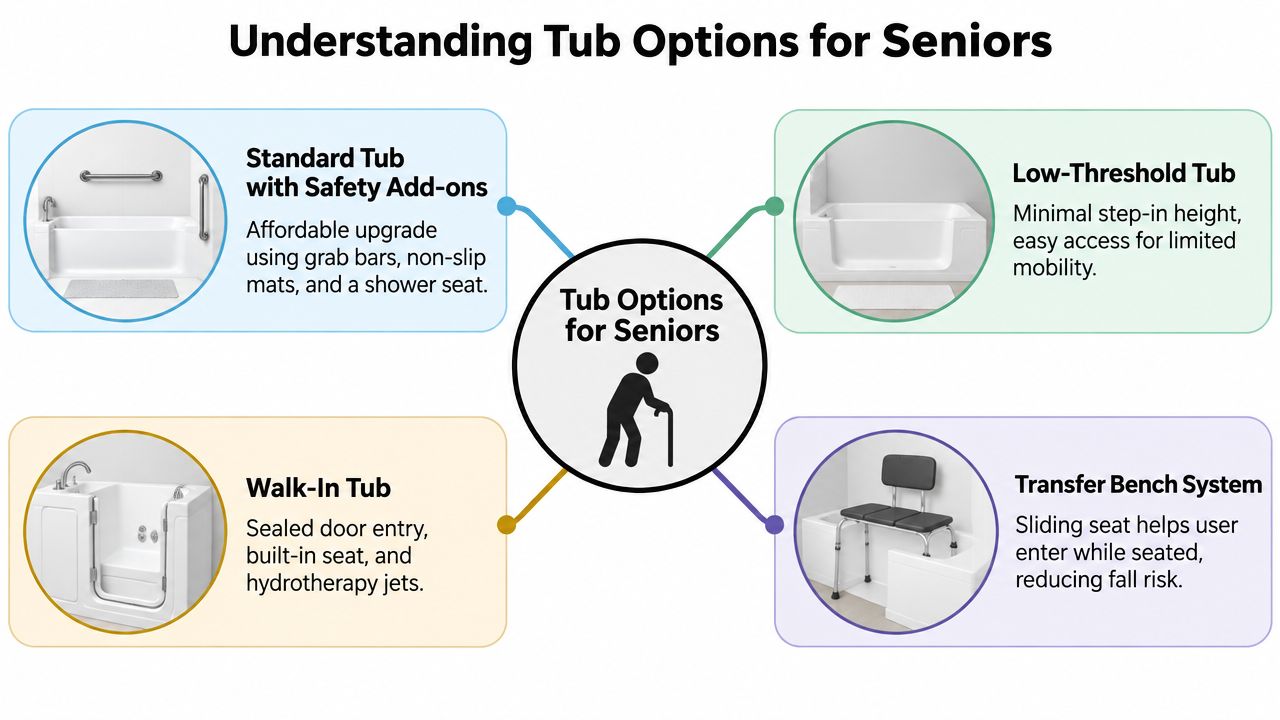
Standard tub with safety add-ons
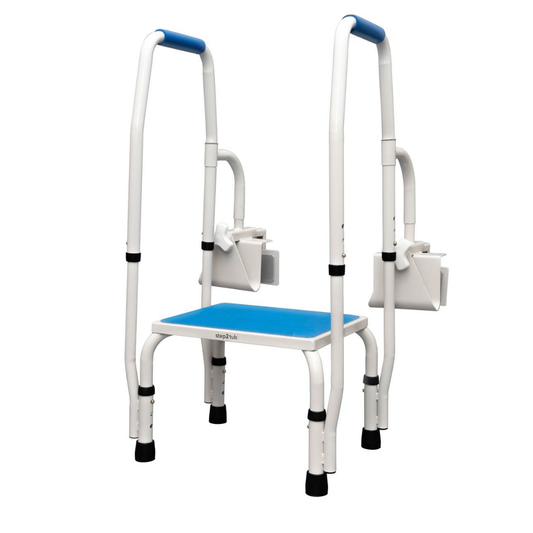
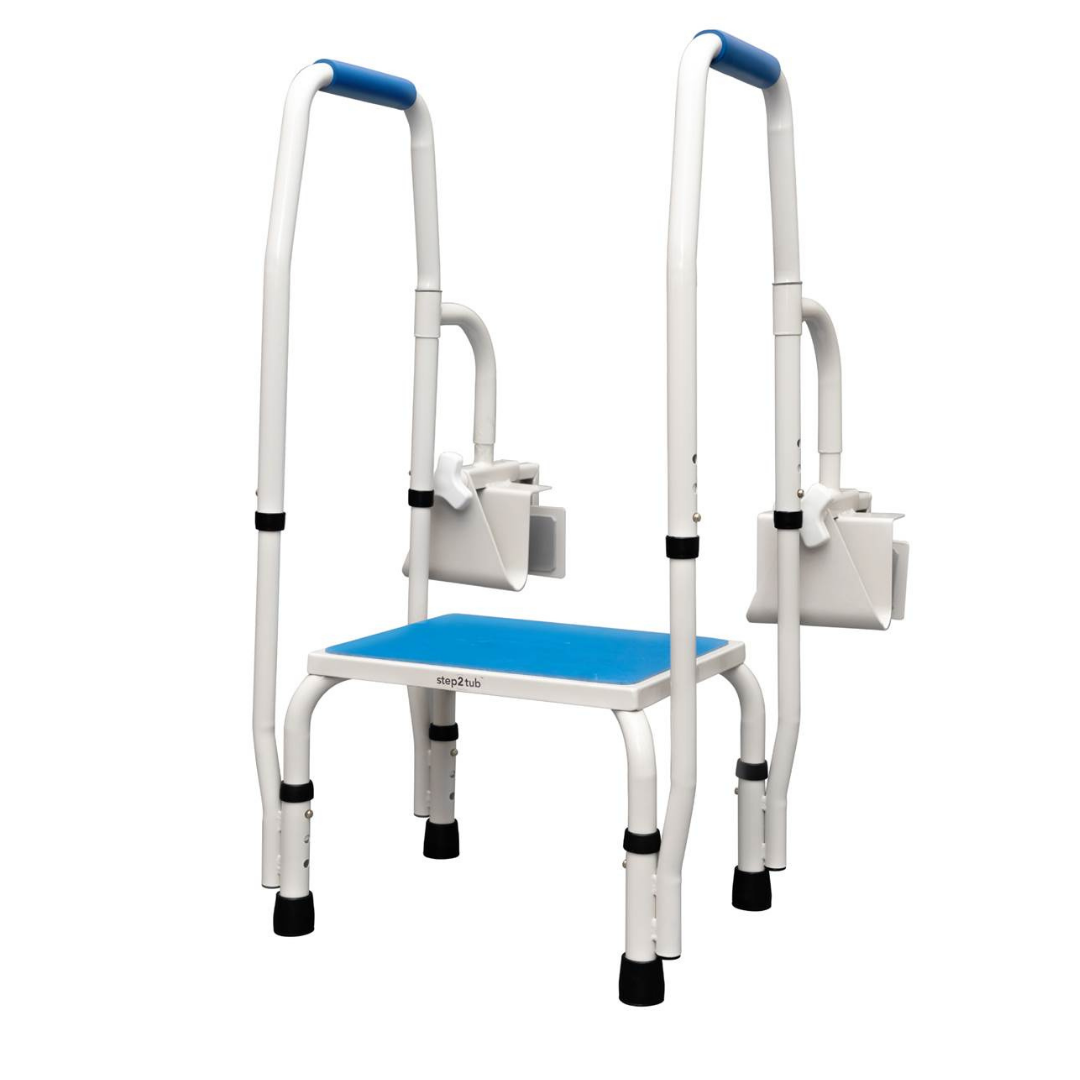
A standard tub remains a practical option for an ambulatory adult who can step over the wall without much help. Grab bars, a non-slip mat, and a bath seat can provide added control and reduce the need to balance while turning or washing. Because the existing tub stays in place, this approach may avoid a larger bathroom renovation.
It is a modification, not a solution for every mobility change. If stepping over the wall has become tiring, painful, or uncertain, added equipment may not address the main barrier.
Low-threshold tub
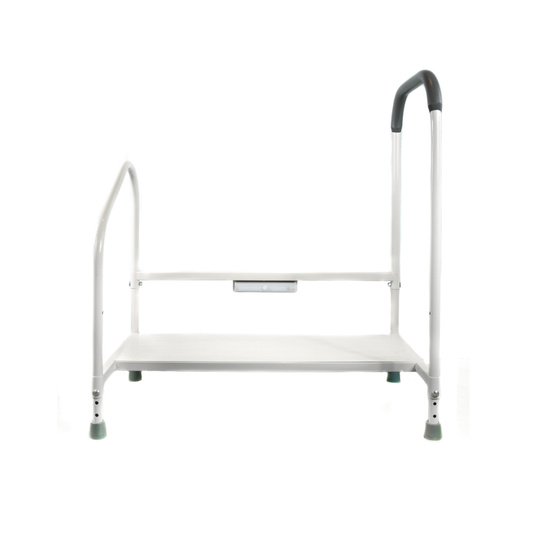
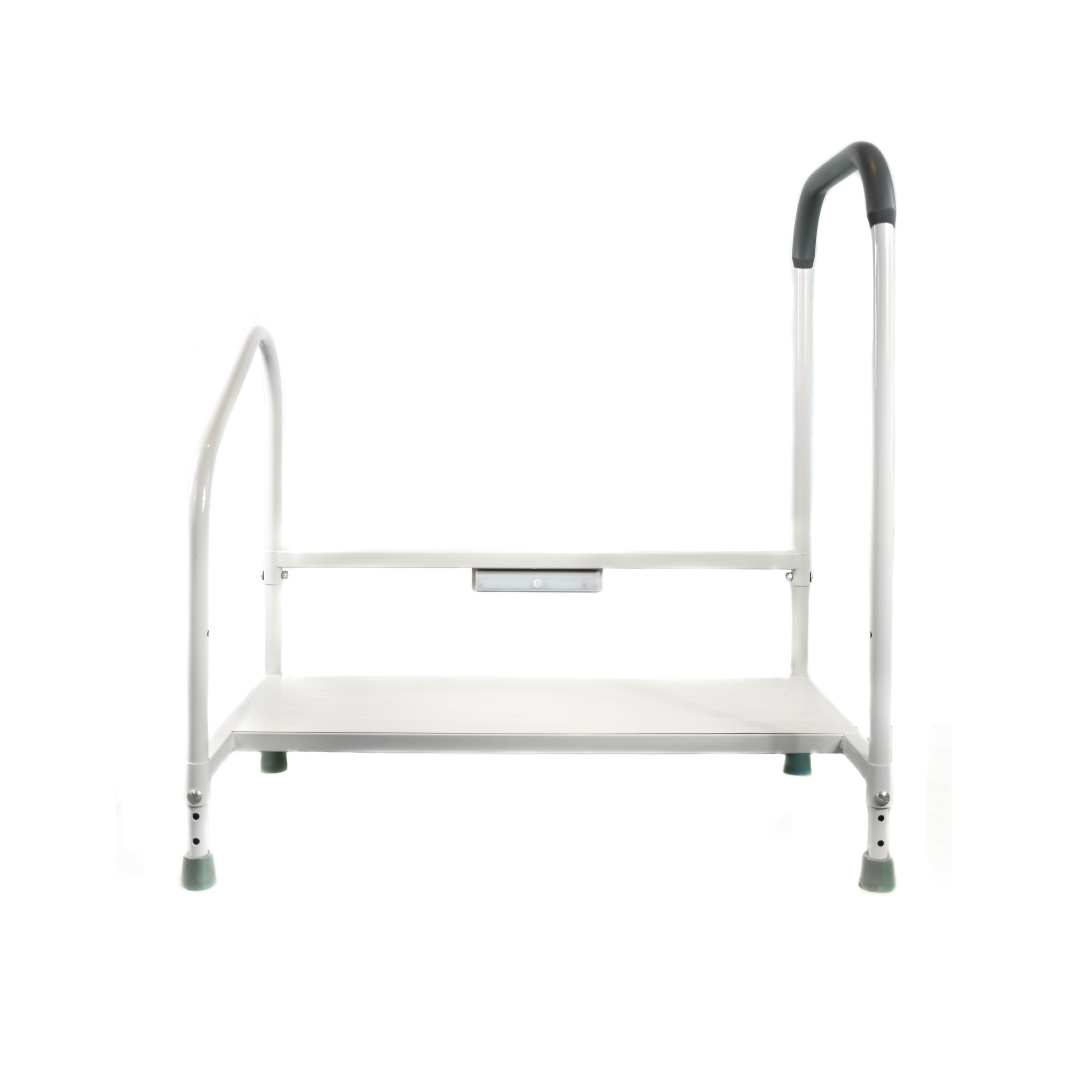
A low-threshold tub lowers the step-over height, much like replacing a high doorstep with a shorter one. It suits someone who can still stand and pivot but no longer feels secure lifting a leg over a tall edge. This option offers more access than a standard tub while requiring less change than a full replacement with a door.
Check whether the user can remain steady during the step and turn. If that movement still requires substantial assistance, a lower threshold alone may not be enough.
Walk-in tub
A walk-in tub has a side door and usually a built-in seat. The user enters through the door, sits while bathing, and avoids climbing over the tub wall. This arrangement can fit a semi-ambulatory adult whose balance, knee strength, or confidence makes step-over entry the main obstacle.
The door also means the user must enter before the tub fills and remain seated while it drains. Consider that routine as part of the choice, not just the entry height.
Transfer tub or shower-tub combo
A transfer setup centers on moving from a wheelchair, walker, or nearby seat onto a bench and into the bathing area. It can suit a wheelchair-transfer user who needs to stay seated during the move. Review this transfer bench and shower chair guidance to understand how the aid supports access without automatically replacing the entire bathroom.
The practical question is simple: does the person need a safer step, a seated entry, or a supported transfer? That answer helps families decide whether to modify the existing tub or replace it.
Essential Accessibility Features That Prevent Falls
A person can feel steady beside the tub yet lose balance during the step, turn, or reach for a towel. Safer tub for seniors designs address each movement with three forms of support: secure handholds, traction underfoot, and seated bathing. Together, they reduce the number of moments when the user must balance on one leg.
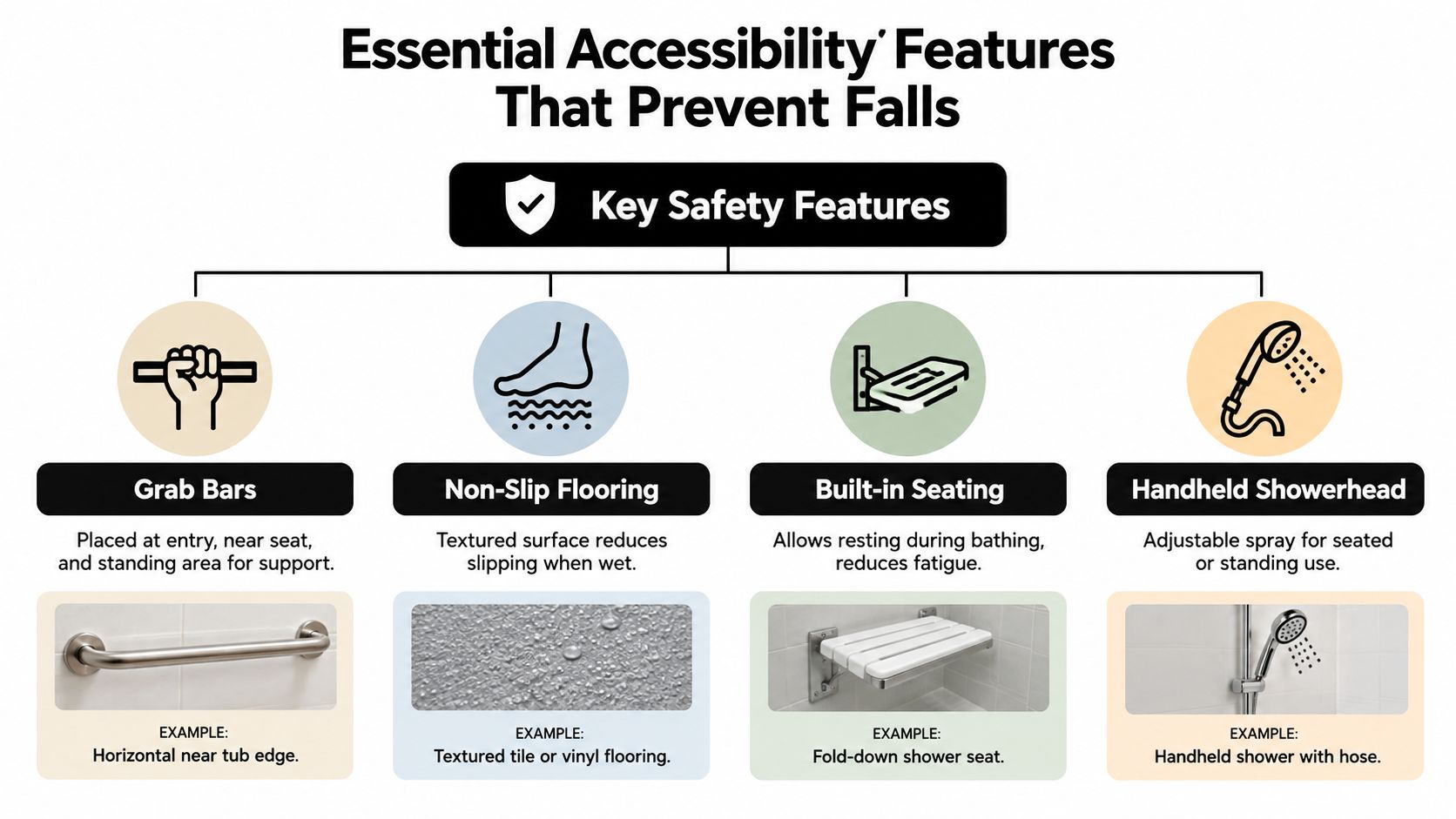
Grab bars do different jobs
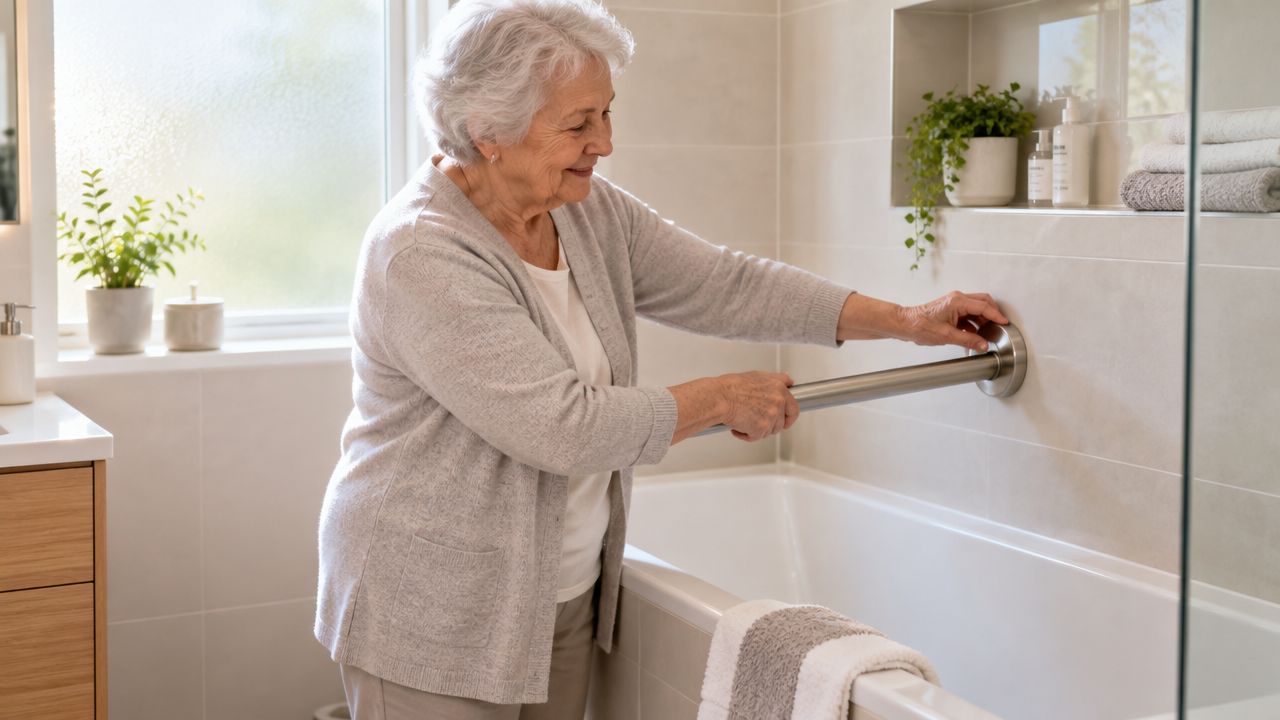
A Canadian housing-safety research report recommends at least two grab bars for senior bathtub use: one on the side wall for entering and exiting, and one on the back wall for sitting down and standing up (Canadian housing-safety report). Their positions match different body movements. A side bar supports a sideways step, while a back-wall bar helps during a seated transition.
MedlinePlus recommends vertically or horizontally mounted grab bars rather than diagonal bars, a water-heater setting of no more than 120°F (49°C), and non-slip mats or decals inside the tub (MedlinePlus). The National Institute on Aging advises placing grab bars near the toilet and on both the inside and outside of the tub or shower (NIA).
Surfaces and seating reduce the slip chain
A CPSC-sponsored slip study tested 61 participants entering and leaving four simulated bathtub and shower floor types in wet and dry conditions. Its findings identify entry and exit as major slip-fall hazard points, particularly for older adults (CPSC slip study). Non-slip flooring limits sliding, while stable seating reduces the need to stand on one leg while washing.
A handheld showerhead can keep water controls within reach, and a built-in or properly secured seat can make washing less demanding. These features are most useful when they match the user's mobility profile, rather than being added without considering how entry and transfer happen.
Useful shortcut: if the person cannot safely pivot, the main issue is usually a transfer problem, not only a tub problem.
For placement and anchoring details, consult this grab bar installation guide. If the existing bathtub creates more risk than it solves, expert tips for tub removal can help families assess a full conversion and its practical complications.
Comparing Tub Solutions by Mobility Needs
A person who walks steadily, someone who pauses before each step, and a wheelchair user do not approach a tub in the same way. Match the tub for seniors to the person's transfer pattern first. Then consider the room and whether modifying the existing tub is safer than replacing it.
| Tub Solution | Best For | Entry Method | Support Level |
|---|---|---|---|
| Standard tub with add-ons | Ambulatory older adults who step in independently | Step-over entry | Basic support with bars, mat, and seat |
| Low-threshold tub | People who can stand and pivot but need less step height | Smaller step-over | Moderate support and easier entry |
| Walk-in tub | Users who prefer seated bathing and door access | Side door and seat | Higher support for limited balance |
| Transfer bench system | Semi-ambulatory and wheelchair-transfer users | Sliding seated transfer | Strong transfer support with less standing |
An ambulatory user who can step over the wall, turn, and sit safely may only need a standard tub with suitable supports. A low-threshold model reduces the height to clear, like replacing a tall curb with a shorter one. If the person cannot manage that step reliably, a walk-in tub may offer a better entry pattern.
Semi-ambulatory users often benefit from sitting before their legs enter the tub. A transfer bench lets them slide across instead of balancing on one leg. Wheelchair-transfer users usually need enough clearance for the chair, bench, and caregiver, so a seated transfer setup may fit better than a tub designed for standing entry. This transfer bench and shower chair resource can help families compare those equipment choices.
Choose the least complicated solution that supports safe movement. A cautious walker may need a lower threshold and stable support rather than a complete remodel. A user who cannot pivot safely may need a transfer system or tub replacement, because adding accessories does not change the basic entry route. Test the intended movement with an occupational therapist or qualified installer before deciding.
Installation Space and Home Fit Considerations
A safe tub still has to fit the room. Families often focus on features first, then discover the alcove is too short, the doorway is too tight, or the floor needs reinforcement. A tub for seniors can only work well when the space, plumbing, and access points all line up.
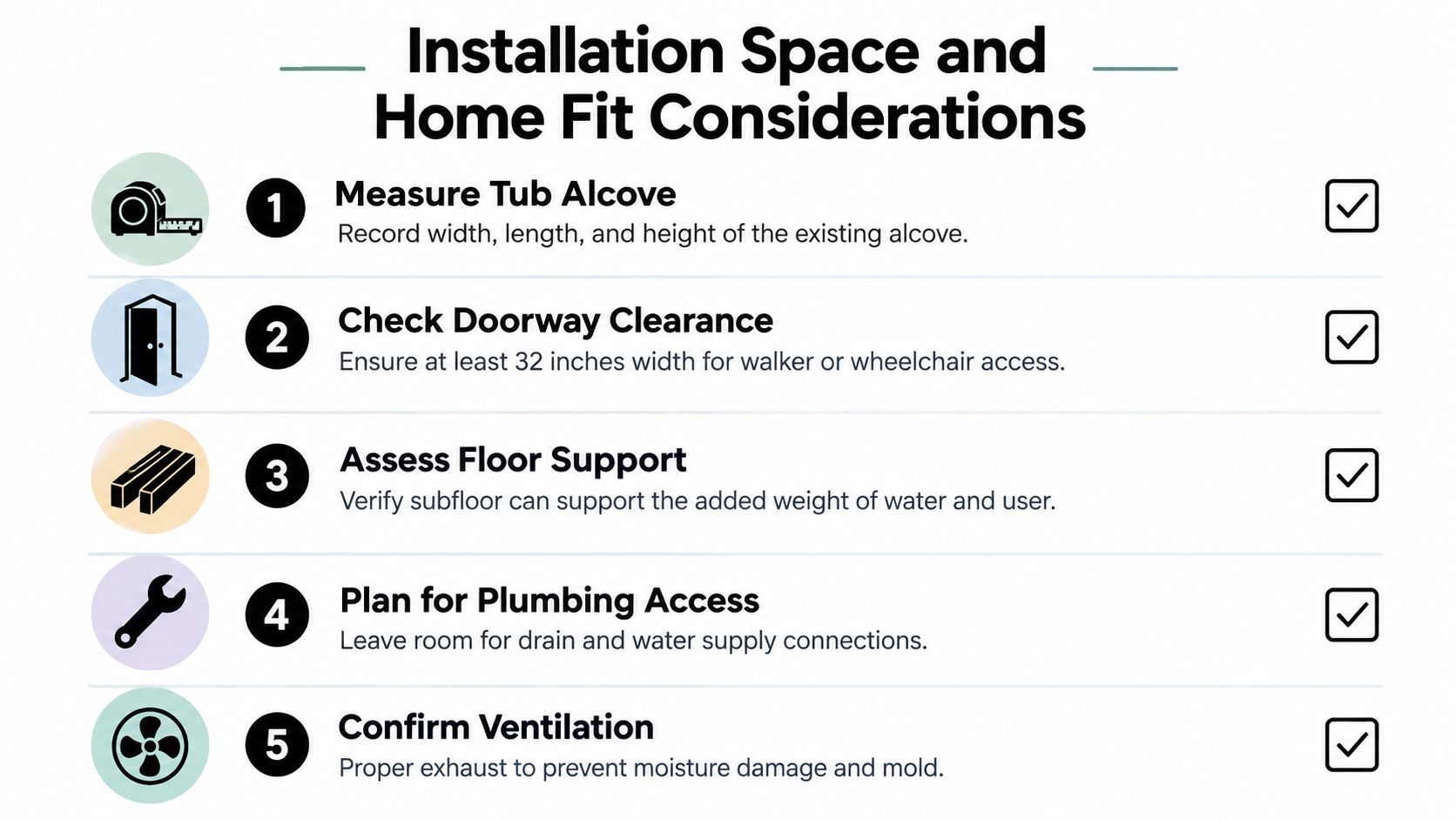
Measure the room before you shop
Start with the tub alcove, doorway width, and the path from the hallway into the bathroom. A walk-in tub or transfer setup can look perfect online and still fail if the bathroom opening is too narrow for delivery or installation. Caregiver space matters too, because even a good transfer solution can feel cramped if there's no place to stand and assist safely.
Check support, plumbing, and moisture control
Some tubs are heavier than a standard model, especially once water and a user are added. That makes floor support and subfloor condition part of the conversation, not an afterthought. Plumbing access also matters, and if the remodel involves new drain lines or repositioned supply lines, that work belongs in the planning stage, not the final week.
For families trying to avoid surprise costs, this guide to aging-in-place home modifications helps frame the tub as one part of a broader home safety plan. For renovation-specific caution, the EZ Plumbing bathroom remodeling tips are a useful reminder that drain placement and water lines can shape the whole project.
A smart installation plan asks one question early, can this bathroom support the right tub without creating a new access problem?
Daily Safety Habits and Simple Maintenance
A senior may enter the bathroom safely in the morning and face a loose mat or wet floor by evening. Daily checks keep a tub for seniors dependable. The right routine also depends on mobility: an ambulatory user may need clear footing, while someone using a chair may need stable transfer points and dry surfaces within reach.
A simple habit checklist
- Check grab bars by hand: they should feel solid and stay fixed when the user applies weight.
- Keep mats flat and clean: suction mats and decals lose traction when edges curl or soap residue builds up.
- Control water temperature: keep it no higher than 120°F (49°C) to reduce burn risk (MedlinePlus).
- Clear the floor: store bottles, towels, and loose items away from the tub edge and transfer path.
- Dry wet surfaces: wipe standing water after bathing so the floor remains easier to grip.
These checks work like a preflight inspection. They take little time, yet they reveal small problems before a person depends on the equipment. A caregiver can complete them before assisting with a transfer, while an independent user can make them part of the bathing routine.
Watch the parts that wear out
Inspect a walk-in tub door seal for cracks, gaps, or a latch that no longer closes firmly. Clean jets according to the manufacturer's directions, and avoid harsh chemicals that may damage components or leave residue. Replace suction mats, strips, and rubber decals when they stop adhering well. A familiar accessory is not safe merely because it has always been there.
Guidance from the National Institute on Aging supports nonskid mats, strips, or carpet on wet surfaces, along with grab bars near the tub and shower (NIA). Families adding seated support can also use this guide to using a shower chair to review positioning and safe handling.
How to Choose the Right Tub for Your Needs
A person who walks steadily but hesitates at the tub wall may need a different solution from someone who transfers from a wheelchair. Match the setup to the user's movement first, then consider the room and budget. For an ambulatory user who needs more stability, a standard tub may work with a properly installed seat, grab bars, and other safety additions. These changes can be simpler than replacing the tub.
For someone who cannot safely lift a leg over the wall, a low-threshold or walk-in tub removes that step-over barrier. A user who can stand briefly may still need a built-in seat and well-placed supports. If transfers take place from a chair or wheelchair, a transfer bench or another seated-transfer arrangement may provide a more direct path into the bathing area than a door-style tub.
Ask three practical questions. Can the person step over the wall without losing balance? Can they sit down and stand up without pulling on an unstable towel bar or other weak support? Will a caregiver need room to assist, or does the user need to manage bathing independently? The answers help determine whether to modify the current tub, replace it with a lower-threshold option, or switch to a transfer-focused setup.
Cost and installation effort matter, but function should guide the choice. A bathroom may need only targeted modifications, while a poor layout may justify a tub replacement or shower conversion. The right option reduces the hardest transfer step without creating a new reach, slip, or clearance problem.
Families comparing bathroom safety equipment can review products from DME Superstore. Select for mobility needs first, room fit second, and budget third. That order keeps the bathing setup practical and safer for daily use.
