



Essential tools like grab bars, shower chairs, and raised toilet seats are more than just bathroom accessories; they are fundamental to maintaining independence and confidence. For older adults, this equipment is crucial for transforming a high-risk area into a secure, comfortable, and accessible space. This guide provides an educational overview of why these items are necessary and how to choose the right ones.
The Importance of Bathroom Safety for Seniors
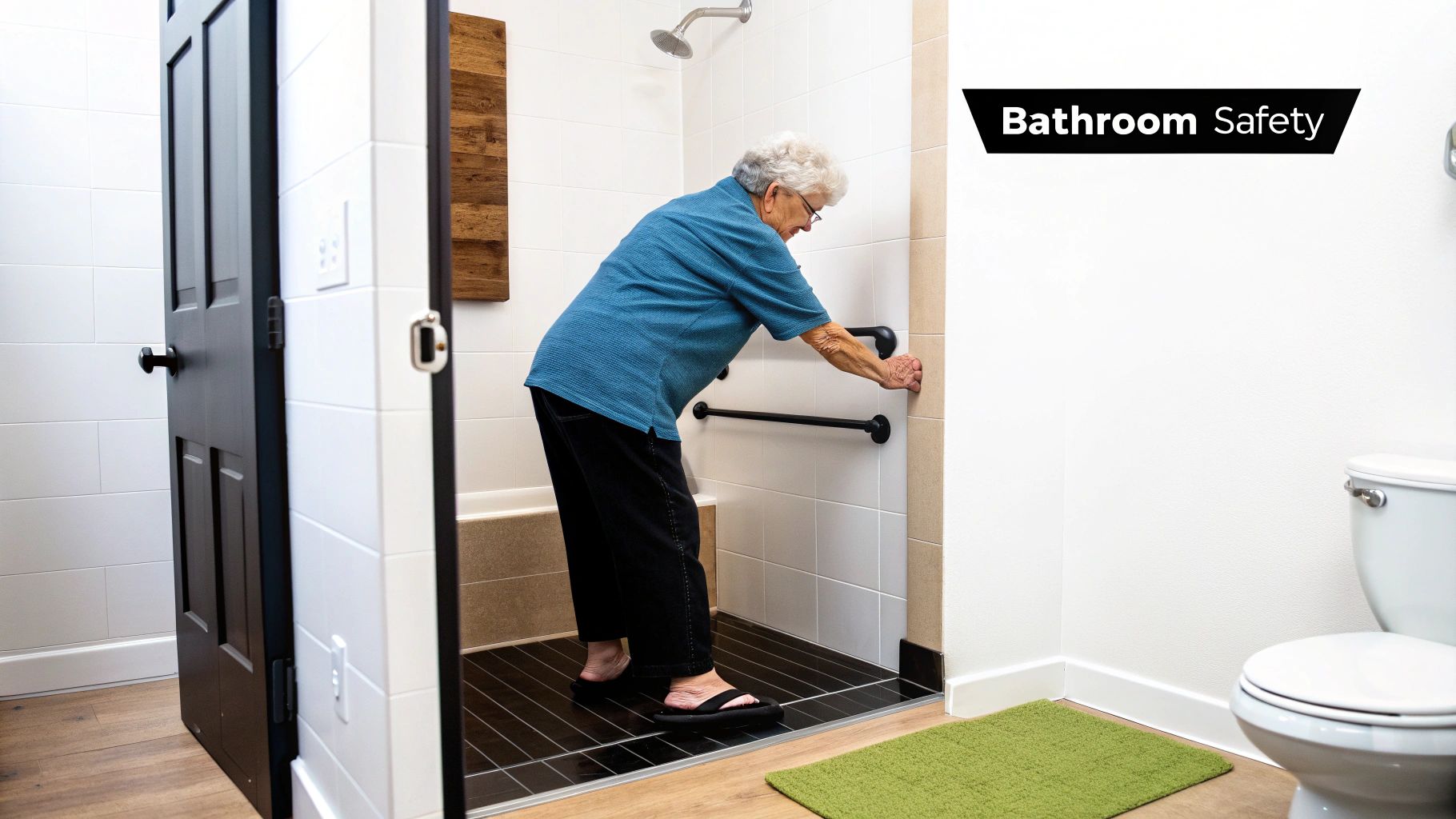
For many older adults, the bathroom presents unique challenges. Its combination of hard surfaces, compact spaces, and wet conditions creates a significant risk for falls and injuries. Age-related changes in balance, vision, and mobility can make routine activities—like stepping into a shower or using the toilet—potentially hazardous.
The goal of bathroom safety is not to restrict activity but to enable it safely. By installing specific equipment, the bathroom can be adapted to support the user's needs, transforming a high-risk zone into a place of comfort and security.
Understanding the Risks in the Bathroom
The statistics on bathroom falls among seniors are a serious call to action. Research indicates that a significant percentage of falls among older adults occur in this one room, often resulting in serious injuries. The primary contributing factors are:
- Slippery Surfaces: Water on tile floors or in shower basins dramatically reduces traction.
- Poor Lighting: Inadequate lighting can obscure obstacles, especially during nighttime visits.
- High Tub Walls: Stepping over a tub ledge requires balance and strength that may be diminished.
"The bathroom poses a unique combination of risks. The transition between wet and dry surfaces, combined with the need to bend, lift, and sit, creates a perfect storm for potential accidents. Proactive safety measures are not just helpful—they are essential."
An Empowering Approach to Aging in Place
Installing the right bathroom safety equipment for elderly loved ones is a proactive measure that fosters independence. It's about providing targeted support where it is most needed, allowing individuals to perform daily routines with dignity and reduced risk.
This is a growing public health concern. As the U.S. elderly population is projected to increase by 47% by 2050, the demand for home safety solutions will become even more critical. This trend is reflected in the expanding market for bathroom assistance devices, as detailed in this market analysis from Grandview Research.
This guide will explain the function and benefits of essential equipment. For a broader look at fall prevention strategies, our guide on how to prevent elderly falls offers valuable information.
An Educational Guide to Your Bathroom Safety Toolkit
Creating a safe bathroom is about selecting the right tools for specific needs. This section serves as an educational resource on the core pieces of bathroom safety equipment for elderly individuals, explaining the function of each item and the mobility challenge it is designed to address.
Each piece of equipment serves a distinct medical and functional purpose, from providing stabilization during movement to reducing physical strain during bathing. Understanding these functions is the first step in creating a bathroom environment that promotes confidence, protects dignity, and significantly reduces the risk of accidents.
Let's begin with a summary of the most effective and commonly used bathroom safety tools.
At-a-Glance Bathroom Safety Equipment Guide
This table provides a quick reference to essential items, their primary function, and the mobility challenge they help overcome.
| Equipment Type | Primary Function | Best For Addressing |
|---|---|---|
| Grab Bars | Provides a secure, mounted handhold for stability. | Balance issues, weakness when standing or sitting. |
| Shower Chair | Offers a stable, waterproof seat inside the shower. | Fatigue, poor stamina, inability to stand for long. |
| Transfer Bench | Bridges the tub wall for a seated, sliding entry. | Difficulty lifting legs over the tub edge. |
| Raised Toilet Seat | Adds height to the toilet, reducing bending distance. | Knee/hip pain, arthritis, leg weakness. |
| Non-Slip Mat | Creates a textured, high-traction floor surface. | General slip risk on wet, slick tub/shower floors. |
| Handheld Shower | Brings the water stream to the user for rinsing. | Limited reach, seated bathing, poor flexibility. |
Now, let's explore the specific benefits and applications of each piece of equipment.
Grab Bars: The Foundation of Bathroom Stability
Grab bars are the cornerstone of a safe bathroom. Unlike towel racks or sinks, which are not designed to support body weight, grab bars are securely anchored into wall studs. Their purpose is to provide a reliable handhold during critical moments of transition.
Actions like stepping out of a wet shower or rising from the toilet require significant balance and strength. A properly installed grab bar acts as a stable anchor, allowing an individual to use their arm strength to support and stabilize their body.
- Who benefits most? Anyone with balance deficits, lower body weakness, or a general need for an additional point of stable contact.
- Where to install them? Strategically placed inside the shower, near the shower entrance, and adjacent to the toilet for maximum support.
This single addition transforms a potentially unstable movement into a secure, controlled action. The increasing demand for grab bars and handgrips highlights their efficacy in meeting the mobility needs of an aging population. For more detailed insights into the bathroom assist devices market, you can learn about current trends and innovations.
Shower Chairs and Transfer Benches: Seated Solutions for Safe Bathing
For individuals with limited stamina or balance, standing on a wet surface for an extended period can be both fatiguing and dangerous. Shower chairs and transfer benches are medical devices designed to provide a safe, stable seating option during bathing.
A shower chair is a waterproof seat placed inside a tub or shower stall. It allows a person to sit comfortably while washing, which reduces fatigue and the risk of slipping. This is an ideal solution for individuals who can safely step into the shower but cannot stand for its duration.
A transfer bench is a longer bench designed with two legs inside the tub and two outside. It is engineered for those who have difficulty lifting their legs over the tub wall. The user sits on the outer portion of the bench and slides across into the bathing area, completely eliminating the need for the high-risk step-over motion. You can see how models like the NOVA Medical Bathtub Transfer Bench are designed for maximum stability and safety.
Think of a transfer bench as a bridge over a treacherous river. Instead of taking a dangerous leap, you can safely and slowly slide from one bank to the other, removing the most hazardous part of the journey.
Raised Toilet Seats: Reducing Strain on Joints
For individuals with arthritis, knee or hip pain, or general lower body weakness, the act of sitting on a standard-height toilet can cause significant strain. A raised toilet seat, also known as a toilet riser, is a simple but highly effective solution.
This device attaches securely to the toilet bowl, adding 3 to 5 inches of height. This seemingly small modification significantly reduces the required range of motion for knee and hip flexion, making it much easier and less painful to sit and stand.
- With Handles: Many models include integrated armrests, providing additional leverage for users to push themselves to a standing position.
- Without Handles: Simpler versions provide height alone, suitable for bathrooms with limited space.
This piece of durable medical equipment directly addresses a common source of physical strain, transforming a challenging daily task into a more comfortable and manageable one.
Non-Slip Mats and Handheld Showers: Essential Environmental Controls
While grab bars and specialized seating are primary interventions, two additional items provide crucial layers of environmental safety and user control.
-
Non-Slip Mats or Strips: These are essential for creating a high-traction surface on the bottom of a tub or shower. The textured material grips the user's feet, preventing slips on smooth, soapy surfaces. It is a fundamental safety measure that offers significant protection for a minimal investment.
-
Handheld Shower Heads: A handheld shower head enhances flexibility and control, particularly for individuals who bathe while seated. It allows the user to direct the water stream precisely where needed without risky twisting or reaching. This makes the bathing process safer, more efficient, and more thorough.
How to Select the Right Equipment for Specific Needs
Choosing the correct bathroom safety equipment is a process that requires careful consideration of an individual's specific medical and mobility challenges, as well as the bathroom's physical layout. This is not about acquiring products, but about implementing a personalized safety plan.
A successful setup begins with a thorough assessment. By understanding the primary difficulties and the constraints of the space, you can select equipment that provides effective, targeted support.
Begin with a Personalized Mobility Assessment
The first step is to identify the specific mobility challenges. Is the primary concern a fear of slipping? Is it difficulty standing for long periods? Or is it pain associated with bending the knees and hips? The answers will dictate your equipment choices.
Focus on the actions that cause discomfort or feel unsafe. A problem-solution framework is most effective. For example, if knee pain makes using the toilet difficult, a raised toilet seat with handles is a direct solution. If stepping over the tub wall is the main hazard, a transfer bench is the appropriate intervention.
A personalized assessment ensures you're addressing the root cause of the risk. It’s the difference between adding clutter and adding genuine, life-enhancing support that builds confidence and independence.
This tailored approach is more critical than ever. The market for aging-in-place bathroom products is projected to reach $9.23 billion by 2032, driven by the desire for seniors to live safely in their own homes. This growth fuels the development of customized solutions designed to manage risks for individuals with varying mobility levels.
This decision tree can help visualize the selection process.
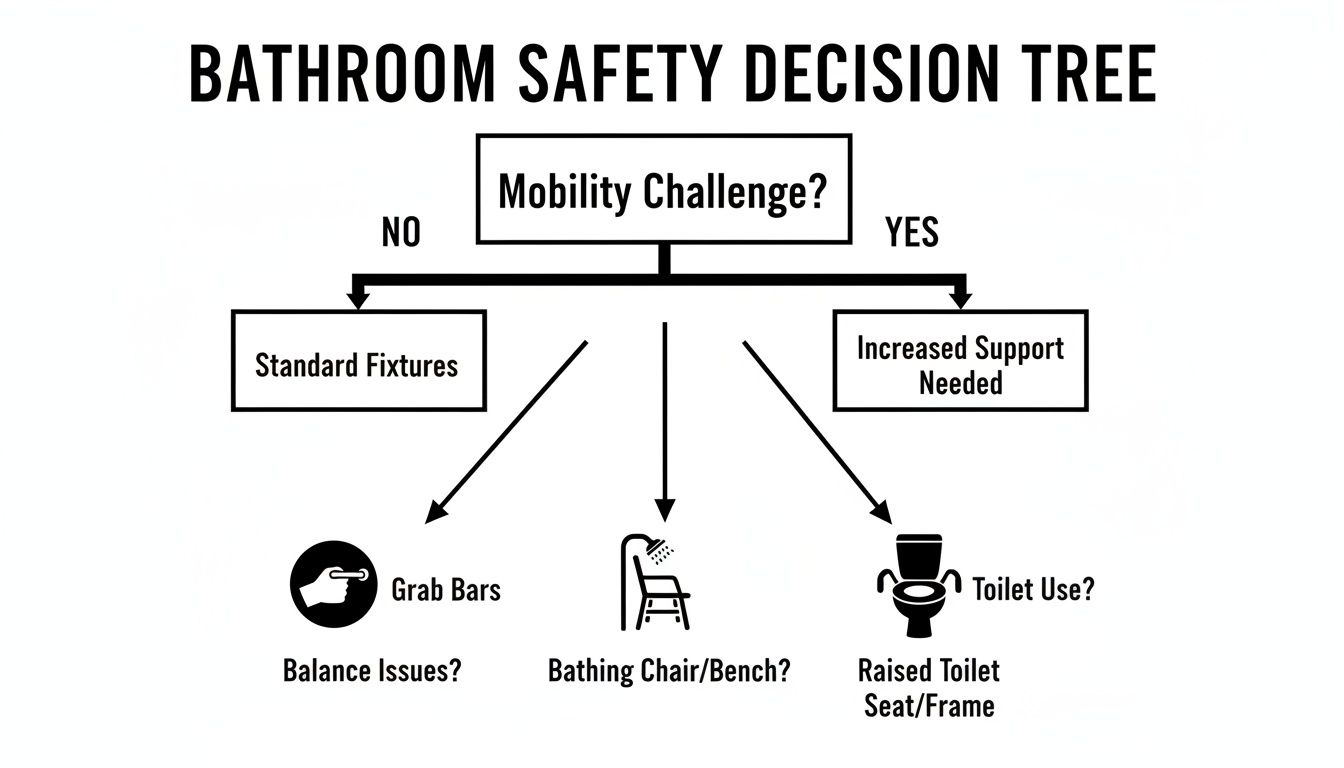
The flowchart simplifies the process by connecting a specific need—like bathing or balance—directly to its most effective solution, guiding you toward a logical choice.
Evaluate the Bathroom Layout and Dimensions
After identifying the necessary equipment, the next step is to measure the physical space. Safety equipment is only effective if it fits properly without creating new hazards. A shower chair that is too large for a stall can make the space more difficult and dangerous to navigate.
Use a tape measure before making a purchase.
- For Shower Chairs: Measure the interior width and depth of the shower floor to ensure the chair's legs can sit flat and stable.
- For Transfer Benches: Measure the tub wall height and the total tub width. The bench must be adjustable to clear the wall while remaining level.
- For Raised Toilet Seats: Determine if the toilet bowl is standard round or elongated to ensure a secure, non-wobbling fit.
For larger projects, understanding how to plan a bathroom renovation can provide a framework for making permanent safety modifications.
Prioritize Weight Capacity and Material Quality
Every piece of safety equipment has a specified weight capacity, which is a critical safety limit that must not be exceeded. Ignoring this can lead to equipment failure and serious injury.
Always select products with a weight capacity that comfortably exceeds the user's weight. For example, for an individual weighing 220 pounds, equipment rated for at least 250-300 pounds provides a necessary safety margin. This is especially important for weight-bearing items like transfer benches, shower chairs, and toilet safety frames.
Material quality is equally important for safety and longevity.
- Seek corrosion-resistant materials such as anodized aluminum, stainless steel, or medical-grade molded plastic. These materials are designed to withstand the high-moisture bathroom environment.
- Verify non-slip features, like rubberized feet on chairs and textured surfaces on grab bars and bath mats.
- Ensure adjustable components lock securely. There should be no movement or instability once they are set.
A thorough assessment of individual needs, precise measurements, and verification of safety specifications like weight capacity are essential for creating a bathroom that supports safe, independent living.
Best Practices for Installation and Maintenance
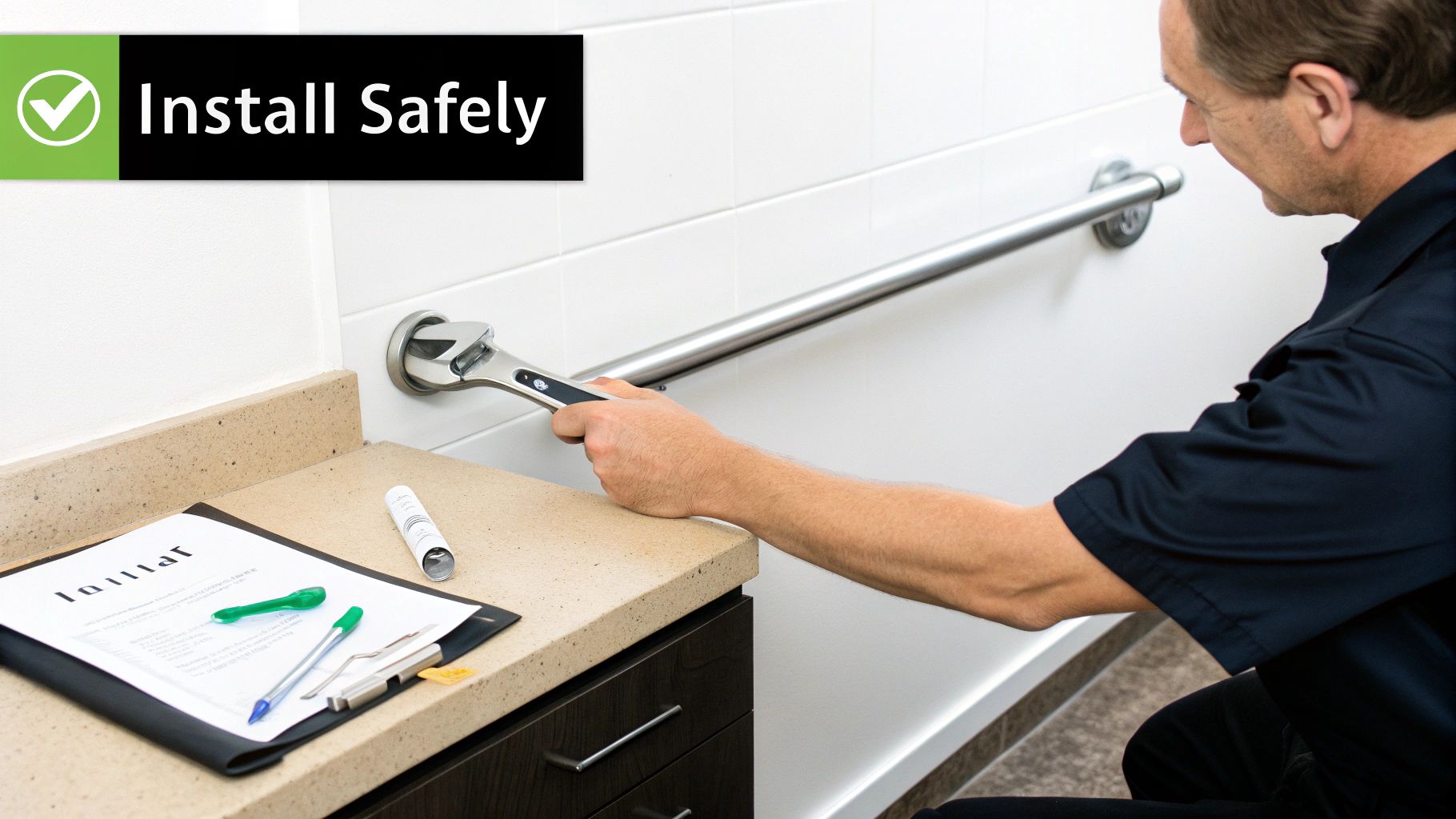
The effectiveness of bathroom safety equipment for elderly individuals depends entirely on proper installation. This final step is crucial for ensuring that the equipment provides reliable support. An improperly installed grab bar or a wobbly shower chair can create a false sense of security, which is more dangerous than having no equipment at all.
This section provides practical guidance for correct installation and routine maintenance, ensuring the long-term integrity of your safety investment.
Professional vs. DIY Installation
Some safety devices are designed for simple assembly, while others require professional installation to guarantee security. Understanding the difference is critical for preventing accidents.
For any equipment that must bear a person's full body weight, professional installation is the safest choice.
-
Professional Installation Recommended: Wall-mounted grab bars are a prime example. They must be anchored directly into wall studs to provide adequate support. A professional has the tools and expertise to locate studs and create a secure attachment that will not fail under load.
-
User-Friendly Installation: Most raised toilet seats, transfer benches, and freestanding shower chairs are designed for easy, tool-free assembly. However, it is imperative to follow the manufacturer's instructions precisely.
For extensive modifications, such as installing a walk-in shower, hiring a qualified bathroom installer ensures the work is completed safely and to code.
A Checklist for Secure Setup
Before using any newly installed equipment, perform a quick safety check to ensure a stable, wobble-free fit.
- Give It a Shake Test: Apply firm pressure by pushing, pulling, and leaning on the equipment. A grab bar should not move at all. A shower chair or bench must sit flat without any rocking.
- Check All Connections: Ensure all screws, clamps, and locking pins are fully tightened and engaged.
- Confirm Level Placement: All four legs of a chair or bench must rest evenly on the surface.
- Review the Instructions: Double-check the manual to confirm that no steps were missed.
Properly installed safety equipment should feel like a permanent, sturdy part of the bathroom itself. If there is any movement, wiggle, or instability, the installation is not complete and the equipment is not safe to use.
If you are installing grab bars yourself, it is vital to understand the structural requirements. Our guide on how to install grab bars in a bathroom offers detailed, step-by-step instructions.
Routine Maintenance for Lasting Safety
Installation is the first step; ongoing maintenance ensures long-term reliability. Regular inspections can identify minor issues before they become serious hazards.
A simple monthly maintenance routine should include checking for:
- Loose Fittings: Re-tighten any bolts or screws that may have loosened over time.
- Signs of Rust or Corrosion: Inspect metal components, particularly around joints and connection points.
- Cracks or Wear: Examine plastic seats and rubber feet for any signs of degradation.
This proactive approach will maximize the lifespan and safety of the equipment, ensuring it provides dependable support for years to come.
Understanding Your Purchase Options
Investing in bathroom safety equipment for elderly individuals is a practical way to support their independence at home. While the benefits are clear, understanding the payment options can help make these essential purchases more accessible.
From using pre-tax health accounts to utilizing payment plans, there are various ways to acquire necessary equipment without financial strain. This section explains the key financial considerations to help you make these upgrades confidently.
Using FSA and HSA Funds
One of the most cost-effective ways to purchase bathroom safety equipment is through a Flexible Spending Account (FSA) or a Health Savings Account (HSA). These accounts allow you to use pre-tax funds for qualified medical expenses, which often includes bathroom safety items.
Products like grab bars, raised toilet seats, and shower chairs are typically classified as durable medical equipment (DME), making them eligible for purchase with FSA or HSA funds. This effectively provides a discount equivalent to your income tax rate, making your healthcare budget go further.
Exploring Financing and Payment Plans
For larger purchases, such as a complete bathroom safety overhaul, paying the full amount upfront may not be feasible. Financing options and payment plans allow you to acquire the necessary equipment immediately and pay for it over time.
Many retailers offer flexible payment plans through services like Affirm. This breaks a large purchase into smaller, manageable monthly installments with clear interest terms, making essential equipment more affordable.
Financing isn't just about managing costs; it’s about removing barriers to immediate safety. When a loved one's well-being is at stake, the ability to install essential equipment without delay is invaluable.
This approach ensures that budgetary constraints do not force a compromise on quality or a delay in implementing vital safety measures.
Reviewing Warranties and Return Policies
Before making a purchase, it is important to review the product warranty and the retailer's return policy. A comprehensive warranty protects against manufacturing defects and indicates that the product is built to last.
Key information to look for includes:
- Warranty Duration: How long is the product covered?
- What's Covered: Does the warranty include parts, labor, or both?
- Return Window: A reputable retailer should offer a reasonable return period, such as a 30-day return policy, to ensure the item meets your needs.
A transparent policy demonstrates a company's commitment to its products and provides you with the assurance that you are making a sound investment.
The Value of Customer Support
Knowledgeable customer support can be an invaluable resource. A responsive support team can answer questions about product specifications, clarify FSA/HSA eligibility, explain financing options, and help you select the best solutions for a specific bathroom layout. This level of support ensures you feel confident in your purchasing decisions from start to finish.
Your Top Bathroom Safety Questions, Answered
Navigating the options for bathroom safety equipment for elderly loved ones can lead to several questions. This section addresses the most common inquiries to provide clarity and help you finalize your safety plan with confidence.
What Is the Most Important Piece of Bathroom Safety Equipment to Install First?
While needs vary, professionally installed grab bars are typically the most critical starting point. They provide essential support during high-risk movements, such as transitioning from a sitting to a standing position or stepping in and out of a shower.
Unlike portable or suction-based bars, which can fail, wall-mounted bars anchored into wall studs offer unwavering stability. They form the foundational layer of a comprehensive bathroom safety system.
How Do I Choose Between a Shower Chair and a Transfer Bench?
The choice between these two items depends on an individual's ability to step into the tub or shower.
-
A Shower Chair is suitable for someone who can safely enter the shower but needs to sit due to fatigue or instability. It is placed entirely inside the tub or shower stall.
-
A Transfer Bench is designed for individuals who cannot safely lift their legs over the tub wall, including those who use a walker or wheelchair. The bench spans the tub wall, allowing the user to sit on the outside and slide safely into the bathing area.
Think of a transfer bench as a bridge over a treacherous gap. Instead of making a risky leap (stepping over the tub wall), it creates a safe, gradual path from one side to the other, removing the most hazardous part of the journey.
Are Raised Toilet Seats Difficult to Install?
No, most raised toilet seats are designed for simple, tool-free installation. They typically attach directly to the toilet bowl using adjustable clamps or bolts that can be tightened by hand. It is crucial to follow the manufacturer's instructions and perform a "shake test" to ensure the seat is completely stable before use.
Can I Use My FSA or HSA to Purchase Bathroom Safety Equipment?
Yes, in most cases. Key pieces of bathroom safety equipment for elderly individuals are classified as Durable Medical Equipment (DME), making them eligible for purchase using funds from a Flexible Spending Account (FSA) or Health Savings Account (HSA).
This allows you to use pre-tax dollars, reducing your out-of-pocket costs. Eligible items almost always include:
- Grab bars
- Shower chairs and transfer benches
- Raised toilet seats and toilet safety frames
- Handheld shower heads
Always confirm eligibility with your plan administrator if you are unsure about a specific item.
How Often Should I Inspect the Safety Equipment?
Regular inspections are essential for ensuring the long-term reliability of safety equipment. A visual inspection should be conducted at least once a month, with a more hands-on check every few months.
During your monthly check, test grab bars for any looseness, ensure shower chair legs are stable, and confirm that the toilet riser is securely fastened. This simple habit helps maintain the integrity of your safety system and provides lasting peace of mind.
At DME Superstore, we are dedicated to providing high-quality, reliable equipment that promotes safer, more independent living. Explore our comprehensive collection of bathroom safety solutions to create a secure and comfortable home environment. Visit our Bathroom Safety collection today.
Article created using Outrank

