

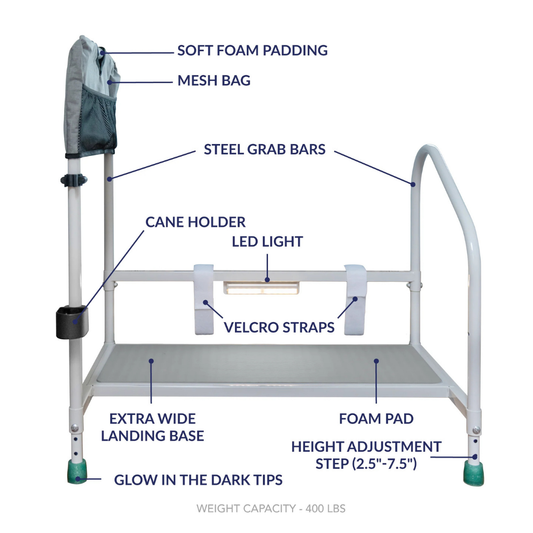
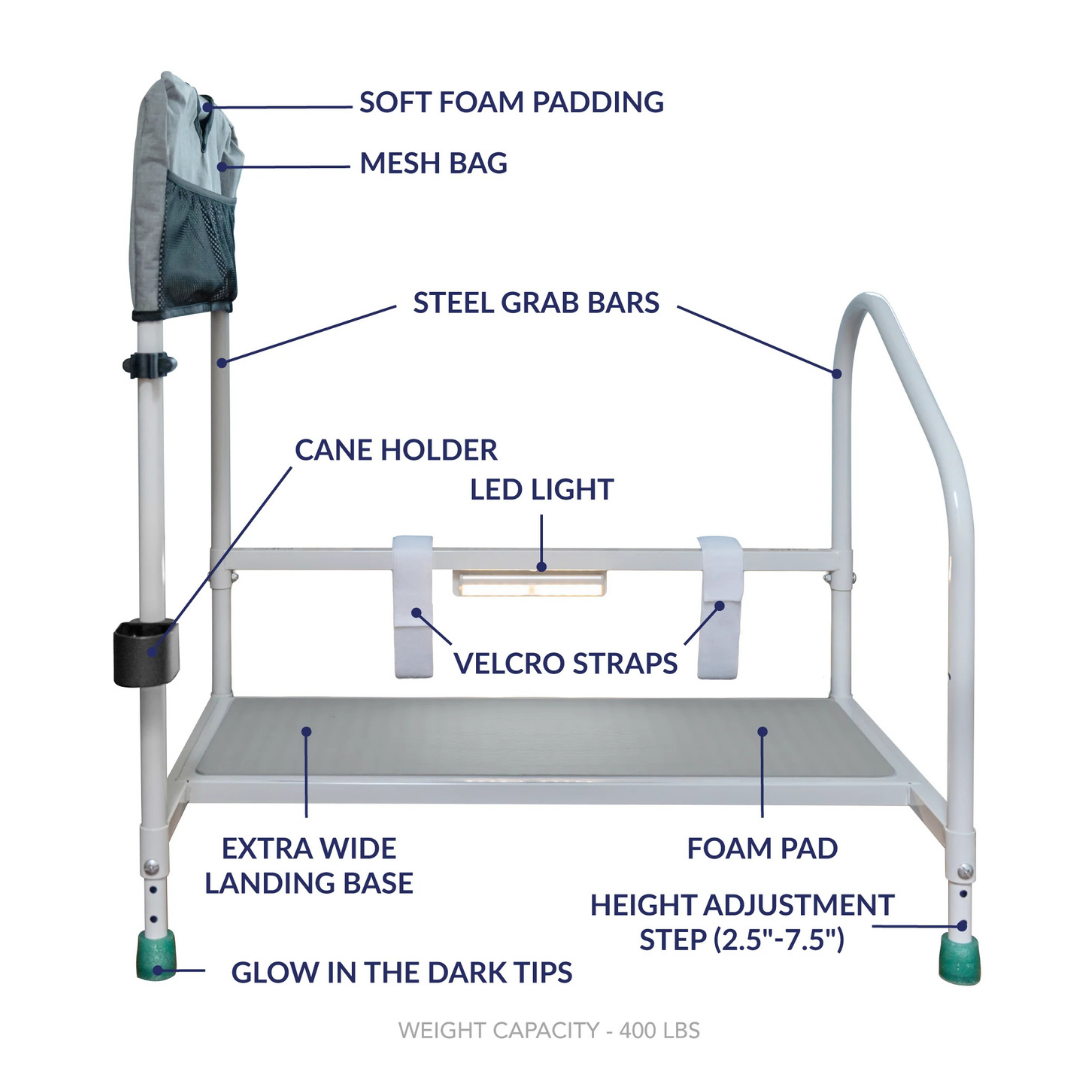
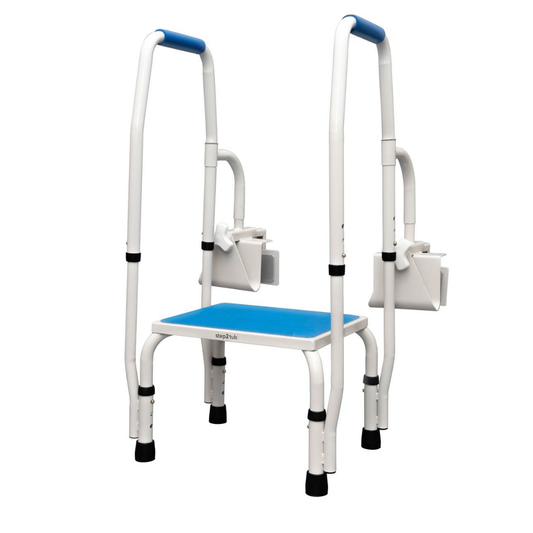
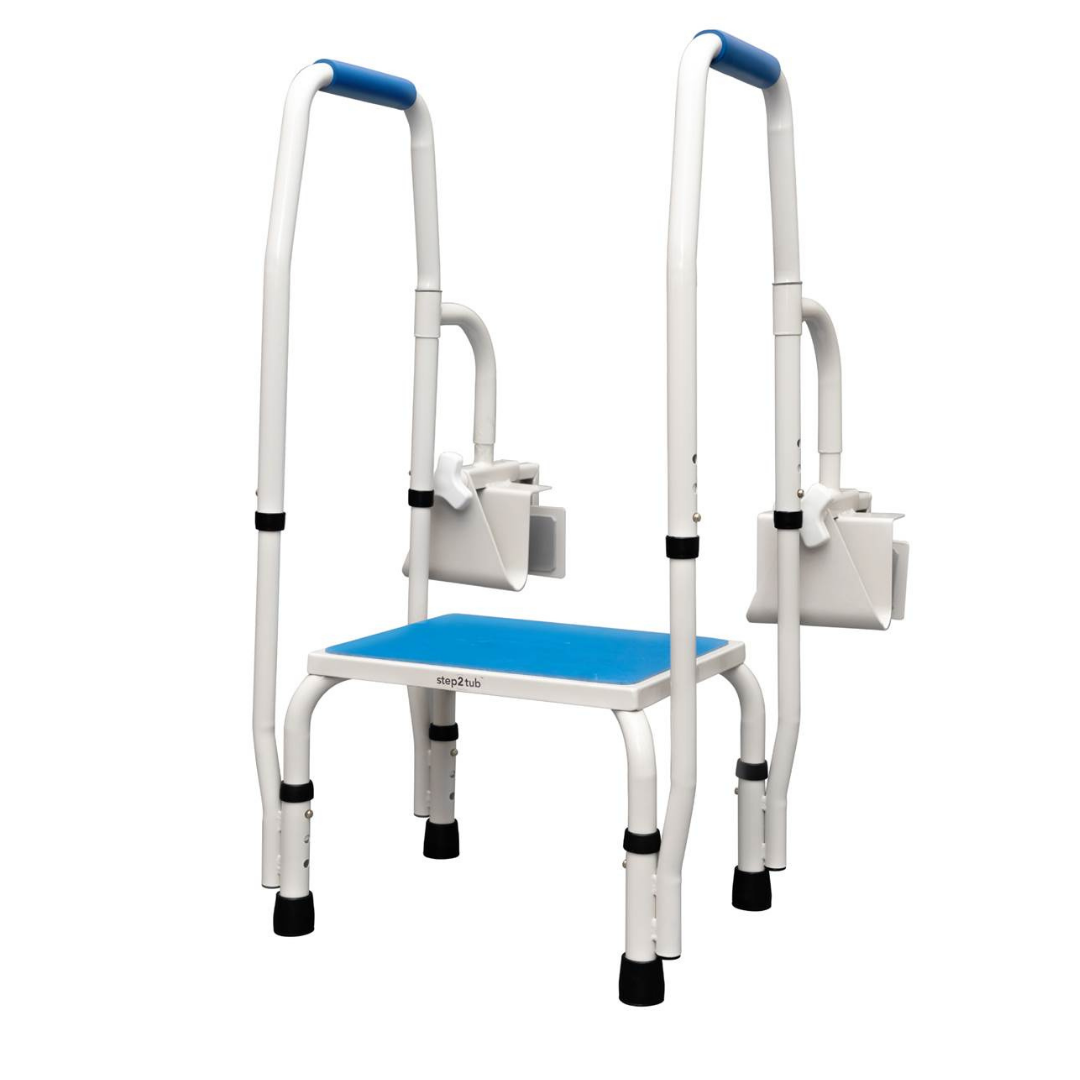
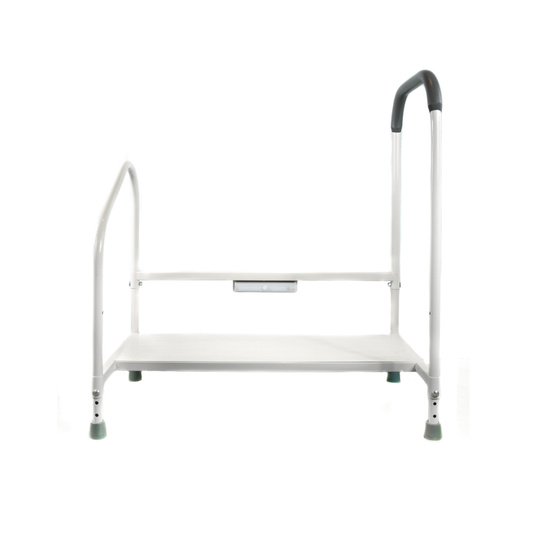
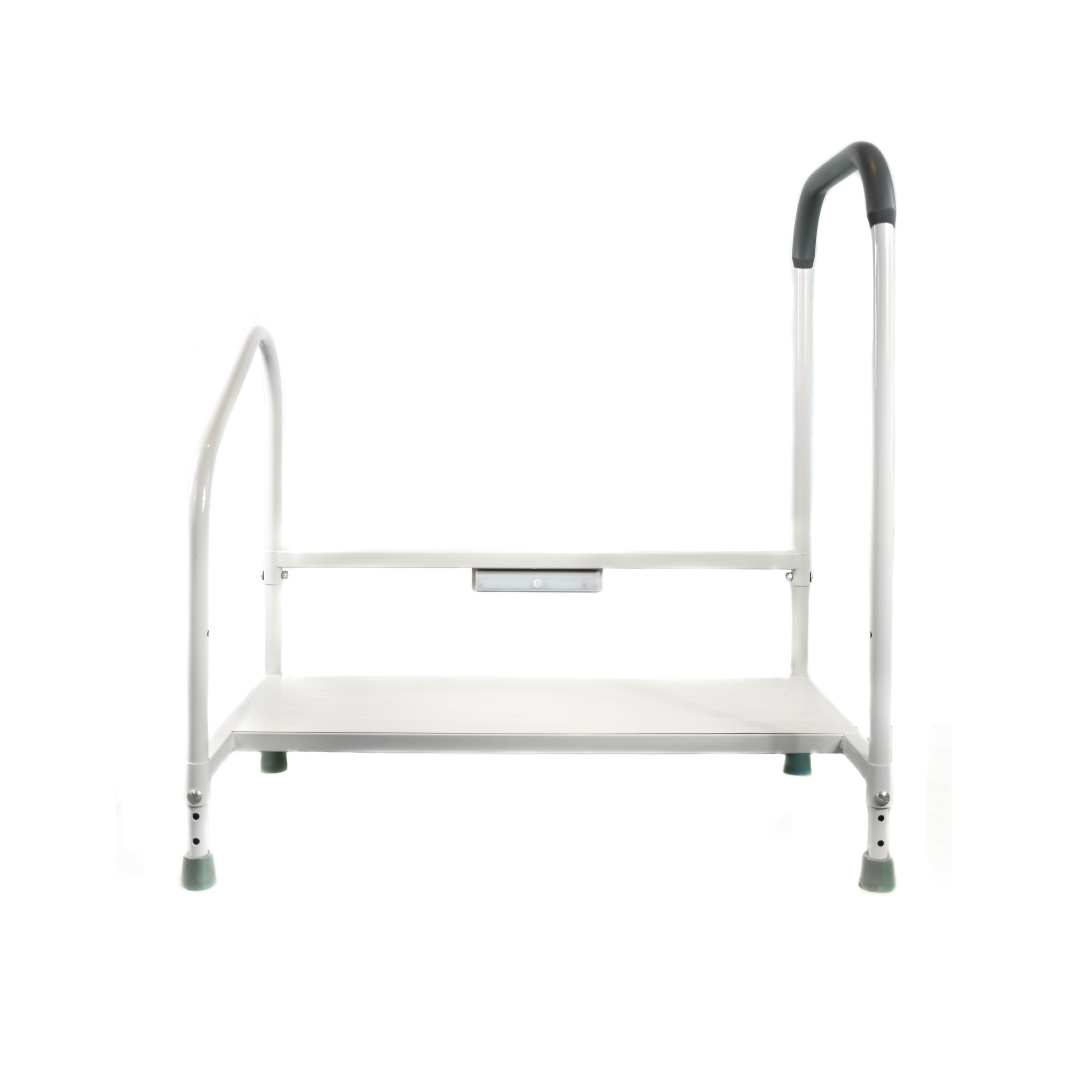


A safety rail bathroom setup is one of the most impactful home modifications for preventing falls and enhancing independence. These are not merely accessories; they are essential medical equipment designed to provide stable, reliable support for sitting, standing, and moving around the bathroom with greater confidence.
Why Bathroom Safety Rails Are a Crucial Medical Upgrade
The bathroom is a private, personal space. However, its combination of wet, slippery floors and hard surfaces makes it one of the most hazardous rooms in any home. For older adults, individuals recovering from surgery, or anyone with mobility or balance challenges, navigating the bathroom can become a source of daily anxiety and significant risk.
A properly installed safety rail fundamentally changes that reality. It's best understood not as simple hardware, but as a critical piece of durable medical equipment that acts as a steady hand. It provides a firm anchor precisely where it's needed most—whether that's getting up from the toilet or stepping carefully out of a slippery shower.
Preserving Independence and Ensuring Peace of Mind
Installing a safety rail bathroom solution is a powerful step toward maintaining personal autonomy. It empowers individuals to manage their own daily routines safely and privately, which is fundamental to preserving dignity. This also provides immense peace of mind for family and caregivers, who can rest easier knowing their loved one has a safer environment. This single upgrade dramatically reduces the risk of falls, a leading cause of serious injury among older adults. You can explore our complete guide on bathroom safety equipment for elderly users for a more comprehensive overview.
The growing recognition of these devices as essential medical tools is clear. The global market for bathroom and toilet assist devices, which includes safety rails, was valued at USD 4.9 billion in 2024. Projections show it nearly doubling to USD 9.7 billion by 2034. This growth reflects a significant societal shift in understanding how vital these tools are for creating safer, more accessible home environments. You can learn more about these market trends on Market.us.
A safety rail is more than just a product; it’s a commitment to independence. It provides stability where it counts, turning potential hazards into manageable daily tasks and fostering a sense of security at home.
At DME Superstore, we see ourselves as your partner in creating a safer, more independent life. Our goal is to provide the educational resources and high-quality products you need to make informed decisions for your home.
Finding the Right Safety Rail for Your Bathroom
Not all safety rails are interchangeable. Choosing the right one for your bathroom depends on your specific medical needs, physical abilities, and the room's layout. The process is similar to being fitted for a medical device; the rail that's perfect for a small powder room will not be the best solution for a large master bath with a separate tub and shower.
Making an informed choice begins with understanding the available options. Each type of rail is engineered to solve a specific functional challenge, and knowing their intended uses, benefits, and limitations is the first step toward a safer bathroom.
Comparing Your Bathroom Safety Rail Options
This table offers a direct comparison of the most common safety rail types to help you learn which one best addresses your specific needs.
| Rail Type | Best For | Installation | Pros | Cons |
|---|---|---|---|---|
| Wall-Mounted Grab Bar | Permanent, load-bearing stability in showers, by toilets, or along walls. | Requires professional installation into wall studs for safety. | Extremely sturdy; engineered to support full body weight; versatile placement. | Permanent; requires drilling and structural anchoring; not portable. |
| Toilet Safety Frame | Aiding the biomechanics of sitting and standing from the toilet. | Often tool-free; either freestanding or mounts directly to the toilet. | Provides targeted bilateral support; easy to install/remove; affordable. | Only supports toilet transfers; can be bulky in smaller bathrooms. |
| Clamp-On Tub Rail | Providing a secure handhold for entering and exiting the bathtub. | Clamps directly onto the tub wall, typically without tools. | Adds stability at a key transition point; no drilling required. | Only compatible with tubs having suitable side walls; not for shower use. |
| Floor-to-Ceiling Pole | Versatile, multi-level support, especially where wall mounting is not feasible. | Tension-mounted between the floor and ceiling; no screws needed. | Can be placed almost anywhere; offers a handhold at multiple heights. | Requires a solid, flat ceiling; can be more visually prominent. |
By understanding these distinctions, you can begin to identify which style aligns with the functional challenges you or a loved one face in the bathroom.
Wall-Mounted Grab Bars
For unwavering, permanent stability, nothing surpasses a professionally installed wall-mounted grab bar. These are the gold standard of bathroom safety for good reason. By anchoring them directly into the wall studs, you create a load-bearing fixture you can trust to support full body weight, day after day.
They are ideal for high-risk areas like the interior of a shower, next to the toilet, or along a key wall to serve as a safe pathway. Their permanence is their greatest strength—once installed correctly, they are always there when you need them.
Toilet Safety Frames
A toilet safety frame, sometimes called a toilet surround, is a freestanding or toilet-mounted frame with two armrests that make sitting down and standing up much safer and more biomechanically efficient. It's designed to solve one very specific, common challenge.
These are an excellent choice if the primary difficulty is with toilet transfers. Most are incredibly easy to install without tools. Their importance is growing, with the global market valued at around USD 600 million in 2022 and projected to reach USD 1.2 billion by 2033 as more households adapt for accessibility.
Clamp-On Tub Rails
Entering and exiting the bathtub is a high-risk activity for falls. A clamp-on tub rail addresses this by attaching directly to the side wall of the tub, providing a secure, high-grip handle right where it's most needed.
It’s an ingeniously simple device that adds a significant layer of safety for bathing, all without requiring any drilling or permanent modifications to your bathroom.
This simple decision tree can help you begin the thought process of whether a safety rail is the right medical solution for you.

The flowchart boils it down to a critical question: if you feel unsteady or need more stability for daily tasks, a safety rail is the clear answer.
Floor-to-Ceiling Poles
When versatility is paramount, a floor-to-ceiling pole (also known as a "security pole") is an outstanding solution. Using a tension-mount system, this pole can be installed almost anywhere in the bathroom, creating a sturdy vertical grab bar from floor to ceiling without a single screw.
It’s especially useful in bathrooms where wall mounting isn't possible, or when support is needed in an open area, such as the space between the toilet and the tub. You can also explore our guide to bathroom grab bars for more detailed ideas on placement.
Each type of safety rail is designed to solve a specific problem. The key is to match the product to your personal daily routine and the unique layout of your bathroom space.
What to Know Before You Buy Your Safety Rail
Once you have identified the need for a safety rail, it is crucial to look beyond aesthetics. The technical specifications are what distinguish a decorative bar from a piece of life-saving medical equipment. Understanding these details is what ensures the rail will perform safely when you need it most.
Consider the analogy of a prescription: the specific dosage and type of medicine are critical for effectiveness. The same logic applies here—the right specifications guarantee reliable support, every single time.
Decoding Weight Capacity and Why It Matters
The first and most critical specification to check is the weight capacity. This number indicates the maximum force the rail is engineered to support safely and is a non-negotiable safety feature. Always choose a rail with a capacity that comfortably exceeds the user's weight.
This is especially important to account for dynamic force—the sudden load applied if a person grabs the bar to prevent a fall. Most quality grab bars are rated for at least 250-300 pounds, but you must confirm this for the specific model you choose. A higher capacity is not just for bariatric users; it provides an essential margin of safety for everyone.
A safety rail’s weight capacity isn't just a suggestion—it's a promise of security. Always choose a model that can handle more than the user's weight to ensure it provides steadfast support during critical moments.
Materials and Finishes for a Secure Grip
The material and finish of a safety rail directly influence its durability and, most importantly, its grip performance—especially with wet or soapy hands.
Here’s a breakdown of common materials and their properties:
- Stainless Steel: This is the industry standard for its incredible durability and corrosion resistance, making it ideal for the humid bathroom environment. Look for finishes described as "brushed" or "peened," as this added texture enhances grip and reduces slipping.
- Coated Metal: Many rails have a powder-coated or plastic finish, which can offer a warmer touch and a less "clinical" look. These often incorporate subtle textures molded directly into the surface to ensure a secure hold.
- Textured Grips: Some of the best models feature dedicated rubberized or "knurled" (a diamond-shaped crosshatch pattern) sections. These are engineered for maximum friction and are an excellent choice for individuals with arthritis, neuropathy, or limited hand strength.
Following ADA Guidelines for Your Home
While the Americans with Disabilities Act (ADA) standards are legally mandated for public buildings, they provide an invaluable blueprint for home installations. These guidelines specify the optimal heights and positions for grab bars around toilets and in showers to provide the most effective and ergonomic support.
Adhering to ADA recommendations is the smartest way to ensure your safety rail bathroom is configured for maximum function and safety, removing guesswork from the installation process.
Assessing Your Walls and Installation Needs
Finally, the structural integrity of the wall is a critical part of the safety equation, especially for wall-mounted bars. Where and how you anchor the rail determines its strength.
- Drywall with Studs: This is the ideal scenario. For a grab bar to be truly secure, it must be anchored directly into the solid wood studs behind the drywall.
- Tile or Fiberglass: You can install a grab bar on these surfaces, but it requires specialized knowledge, drill bits, and anchoring systems to do so without cracking the surface or creating a weak point that could fail under load.
Because of these structural complexities, professional installation is the gold standard for wall-mounted grab bars. It is the only way to be 100% certain the rail will hold when it matters most. This focus on safe, reliable installation is why trusted brands like MOEN and Kohler dominate this space. The global demand for these safety devices, valued at USD 0.61 billion in 2024, is projected to grow to USD 1.07 billion by 2033, highlighting how critical this equipment has become. You can read more about these bathroom safety market trends on Business Research Insights.
Installing Your Rail for Maximum Safety and Support
 A safety rail's effectiveness is entirely dependent on its installation. You can purchase the strongest, most durable bar available, but if it is not placed correctly or anchored securely, it will fail to provide the necessary support in a critical moment.
Careful planning of where and how to install your safety rail bathroom equipment is the single most important step. This planning transforms a piece of hardware into a reliable medical tool that is exactly where your hand instinctively reaches, making safety feel natural and effortless.
Strategic Placement for Key Areas
The ideal location for your safety rail is determined by answering one question: where is support most needed? The most common high-risk zones are around the toilet, inside the shower, and along the main pathways of the bathroom.
-
Around the Toilet: This is often the most critical placement. A horizontal bar on the wall beside the toilet greatly assists with the biomechanics of sitting and standing. The optimal height is typically 33-36 inches from the floor, positioned for easy reach while seated. Adding a vertical bar in front of the toilet provides a second point of contact for pulling up to a standing position.
-
Inside the Shower: With wet, slippery surfaces, grab bars are an absolute necessity. A horizontal bar at roughly hip height offers stability for balance, while a vertical bar near the shower entrance provides a secure handhold for stepping in and out.
-
Along Bathroom Walls: For individuals needing support while walking from the door to the toilet or sink, a longer horizontal grab bar acts as a handrail, providing a continuous point of stability.
For a deeper dive into placement, our guide on how to install grab bars in your bathroom covers specific positioning in more detail.
Professional vs. DIY Installation
When it comes to wall-mounted grab bars, we cannot overstate the importance of this: professional installation is the only way to guarantee absolute safety. A grab bar must be anchored directly into solid wall studs. Any other method is dangerously inadequate.
Attempting to mount a bar into drywall or tile without hitting a stud creates a false sense of security. The fixture may feel solid initially, but it will fail under the sudden, dynamic force of a slip or fall.
While freestanding toilet frames and clamp-on tub rails are designed for easy, tool-free assembly, wall-mounted units require precision and expertise. The peace of mind from knowing a professional secured it correctly is invaluable.
For true safety, consider using professional bathroom installation services to ensure your rails are fitted correctly. An expert knows how to locate studs, use the right hardware for your specific wall type (tile, fiberglass, or drywall), and ensure the bar meets all safety standards. It’s an investment that protects your home and, far more importantly, your well-being.
How to Pay for Your Bathroom Safety Equipment
Figuring out how to pay for essential home safety upgrades shouldn't be a source of stress. We believe everyone deserves to feel secure in their own home, which means making a **safety rail bathroom** setup financially accessible.Fortunately, there are several options available. Many people are unaware they can use existing health-related funds to cover the cost, making these critical improvements surprisingly affordable.
Using HSA and FSA Funds
One of the most financially savvy ways to purchase your equipment is with a Health Savings Account (HSA) or a Flexible Spending Account (FSA). Bathroom safety rails are classified as qualified medical expenses, which means you can use these tax-advantaged accounts to pay for them.
This is an excellent financial strategy. Because you are using pre-tax dollars, you effectively receive an automatic discount on the purchase. This allows you to invest in your long-term health and safety while optimizing your financial resources.
Using your HSA or FSA funds for bathroom safety equipment is like getting an automatic discount. You're leveraging your own pre-tax dollars to make a vital investment in your long-term health and independence at home.
Flexible Financing Options
If you prefer to pay over time, financing is a practical solution. We've partnered with services like Affirm that allow you to break down the total cost into small, manageable monthly payments. This enables you to install the equipment immediately without the financial strain of a large one-time expense.
Financing removes the upfront cost barrier, making it easier to budget for necessary home safety modifications. To get a bigger picture of potential expenses, looking at a realistic bathroom renovation cost breakdown can give you valuable context for your financial planning. This way, you can build a safer, more comfortable space without delay.
Your Bathroom Safety Rail Buying Checklist

You have now learned about the types of rails, key safety features, and installation best practices. This final checklist is designed to help you confirm your choice before purchasing. Think of it as a final consultation to ensure you haven't missed a crucial detail.
Walking through these points will provide total peace of mind, confirming you’ve chosen the ideal safety rail bathroom solution. The goal is to find the right medical equipment for the specific user and space, not just to buy a product off the shelf.
The Final Confirmation Questions
Before adding an item to your cart, take a moment to review these critical questions. This simple process can be the difference between a perfect solution and a frustrating return.
-
Who is the primary user? Consider their specific mobility challenges. Do they need light balance support, or will they be putting their full weight on the bar to stand? Conditions like arthritis, poor grip strength, or neurological disorders will influence which type of rail and grip surface is most effective.
-
What are the physical characteristics of the bathroom? Use a measuring tape. Assess the space around the toilet or in the shower. Crucially, identify the wall material. Drywall requires a different installation approach than tile over concrete board. This detail often determines whether a wall-mounted or freestanding model is the more practical option.
-
Which rail type is the most logical solution? Based on the user's needs and your bathroom's layout, which type is the clear winner? A permanent wall-mounted grab bar, a versatile toilet safety frame, or a simple clamp-on tub rail? If you're still weighing the pros and cons, our deep dive on toilet safety frame options can help clarify your choice.
A successful outcome is all about matching the right product to the right person and space. This final check ensures you've connected the dots between your needs and the solution.
-
Does the weight capacity include a safety buffer? This is non-negotiable. Always select a rail with a weight capacity that is significantly higher than the user’s actual weight. This buffer is critical for safety during dynamic movements.
-
Will I need a professional installer? Be realistic about your skills. If you have chosen a wall-mounted grab bar, it is almost always best to hire a professional. Proper anchoring isn't a recommendation; it is essential for the rail's safety and performance.
Frequently Asked Questions About Bathroom Safety
As you finalize your decision, a few practical questions often arise. Having clear, expert answers is the last step toward feeling confident in your safety rail bathroom setup. Let's address the most common inquiries.
How Do I Clean and Maintain My Bathroom Safety Rail?
Maintaining your safety rail is simple but essential for hygiene and long-term reliability. For nearly all rail types—stainless steel, coated metal, or plastic—regular cleaning with a soft cloth and a mild, non-abrasive household cleaner is sufficient.
Avoid using abrasive cleaners or scouring pads. These can scratch the finish and, more importantly, wear down the textured gripping surfaces designed to prevent slipping.
Approximately once a month, perform a quick safety inspection. For wall-mounted bars or toilet frames, check that all screws and connection points are tight. For freestanding models, inspect the rubber feet for wear and give the frame a gentle push to confirm it remains stable and does not wobble.
Can I Install a Wall-Mounted Grab Bar Myself?
While it may appear to be a simple DIY project, we strongly advise professional installation for wall-mounted grab bars. The reason is structural: a grab bar's safety is entirely dependent on its anchor points. It must be secured directly into solid wood studs within the wall.
A professional installer has the specialized tools to locate wall studs with 100% accuracy and uses the correct hardware to ensure the bar can withstand significant dynamic force, such as that generated during a slip. A bar improperly screwed into drywall alone can be ripped from the wall when you need it most, potentially causing severe injury.
Are Suction Cup Grab Bars a Safe Alternative?
This is a critical safety question, and our expert answer is an emphatic no. Suction cup grab bars are not a safe alternative for bearing body weight. They are designed only for light steadying, like balancing a hand, and can detach from the wall without warning.
Their failure rate is particularly high on surfaces that are not perfectly smooth, clean, and non-porous—a common issue with tiled or textured shower walls. For the dependable support required when sitting, standing, or recovering from a loss of balance, you need equipment you can trust implicitly.
A securely installed grab bar or a stable, freestanding safety frame provides the reliable support that suction cups simply cannot guarantee. This is precisely why we only offer solutions that are professionally rated and proven to be secure.
Ready to create a safer bathroom? At DME Superstore, our team of experts is available 24/7 to help you choose the right safety rail for your specific needs. Explore our full collection of bathroom safety solutions and enjoy free shipping on your order today. Find your perfect fit at https://dmesuperstore.com.

