

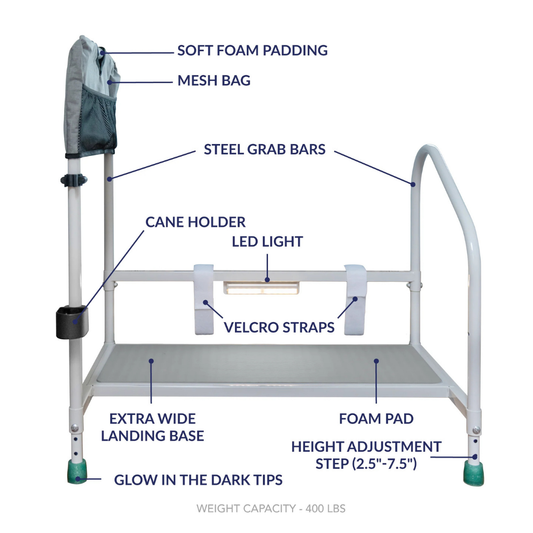
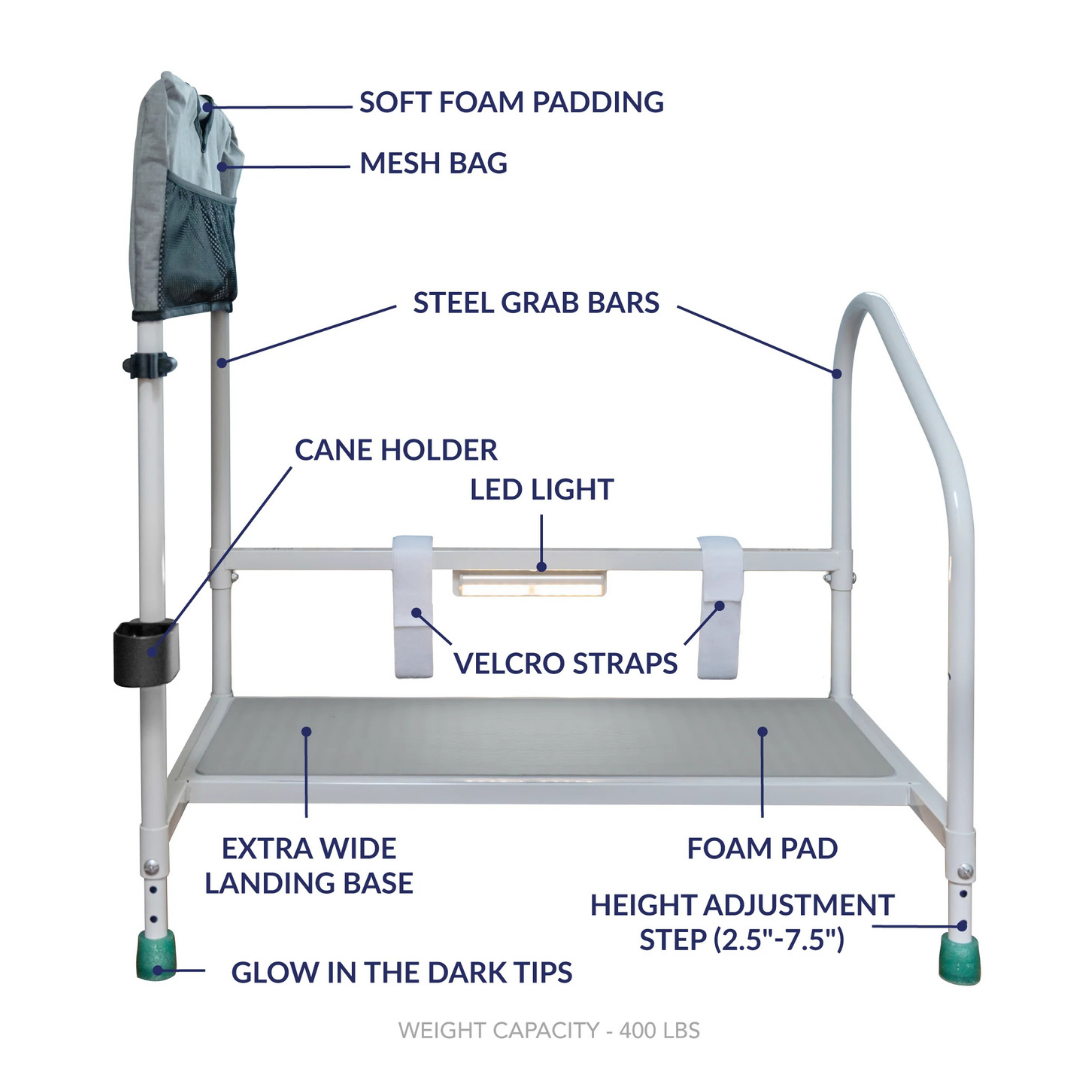
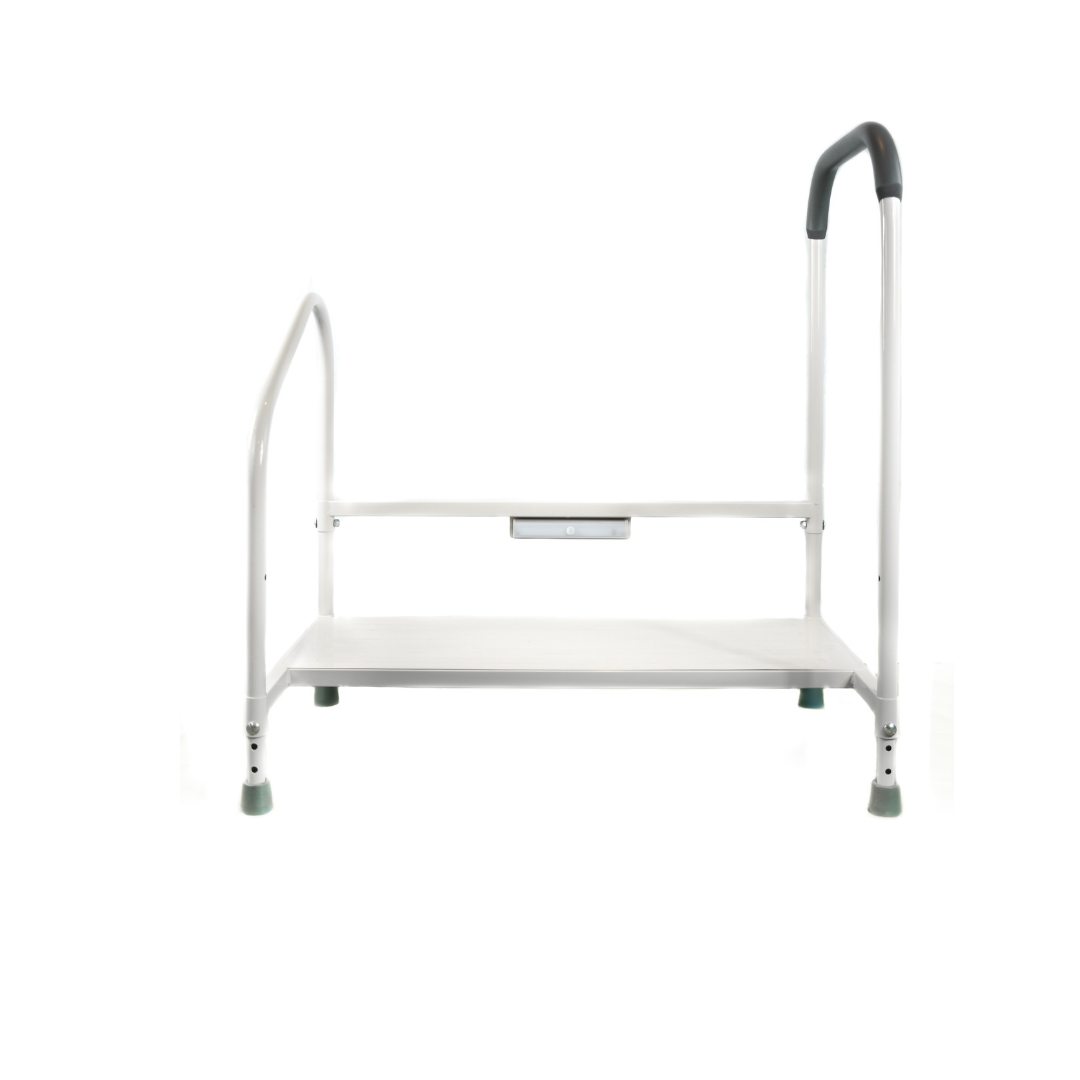
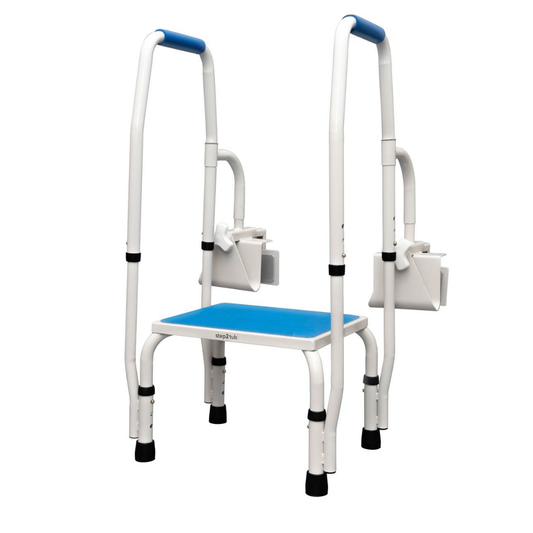
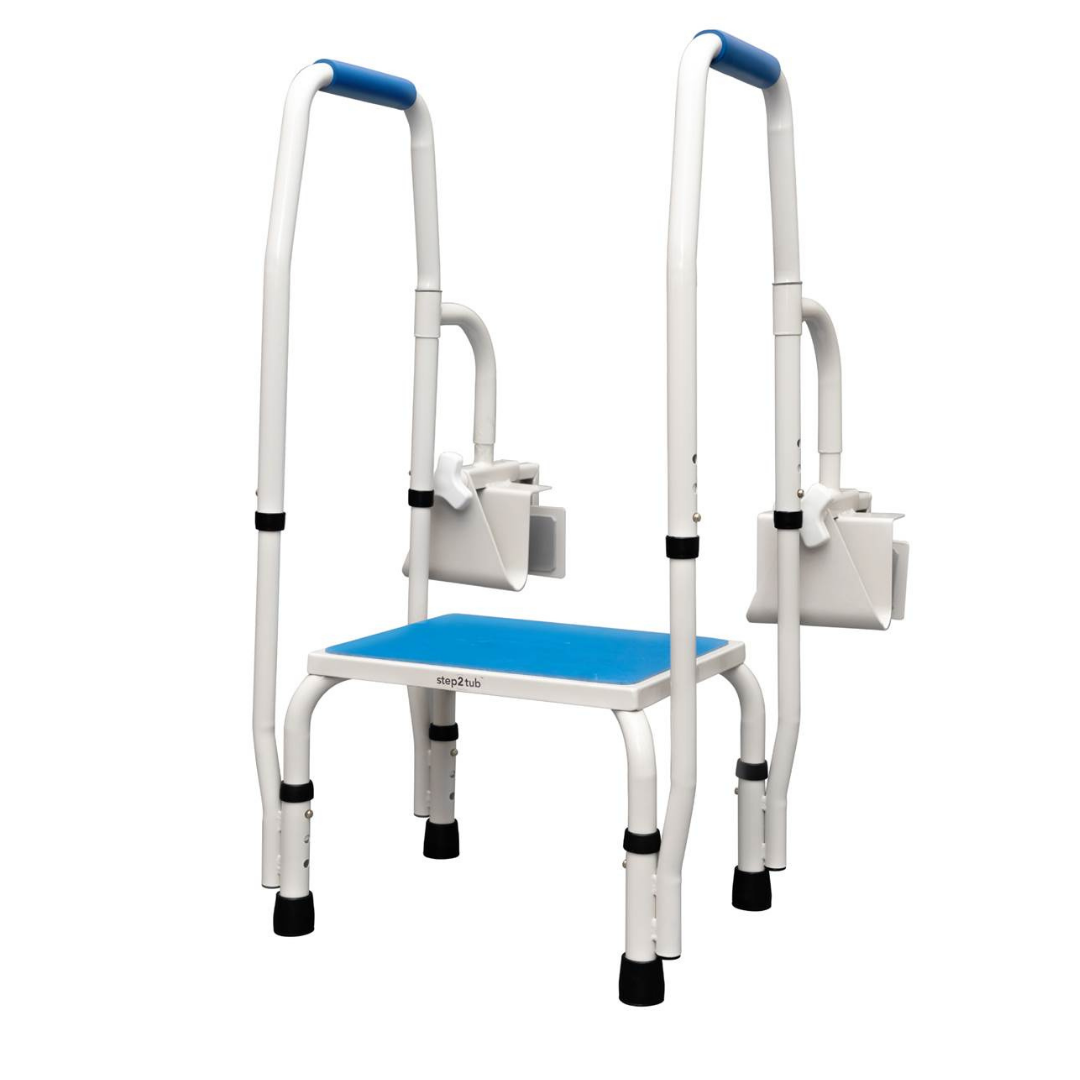
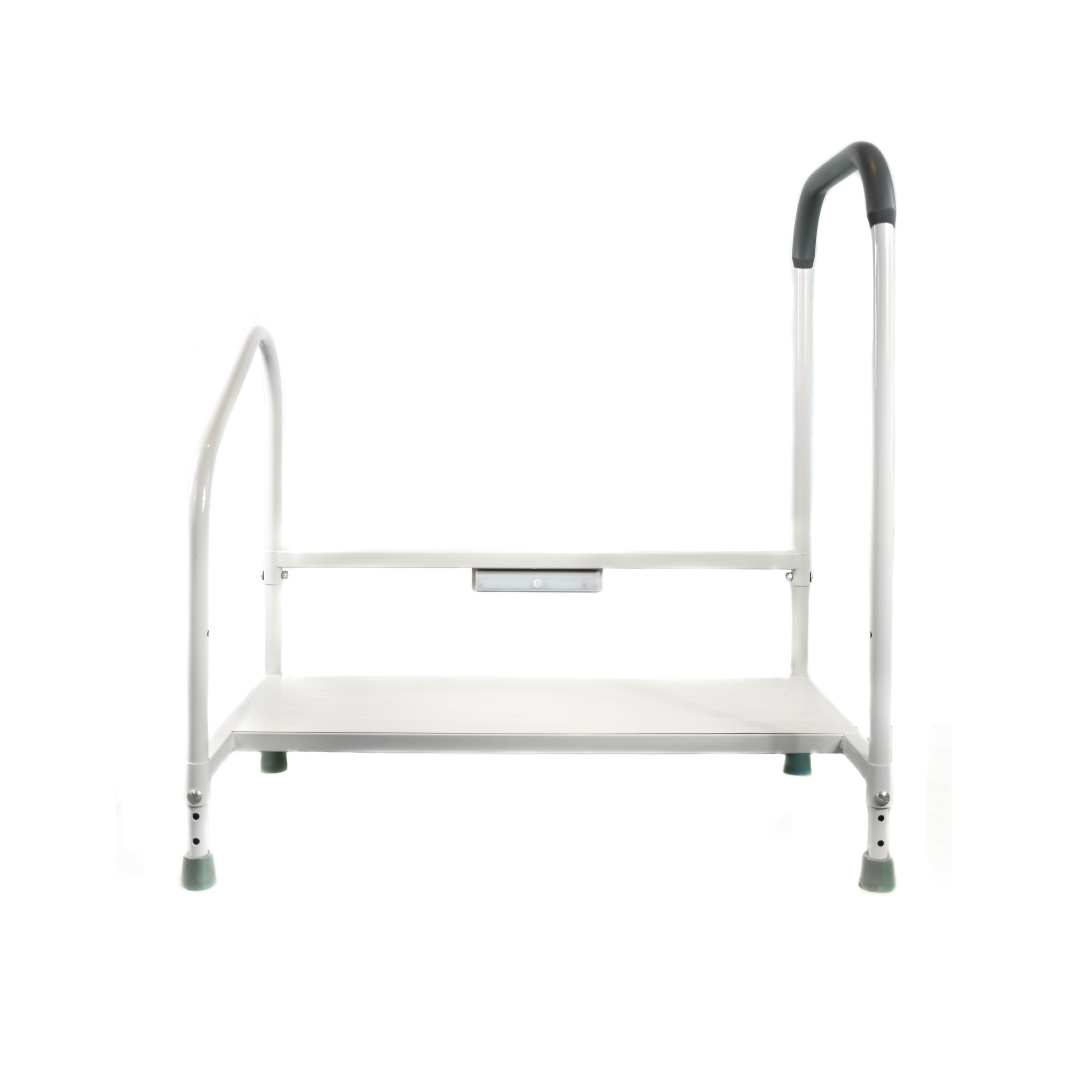


For caregivers and older adults, even simple daily routines can become a source of worry. The bathroom, in particular, often tops the list of concerns. It’s a space where independence is deeply personal, but where the risk of a fall is statistically high. A simple, effective solution like a toilet support can completely change that dynamic, helping to transform a high-risk area into a space of safety and confidence.
These supports are not about frailty; they are proactive tools for maintaining a safe and independent lifestyle. They function by either adding height to the toilet seat or providing sturdy armrests to lean on, making the fundamental actions of sitting down and standing back up dramatically easier and safer.
Why Toilet Supports Are an Essential Part of Senior Safety
The anxiety a caregiver feels each time a loved one uses the bathroom is a common, shared experience. While it’s one of the most-used rooms in the house, it’s also statistically one of the most dangerous for older adults. Understanding the role a toilet support plays in mitigating these risks can turn a source of stress into a safe, accessible space.

The Functional Impact on Daily Independence
Consider the case of a fiercely independent individual who, after a minor slip, becomes hesitant to use the bathroom alone. A standard-height toilet, which may have been fine for years, can suddenly present a significant challenge, making the act of standing up a struggle. This common scenario often leaves caregivers on high alert.
The installation of a simple toilet safety frame can have an immediate and profound impact. The user can confidently lower themselves and push up on the sturdy armrests without a second thought. For the caregiver, the constant worry subsides. For the user, a crucial piece of daily independence is restored. This is the practical, real-world benefit of a well-chosen toilet support.
The Core of Aging in Place
This small adjustment is a perfect illustration of a much larger concept: aging in place. This philosophy is centered on empowering individuals to live in their own homes safely, comfortably, and with dignity, regardless of age or physical ability. Toilet supports are a key piece of durable medical equipment (DME) that makes this possible by addressing one of the most fundamental activities of daily living (ADLs).
By making the bathroom safer, we enable older adults to maintain their routines, preserve their dignity, and continue living in the familiar comfort of their own homes. This is a cornerstone of successful aging.
The data underscores this growing need. The global market for these essential aids is projected to grow at a compound annual growth rate of 5.0% between 2025 and 2034. With statistics showing that one in four seniors falls annually—and that over 80% of those falls happen in the bathroom—it's clear why these devices are becoming a standard part of home safety planning.
Ensuring Comprehensive Bathroom Safety
A toilet support frame is a fantastic first step, but a truly safe bathroom requires a holistic approach. It's also important to be aware of other potential dangerous toilet conditions, such as a hairline crack in the porcelain that could fail under pressure.
When you address both mobility challenges with a support and environmental hazards in the room, you create a genuinely secure space. This foundation of safety is what truly provides peace of mind. For more strategies, you can explore our complete educational guide on how to prevent elderly falls.
Breaking Down the Main Types of Toilet Supports
Navigating the world of toilet supports can feel overwhelming at first, but it becomes much simpler when you understand the function of each type. Each device is engineered to solve a specific problem, and the key is matching the right product to the user's specific needs and physical capabilities.
Think of it as selecting the right tool for a job. Just as you wouldn't use a hammer to turn a screw, the most effective toilet support is the one designed for the exact mobility challenge you aim to solve. Let's examine the most common options and their underlying mechanics.
Comparing Toilet Support Options at a Glance
This quick-glance table can help you identify the most promising solution for a given situation. Use it as a starting point to guide your research and decision-making process.
| Support Type | Best For | Installation | Key Benefit |
|---|---|---|---|
| Toilet Safety Frame | Users with good leg strength who need help pushing up and sitting down. | Simple, often tool-free. | Provides leverage and arm support. |
| Raised Toilet Seat | Users with significant hip/knee pain or post-surgery recovery. | Locks onto the toilet bowl, usually tool-free. | Reduces the distance you need to bend. |
| Wall-Mounted Grab Bar | Anyone needing a permanent, rock-solid support point. | Professional installation into wall studs required. | Unmatched stability and security. |
| 3-in-1 Commode | Evolving needs, bedside use, and maximum versatility. | No installation; placed over toilet or bedside. | Serves as a frame, riser, and standalone toilet. |
Now that you have a basic overview, let's explore the functional details of each of these options.
Toilet Safety Frames: Your Own Sturdy Armrests
A toilet safety frame is one of the most popular and straightforward solutions. Functionally, it adds a set of sturdy, reliable armrests directly to the toilet area. These frames either attach to the toilet itself or stand independently around it, giving the user a solid handhold for getting up and down.
Their primary mechanical advantage is providing leverage. For seniors who have adequate leg strength but struggle with the initial push to stand up or need more stability while lowering, these frames are ideal. By gripping the arms, users can engage their upper body strength to assist their legs, taking a significant amount of strain off their knees and hips.
Most quality frames will have a few key features:
- Adjustable Height: Allows the armrests to be set at the optimal level for the user, enabling them to push up effectively without straining their shoulders.
- Padded Handgrips: Ensures a secure, comfortable grip, which is particularly beneficial for individuals with arthritis or weakness in their hands.
- Tool-Free Assembly: Many models are designed to be assembled in minutes without any special tools, making setup simple and stress-free.
Raised Toilet Seats: Giving the Toilet a Lift
A raised toilet seat, sometimes called a toilet seat riser, tackles the problem from a biomechanical angle. Instead of adding arms, it increases the height of the toilet seat itself by 3 to 6 inches. This reduces the range of motion required to sit down, effectively making the toilet "meet the user halfway."
This modification is a game-changer for anyone with significant hip or knee pain, especially those recovering from joint replacement surgery or managing severe arthritis. By raising the seat, you dramatically reduce the degree of flexion in the joints, which makes sitting and standing far less painful.
A raised toilet seat directly addresses the physical challenge of bending. It decreases the distance a person has to lower themselves, which is often the most difficult and unstable part of using the toilet.
These seats come in several variations:
- Basic Risers: Simple, molded plastic seats designed to lock firmly onto the toilet bowl.
- Risers with Arms: A hybrid model that combines the height of a riser with the stability of a safety frame, offering maximum support.
- Locking Mechanisms: Always look for a seat with a secure locking system. This is a critical safety feature that prevents the riser from shifting during use.
Wall-Mounted Grab Bars: Permanent and Secure
For a more permanent, integrated solution, wall-mounted grab bars are the gold standard. When installed correctly into the studs of a wall, these bars offer uncompromising stability that becomes a permanent fixture of the home.
A strategically placed grab bar next to the toilet gives a user a fixed point to pull themselves up or to steady themselves while turning. Unlike frames or risers that attach to the toilet, grab bars are part of the home's structure, offering a superior level of security. Their only prerequisite is proper installation, which usually means hiring a professional to ensure they are anchored safely.
Commodes: Versatile and Multifunctional
Finally, commodes offer the most versatility. While a standard commode is a portable toilet, many modern designs are brilliant multi-taskers. These are often called "3-in-1" commodes because they can be used in three distinct ways:
- As a standalone bedside toilet for nighttime needs.
- As a toilet safety frame placed directly over an existing toilet.
- As a raised toilet seat (when the collection bucket is removed).
This adaptability makes a 3-in-1 commode an excellent investment, especially if a senior's needs may change over time. If you want to learn more, be sure to check out our complete guide on choosing the best commodes for seniors. Their ability to adapt ensures you have a solution that can evolve with your loved one.
How to Choose the Right Toilet Support
Choosing the right toilet support is not about finding a one-size-fits-all solution. It is about a careful assessment to match a specific product to an individual's unique needs and the physical environment of their bathroom. Getting this right is the difference between a purchase that restores independence and one that creates new frustrations.
The process can be broken down into three practical steps: assessing the user's abilities, measuring the bathroom space, and confirming the weight capacity.
Assess the User’s Mobility and Strength
First, conduct an honest assessment of the user’s physical abilities. This evaluation should focus on specific strengths and challenges rather than just age. Their ability to bend, balance, and use their arms will point directly to the most appropriate type of support.
Ask these key questions:
- Do they have good upper body strength? If pushing up from a regular chair using its arms is manageable, a toilet safety frame will likely be a perfect fit, providing necessary leverage.
- Is bending at the knees or hips difficult or painful? For someone with severe arthritis or recovering from hip surgery, a raised toilet seat is often the best answer. It shortens the required range of motion, which directly reduces strain on the joints.
- Is balance a major concern? If they are unsteady on their feet, prioritize stability. A combination product like a raised seat with built-in arms or a sturdy 3-in-1 commode offers both height and a secure frame to hold onto.
For many people, the choice comes down to a few key factors. This flowchart helps visualize that decision.

As the chart illustrates, if the primary difficulty is bending, a raised seat is the logical starting point. If the main challenge is generating the force to stand up, a safety frame provides the necessary leverage.
Measure Your Toilet and Bathroom Space
Next, it’s time to take precise measurements. A support that doesn't fit the bathroom is an unusable product. You need to measure two things: the toilet itself and the space around it.
Start with the toilet bowl. Toilets are not universally sized; they come in two main shapes: round and elongated. Many raised seats and safety frames are designed for one shape or the other. To determine which you have, measure from the seat bolt holes at the back to the very front edge of the bowl. Round bowls are typically about 16.5 inches, while elongated bowls measure closer to 18.5 inches.
Proper toilet height is a critical but often overlooked factor in bathroom safety. The ideal seat height allows a person's feet to rest flat on the floor with their knees at a natural 90-degree angle.
You can learn more about achieving the perfect height in our guide on the ideal toilet height for elderly users. This will help you choose a riser that adds enough lift, but not too much.
Finally, assess the surrounding space. If you're considering a freestanding safety frame, you must ensure there is enough clearance on both sides for its legs to stand securely. A compact bathroom may not accommodate a wide frame, making a model that attaches directly to the toilet a better choice. If there are only a few inches between the toilet and a vanity, a bulky freestanding frame is not a viable option.
Determine the Necessary Weight Capacity
The final check is one of the most critical for safety: weight capacity. Every toilet support, from a simple riser to a heavy-duty commode, has a maximum weight limit specified by the manufacturer. This is not a suggestion—it is a crucial safety parameter.
Most standard toilet supports are rated for a weight capacity of 250 to 300 pounds, which is sufficient for many users.
However, it is absolutely essential to select a bariatric model if the user’s weight is near or over this limit. Bariatric supports are constructed with reinforced materials and wider designs for superior stability. Using a standard product for someone who requires a bariatric one can lead to equipment failure and serious injury. Always check the product specifications and choose a model with a capacity that safely exceeds the user's weight for total peace of mind.
Correct Installation and Everyday Safety Practices
Selecting the right toilet support is a huge step, but the work is not complete until it is properly installed. A poorly installed or wobbly support is far more dangerous than no support at all. Let’s review the best practices for ensuring your new equipment is rock-solid and ready for daily use.
Assembling Frames and Raised Seats
Many toilet safety frames and raised seats are designed for simple, tool-free assembly. However, "tool-free" should never mean "attention-free."
When assembling a frame, double-check that every push-pin clicks securely into place. Adjust the legs until the frame is perfectly level and the armrests are at a comfortable height. If you're installing a raised seat that locks onto the bowl, ensure the clamping mechanism is fully engaged and tightened according to the manufacturer's instructions.
Before every single use, give it a "wiggle test." A quick push and pull from a few different angles will confirm if it's solid or has started to loosen. This two-second habit is one of the most powerful safety checks you can perform.
This simple check is more important than you might think. Falls lead to over 3 million emergency room visits for older adults in the U.S. each year, and the bathroom is a high-risk zone. Conditions like arthritis, which affects 54 million adults, make maneuvering much harder and increase that risk. It's this reality that has pushed the demand for sturdy aluminum and steel toilet frames, with home care settings now making up 51.9% of the market as of 2024. Families are increasingly seeking safer solutions for aging in place.
The Non-Negotiable Rule for Grab Bars
While frames and risers are often DIY-friendly, wall-mounted grab bars are a completely different category. Their incredible stability is entirely dependent on one factor: being anchored directly into the solid wood studs behind the drywall.
Screwing a grab bar into drywall alone is extremely dangerous. The material cannot support the sheer force of a person pulling on it and will rip out of the wall.
For this reason, professional installation is non-negotiable. A handyman or contractor has the tools and expertise to locate wall studs and anchor the bars correctly. It is a small investment that guarantees the highest possible level of safety. For a more detailed guide, see our post on how to install grab bars in the bathroom for maximum security.
Your Daily Safety Checklist
Safety doesn't stop once the installation is done—it's an ongoing practice. Integrate these simple checks into your daily or weekly routine to keep the toilet support safe and reliable.
- Check for Stability: Perform the "wiggle test." Are all legs, clamps, and contact points still firm?
- Adjust to the Correct Height: A person's needs can change. Make sure the seat height still allows their feet to rest flat on the floor with their knees bent at a comfortable angle.
- Keep the Floor Dry: A wet tile floor is a serious slipping hazard. Keep a non-slip bath mat nearby and wipe up any splashes immediately to ensure safe footing.
- Inspect for Wear and Tear: Look for any cracks in the plastic or rust on metal parts. Make sure padded handgrips aren't worn, torn, or loose.
- Ensure Clear Pathways: The area around the toilet should always be free of clutter like laundry baskets or shoes. A clear path is critical for safe access, especially at night.
Paying for Your Equipment: FSA, HSA, and Financing
Making a home safer should not create a financial strain. After you have identified the right toilet supports for elderly family members, the next step is determining how to pay for them. Fortunately, there are several straightforward, budget-friendly options, including tax-advantaged accounts and simple payment plans.
Many people are unaware that toilet supports and other bathroom safety aids qualify as medical expenses. This classification is a significant advantage, as it often allows you to use pre-tax dollars from a health savings account to make the purchase, making your budget go further.
Using Your FSA and HSA for Smart Savings
Your Flexible Spending Account (FSA) or Health Savings Account (HSA) functions as a dedicated wellness fund. Because you contribute to these accounts before taxes are deducted, every dollar spent from them has greater purchasing power. It’s a smart and simple way to pay for essential safety equipment.
Nearly all durable medical equipment (DME), including the safety aids we provide, is an eligible expense. This is the key that unlocks your ability to buy what you need without impacting your day-to-day budget. To see exactly what qualifies, take a look at our guide on what is considered durable medical equipment.
This isn't just a niche benefit; it's part of a major shift in healthcare. With 56 million seniors in North America, the market for bathroom aids grew to $4.9 billion last year and is projected to reach $9.7 billion by 2034. Given that the CDC reports 36 million falls among older adults each year, using FSA/HSA funds for supports that can cut fall risks by up to 50% is a powerful investment in long-term health.
Spreading Out Payments with Financing
Sometimes, even with tax savings, paying the full cost upfront may not fit the budget. That’s where financing options come in. We partner with services like Affirm to allow you to break the cost into smaller, manageable monthly payments.
This approach removes the immediate financial hurdle, letting you focus on what really matters: getting the right safety equipment installed in your home without delay.
Financing is also a useful tool if you're planning more extensive home modifications. If you're considering a full renovation, it's worth exploring a realistic budget for a bathroom remodel to plan effectively.
Whether you use an FSA, HSA, or a flexible payment plan, our goal is to ensure cost is never a barrier to safety and independence. These options empower you to make the best choice for your loved one’s well-being right when they need it most.
Common Questions About Toilet Supports
Even after exploring all the options, a few questions are bound to arise. This is completely normal. When making decisions about safety and independence, understanding the details is crucial for confidence.
We've gathered the most common questions we hear from customers and caregivers. Consider this a final resource to clear up any lingering doubts and help you choose with complete assurance.

Our goal is to provide the information you need to feel you've made the right choice for your home and the person you're caring for.
Will a Toilet Safety Frame Damage My Toilet?
This is a very common and understandable concern. The last thing anyone wants is for a piece of safety equipment to damage the fixture it's designed to protect.
Fortunately, quality toilet safety frames are engineered specifically to prevent this. They include protective features such as:
- Rubber-Tipped Legs: Freestanding models use non-slip rubber feet that protect your floor from scratches while holding the frame securely in place.
- Padded Clamps: For frames that attach directly to the toilet, you’ll find padded brackets or rubberized clamps that create a firm grip without chipping or scuffing the porcelain.
The real key to preventing damage is proper installation. While it can be tempting to overtighten bolts and clamps for extra security, this can cause problems. The objective is to make it snug and stable, not to apply excessive force. A mindful installation ensures both your support and your toilet remain in perfect condition.
What Is the Difference Between a Raised Seat and a Riser?
These terms are often used interchangeably, which can cause confusion. However, they can refer to two very different products. Knowing the distinction will help you select the best solution.
A raised toilet seat is an elevated seat that attaches directly to your toilet bowl, often replacing your existing seat and lid. It becomes a semi-permanent part of your toilet.
A toilet riser, on the other hand, is a base that is installed underneath your existing toilet fixture. It physically lifts the entire toilet higher off the floor. This is a much more involved installation that typically requires a plumber, but it creates a seamless, integrated look. For most people seeking a straightforward and effective solution, a raised toilet seat is the far more practical choice.
How Do I Keep a Toilet Support Clean?
Maintaining hygiene for bathroom equipment is absolutely critical, and thankfully, these products are designed for easy cleaning. Most are made from smooth, molded plastic and coated metals that resist staining and are simple to wipe down.
For routine cleaning, a soft cloth and a mild household cleaner or disinfectant spray are all you need. It is important to avoid abrasive powders or harsh chemical cleaners. These can easily scratch the plastic or wear down the protective finish on the metal over time.
Beyond daily cleaning, regular maintenance is a crucial safety habit. Get in the habit of periodically checking all knobs, legs, and attachment points. Make sure everything is still tight and secure. This simple check guarantees the support remains stable and reliable when it's needed most.
Are Bariatric Supports Really Necessary?
Yes, absolutely. This is non-negotiable. If the user's weight exceeds the capacity of a standard model—which is typically 250-300 pounds—using a bariatric-rated support is a fundamental safety requirement.
Bariatric toilet supports are not just "heavy-duty" versions of standard models; they are engineered differently from the ground up. They use reinforced steel, feature wider frames for greater stability, and have much stronger attachment points to handle the increased load.
Attempting to use a standard support for a bariatric individual is a recipe for disaster. It can lead to catastrophic equipment failure, resulting in a dangerous fall and serious injury. Always check the weight capacity and choose a model that provides a safe margin for complete peace of mind.
Ready to create a safer, more accessible bathroom? The DME Superstore offers a curated selection of high-quality toilet supports, raised seats, and safety frames designed to restore independence and confidence. Shop our full collection of bathroom safety equipment at dmesuperstore.com and find the perfect solution for your family today.

