



When a doctor recommends extra support for managing a health condition at home, they might prescribe what’s known as durable medical equipment, or DME. Understanding what this term means is the first step toward regaining independence and ensuring safety for yourself or a loved one.
So, what is durable medical equipment? Simply put, DME refers to reusable medical equipment prescribed by a doctor for use in the home. It’s designed to withstand repeated use and help manage a long-term medical condition. Unlike disposable supplies such as bandages or gloves, DME includes sturdy, long-lasting items that become a reliable part of a daily health routine, like a wheelchair, a hospital bed, or an oxygen concentrator.
What Qualifies as Durable Medical Equipment?
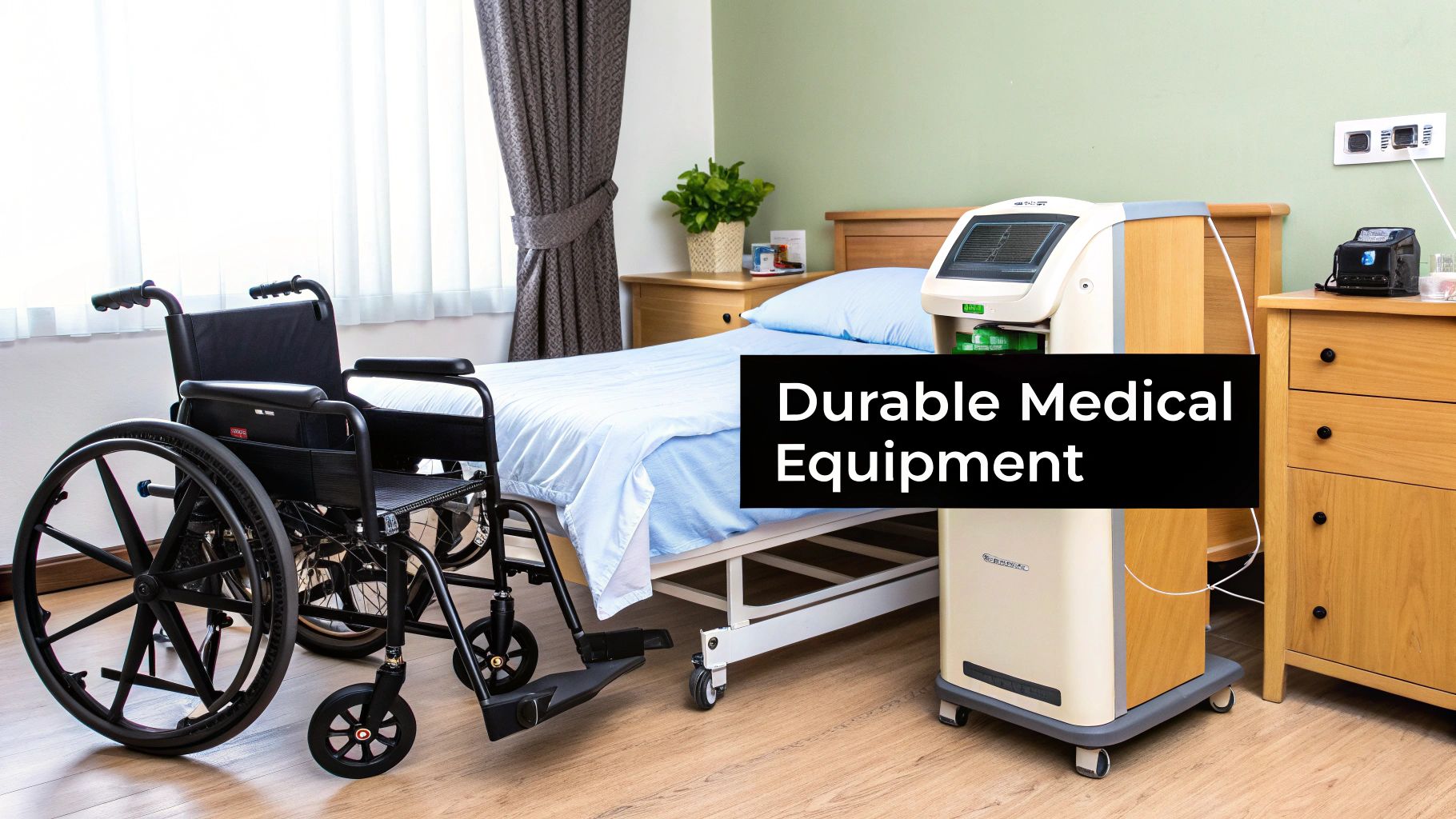
The term "durable medical equipment" describes tools that assist with daily activities that have become difficult due to an illness, injury, or aging. The primary purpose of DME is to enhance safety, improve mobility, and restore independence within the comfort of one's own home.
For example, a walker provides crucial stability for someone recovering from hip surgery, while a hospital bed allows a caregiver to provide support more easily. These items are not temporary aids but long-term solutions for managing health conditions at home. This focus on repeated, long-term use is what separates DME from single-use medical supplies.
The demand for these products is growing. The global DME market was valued at USD 232.33 billion in 2024 and is projected to reach USD 331.14 billion by 2033. This growth is largely driven by an aging global population; by 2030, one in six people worldwide will be over 60, increasing the need for mobility aids and other home medical equipment. For those interested in market trends, this report on the durable medical equipment market offers further insight.
The Three Pillars of DME
To be officially classified as "DME," particularly for insurance or Medicare coverage, an item must meet three fundamental criteria. These pillars ensure that the equipment serves its intended medical purpose.
The Three Pillars of Durable Medical Equipment
Here is a simple breakdown of the official criteria used to define DME.
| Criterion | What It Means | Simple Example |
|---|---|---|
| It Must Be Durable | The equipment is designed to be used repeatedly over a long period. | A wheelchair frame, which is reusable, versus a disposable pad. |
| It Must Be Medically Necessary | A physician must prescribe it to treat or manage a specific medical condition. | An oxygen concentrator for a respiratory illness, not for recreational use. |
| It Must Be Used in the Home | Its primary function is to provide support within a patient's residence. | A hospital bed for a bedroom, even if a wheelchair is also used outdoors. |
These guidelines are used by insurance providers, including Medicare, to determine coverage for DME, ensuring it provides essential, long-term support for individuals managing their health at home.
Many qualifying items are specifically designed to make certain areas of the home safer. For more information on this topic, our guide to bathroom safety equipment for the elderly provides practical advice.
What Kinds of DME Are Used at Home?
Now that we've defined what makes medical equipment "durable," let's explore the common types of items used in homes. Understanding these categories helps connect specific medical challenges to the practical tools that can make daily life easier, safer, and more independent.
The range of DME is extensive, but most equipment falls into a few key categories. Each category addresses a different set of daily challenges, from moving around the house to resting safely.
Mobility Aids: Restoring Freedom of Movement
Mobility aids are often the first things that come to mind when people think of DME. These devices are designed to help individuals move safely, especially when dealing with limited strength, balance issues, or difficulty walking long distances.
A key function of durable medical equipment is to assist with mobility. Items like wheelchairs, scooters, walkers, and ramps are built to last for years with proper maintenance. Globally, an estimated 15% of the population—over 1 billion people—lives with a disability, and many rely on these aids for daily activities. For someone recovering from surgery or managing a chronic condition, a quality rollator or power wheelchair can significantly reduce their risk of falling.
Common mobility aids include:
- Power Wheelchairs and Scooters: For those who cannot self-propel a manual wheelchair or need assistance covering longer distances, these devices offer critical independence.
- Walkers and Rollators: These provide a stable base of support to improve balance while walking. Many rollators include a built-in seat for resting.
- Ramps: For homes with stairs or raised thresholds, a ramp allows safe access for wheelchair and scooter users.
Home Comfort and Safety Equipment
This category of equipment is focused on making the home environment safer and more accommodating. While these items often resemble standard furniture, they are equipped with features designed to support health and well-being.
A well-equipped home is fundamental to effective care. Equipment like hospital beds and lift chairs not only adds comfort but also actively helps prevent complications while reducing physical strain on both the user and their caregivers.
A hospital bed, for instance, has an adjustable head and foot, which can improve breathing or allow a person to eat comfortably. Specialized surfaces, such as low-air-loss mattresses, help redistribute body weight, which is vital for preventing painful pressure sores that can develop from prolonged bed rest.
Similarly, a lift chair looks like a standard recliner but contains a motor that gently tilts the chair forward to assist with standing. This feature helps conserve energy and dramatically reduces the risk of a fall. In addition to specific devices, broader strategies like home modifications for seniors can further enhance home safety.
Bathroom Safety Items
The bathroom can be one of the most hazardous areas in a home, particularly for those with mobility challenges. DME for the bathroom is designed to prevent slips and falls by providing stability where it's needed most.
- Shower Chairs and Benches: Sitting while bathing is a simple and effective way to prevent slipping on wet surfaces.
- Grab Bars: Installed near the toilet or in the shower, these sturdy bars provide a reliable handhold for support.
- Raised Toilet Seats: By adding height to the toilet, these devices reduce the strain on knees and hips when sitting and standing.
Respiratory Support Devices
For individuals with breathing conditions like COPD, respiratory DME can be a lifeline. These devices ensure the body receives a steady supply of oxygen.
The most common piece of respiratory equipment is the oxygen concentrator. Unlike traditional oxygen tanks that require refilling, a modern concentrator is a machine that plugs into a wall outlet. It draws in room air, filters out nitrogen, and delivers concentrated oxygen through a nasal cannula. This provides a continuous and reliable oxygen source, making it a cornerstone of at-home respiratory care. To learn more about how these devices work, see our guide on how to get started with medical oxygen.
Navigating Medicare and Insurance for DME Coverage
Understanding what qualifies as durable medical equipment is the first step; the next is figuring out how to pay for it. For many, this process involves Medicare Part B, which provides coverage for most types of DME.
The process can seem complex, but it is centered on one core principle: medical necessity. This is a strict requirement. A physician must formally determine that the equipment is essential for treating an illness, injury, or medical condition. Without this documentation, obtaining coverage is nearly impossible.
The Foundation of Coverage: Medical Necessity
Proving medical necessity begins with a written order or prescription from your doctor. This document is the key to unlocking coverage. It must be detailed, clearly stating your diagnosis, explaining why the specific equipment is critical for your health, and outlining how it will be used in your home.
For example, a prescription for a power wheelchair must specify the medical reason—such as severe arthritis or a neurological condition—that makes it impossible for you to move around your home using a walker or manual wheelchair. This level of detail is what Medicare requires for approval.
The rule of thumb for medical necessity is that the equipment must be the most appropriate and least expensive option that effectively meets your medical needs. The goal is to provide necessary support, not to upgrade to a premium model for convenience.
Finding a Medicare-Approved Supplier
Once you have a prescription, the next step is crucial. You must obtain your durable medical equipment from a supplier enrolled in the Medicare program. If you choose a non-enrolled company, Medicare will not pay the claim, and you could be responsible for the full cost.
It is also important to ask potential suppliers if they "accept assignment." This means they agree to accept the Medicare-approved amount as full payment. If they do, you will only be responsible for your deductible and any remaining coinsurance, which protects you from unexpected out-of-pocket expenses.
The flowchart below illustrates the decision-making process for selecting DME based on different home-based needs.
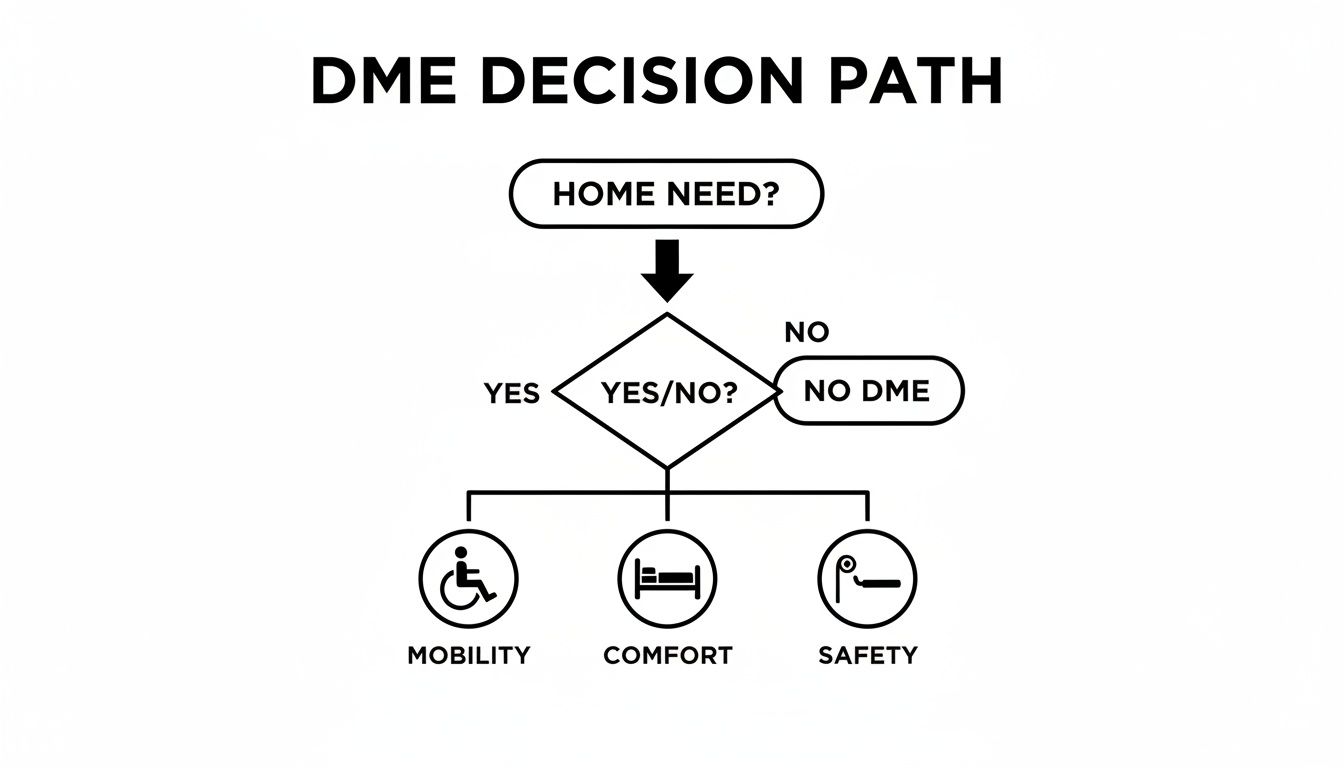
This decision tree shows how DME is organized by need—such as mobility, comfort, or safety—to help guide you toward the appropriate solution for your home.
Private Insurance and Other Medicare Options
If you have private insurance or a different type of Medicare plan, the process is similar. Most private insurers base their DME coverage policies on Medicare's guidelines. The principles of medical necessity and using in-network suppliers generally apply. However, specific requirements and coverage amounts can vary, so it is always best to review your plan details.
For many individuals, a key decision is choosing between Medicare Advantage plans vs Supplemental plans, as they cover DME costs differently. Advantage Plans (Part C) often have their own supplier networks and may require prior authorization for certain items.
To help you navigate the process, we have created a simple checklist outlining the core requirements for Medicare Part B coverage.
Medicare DME Coverage Checklist
| Requirement | Why It's Important | Action Step |
|---|---|---|
| Doctor's Prescription | Establishes medical necessity—the foundation of your claim. | Obtain a detailed, written order from your doctor explaining your diagnosis and the need for specific DME. |
| Medicare Part B | This is the part of Original Medicare that covers DME. | Confirm you are enrolled and active in Medicare Part B. |
| Medicare-Enrolled Supplier | Medicare will only pay claims from approved suppliers. | Use Medicare's official supplier directory or ask the company if they are enrolled. |
| Supplier "Accepts Assignment" | This protects you from being overcharged and limits your out-of-pocket costs. | Before ordering, confirm with the supplier that they accept assignment for your specific item. |
| Home Use | The equipment must be intended for use within your home. | Ensure your doctor's order specifies that the equipment is for home use to manage your condition. |
Following these steps can help streamline the approval process and prevent unexpected financial burdens.
Regardless of your insurance provider, the path to obtaining coverage follows a clear sequence:
- Consult Your Doctor: Begin with a thorough evaluation to receive a diagnosis and a detailed prescription for the necessary DME.
- Verify Your Coverage: Contact your insurance provider (Medicare or private) to confirm the specific requirements of your plan.
- Choose an Approved Supplier: Select a supplier that is in-network or accepts Medicare assignment to avoid surprise costs.
- Submit All Documentation: Work with your doctor and supplier to ensure all necessary paperwork is submitted correctly and on time.
For certain types of equipment, such as highly customized wheelchairs, the approval criteria can be even more specific. To learn more, read our guide on how to choose a wheelchair that meets both your medical needs and coverage requirements.
Using Your FSA and HSA to Purchase Medical Equipment
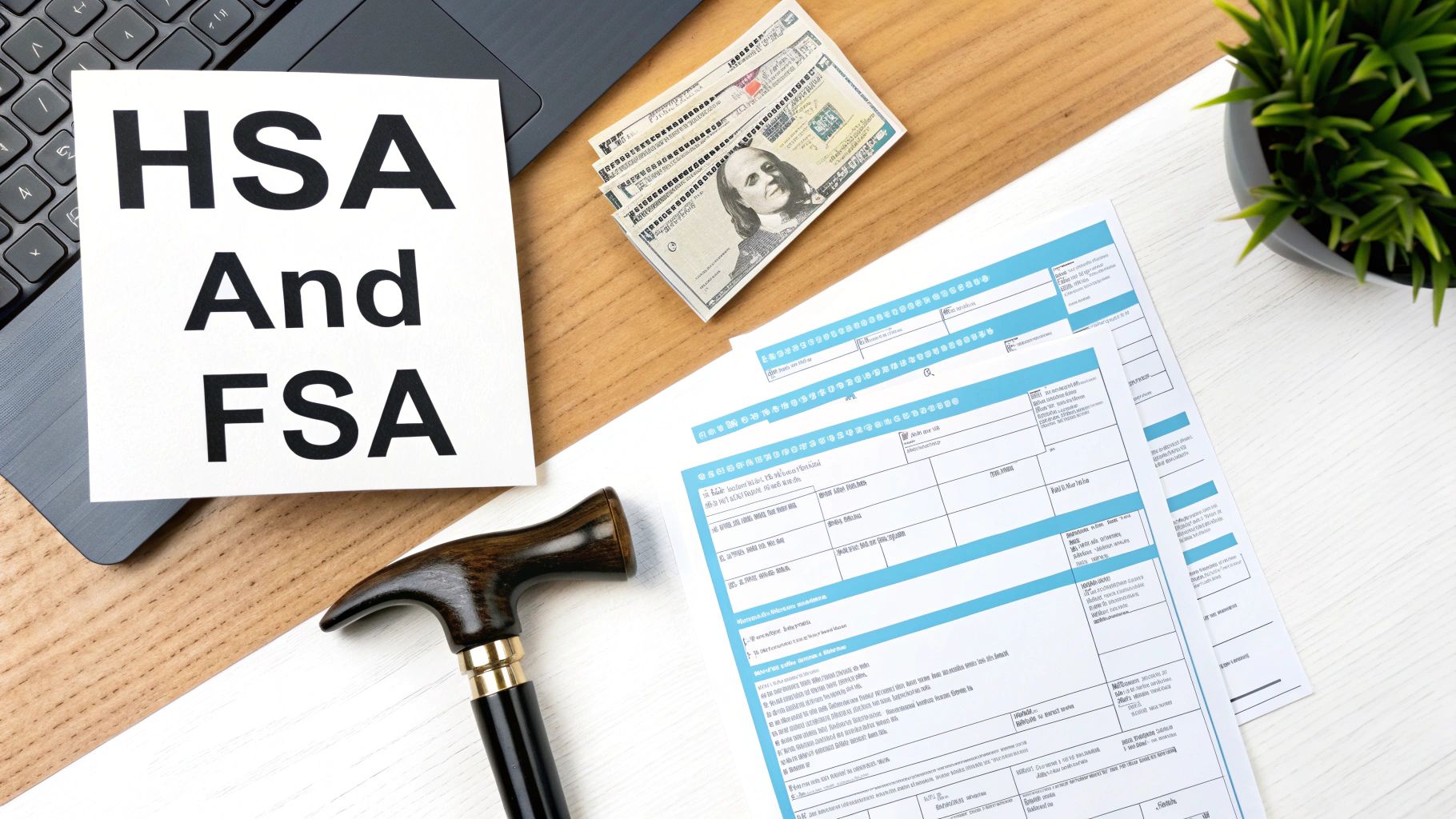
While Medicare and private insurance are primary sources for DME coverage, many people can also use tax-advantaged accounts like Flexible Spending Accounts (FSAs) and Health Savings Accounts (HSAs). These accounts allow you to set aside pre-tax money for qualified medical expenses, which includes durable medical equipment.
Using pre-tax dollars provides an immediate discount on your purchases. This can be especially helpful for covering deductibles, coinsurance, or the full cost of items not covered by your insurance plan.
These accounts are excellent for bridging coverage gaps. For instance, if your insurance covers a basic walker but your physical therapist recommends a more stable rollator, you can use your HSA or FSA funds to pay for the difference. This financial flexibility has made these accounts a popular option for managing healthcare costs.
Key Differences Between HSA and FSA
While both accounts help save on medical expenses, they operate under different rules. Understanding these distinctions is key to maximizing your funds.
An HSA is a personal savings account for healthcare that you own and can keep indefinitely. An FSA is a "use-it-or-lose-it" account offered through an employer. Both can be used for what is considered durable medical equipment.
Health Savings Account (HSA)
An HSA must be paired with a high-deductible health plan (HDHP). The funds in an HSA are yours to keep, even if you change jobs or retire. The money rolls over year after year and can be invested to grow over time.
Flexible Spending Account (FSA)
An FSA is an employer-sponsored account where you contribute a pre-determined amount at the beginning of the plan year. The primary feature of an FSA is the "use-it-or-lose-it" rule—funds must typically be spent by the end of the year, or the remaining balance is forfeited.
Practical Scenarios for Using Your Funds
These accounts offer significant value in real-world situations. Policies promoting tax-advantaged savings have had a major impact; today, 40% of U.S. households have accounts like HSAs. This trend helps families view DME as an essential tool for assisted living, with home-based care becoming more common than hospital care. This shift can lead to cost savings of up to 30% compared to institutional care.
Here are a few examples of how you can use these funds:
- Covering Out-of-Pocket Costs: If your insurance covers 80% of a new power wheelchair, you can use your HSA card to pay the remaining 20% coinsurance with pre-tax dollars.
- Purchasing Non-Covered Items: If you want a shower chair for added safety but your insurance considers it a convenience item, you can purchase one directly from DME Superstore using your FSA or HSA funds.
- Using Leftover FSA Funds: As the end of the year approaches, you can use remaining FSA funds to purchase bathroom safety upgrades like grab bars or a raised toilet seat before the money expires.
How to Choose the Right DME Supplier
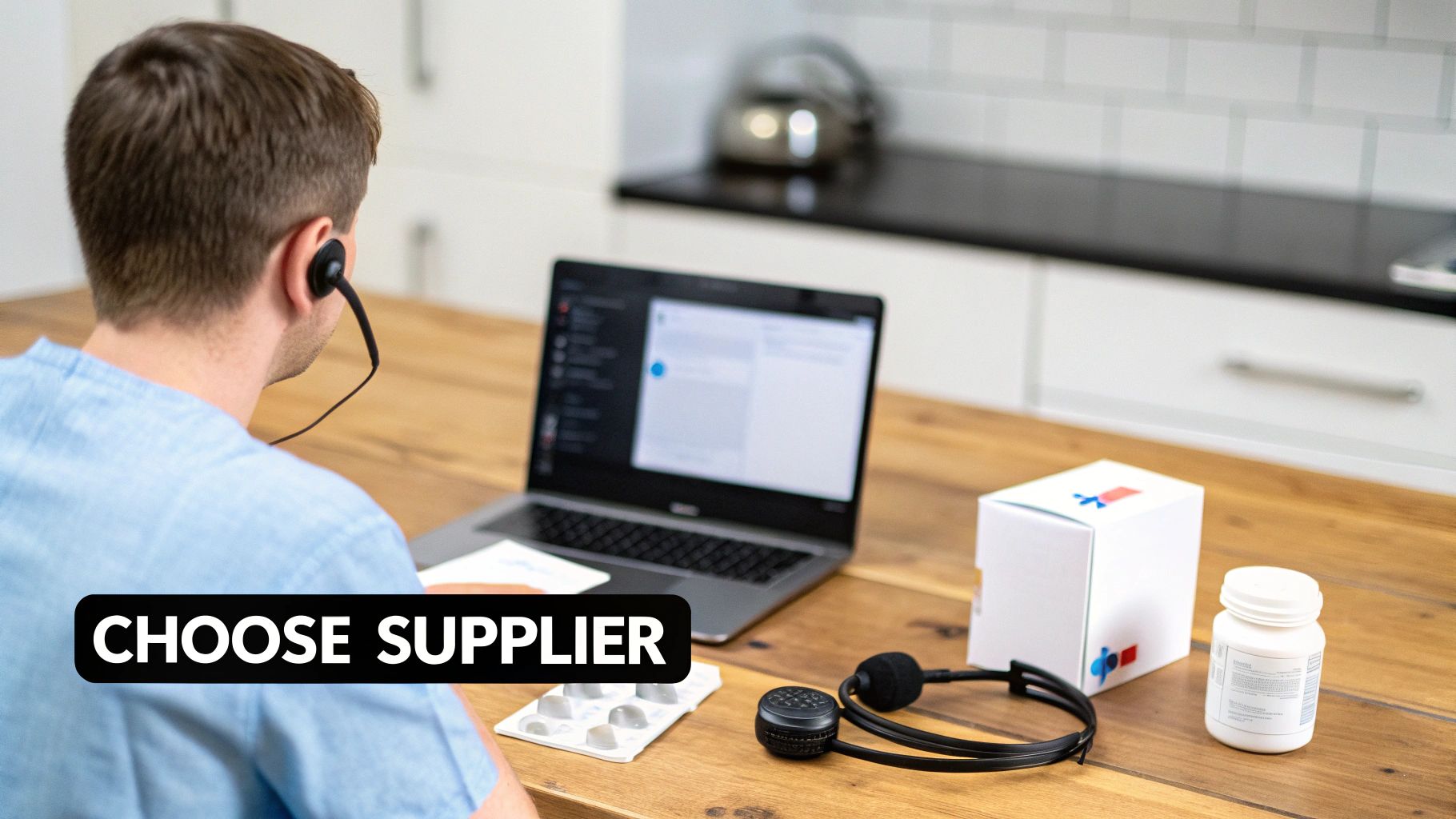
Selecting the right equipment is only part of the process; choosing the right supplier is equally important. A quality supplier is more than just a retailer—they are a partner in your health, providing the products, support, and services needed to live safely and independently.
Think of it like choosing a pharmacy. You would likely select one with a knowledgeable pharmacist, convenient hours, and reliable service. The same logic applies when selecting a DME supplier.
Evaluating Product Selection and Quality
A good starting point is the supplier's inventory. A wide selection of high-quality equipment from reputable brands increases the likelihood of finding a product that perfectly matches your medical needs and home environment.
Look for suppliers that carry trusted brands like Pride Mobility, Golden Technologies, and Medline, which are known for their durability and performance. A reliable supplier also provides detailed product descriptions with clear specifications, compatibility information, and warranty details, empowering you to make an informed decision.
Transparency in Pricing and Policies
A trustworthy DME supplier is transparent about costs and policies. Vague pricing, hidden fees, and confusing return policies are all red flags. You should be able to easily find information about shipping costs, return procedures, and product warranties before making a purchase.
Look for these indicators of transparency:
- Clear Pricing: The total cost, including any shipping or handling fees, should be clearly stated.
- Accessible Return Policy: A fair return policy (such as a 30-day window) demonstrates that the company stands behind its products.
- Financing Options: Flexible payment plans, like those offered through Affirm, can make essential equipment more affordable by breaking the cost into manageable monthly payments.
Choosing a supplier isn't just a one-time transaction. It's the beginning of a relationship. Prioritize partners who invest in your success with excellent service and support long after the initial sale is complete.
The Importance of Service and Support
The level of customer service a supplier provides can make a significant difference. When you have a question or an issue with your equipment, you need access to timely and helpful support from a real person.
Consider these value-added services that distinguish a great supplier:
- Nationwide Shipping: Free nationwide shipping simplifies the buying process and removes geographical barriers.
- White-Glove Delivery: For larger items like hospital beds or lift chairs, a white-glove delivery service that includes setup and a tutorial can be invaluable.
- Accessible Support: Look for suppliers offering multiple support channels, such as 24/7 chat-based assistance, to ensure you can get help whenever you need it.
Ultimately, the right supplier simplifies the entire process of obtaining and using your durable medical equipment. They provide not just a product, but a complete support system that helps you maintain your independence and quality of life at home.
Got Questions About DME? We've Got Answers.
Navigating the world of durable medical equipment can be overwhelming. Even after learning the basics, practical questions often arise. This section serves as a quick-reference FAQ to address common uncertainties and help you move forward with confidence.
What's the Real Difference Between DME and Disposable Supplies?
The primary distinction between DME and disposable supplies is reusability.
Durable medical equipment—such as a power scooter, hospital bed, or lift chair—is built for long-term use. It is an investment in your health and independence, designed to be used repeatedly for months or years.
In contrast, disposable medical supplies are single-use items, like bandages, incontinence pads, or sterile gloves. You use them once and then discard them. This distinction is important because insurance companies classify these categories differently, which can affect your out-of-pocket costs.
Do I Absolutely Need a Prescription to Buy DME?
A doctor's prescription is 100% necessary if you want insurance or Medicare to help cover the cost. However, if you plan to pay out-of-pocket, you can purchase items like walkers, shower chairs, or lift chairs directly without a prescription.
Even so, a prescription is more than just a requirement for insurance coverage. It represents a professional medical assessment that ensures you are getting the right equipment for your specific health needs. Without this expert guidance, you might choose a product that is ineffective or unsafe for your condition.
Always consult with a doctor or physical therapist before making a significant DME purchase. Their expertise ensures your choice will genuinely support your health and safety. Even when paying privately, that professional sign-off provides invaluable peace of mind.
Should I Rent or Buy My Medical Equipment?
The decision to rent or buy depends on your timeline and how long you expect to need the equipment.
- Renting is ideal for short-term needs. If you are recovering from surgery and need a wheelchair for only a few weeks, renting is the most cost-effective option.
- Buying is better for long-term use. For chronic conditions or permanent mobility challenges, purchasing is a wiser financial choice. Over time, the cost of renting can exceed the purchase price. Ownership also provides you with full control over the equipment's use and maintenance.
How Do I Keep My DME in Good Shape?
Proper maintenance is essential for keeping your equipment safe, reliable, and functional. Neglecting regular care can lead to malfunctions or accidents.
Here are a few simple tips for maintaining your equipment:
- Clean It Regularly: Keep surfaces free of dirt and germs. Always follow the manufacturer's cleaning instructions to avoid damaging materials.
- Do Routine Inspections: Periodically check for loose screws, worn parts, or frayed electrical cords. Pay special attention to the brakes on walkers and wheelchairs.
- Mind the Battery: For power wheelchairs and scooters, proper battery care is crucial for longevity. Follow charging guidelines and avoid letting the battery drain completely.
- Read the Manual: Your user manual is your best resource. It contains specific maintenance schedules and troubleshooting advice from the manufacturer.
At DME Superstore, our goal is to provide top-quality equipment and the expert support you need to live safely and comfortably at home. Explore our huge selection of mobility aids, lift chairs, and bathroom safety products today.

