



Returning home after surgery is a critical step in the healing process. Clinicians encourage this transition because recovery is often more effective in a familiar environment. By preparing your home beforehand, you can create a safe and comfortable space that allows you to focus solely on getting better.
Understanding the Benefits of At-Home Recovery
Choosing to recover at home is more than a matter of comfort; it is a clinically supported approach that can lead to a faster, safer, and more positive healing experience. The familiarity of your own surroundings can significantly reduce the stress and anxiety associated with a hospital stay, and this psychological comfort has a direct, positive impact on physical well-being.
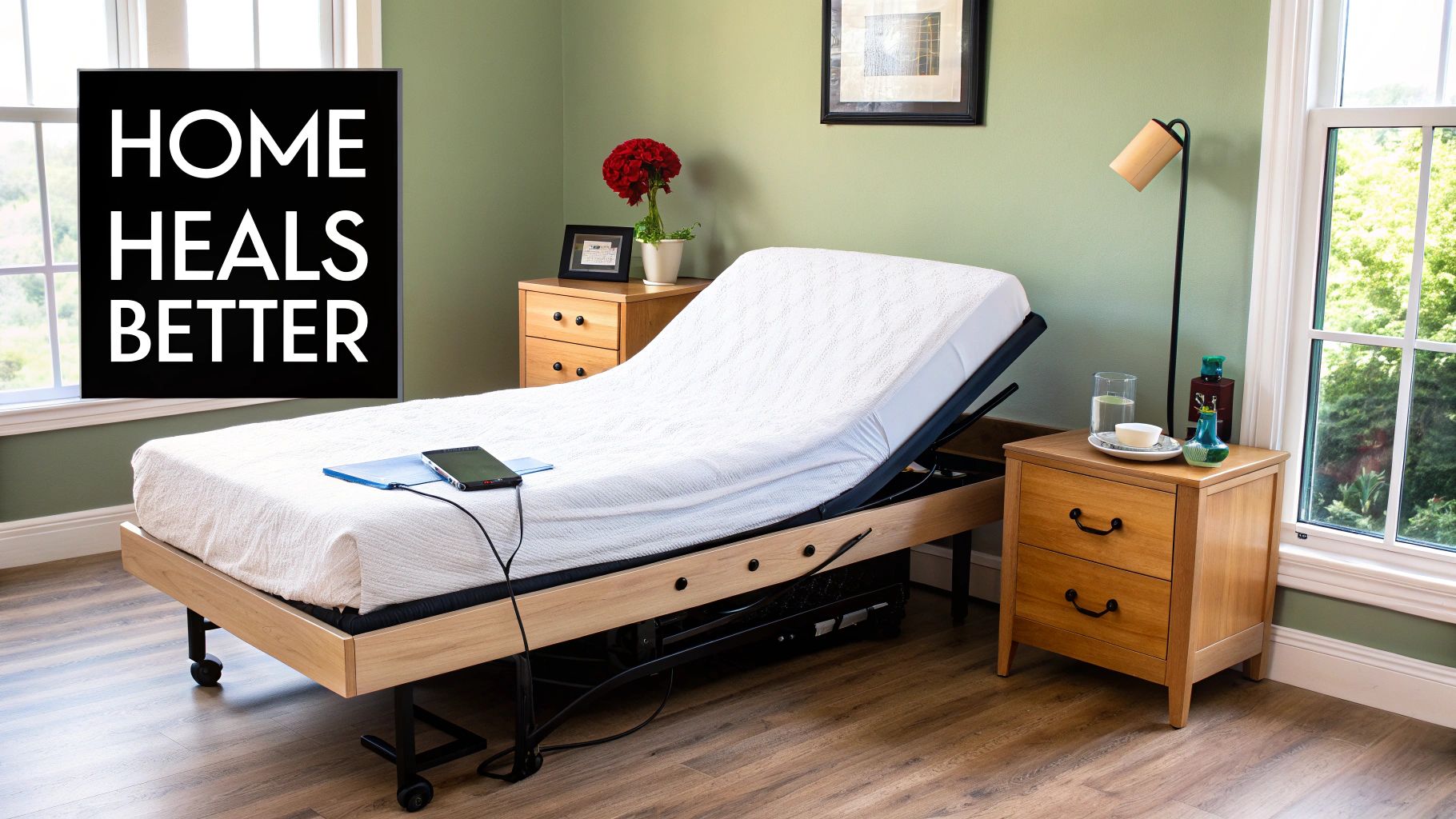
This guide provides a practical roadmap to transform what can feel like an overwhelming process into a series of manageable steps. A successful home recovery is not complex; it is based on thoughtful planning and understanding what to expect.
Why Home Recovery is More Effective
Evidence clearly indicates that returning to a familiar environment helps individuals regain a sense of control and normalcy, which is vital for motivation and a positive outlook. A positive mindset can significantly accelerate the physical healing process.
Research consistently demonstrates that recovering from surgery at home leads to better outcomes compared to extended hospital stays.
One study revealed an 80% recovery rate for post-operative patients at home, compared to just 60% in hospital settings. Furthermore, patients recovering at home experience a 20% lower readmission rate and report 90% overall satisfaction, significantly higher than the 70% reported in facilities. You can learn more from these home care recovery statistics, but the conclusion is clear.
The objective is to create a personal recovery sanctuary, a space where safety and comfort are integrated into your daily routine, rather than being obstacles to overcome.
This guide will cover essential aspects of setting up a successful home recovery plan, including:
- Creating a safe environment: We will discuss practical, room-by-room modifications to prevent falls and reduce physical strain.
- Mastering daily care: Learn effective techniques for managing pain, caring for wounds, and moving safely throughout your home.
- Using the right medical equipment: We will explain durable medical equipment (DME) and demonstrate how tools like adjustable beds and lift chairs can help you regain independence more quickly.
Consider this your handbook for a secure and empowering recovery in the place you feel most comfortable. By preparing your space and understanding the process, you can transform your home into the ideal environment to heal and regain your strength.
How to Set Up Your Home for a Safe Recovery
Preparing your home before being discharged from the hospital is one of the most crucial steps for a successful recovery. Even minor, proactive adjustments can dramatically reduce physical strain and help prevent accidents that could lead to rehospitalization.
The goal is to establish a "recovery sanctuary" where movement is safe, rest is restorative, and everyday tasks do not deplete your limited energy. Let's review the setup process room by room to ensure your focus remains on healing, not on navigating obstacles.
Optimize the Bedroom for Rest and Safety
Your bedroom will serve as your primary recovery zone, so it must be both comfortable and highly functional. After surgery, many people find it surprisingly difficult to get in and out of a standard bed. One breast cancer survivor noted that it was "near impossible to get out of it once you’re laying down," leading her to sleep in a chair for the first week.
This is where an adjustable electric bed can be transformative. With the touch of a button, you can elevate your head and feet, making it much easier to sit up, swing your legs over the side, and stand without putting stress on your core muscles or incision sites.
If your mobility will be significantly limited, you should also consider an alternating-pressure mattress. These specialized mattresses are designed to continuously redistribute body weight, which is essential for preventing painful pressure injuries (also known as bedsores) that can develop from prolonged immobility.
Create a Comfortable and Accessible Living Room
Your living room should be a place for relaxation, not a source of struggle. Attempting to push yourself up from a low, soft sofa can be painful and even dangerous after an operation. This is precisely why a lift chair is one of the most practical pieces of equipment for a post-surgery setup.
A lift chair looks and feels like a comfortable recliner but contains a powerful lifting mechanism. It tilts the base of the chair forward, gently guiding you to a standing position. This simple function conserves energy and significantly reduces the risk of a fall or re-injury. Position the chair with a clear path to the bathroom and kitchen, and place a small side table nearby for essentials like your phone, medications, and water.
Key Takeaway: Do not underestimate the energy required for simple movements like standing. A lift chair removes this daily struggle, allowing you to preserve your strength for more important healing activities.
Prioritize Bathroom Safety to Prevent Falls
The bathroom is one of the most hazardous rooms in any home, and these risks are significantly increased during recovery. The combination of slippery surfaces with limited mobility and strength creates a high potential for accidents.
Installing sturdy grab bars is a non-negotiable safety measure. They are needed inside the shower and next to the toilet to provide stable support for sitting, standing, and balancing. Proper installation is critical; if they are not secure, they become a hazard. For detailed guidance, you can learn more about how to install grab bars in a bathroom.
A shower chair or transfer bench is also essential. It allows you to sit safely while bathing, eliminating the risk of slipping on a wet surface. This simple addition makes personal hygiene more manageable and far less exhausting.
Clear the Pathways and Improve Lighting
The final step in preparing your home involves addressing general safety and accessibility. A clear path is a safe path.
- Remove Trip Hazards: Go through your home and eliminate potential obstacles. This includes removing loose rugs, securing electrical cords along walls, and moving small furniture out of walkways.
- Widen Walkways: If possible, rearrange furniture to create wider paths. This is especially important if you will be using a walker or rollator. Ensure you can easily pass through doorways.
- Improve Lighting: Good lighting is crucial, particularly for nighttime trips to the bathroom. Use nightlights in hallways, bedrooms, and bathrooms to ensure you can always see where you are going.
Before concluding this section, here is a quick checklist to help you organize your home preparation, breaking down key tasks by room to ensure nothing is missed.
Home Safety Preparation Checklist
This checklist outlines essential tasks and equipment to prepare your home for a safe post-surgery recovery.
| Area of Home | Essential Preparation Task | Recommended DME | Safety Goal |
|---|---|---|---|
| Bedroom | Ensure easy and low-strain bed entry/exit. | Adjustable Bed, Alternating-Pressure Mattress | Prevent strain on incisions; prevent pressure sores. |
| Living Room | Create a comfortable resting area with easy stand-assist. | Lift Chair | Conserve energy; reduce fall risk when standing. |
| Bathroom | Install support for balance and eliminate slip hazards. | Grab Bars, Shower Chair or Transfer Bench | Prevent falls on wet surfaces; reduce fatigue. |
| Pathways | Remove all clutter, rugs, and cords from walkways. | None | Eliminate trip hazards for safe movement. |
| Lighting | Add nightlights to hallways, bedrooms, and bathrooms. | None | Ensure clear visibility for nighttime navigation. |
By addressing these tasks before you return home, you are setting the stage for a smoother and safer recovery.
For a comprehensive overview, it is beneficial to explore various home modifications for a safe recovery that can adapt your space for both short-term and long-term needs. These preparations establish a secure foundation, enabling you to move through your home with confidence as you heal.
Mastering Your Daily Post-Surgery Care Routine
Once your home is prepared for safety, the focus shifts to the daily tasks that are fundamental to your healing. This is the core of your recovery from surgery. It may feel as though you are managing many things at once—from tracking medications to caring for an incision—but establishing a simple, structured routine will build your confidence and keep you on track.
The goal is to create a predictable schedule. This structure helps ensure you do not miss a critical medication dose or a gentle mobility exercise. Let's examine the three pillars of your daily care: pain management, wound care, and safe movement.
Creating an Effective Pain Management Plan
Managing post-operative pain is not just about comfort; it is a vital part of your recovery. Uncontrolled pain can lead to immobility, increasing the risk of serious complications like blood clots and pneumonia. Your surgeon will prescribe pain medication, but it is your responsibility to use it wisely and supplement it with other methods.
First, create a simple medication schedule. Many people find that a basic notebook or a phone alarm is effective for tracking doses. This simple step helps prevent missed doses, which can allow pain to intensify and become more difficult to control.
In addition to medication, several simple techniques can provide significant relief:
- Ice Packs: Applying a cold pack wrapped in a thin towel to the surgical area for 15-20 minutes at a time can help reduce swelling and numb the area.
- Strategic Positioning: The strategic use of pillows to elevate a limb or support your body can relieve pressure on the incision and surrounding tissues, providing immediate comfort.
- Relaxation Techniques: Deep breathing, listening to calming music, or finding a quiet space to rest can lower stress, which in turn can lessen the perception of pain.
To help manage discomfort and promote relaxation, some individuals find a recliner with heat and massage to be a valuable addition to their recovery toolkit. The gentle warmth can soothe sore muscles, and the massage function can ease tension, making it an excellent non-medicinal option for pain relief.
Diligent Wound and Incision Care
Proper wound care is non-negotiable, as it is your primary defense against infection, a complication that can seriously impede your recovery. Your surgical team will provide specific instructions for cleaning the area, changing dressings, and showering. It is essential to follow these instructions precisely.
Your main responsibility is to keep the incision site clean and dry. At the same time, you must remain vigilant for any signs of infection.
A common misconception is that all redness is a sign of infection. While some pinkness around the incision is normal during healing, you should contact your doctor immediately if you observe spreading redness, increased swelling, warmth to the touch, or any pus-like drainage.
Monitor your temperature closely as well. A fever is often one of the first signs that your body is fighting an infection. Do not hesitate to contact your clinical team if anything seems unusual—it is always better to be cautious.
This visual guide demonstrates how to apply this safety-first mindset across key areas of your home, reinforcing the connection between a safe environment and a successful daily routine.
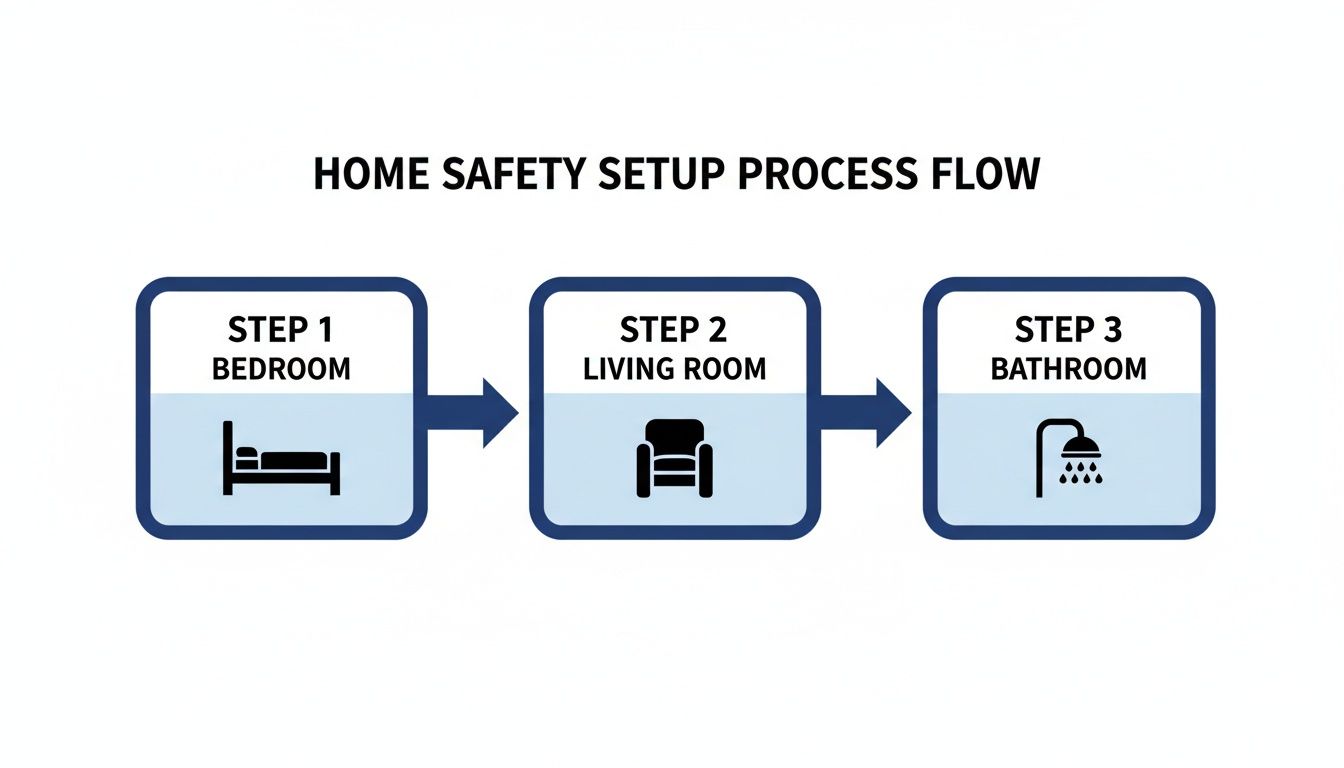
This process flow illustrates that preparing the bedroom, living room, and bathroom is the foundation for safely carrying out your daily care tasks.
Prioritizing Safe Mobility and Movement
While rest is crucial, movement is equally important. Getting up and walking, even for short distances, is one of the most effective ways to accelerate your recovery. It stimulates circulation, helps prevent blood clots, and maintains muscle strength.
However, you must move safely. After surgery, your balance may be compromised, and your strength will be limited. This is where mobility aids like walkers or rollators become indispensable.
Here is a practical, step-by-step example of using a walker to move from the bedroom to the kitchen:
- Sit up slowly. Before attempting to stand, sit on the edge of the bed for a moment to ensure you are not dizzy.
- Position the walker. Place it directly in front of you, making sure all four legs are stable on the floor.
- Stand with support. Use your hands to push up from the bed—do not pull on the walker. Once you are steady, place your hands on the walker's grips.
- Move the walker first. Push the walker a short, comfortable distance ahead of you.
- Step forward. Now, step into the space you just created, leading with your weaker or operated-on leg.
- Follow with your other leg. Bring your stronger leg forward to meet the first. Repeat this slow, deliberate process.
This methodical "walker first, weak leg, strong leg" approach creates a stable base of support at all times, drastically reducing your risk of a fall. Consistency is key. Aim for several short walks throughout the day rather than one long, exhausting one. This steady rhythm is what facilitates a strong and successful recovery.
Choosing the Right Durable Medical Equipment
Navigating the world of Durable Medical Equipment (DME) can feel overwhelming, especially during a stressful time. The best approach is to shift your mindset from "buying products" to "solving problems."
Each piece of equipment should answer a simple question: "What daily challenge does this piece of equipment eliminate?"
Making informed choices about DME is not just about comfort—it is a critical component of a safe and successful home recovery. The right equipment empowers you, prevents setbacks, and can genuinely accelerate your healing. Data supports this, demonstrating the effectiveness of a properly supported home recovery.
For example, a major study on total joint replacement patients found that 96% were discharged directly home and achieved outcomes that were as good as, if not better than, those in inpatient rehabilitation facilities. Patients with appropriate support at home experienced significant gains in joint function, highlighting the power of a well-equipped environment.
Deciding Between Walkers and Rollators
Mobility support is often the first consideration. Both walkers and rollators are designed to help you move safely, but they cater to different levels of stability and strength. Making the right choice is your first line of defense against falls.
A walker is a simple, highly stable frame that you pick up and place in front of you with each step. It is the ideal choice if you require significant weight-bearing support. If your balance is unsteady or a doctor has instructed you to keep weight off one leg, a walker provides the most secure foundation.
A rollator, on the other hand, is a walker with wheels and hand brakes, allowing you to push it smoothly without lifting. It is well-suited for individuals who are more stable but need assistance with balance and endurance over longer distances. Most rollators also include a built-in seat, which is an excellent feature for resting during a walk down the hall or a trip to the kitchen.
The Benefits of Specialized Beds and Mattresses
Your body performs its most critical healing work while you sleep, but a standard bed can become a significant obstacle after surgery. As one mastectomy survivor noted, getting out of a normal bed can be "near impossible," forcing many to sleep in a recliner for weeks.
This is where a hospital-style adjustable electric bed offers a solution.
With the touch of a button, you can raise your head and feet independently. This simple function helps you find a comfortable position that reduces strain on incisions and—most importantly—allows you to sit up and get out of bed using your arm strength instead of your core. It transforms your bed from a source of struggle into an active recovery tool.
For anyone with very limited mobility, a pressure-relief mattress is another essential item. These specialized mattresses are engineered to redistribute body weight, which is crucial for preventing painful and dangerous pressure injuries (bedsores).
Key Takeaway: The right bed setup provides more than just comfort—it actively prevents complications like muscle strain and skin breakdown, allowing your body to rest and heal more effectively.
Understanding Transfer Aids for Safer Movements
Transfer aids are some of the most overlooked yet impactful pieces of DME. These simple tools are designed to make moving from one surface to another—such as from a bed to a wheelchair or a chair to the toilet—safer for both you and your caregiver.
Here are a few common examples and the problems they solve:
- Gait Belts: This is a sturdy belt worn around your waist that gives a caregiver a secure place to hold on. It provides stability during assisted walks and can prevent a stumble from escalating into a serious fall.
- Transfer Boards: Think of this as a smooth, rigid bridge. It spans the gap between two surfaces, like a bed and a wheelchair, allowing someone with limited leg strength to slide across instead of attempting a risky standing transfer.
- Pivoting Discs: This is a rotating disc placed on the floor. It helps a person pivot from a seated position on a chair to a walker or commode without having to twist their body or shuffle their feet.
These tools drastically reduce physical strain on everyone involved and build confidence during daily movements. To get a clearer idea of what items fall under this category, you may find our guide on what is considered durable medical equipment helpful.
By carefully selecting DME that addresses your specific challenges, you are not just purchasing equipment; you are building a personalized support system for a safer, faster recovery at home.
A Practical Handbook for Caregivers
As a caregiver, you are an essential part of the at-home recovery process. Your role is vital—you are the first line of defense against complications and the steady support that makes healing possible. This handbook provides straightforward, actionable advice to help you confidently manage the two greatest risks for anyone recovering from surgery: falls and pressure injuries.
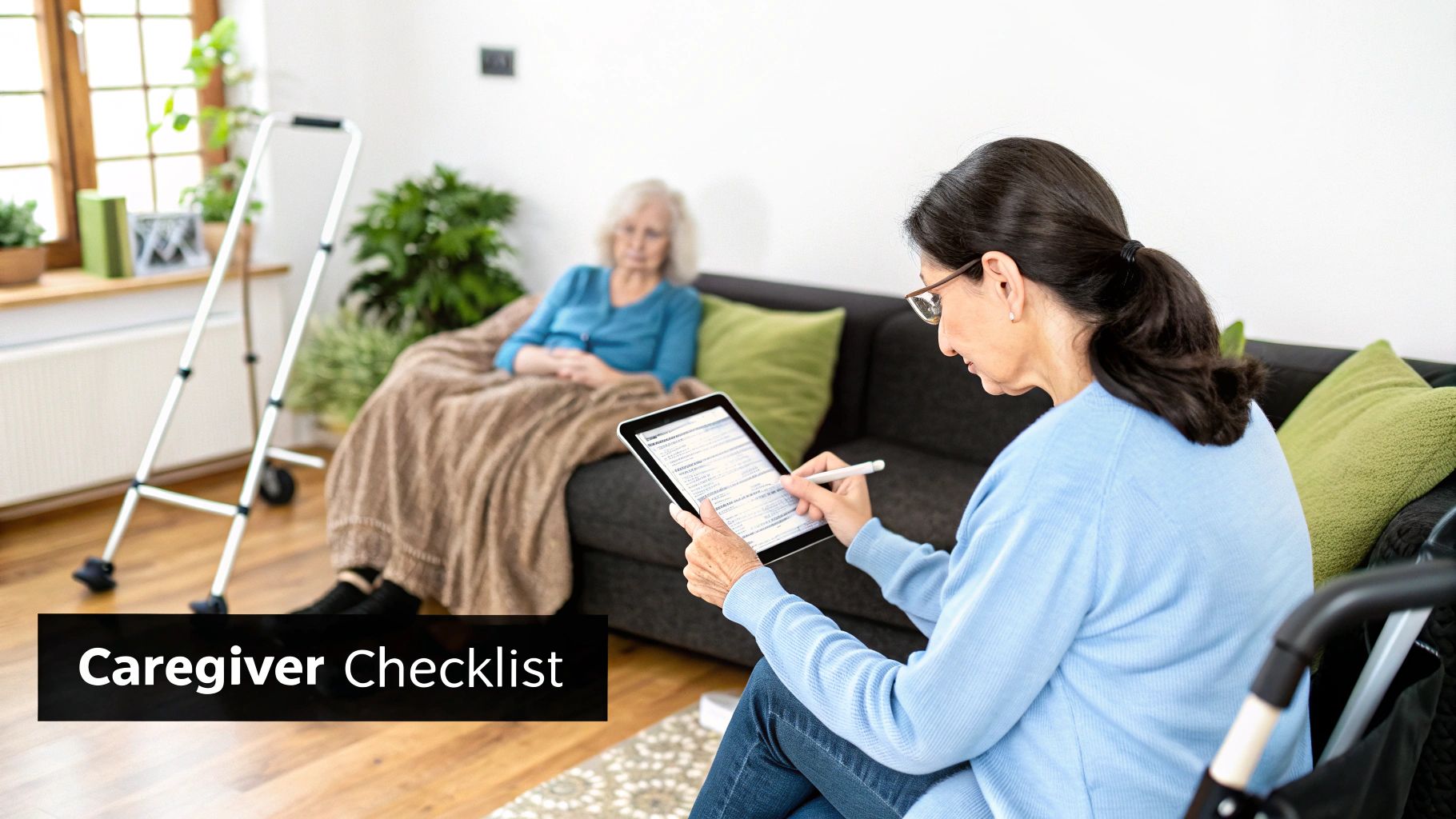
The support you provide has a direct, measurable impact on recovery outcomes. A key metric clinicians use is 'days at home' (DAH) within the first 30 days post-operation. Research has shown that patients who spent eight or fewer days at home faced a 6.78 times higher risk of death within a year.
By preventing setbacks that lead to rehospitalization, you are maximizing these crucial days at home and significantly improving long-term outcomes. You can discover more insights about these recovery metrics in the full study.
Preventing Falls: A Caregiver's Checklist
After surgery, a person’s balance, strength, and even their awareness are diminished, making falls a constant threat. A simple slip can cause a serious new injury and lead to rehospitalization. Your role is to be vigilant and create an environment where falls are less likely to occur.
Use this simple checklist to remain proactive:
- Clear the Path: Always keep walkways free of clutter. This includes removing throw rugs, securing electrical cords against the wall, and ensuring a wide, clear path to the bathroom, kitchen, and bedroom.
- Encourage Proper Aid Use: Gently but firmly insist on the use of a walker or rollator for every trip, no matter how short. Remind them to use transfer aids correctly, as improper use can be as dangerous as not using them at all.
- Provide Hands-On Support: When they are standing up, sitting down, or walking, be ready to offer a steadying hand. Using a gait belt provides a secure grip on their torso without having to grab an arm, which could throw them off balance.
Remember, preventing a fall is always preferable to dealing with the consequences. Small, consistent safety checks throughout the day are your most powerful tool.
Preventing Pressure Injuries Through Vigilance
Pressure injuries, often called bedsores, are a painful and dangerous complication that can develop when someone remains in one position for too long. They occur when constant pressure on the skin restricts blood flow, causing tissue breakdown.
Your role in prevention is critical and centers on two key actions: repositioning and skin checks.
If the person you are caring for has limited mobility, they need your help to change position at least every two hours. This can be as simple as shifting them from their back to their side or using pillows to slightly alter their alignment and relieve pressure points.
In addition to repositioning, you need to perform daily skin checks. Look for any areas of redness, paying close attention to bony spots like the tailbone, heels, hips, and shoulder blades. If you spot a red area that does not fade a few minutes after the pressure is removed, it is an early warning sign. Report it to their clinical team immediately.
Learning how to move someone safely is essential. Our guide on safe patient transfer techniques can show you how to reposition someone without straining your back—or theirs.
When to Call the Doctor
Knowing when to seek medical advice is one of the most important aspects of being a caregiver. Trust your instincts. If something feels wrong, it probably is. Never hesitate to call the doctor's or surgeon's office with a concern.
Here are some clear red-flag symptoms that require an immediate call:
- Fever: A temperature of 101°F (38.3°C) or higher.
- Wound Changes: Any spreading redness, increased swelling, warmth, or pus-like drainage from the incision site.
- Uncontrolled Pain: Pain that is not relieved by the prescribed medication.
- Breathing Issues: Any sudden shortness of breath or new chest pain.
- Leg Swelling: New or worsening pain, swelling, or redness in just one leg, which could be a sign of a blood clot.
Your proactive monitoring can help catch complications before they become serious, ensuring the person you are caring for remains on the path to a smooth and successful recovery at home.
Common Questions About Home Surgery Recovery
Returning home after surgery is a significant milestone, but it is also when practical questions arise. Even with a thorough discharge plan from the hospital, new concerns often surface once you are back in your own environment. Let’s address some of the most common questions from patients and their families.
How Long Will I Need Help at Home After My Surgery?
The duration of needed assistance varies significantly. For a less invasive procedure, you might only need a friend to check in for a few days. However, for a major operation like a hip or knee replacement, you could require daily help for several weeks.
Your surgical team will provide the most realistic timeline based on your specific procedure and overall health. It is always advisable to plan for more help than you think you will need. It is much easier to reduce caregiving support than to arrange for last-minute help when you are feeling overwhelmed.
What Are the Most Important Signs of a Complication?
While your doctor will provide a detailed list specific to your surgery, there are several universal red flags that warrant an immediate call to your clinical team. Do not wait to report any of the following:
- A fever of 101°F (38.3°C) or higher.
- The incision site worsening, with increased redness, pain, or any drainage.
- Sudden shortness of breath or chest pain.
- New pain, swelling, or redness in one leg, which could indicate a blood clot and requires immediate attention.
A helpful tip is to keep a small notebook by your bedside. Each day, record your temperature, pain level (on a 1-10 scale), and any other symptoms. This creates a clear record that is incredibly useful if you need to contact your doctor's office.
It is completely normal to experience a wide range of emotions during recovery. Do not hesitate to rely on your support system and communicate your needs openly.
How Can I Manage Feelings of Frustration or Depression?
The psychological aspect of recovery is as significant as the physical one. It is very common to feel frustrated, anxious, or down when your independence is suddenly limited. The transition from self-sufficiency to needing help can be challenging.
The key is to focus on small, achievable goals. For example, a goal for today might be walking to the kitchen for a glass of water or sitting in a different chair for an hour. Celebrate these small victories—they are tangible proof of your progress.
Additionally, avoid isolation. Phone calls, video chats, or short visits from friends and family can make a significant difference. If you experience persistent feelings of sadness that do not improve after a couple of weeks, please talk to your doctor. They can connect you with resources to support your mental health.
Should I Rent or Buy Durable Medical Equipment?
This decision typically depends on your expected recovery time. If you will only need an item like a hospital bed or a lift chair for a few weeks, renting is often the more cost-effective option.
However, if you are managing a chronic condition or foresee long-term use for the equipment, purchasing may be a better investment. Before making a decision, contact your insurance provider to determine what is covered. Remember that many items are also eligible for purchase with FSA/HSA funds, which can make buying a more affordable option.
At DME Superstore, our focus is on making your at-home recovery as safe, comfortable, and stress-free as possible. From adjustable hospital beds and power lift chairs to walkers and bathroom safety aids, we provide the high-quality equipment you need to heal with confidence. Explore our curated selection and find the perfect solutions to support your journey back to health at https://dmesuperstore.com.

