



For many, an adjustable bed is viewed as a luxury item, perhaps seen in a high-end furniture showroom. However, this perspective is outdated. A traditional flat bed is a one-size-fits-all product that cannot adapt to the body's specific needs, particularly for individuals managing pain, recovering from surgery, or living with a chronic health condition. An adjustable bed, in contrast, is a personalized wellness tool designed to conform to you.
This guide explores the functional advantages of this essential piece of medical equipment. We will detail how adjustable beds provide tangible improvements to daily life by enhancing health, comfort, and independence.
A Proactive Investment in Your Well-Being
Describing an adjustable bed as merely "comfortable" is an understatement. It represents a proactive investment in one's quality of life. For many individuals, it becomes the key to maintaining safety and independence at home. By allowing you to customize your sleeping or resting position with the touch of a button, it can help alleviate symptoms associated with conditions like acid reflux, chronic back pain, and sleep apnea.
This transforms your bed from a simple piece of furniture into a personalized support system. Consider these key advantages:
- Targeted Pain Relief: Elevating your head or legs by just a few degrees can shift pressure off the spine, hips, and other sensitive joints. This minor adjustment can provide significant relief from chronic aches and pains.
- Improved Respiratory Function: A slight incline of the upper body helps to open airways. This can reduce snoring and ease symptoms for individuals with sleep apnea, COPD, or even a common cold.
- Enhanced Circulation: Raising the legs helps reduce swelling (edema) in the feet and ankles and promotes better overall blood flow. This is crucial for comfort and for healing after an injury or surgery.
- Greater Independence: The simple act of sitting up can be a major challenge for some. The ability to raise the head of the bed makes getting in and out of it safer and easier, which is a significant factor in reducing fall risks.
The core difference is simple: a flat bed forces your body to conform to its rigid surface, while an adjustable bed conforms to your body’s needs. Understanding this distinction is the first step in appreciating its true value.
Whether you are recovering from a medical procedure, managing a long-term health issue, or simply seeking a more restorative night's sleep, an adjustable bed is a powerful tool. In the following sections, we'll explain exactly how this single piece of furniture can become a cornerstone of a healthier, more comfortable life at home.
Unlocking the Health Benefits of an Adjustable Bed
An adjustable bed is far more than a luxury item—it is a powerful therapeutic tool for the home. By moving beyond a simple flat surface, it allows you to use positioning and gravity to your body's advantage, delivering support and relief exactly where it is needed most. Let's examine the specific health benefits and explain the physiological principles behind why certain positions can make such a profound difference.
This diagram illustrates how an adjustable bed's features provide benefits across key areas of life, from direct health improvements and lifestyle enhancements to critical support for caregivers.
As shown, the bed's core functions extend to assist with managing chronic conditions and making simple daily activities like reading or watching TV safer and more comfortable.
Finding Relief Through Strategic Positioning
The primary therapeutic value of an adjustable bed lies in its ability to create custom positions that target specific health issues. These are not merely comfort settings; they are targeted adjustments grounded in physiological principles.
A prime example is the Zero-Gravity position, where both the head and feet are elevated to distribute body weight evenly. This sensation of weightlessness is engineered to decompress the spine and significantly enhance circulation.
By raising your legs slightly above your heart, this position facilitates fluid return to the body's core, which can dramatically reduce swelling (edema) in the feet, ankles, and legs. It is a preferred setting for individuals with arthritis or fibromyalgia because it eases stress on painful joints and muscles.
For those who experience acid reflux or GERD, even a slight incline can be highly effective. Elevating the head 15-20 degrees utilizes gravity to help keep stomach acid in the stomach. This simple adjustment can prevent the painful heartburn that often disrupts sleep, potentially reducing the need for medication.
The table below provides a summary of how different positions can help with common health conditions.
| How Bed Positions Help Common Health Conditions |
| :--- | :--- | :--- |
| Health Condition | Beneficial Position | How It Helps |
| Acid Reflux / GERD | Head Elevated 15-20 Degrees | Uses gravity to keep stomach acid down, preventing heartburn and irritation. |
| Back Pain | Zero-Gravity or Legs Elevated | Reduces pressure on the lumbar spine and supports its natural curve. |
| Swelling (Edema) | Legs Elevated Above Heart | Improves circulation and helps fluid return from the lower extremities. |
| Arthritis / Joint Pain | Zero-Gravity | Creates a feeling of weightlessness, taking stress off inflamed joints. |
| COPD / Sleep Apnea | Head Elevated | Opens up airways, making breathing easier and reducing snoring. |
| Post-Surgery Recovery | Head and Legs Elevated | Minimizes swelling, eases pain, and makes getting in and out of bed safer. |
Finding the right position involves listening to your body and making small adjustments until you achieve optimal relief and support.
Alleviating Chronic Pain and Respiratory Issues
Chronic back pain is a leading reason individuals seek out an adjustable bed. A flat mattress can force the spine into an unnatural alignment, creating pressure points that exacerbate pain. By adjusting the bed, you can find a contour that supports the natural curvature of your spine, thereby reducing the load on the lower back.
To maximize these benefits, it's useful to understand how poor posture contributes to back pain, which an adjustable bed can help correct during sleep.
- Spinal Decompression: Gently elevating the legs relieves tension on the lumbar spine, offering significant relief for conditions like sciatica.
- Pressure Offloading: The ability to shift position helps distribute body weight more evenly. This is critical for preventing pressure sores—a serious risk for individuals with limited mobility. If this is a primary concern, our guide on how to choose the best pressure relief mattress provides further information.
- Joint Support: For those with arthritis, an adjustable bed allows for micro-adjustments that can ease stiffness and reduce inflammation in the hips, knees, and shoulders.
These beds also offer significant advantages for respiratory health. Elevating the head opens up airways, making breathing easier for people with COPD, asthma, or sleep apnea. This improved airflow can reduce snoring and lead to a deeper, more restorative night's sleep.
Why The Medical Community Recommends Adjustable Beds
The medical community increasingly views adjustable beds as essential equipment for home healthcare, not a luxury. Clinical studies have demonstrated significant health improvements for patients with a wide range of conditions.
Research involving patients with respiratory issues, for example, shows that head elevation improves oxygen saturation levels and reduces nocturnal distress. For the millions affected by sleep apnea, an incline helps maintain open airways and reduces snoring. With over 350 million people worldwide living with arthritis, the customized support of these beds is invaluable for reducing stress on sensitive joints.
Post-surgical patients also realize tangible benefits, including faster recovery times and improved pain management. The ability to move from a supine to a seated position facilitates safer transfers out of bed, which supports early mobilization and helps prevent complications. This clinical validation confirms that an adjustable bed is not just about comfort—it is a cornerstone of effective home care and symptom management.
How Adjustable Beds Enhance Safety and Independence
Beyond the passive health benefits associated with improved sleep, a significant advantage of an adjustable bed is its active role in promoting a safer and more independent home environment. For many people, especially older adults or those recovering from surgery, the act of getting in and out of a flat bed presents a daily challenge and a serious risk. An adjustable bed fundamentally changes this dynamic.
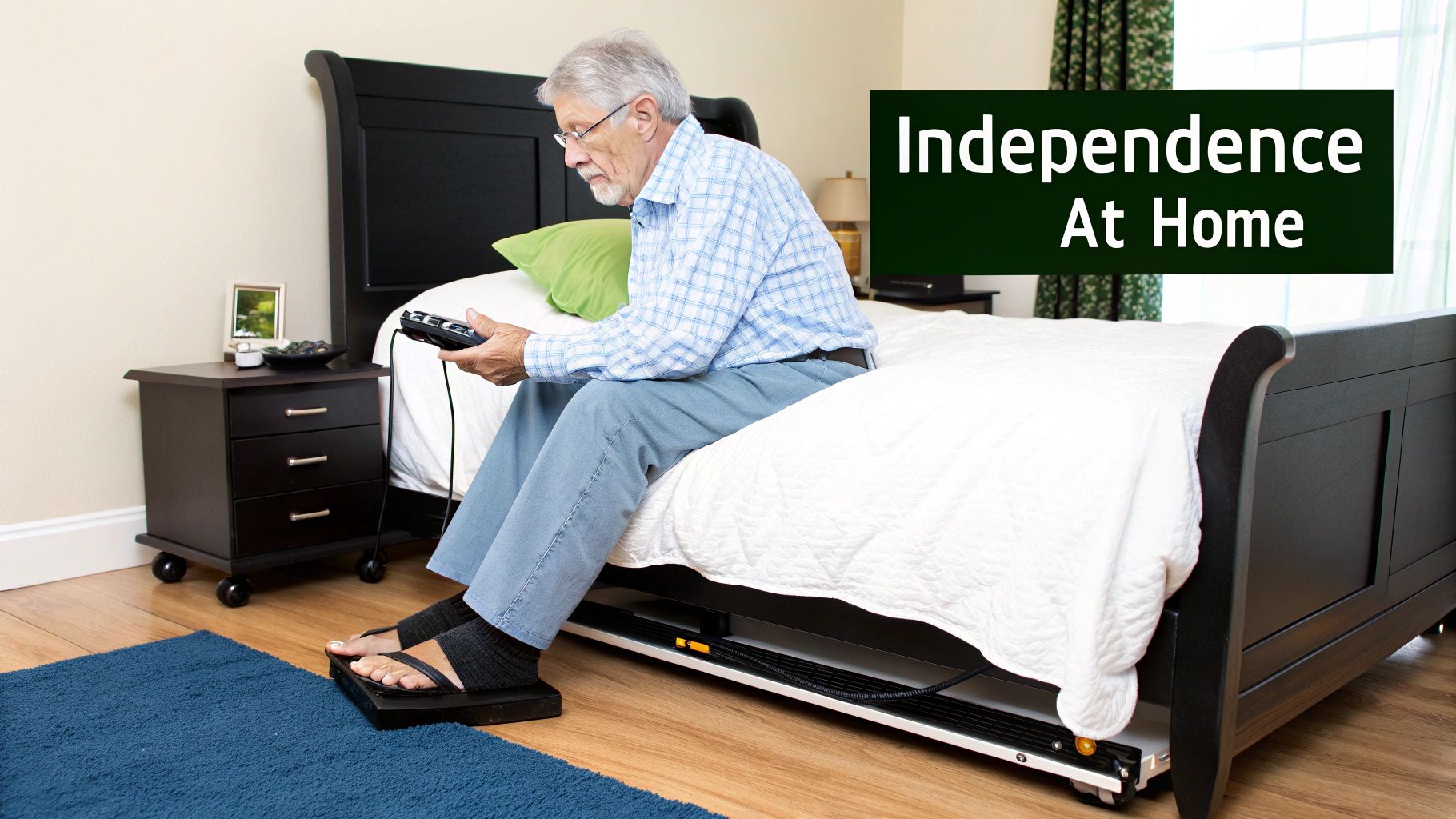
It transforms the bed from a potential hazard into a functional mobility aid. By simply raising the head of the bed, a user can transition smoothly into a seated position. From there, they can pivot their legs over the side and stand with greater stability and less physical exertion. This single feature can dramatically reduce the risk of falls, a leading cause of injury among older adults.
Empowering Safer Transitions
Consider an individual recovering from hip replacement surgery. With a traditional bed, sitting up requires pushing with the arms, engaging core muscles, and placing significant stress on the healing joint. An adjustable bed eliminates this struggle.
The user can effortlessly use the remote to bring themselves to an upright position before attempting to stand. This controlled movement not only preserves dignity but also reduces the physical strain on both the user and any caregiver assisting them.
An adjustable bed empowers users by giving them direct control over their environment. It reduces reliance on others for basic repositioning, fostering a profound sense of self-sufficiency that is crucial for mental and emotional well-being.
This control is vital for building confidence during recovery or while adapting to new mobility limitations. It allows individuals to manage their own comfort and positioning without having to wait for assistance, representing a key step in reclaiming independence at home.
Creating a Functional Hub for Daily Life
For anyone facing extended bed rest, a flat bed can quickly become a place of isolation. An adjustable bed, however, converts into a comfortable and functional hub for various daily activities.
By elevating the head, the bed becomes a suitable spot for:
- Eating Meals Safely: An upright posture aids in swallowing and digestion, reducing the risk of choking or aspiration that can occur when eating in a reclined position.
- Engaging in Hobbies: Activities like reading, using a laptop, or working on puzzles become more comfortable when the back and neck are properly supported.
- Socializing with Visitors: Being able to sit up and interact with family and friends at eye level is more engaging and helps maintain crucial social connections.
This versatility ensures that the bedroom remains a supportive and positive space, even when mobility is limited. For even greater mobility assistance, you can also explore how rotating beds are revolutionizing senior care, which offer another level of support for safe transfers.
An Essential Tool for Family Caregivers
Beyond the benefits to the user, an adjustable bed has a significant impact on family caregivers. The physical and emotional demands of providing home care can be immense. An adjustable bed is not just furniture; it is a powerful tool that makes daily care tasks safer, easier, and less physically strenuous.
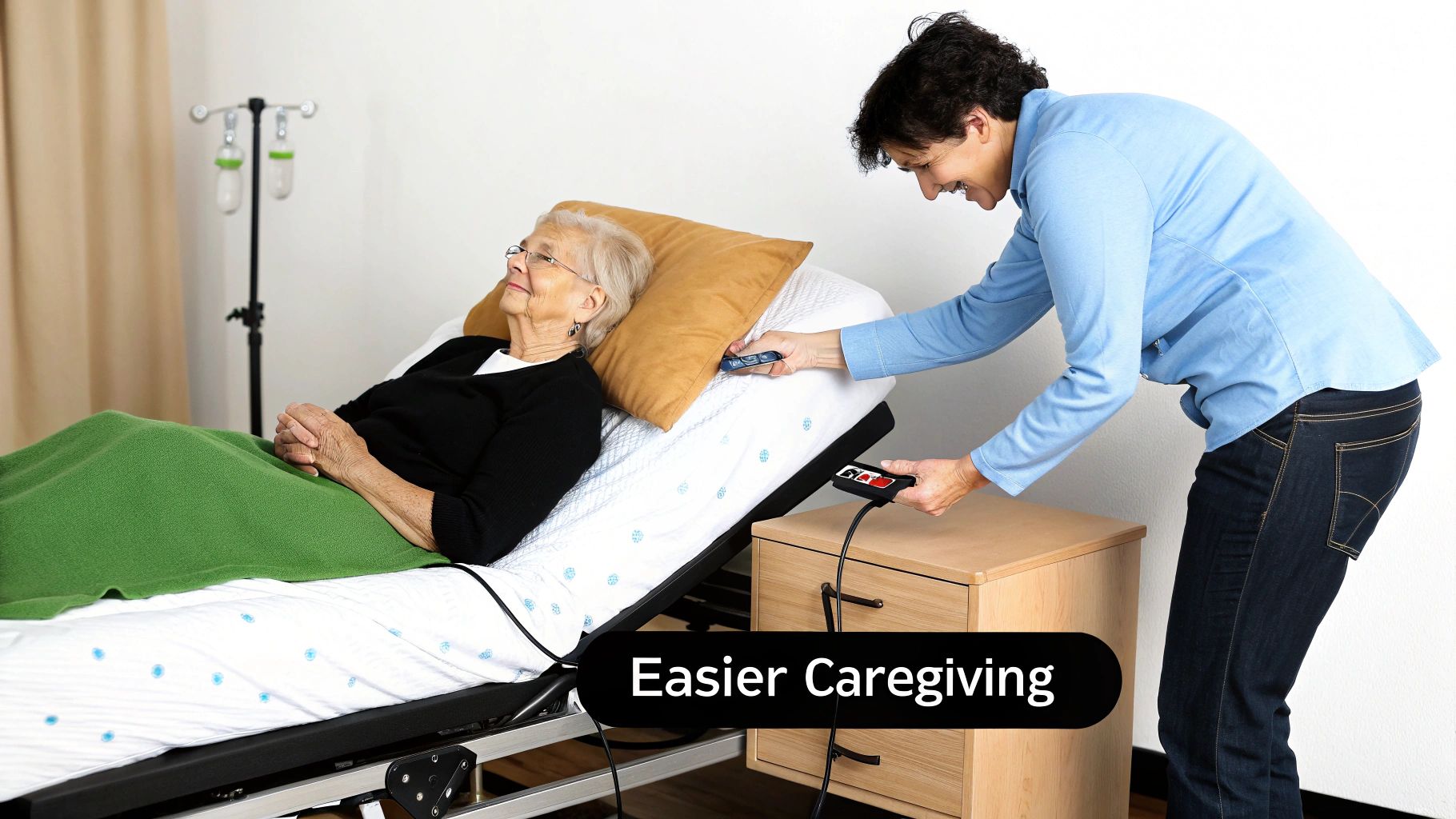
Consider the daily routine of caring for an aging parent. Actions like helping them sit up for a meal, administering medication, or assisting with personal hygiene often require awkward bending, lifting, and straining. Over time, this repetitive stress can lead to injury for the caregiver.
Reducing Physical Strain with Smart Technology
This is where specialized features like the Hi-Low function become essential. While most adjustable beds articulate the head and feet, Hi-Low models can raise and lower the entire bed frame. This capability is a game-changer for caregivers.
Instead of hunching over, a caregiver can bring the bed to a comfortable working height, similar to hospital beds. This ergonomic adjustment can prevent the chronic back pain that affects many individuals providing care at home.
An adjustable bed transforms caregiving by bringing the patient to a safe, accessible height. This feature drastically reduces the physical burden, preventing injury and preserving a caregiver's strength.
Imagine an adult child caring for an elderly parent. Previously, helping them get dressed or changing positions was a constant struggle. With the Hi-Low feature, these tasks can be performed at a comfortable waist level, turning a physically taxing chore into a more manageable and dignified interaction.
Making Daily Tasks Safer and More Dignified
The benefits extend beyond preventing caregiver strain. The right bed makes the entire care routine safer and more efficient.
Raising the head of the bed creates a secure, upright position for meals, which is crucial for preventing choking hazards. Administering medication becomes simpler and more accurate when the person is comfortably seated.
- Safer Transfers: Raising the bed to match the height of a wheelchair or walker makes transfers easier and reduces the risk of falls for the user and strain for the caregiver.
- Easier Personal Care: Tasks like changing bed linens, providing wound care, or assisting with bathing are less awkward and can be performed more thoroughly when the bed is at an optimal height.
- Improved Connection: When care tasks are not a constant physical battle, that energy can be channeled into connection and support.
An adjustable bed helps preserve the dignity of the person receiving care while protecting the physical health of the person providing it. It reduces the stress and friction in a caregiving relationship, fostering a more positive and sustainable home care environment.
How to Choose the Right Adjustable Bed for You
Selecting the right adjustable bed can seem complex, but it simplifies to one core principle: matching the right features to your specific needs. This process is less like buying standard furniture and more like choosing a personalized wellness tool. By focusing on a few key decision points, you can confidently select a bed that will improve your health and comfort.
The first step is to examine the core mechanics. Does the bed offer independent head and foot articulation? This is essential for anyone seeking therapeutic benefits, as it enables fine-tuning positions to relieve pressure, improve circulation, or open airways for better breathing.
Matching Key Features to Your Needs
Different goals require different features. An individual recovering from surgery has different needs than someone managing chronic back pain or a caregiver assisting a loved one. The key is to prioritize the functions that will provide the most significant benefit to your daily life.
For example, for anyone requiring caregiver assistance, the Hi-Low feature is arguably the most critical function. It raises and lowers the entire bed deck, allowing a caregiver to assist with transfers, personal care, and repositioning at a safe, ergonomic height, thereby preventing their own back strain. To see how this feature works, you might be interested in Golden's new Hi-Low adjustable bed.
Conversely, someone with chronic respiratory issues may prioritize a smooth, quiet motor and a remote with memory presets, allowing them to instantly return to their ideal sleeping incline each night.
Choosing the right bed involves looking beyond basic comfort and identifying the features that directly address your primary challenges—whether that’s mobility, pain, breathing, or caregiver strain.
To assist in this process, we've created a checklist to connect common needs with the features that address them best.
Matching Key Features to Your Needs
| Feature | Best For Post-Surgical Recovery | Best For Caregiver Assistance | Best For Chronic Pain/Respiratory Issues |
|---|---|---|---|
| Independent Head/Foot Articulation | ✓ | ✓ | ✓ |
| Hi-Low Function | ✓ | ✓ | |
| Trendelenburg/Reverse Trendelenburg | ✓ | ✓ | |
| Memory Presets (e.g., Zero-G) | ✓ | ✓ | |
| Massage/Vibration Therapy | ✓ | ✓ | |
| Under-Bed Lighting | ✓ | ✓ | |
| Reinforced Weight Capacity | ✓ | ✓ | |
| User-Friendly Remote | ✓ | ✓ | ✓ |
Once you have identified your needs, you can evaluate specific models based on these essential features:
- Weight Capacity: Always check the manufacturer's specified weight limit to ensure it can safely support the user(s) and the mattress. Bariatric models from trusted brands like Medline and Flexabed offer reinforced frames for higher capacities.
- Remote Control Type: A backlit, user-friendly remote is essential for making adjustments at night. Some models offer wireless options or smartphone app controls for added convenience.
- Value-Added Functions: Features like under-bed lighting enhance safety during nighttime trips out of bed, while built-in massage functions can offer gentle relief for sore muscles and improve circulation.
The Crucial Role of the Mattress
An adjustable base is only one part of the system; the mattress is equally important. A mattress that is too rigid will not flex properly with the base, which can damage the mattress and negate the benefits of articulation.
Memory foam, latex, and most modern hybrid mattresses are designed for flexibility and work exceptionally well. Traditional innerspring mattresses, however, often contain a rigid border wire that can be damaged by the movement. When selecting a mattress, it is advisable to consult a comprehensive guide to selecting your mattress to ensure compatibility with your adjustable base.
The global market has recognized these benefits. In 2021, adjustable beds accounted for approximately 54.5% of the total bed market revenue, reflecting a growing appreciation of their therapeutic value from both consumers and healthcare providers. This shift is largely driven by aging populations seeking solutions that assist with mobility and chronic conditions, solidifying the adjustable bed's role in modern home healthcare.
Financially, preventing a single fall-related emergency room visit—which can average between $3,000 to $30,000—often justifies the investment in a safer, more functional bed.
Your Questions About Adjustable Beds Answered
Purchasing an adjustable bed is a significant decision that naturally comes with questions. Obtaining clear answers is the best way to feel confident you are making the right choice for your health and comfort.
Here, we address some of the most common inquiries, from payment and insurance to setup and compatibility.
Will Insurance or Medicare Cover My Adjustable Bed?
This is a frequent and important question. Coverage depends on the type of bed. While most consumer-style adjustable beds found in retail stores are not covered, a true hospital-grade adjustable bed may be covered by Medicare Part B or private insurance if deemed "medically necessary."
To qualify, a physician must provide a diagnosis—such as severe arthritis, a spinal cord injury, or a condition requiring frequent repositioning to prevent pressure sores—for which the bed's functions are part of the official treatment plan. This requires a formal prescription from your doctor explaining why the bed is essential for your care.
A key point for many buyers is that you can often use your Flexible Spending Account (FSA) or Health Savings Account (HSA) to purchase an adjustable bed. Using these pre-tax funds for your purchase can result in significant savings, making it a more accessible investment in your health.
What Kind of Mattress Works Best with an Adjustable Base?
It is crucial to understand that not every mattress is compatible with the flexing motion of an adjustable base. Using an incompatible mattress can cause damage, impede the base's function, and diminish the therapeutic benefits.
The best mattresses are those designed for flexibility. Materials that adapt to new shapes without losing their supportive properties are ideal.
- Memory Foam and Latex Mattresses: These are considered the gold standard due to their flexibility and ability to contour perfectly to the base’s movements, providing consistent support in any position.
- Hybrid Mattresses: Many modern hybrids, which combine foam layers with a pocketed coil system, are now designed for adjustable base compatibility.
- Specialized Medical Mattresses: For users with high-risk needs, mattresses such as low-air-loss or alternating pressure models are engineered to work with adjustable bases and are vital for preventing and treating pressure injuries.
Conversely, traditional innerspring mattresses should be avoided. Their interconnected steel coils and rigid border wires are not designed to bend, and forcing them to do so can cause permanent damage, potentially voiding the mattress warranty.
How Difficult Is the Setup Process?
The prospect of assembling a heavy, technical piece of furniture can be intimidating. Adjustable beds are substantial, and self-assembly can be challenging. Fortunately, professional assistance is available.
While some minor assembly is required, most of our customers opt for a service called "White Glove Delivery." This is a stress-free option where a trained delivery team handles the entire process.
The service typically includes:
- Delivering the bed to your home.
- Carrying it to your room of choice.
- Assembling the frame and base.
- Testing all functions to ensure they work correctly.
- Removing all packaging materials.
Opting for White Glove Delivery transforms a potentially difficult task into a simple, hands-off experience, guaranteeing your new bed is set up safely and correctly from the start.
Can I Use My Existing Bed Frame or Headboard?
Many people wish to keep their existing bedroom furniture. In most cases, this is possible. A large number of modern adjustable bases are designed with "zero clearance."
This means the base has its own self-supporting legs and is built to fit inside a standard, decorative bed frame. The design allows the base to articulate freely without its moving parts interfering with the side rails, footboard, or headboard. This allows you to gain high-tech functionality while maintaining your preferred bedroom aesthetic.
To ensure compatibility, always check the product specifications for the base's dimensions and clearance requirements. Contacting our customer support team with your bed frame's measurements is a great way to confirm a perfect fit before you purchase.
At DME Superstore, we are committed to helping you find the ideal adjustable bed to improve your health, safety, and independence at home. Explore our curated selection of top-rated adjustable beds and discover the difference personalized comfort can make. Shop our adjustable beds today.

