



A low air loss mattress is a specialized support surface engineered to protect the skin of individuals who spend extended periods in bed. It's more than just a comfortable cushion; it functions as a therapeutic system that actively manages the environment directly against the skin.
Think of it as a smart cushion that breathes, creating a healthier surface for rest and recovery.
What Is a Low Air Loss Mattress in Simple Terms
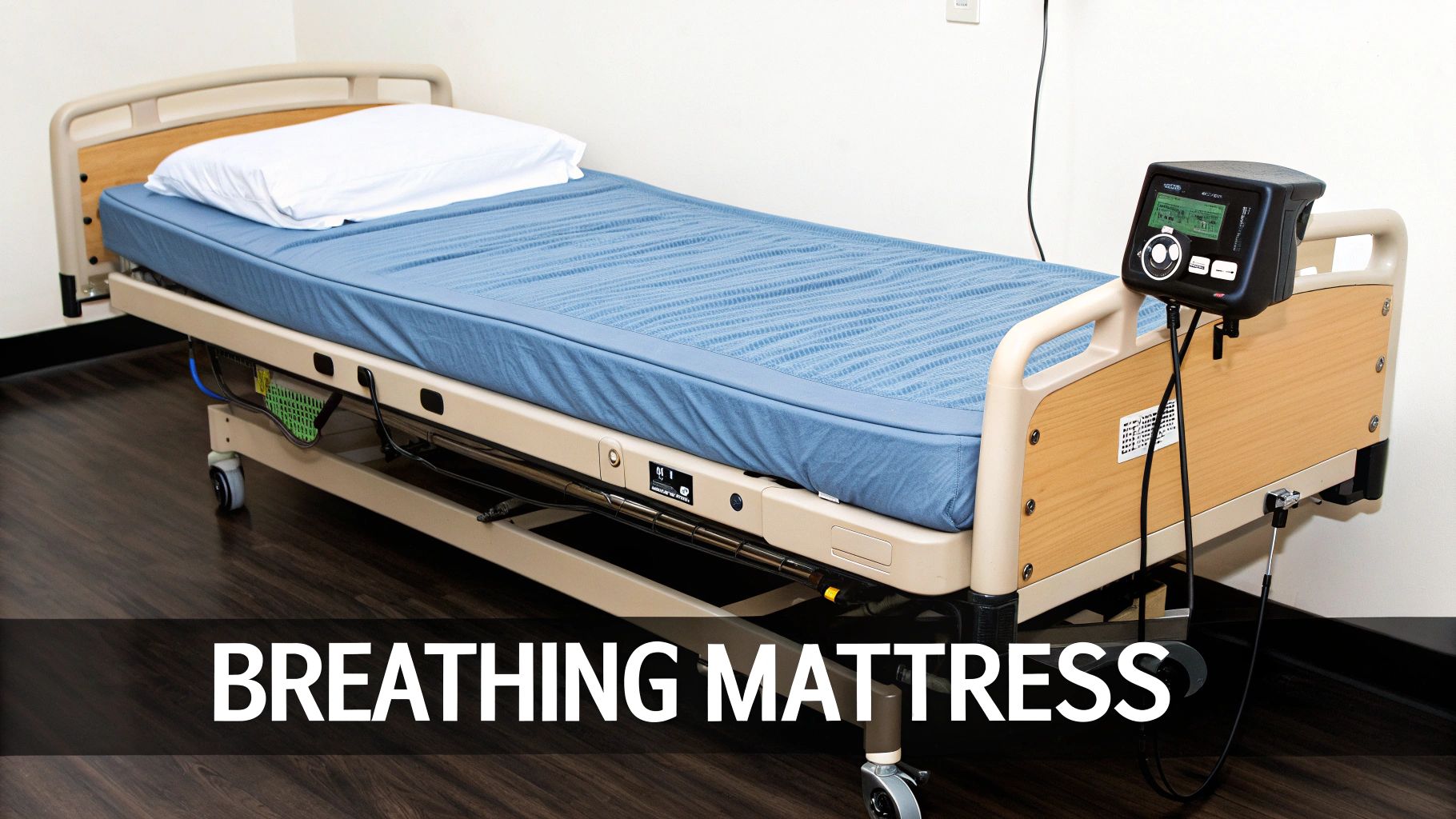
The primary purpose of a low air loss mattress is to manage the skin's microclimate—the thin layer of air and moisture between a person's skin and the mattress.
By circulating a continuous, low-volume stream of air, the mattress wicks away perspiration and prevents heat buildup. This keeps the skin cool, dry, and healthy, which is a critical factor in preventing pressure injuries, commonly known as bedsores. This function makes it an essential piece of medical equipment for long-term patient care.
The Science of Skin Protection
A standard mattress can trap heat and moisture, creating an environment where skin can soften and break down. A low air loss system operates on a different principle. It consists of interconnected air chambers that receive a constant supply of air from an external pump. The mattress cover contains microscopic holes that allow small amounts of air to escape, creating a therapeutic air cushion that supports the user.
This gentle, constant airflow is the key. It keeps the skin dry and helps distribute body weight more evenly across the entire surface. This significantly reduces the intense, focused pressure on vulnerable areas like the hips, heels, and tailbone, which are the most common sites for pressure ulcers.
The benefits are not limited to prevention. For individuals with existing skin breakdown, this technology fosters an ideal environment for healing. The objectives are clear and effective:
- Moisture Control: Actively removes perspiration and other moisture that can soften the skin, making it fragile and susceptible to damage.
- Temperature Regulation: Prevents heat from accumulating, which can cause discomfort and increased sweating.
- Pressure Redistribution: Ensures no single point on the body bears excessive weight for prolonged periods.
Ultimately, a low air loss mattress provides a healthier, more comfortable surface for anyone confined to a bed for extended durations. It is a vital tool for maintaining skin integrity and significantly improving an individual's quality of life.
How This Mattress Protects Your Skin
To understand how a low air loss mattress functions, it is helpful to view it as a purpose-built skin protection system. The entire apparatus is powered by a quiet, external pump that delivers a controlled, steady stream of air into a series of interconnected chambers within the mattress.
The design's ingenuity lies in its cover. The top surface of the mattress is perforated with thousands of microscopic, laser-cut holes. Through these tiny openings, a small amount of air gently escapes, creating a therapeutic cushion that effectively floats the user on a pocket of air.
This design accomplishes two critical goals simultaneously, both of which are vital for individuals spending long periods in bed.
The Power of Immersion and Envelopment
First, the mattress excels at immersion and envelopment. These clinical terms describe how well the mattress allows the body to sink in and conforms to its unique shape.
Consider the difference between lying on a hard floor versus soft, dry sand. The floor creates intense pressure points on the hips, shoulders, and heels. The sand, in contrast, yields and distributes weight evenly across the entire body. A low air loss mattress functions similarly to the sand, spreading body weight over the largest possible surface area.
This dramatically reduces pressure on vulnerable, bony prominences like the heels, hips, and sacrum (tailbone). By eliminating these high-pressure zones, the mattress directly addresses the primary cause of pressure injuries.
The core concept behind this technology has existed for decades. Researchers first detailed this type of support system in 1971, aiming for uniform load distribution and moisture evaporation to combat pressure ulcers.
Managing Moisture and Heat Buildup
The second critical function is managing the skin’s microclimate. The constant, gentle airflow escaping through the cover not only provides cushioning but also actively wicks away moisture and heat from the skin.
When skin is exposed to excess moisture from sweat or incontinence, it can become soft and waterlogged—a process known as maceration. Macerated skin is fragile and breaks down easily. The continuous airflow from the mattress prevents this dangerous moisture buildup.
This process offers several key advantages for skin health:
- Prevents Skin Breakdown: By keeping the skin dry, it helps maintain its natural, protective barrier.
- Reduces Friction and Shear: The air cushion minimizes the rubbing and pulling forces that can damage skin during repositioning.
- Improves Comfort: A cool, dry surface is inherently more comfortable, promoting better rest and overall well-being.
Together, these two functions create the ideal environment for maintaining skin integrity. They not only prevent new pressure sores from forming but also establish the right conditions to help heal existing ones. To learn more about how this fits into a broader care plan, check out our guide on the relationship between pressure injury prevention and overall health.
The Real-World Benefits for Patient Health
Understanding the mechanics is important, but the true value of these mattresses lies in their tangible impact on a person's health. Their most significant and immediate effect is in the prevention and management of pressure injuries.
By constantly managing the skin’s microclimate—keeping it cool, dry, and free from the damaging effects of moisture—a low air loss mattress directly addresses the root causes of skin breakdown. For an individual with limited mobility, this represents a profound improvement that can reduce pain, lower the risk of serious infection, and support the healing of existing wounds.
This focus on skin health contributes to an overall better quality of life. A more comfortable patient is able to sleep better, and restorative sleep is essential for both physical healing and mental well-being.
Enhanced Comfort and Reduced Caregiver Strain
A low air loss mattress provides a stable, comfortable surface that cradles the user's body, a significant improvement over standard mattresses that create painful, concentrated pressure points. For a person spending most of their day in bed, this superior support is invaluable.
The benefits extend to caregivers as well. A patient who is comfortable and well-supported often requires less frequent manual repositioning. This dramatically reduces the physical strain and risk of injury for family members and healthcare professionals, making the daily routine of care safer and more sustainable.
Beyond skin protection, the right mattress offers broader health advantages. For instance, knowing how a mattress can help with back pain is a key piece of the overall wellness puzzle. The pressure-relieving design of a low air loss system can also promote better spinal alignment and ease general discomfort, further enhancing a patient's daily comfort. It’s a holistic approach to support that is a cornerstone of effective care.
Clinically Proven Outcomes
These benefits are supported by clinical evidence. Numerous studies confirm that these systems are highly effective at reducing the risk of pressure ulcers.
- One landmark study found that patients using these mattresses had a 70% lower risk of developing pressure ulcers compared to those on standard hospital beds.
- In direct comparisons, these specialized surfaces consistently outperform others, showing 40% higher patient comfort scores.
- This increased comfort often leads to 25% less frequent repositioning by caregivers, a significant reduction in their physical workload.
This data clearly indicates that a low air loss mattress is far more than a comfortable bed. It is a critical medical device that delivers measurable health improvements, enhances patient well-being, and provides indispensable support for caregivers.
Choosing Between Low Air Loss and Alternating Pressure
When exploring specialized mattresses, the terminology can be confusing. The most common point of confusion is the difference between a low air loss mattress and an alternating pressure mattress.
While both use an external pump and are designed to prevent pressure injuries, they achieve this goal through different mechanisms. Selecting the right one depends on the specific needs of the individual.
A low air loss mattress is focused on creating an optimal skin microclimate. Its primary function is to manage heat and moisture by circulating a gentle, constant stream of air. This keeps the skin cool and dry while providing steady, consistent support that allows the user to immerse into the surface, distributing their weight evenly.
An alternating pressure mattress, conversely, is designed for movement. It actively and continuously shifts pressure points across the body.
Different Mechanisms for Different Goals
The key difference lies in their operation. An alternating pressure system is composed of a series of air cells that inflate and deflate on a timer. For a set period—typically 10 to 15 minutes—one set of cells will be firm while the adjacent set is soft. Then, the pattern reverses.
This constant cycling mimics the small, natural movements the body makes, ensuring no single area of the skin bears the body's full weight for too long. It is a dynamic, active approach focused on pressure offloading. To see how these are constructed, you can explore alternating pressure mattress systems.
A simple way to differentiate them is: Low air loss manages the environment around the skin, while alternating pressure manages the forces on the skin. Both are effective, but they prioritize different aspects of skin protection.
This decision tree serves as a visual guide for determining which type of support surface is typically recommended based on a person's mobility level.
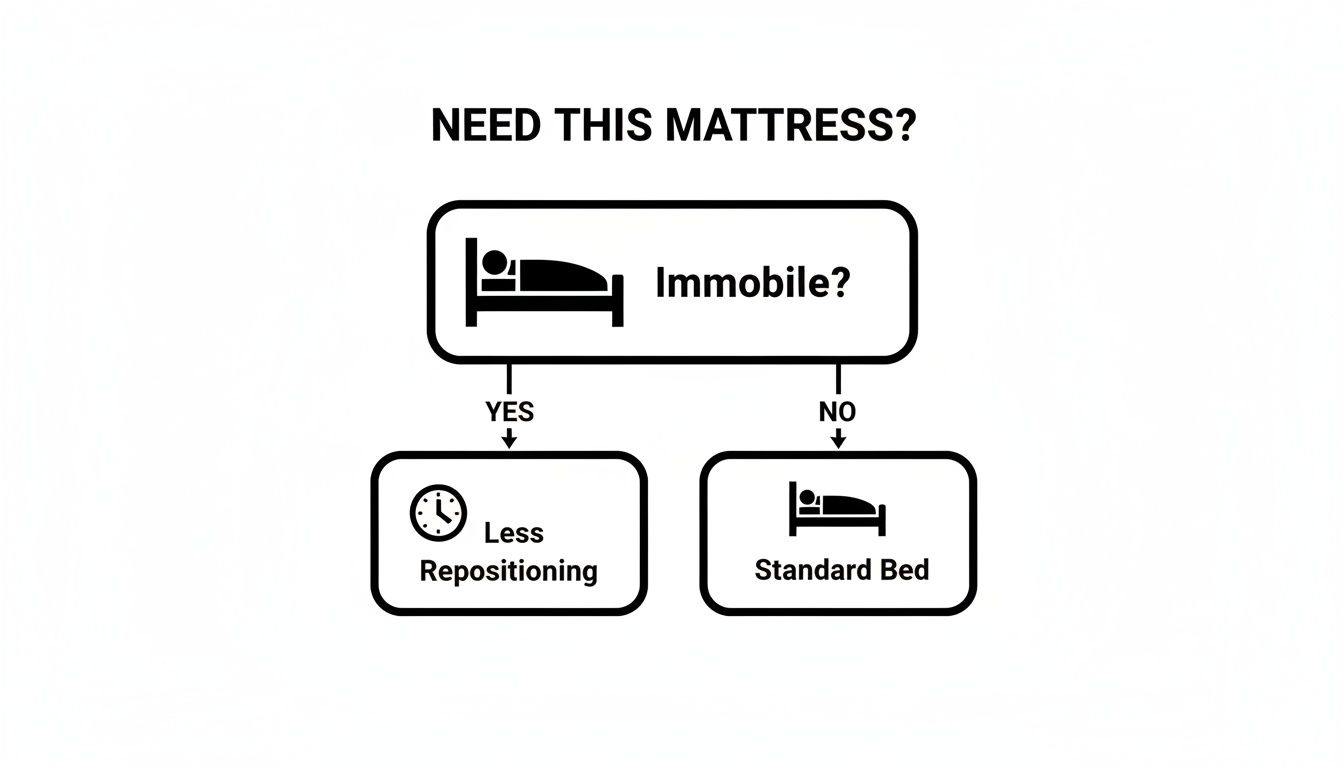
As the flowchart illustrates, the less an individual can move independently, the more critical a specialized mattress becomes for skin protection.
Feature Comparison Low Air Loss vs Alternating Pressure Mattresses
To make an informed choice, comparing the features side-by-side is helpful. This table breaks down their core functions and ideal user profiles.
| Feature | Low Air Loss Mattress | Alternating Pressure Mattress |
|---|---|---|
| Primary Goal | Manages skin microclimate (heat & moisture). | Actively redistributes pressure points. |
| Mechanism | Continuous, gentle airflow through tiny holes. | Air cells inflate and deflate in cycles. |
| User Sensation | A stable, floating sensation on a dry surface. | A gentle, continuous shifting motion. |
| Best For | Patients prone to sweating, incontinence, or maceration. | Highly immobile patients unable to reposition at all. |
Many modern therapeutic mattresses are hybrid systems, combining both low air loss and alternating pressure functions to offer comprehensive benefits. However, understanding their fundamental differences is the crucial first step toward selecting the right surface for comfort and skin health.
Who Needs a Low Air Loss Mattress?
While anyone might find a low air loss mattress comfortable, this technology is a medical tool designed for individuals facing specific health challenges that put their skin at significant risk.
The primary candidates are individuals with severely limited mobility, such as someone who is bed-bound for most of the day or spends long hours in a chair. When a person cannot shift their own weight, pressure builds on bony areas like the hips, tailbone, and heels, creating conditions conducive to skin breakdown.
Key Patient Profiles
Beyond general immobility, certain conditions necessitate the advanced support of a low air loss mattress. It is an essential piece of equipment for anyone who is:
- Recovering from extensive surgery, where prolonged bed rest is a mandatory part of the healing process.
- Living with a neurological condition that impairs movement, such as multiple sclerosis, a spinal cord injury, or advanced Parkinson's disease.
- Prone to heavy perspiration or incontinence, where continuous airflow is crucial for wicking away moisture and preventing the skin from becoming overly soft and fragile.
For people in these situations, a low air loss mattress is a frontline defense. It actively protects the skin by creating a dry, low-pressure environment where healing can occur and new injuries can be prevented.
The need for this type of support surface is increasing. With an aging population and more individuals managing chronic conditions at home, the demand for therapeutic mattresses is rising. One analysis demonstrated that when a facility replaced its standard foam mattresses with low air loss surfaces, the incidence of new pressure ulcers dropped by nearly 45% in just six months. You can find more data on the growing air mattress market.
The bottom line: if you or someone you care for spends more than 15 hours a day in bed and struggles with mobility or moisture management, a low air loss mattress is a vital investment in their health, comfort, and overall quality of life.
Key Features to Consider Before You Buy
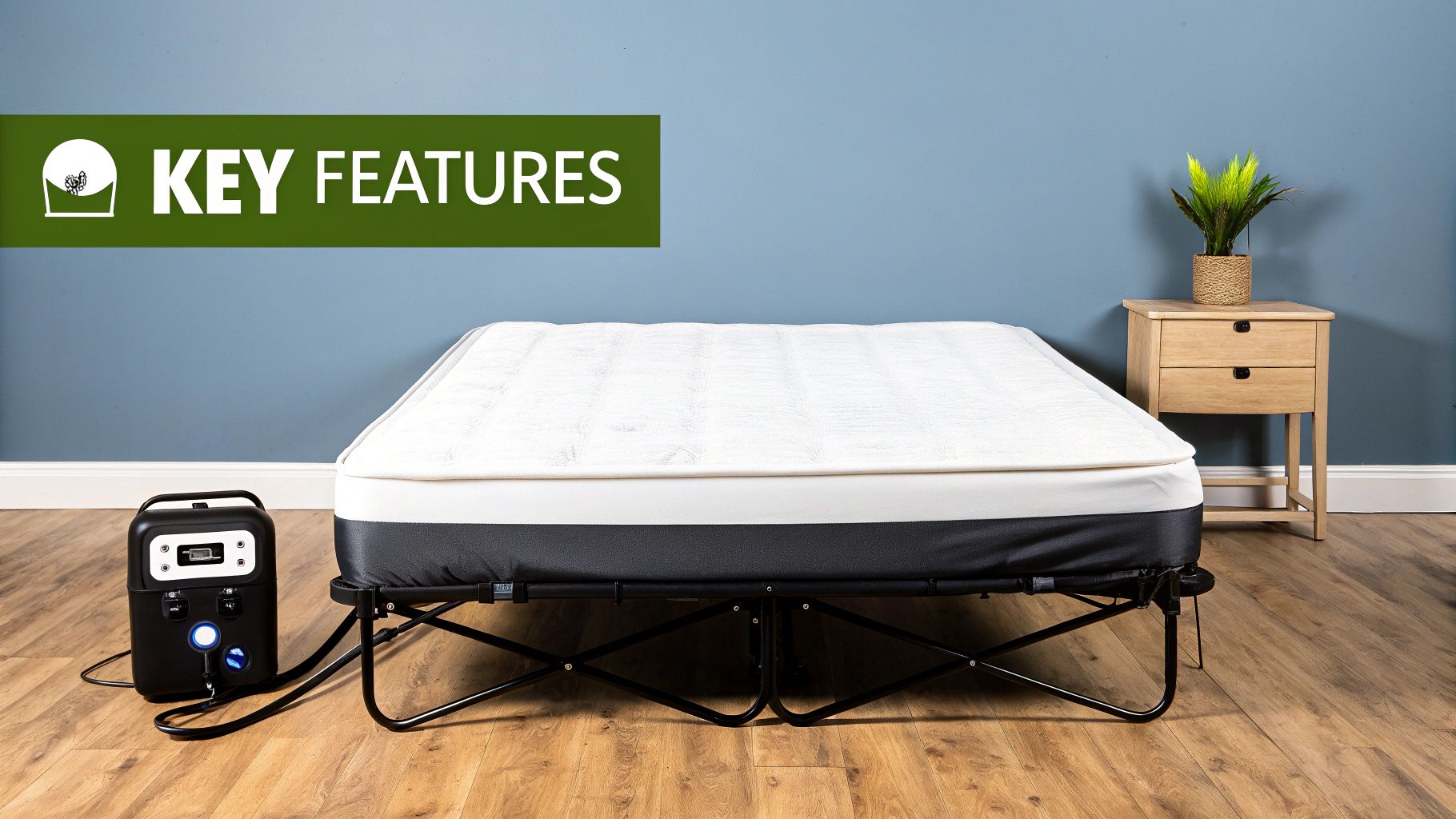
Selecting the right low air loss mattress involves more than just its basic function. It requires examining the practical, day-to-day features that benefit both the user and the caregiver. While it is helpful to know the basics of what to look for when buying a mattress in general, these therapeutic systems have their own unique set of crucial details.
First, always verify the weight capacity. The mattress must be able to safely support the user. This is particularly important for bariatric individuals, as a higher capacity is necessary for the system to function correctly and provide optimal pressure relief.
Next, consider the pump's noise level. This pump will operate 24/7 to maintain airflow, so a quiet model is essential. A loud motor can disrupt sleep and create a stressful environment.
Essential Features Checklist
Beyond the fundamentals, several key features distinguish a standard mattress from a superior one. These functions are designed to enhance comfort and, more importantly, improve safety during daily care.
-
Cover Material: The best covers are made from a combination of materials. Look for one that is vapor-permeable, allowing air to pass through for moisture control, yet also waterproof to protect the mattress from spills or incontinence. A removable, machine-washable cover is essential for maintaining hygiene.
-
Static Mode: This is a critical safety feature. At the press of a button, "static mode" firms up the entire mattress. This creates a stable surface, making it safer for caregivers to reposition the user or assist with transfers in and out of bed.
-
Seat Inflate Feature: For anyone who can sit up in bed, this function is highly beneficial. It automatically inflates the seat and torso sections with extra air, providing firm support where it's needed most. This prevents the user from "bottoming out"—sinking so far down that their body contacts the hard bed frame.
A mattress that includes these features offers a more complete solution. It balances the therapeutic goal of pressure relief with the practical needs of everyday care, such as helping someone sit up comfortably or move safely.
When you're ready to make a final decision, understanding these details will be invaluable. For more guidance, our guide on how to choose the best pressure relief mattress can walk you through comparing models to find the perfect match.
Common Questions About Low Air Loss Mattresses
When researching a low air loss mattress, several practical questions often arise. Clear answers are key to feeling confident about this important medical equipment. Here are the most common concerns.
Using and Maintaining Your Mattress
A frequent question is whether these mattresses can be placed on an existing bed frame. While technically possible, they perform best when paired with an adjustable hospital bed frame. This combination maximizes the pressure-relieving benefits and simplifies daily care and repositioning.
Another common concern is electricity consumption. Does running the pump 24/7 use a lot of power?
Modern low air loss pumps are designed for high efficiency. The energy consumption of a typical pump is comparable to a single 60-watt light bulb, so its impact on utility costs is minimal.
Finally, what is involved in cleaning? Maintenance is straightforward and designed for home use. The waterproof top cover can be wiped down with a disinfectant or, in many cases, removed for machine washing. It is also important to periodically check that the air hoses are securely connected and not kinked to ensure the system operates correctly.
Step-By-Step Cleaning Guide
Maintaining a hygienic mattress is a simple routine. Follow these general steps:
- Prepare the Surface: Turn off and unplug the pump. If the user is out of bed, slightly deflating the mattress can make it easier to clean.
- Wipe Down the Cover: Use a soft cloth with a mild detergent or a hospital-grade disinfectant to clean the entire top surface, paying close attention to seams.
- Check Hoses and Connections: Gently wipe the air hoses and confirm they are firmly attached to both the pump and the mattress.
- Dry Thoroughly: Allow the cover to air dry completely before placing clean linens back on the bed.
This simple process helps maintain a safe and clean environment for the user.
At DME Superstore, we are committed to providing solutions that improve safety and independence at home. Our curated selection of low air loss and alternating pressure mattresses is designed to meet a wide range of clinical needs and enhance quality of life. Explore our products today at https://dmesuperstore.com.

