



An alternating pressure mattress is a highly specialized surface designed to both prevent and help heal pressure ulcers, more commonly known as bedsores. It accomplishes this with a clever system of air cells that systematically inflate and deflate in cycles. This constant, subtle movement continuously shifts pressure points under the body, which is critical for promoting healthy blood flow to the skin.
This dynamic surface is an essential therapeutic tool for anyone with limited mobility who must spend long periods in bed.
How Does an Alternating Pressure Mattress Actually Work?
Medical equipment can seem complex, but the principle behind an alternating pressure mattress is straightforward. Imagine it as a very slow, gentle, rhythmic wave. Instead of allowing a person’s body to remain in one fixed position, the mattress creates continuous, subtle movement that constantly redistributes their weight.
This constant shifting is the key to its therapeutic effect. When a person cannot easily reposition themselves, the prolonged pressure on bony areas like the hips, heels, and tailbone can restrict circulation. This lack of blood flow leads to skin breakdown and the formation of painful and dangerous pressure ulcers.
Who Is This Type of Mattress For?
An alternating pressure mattress is not a standard consumer product; it's a clinical tool designed for specific medical needs. It provides essential support for a wide range of individuals facing mobility challenges.
Some of the most common users include:
- Post-Surgery Patients: After a major surgery, mobility is often severely limited. This makes patients highly susceptible to pressure sores during their recovery.
- Individuals with Chronic Illness: Conditions that confine a person to bed for the long term, such as advanced multiple sclerosis or paralysis, require proactive skin protection.
- Frail Older Adults: Seniors who are bed-bound or find it difficult to move independently are at an extremely high risk for skin integrity issues.
- High-Risk Patients: Anyone identified by a healthcare professional as being at a high or very high risk for pressure ulcers based on a clinical assessment will benefit significantly from this technology.
At its core, an alternating pressure mattress is a prevention tool. Its main function is to offload pressure before skin damage has a chance to begin, creating an environment where the body can stay healthy. This proactive approach is key to avoiding complications that are far more difficult and expensive to treat.
To understand how these specialized mattresses fit into the broader landscape of sleep surfaces, it helps to first learn about various mattress types and their intended purposes. While a standard mattress focuses on comfort, medical surfaces like this one are engineered for specific health outcomes. They are often used alongside other technologies for comprehensive care.
How These Mattresses Protect Vulnerable Skin
To fully appreciate what an alternating pressure mattress does, it's helpful to look at the mechanics behind its protective function. The entire system is powered by a small, quiet external pump that connects to the mattress with air hoses. This pump acts as the "brain" of the operation, managing a controlled cycle of inflation and deflation.
Inside the mattress is a series of interconnected air cells, typically arranged in rows from head to toe. The pump pushes air to inflate certain cells while simultaneously deflating others in a continuous, rhythmic pattern. This creates a gentle, wave-like motion across the surface of the bed.
This constant movement is the secret to preventing skin breakdown. When some air cells are inflated, they support the body’s weight. Then, as they deflate, the adjacent cells inflate, shifting the points of contact. This relieves pressure long before it can restrict blood flow to the skin.
The Cycle of Pressure Relief
This inflation and deflation cycle is not random. It’s a carefully timed process designed to remove the load from the body's most vulnerable spots. These high-risk areas are known as bony prominences—the tailbone (sacrum), hips, heels, elbows, and shoulder blades.
This simple visual breaks down the process into three steps: pressure is applied, the mattress shifts support, and the skin gets relief.
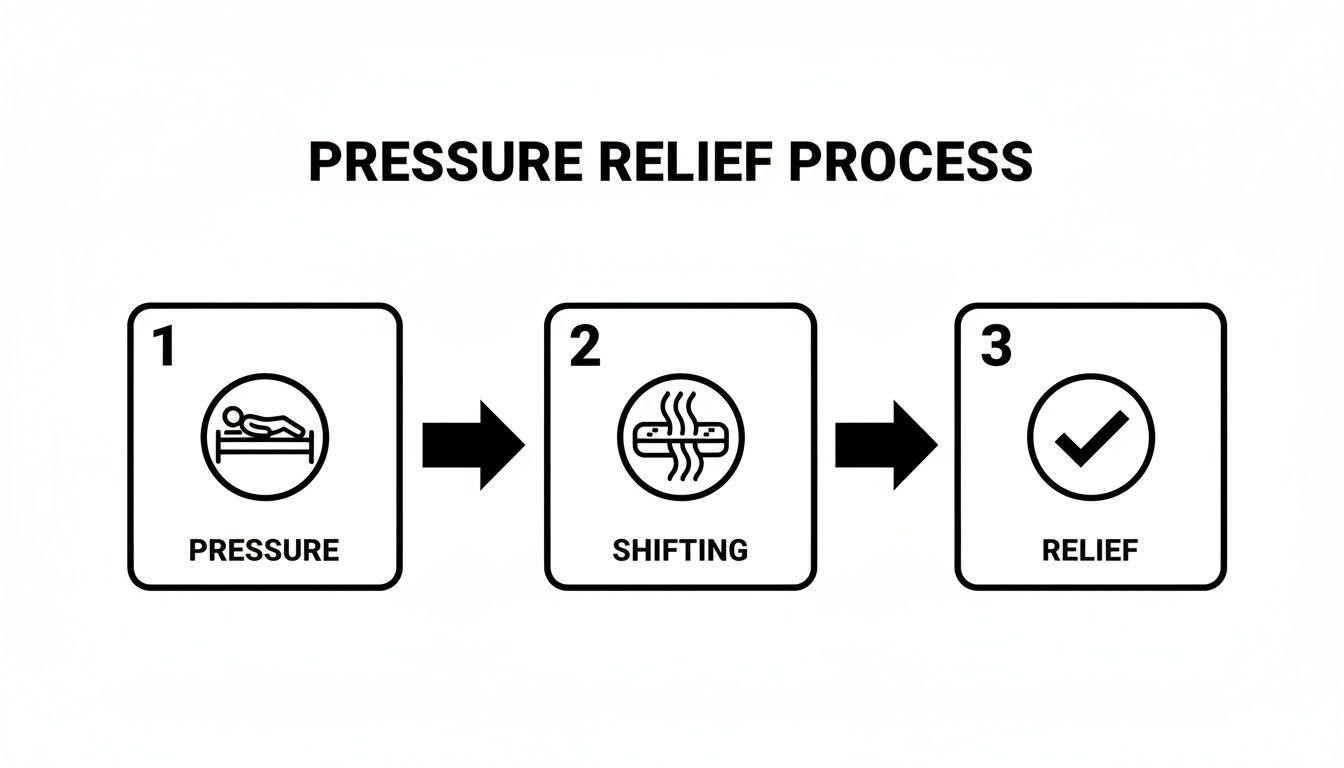
This flow illustrates the mattress's core function: it actively intervenes to ensure no single area of skin bears the body's full weight for too long. That constant, unrelieved pressure is a primary cause of bedsores.
Caregivers can adjust the cycle time on the pump's control unit, which typically ranges from 10 to 20 minutes. This means that every few minutes, the pressure points on the user's body are automatically changed. It mimics the natural fidgeting and repositioning that a mobile person performs subconsciously—a significant benefit that reduces the need for frequent, manual turning by caregivers.
Beyond Pressure: Advanced Skin Protection
Many of today's alternating pressure mattresses also incorporate another critical technology: Low Air Loss (LAL). While alternating pressure handles weight distribution, low air loss combats another enemy of skin health: moisture. Skin that remains too moist becomes soft and fragile, making it much more susceptible to damage from friction.
LAL systems solve this with microscopic, laser-cut holes in the surface of the air cells. The pump pushes a steady, gentle flow of air through these tiny openings, which circulates underneath the person. This airflow provides two important benefits:
- It wicks away moisture: The air helps evaporate sweat and other moisture, keeping the skin comfortably dry.
- It regulates temperature: By preventing heat and humidity from being trapped, it helps maintain a healthier microclimate directly against the skin.
When you combine pressure redistribution with moisture control, you create the ideal healing environment. The improved blood flow from the alternating pressure, paired with the cool, dry surface from low air loss, gives the skin its best possible chance to remain healthy and intact.
This dual-action approach is particularly beneficial for individuals who have difficulty regulating their body temperature or are prone to sweating.
Turning Technology into Real Health Benefits
Ultimately, these technical features deliver real, measurable health outcomes. The constant shifting of pressure directly improves tissue perfusion—the medical term for blood flow through the tiny vessels in the skin. When blood can flow freely, it brings the oxygen and nutrients needed to keep skin cells alive and strong.
Additionally, the gentle surface helps minimize damage from shear and friction. Shear occurs when the skin is pulled in one direction while the bone underneath moves another way, stretching and tearing cell walls. By creating a supportive, low-friction surface, the mattress helps protect against these invisible but deeply damaging forces. It's this combination of features that makes an alternating pressure mattress an essential tool for both preventing and treating pressure injuries.
The Real-World Benefits of Dynamic Pressure Relief
Understanding the mechanics of an alternating pressure mattress is one thing, but seeing its profound impact on a person's well-being is what truly matters. This technology is far more than just a piece of equipment; it's a proactive tool that genuinely enhances quality of life. The benefits are both immediate and long-term, affecting everything from skin health to a caregiver's peace of mind.
The single most critical benefit is its proven effectiveness in preventing and treating pressure ulcers. In fact, studies show that a staggering 95% of all pressure sores are preventable, and this type of mattress is a frontline defense. By constantly redistributing a person's weight, it ensures vulnerable areas of the skin get the blood flow they desperately need to stay healthy.
This dynamic relief directly translates into several key clinical outcomes that protect the user from the debilitating pain of skin breakdown.
Enhancing Circulation and Skin Integrity
The constant, gentle motion of the air cells provides a significant boost to tissue perfusion—the flow of blood through the tiny vessels in the skin and underlying tissues. When a person is immobile, their body weight can easily compress these vessels, essentially starving the cells of oxygen and nutrients. This is the root cause of every pressure injury.
An alternating pressure mattress actively counteracts this process. By offloading pressure from different spots every few minutes, it allows blood to circulate freely, keeping the skin nourished, resilient, and far better equipped to resist damage. It's a continuous, automated process that works around the clock to maintain skin health.
This is especially vital for individuals with conditions that already compromise circulation, such as diabetes or peripheral vascular disease. For them, a specialized mattress is not just a comfort item—it’s an essential part of their comprehensive care plan.
Minimizing Harmful Shear and Friction Forces
Beyond direct pressure, two other invisible forces can damage fragile skin: shear and friction.
- Friction is the rubbing that occurs when skin is dragged across a surface, like a bedsheet. This can cause surface-level abrasions and irritation.
- Shear is a more damaging internal force. It happens when the skin stays put but the underlying bone moves—for instance, when the head of a bed is raised and a person slides down slightly. This stretches and tears cell walls and blood vessels beneath the skin's surface.
An alternating pressure mattress helps minimize both of these threats. Its smooth, low-friction cover reduces rubbing, while the cell-on-cell design helps cradle the body, preventing the subtle sliding that leads to dangerous shear forces. This creates a safer environment where the skin is protected from these destructive mechanical stresses.
Using an alternating pressure mattress is about creating an optimal healing environment. By managing pressure, shear, and moisture simultaneously, it gives the body the best possible chance to not only prevent sores but also heal existing ones more effectively.
Improving Comfort and Reducing Caregiver Strain
The benefits extend far beyond clinical metrics. For someone confined to bed, constant pain and discomfort can be overwhelming. The gentle, supportive surface of an alternating pressure mattress provides significant relief, helping to manage pain and improve overall comfort. Better comfort almost always leads to better sleep, which is fundamental to both healing and mental well-being.
This technology also provides a major advantage for caregivers. The need for manual repositioning—turning a patient at least every two hours—is physically demanding and can be disruptive, especially through the night. While a mattress does not eliminate the need for turning, it greatly reduces its frequency and urgency.
This lightens the physical and emotional load on caregivers, helping to prevent burnout and allowing them to focus on other aspects of care. It’s a tool that supports both the patient and the person looking after them.
Choosing Between Overlays and Full Replacement Systems
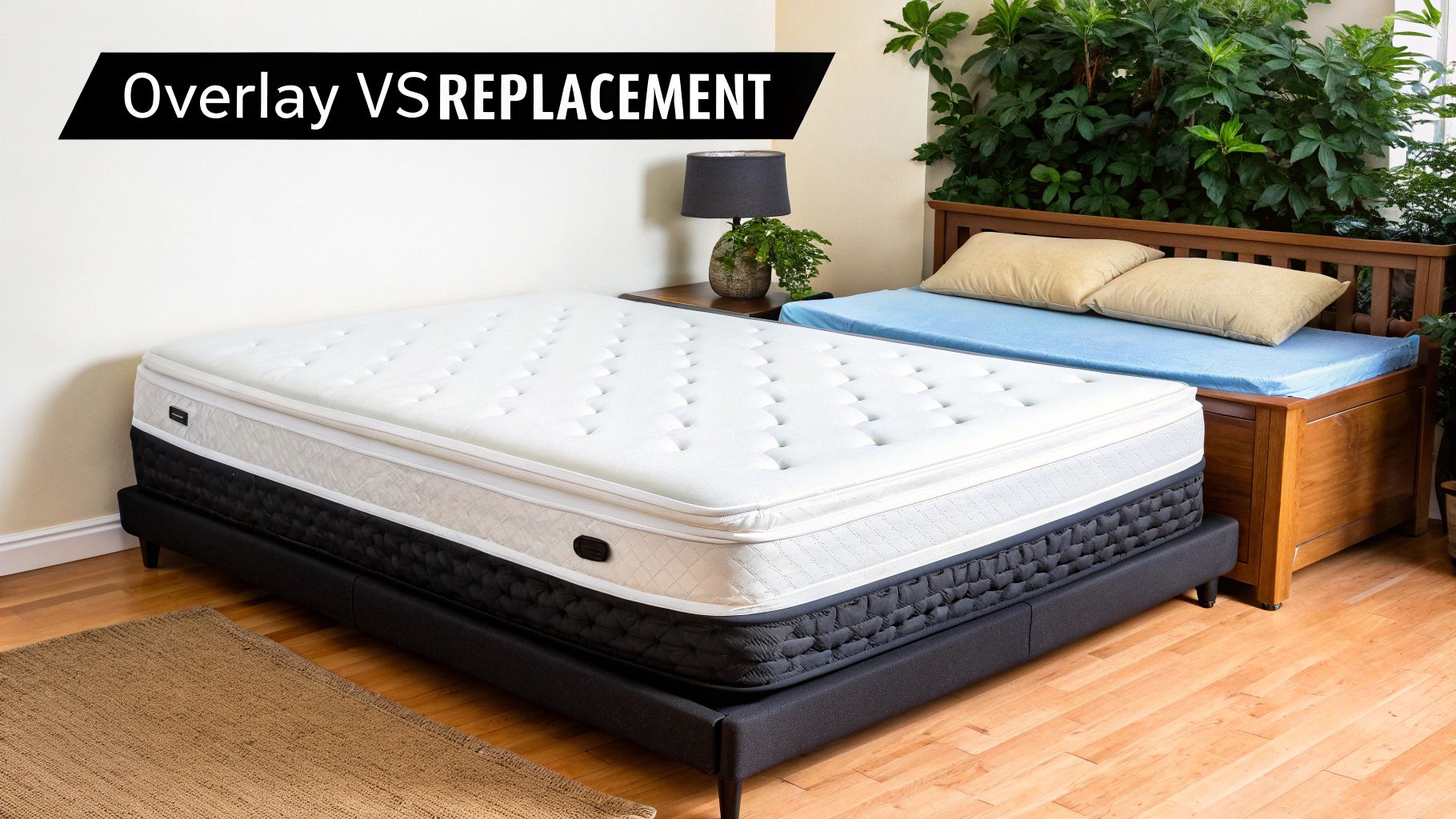
When you begin researching alternating pressure mattresses, you’ll quickly find they come in two main forms: overlays and full mattress replacement systems. They both use the same pressure-shifting technology, but they are designed for different situations. Choosing the right one is about matching the equipment to the user's specific health needs to achieve the best possible outcome.
The decision primarily depends on the individual's mobility, their assessed risk level for developing pressure sores, and the overall goals of their care plan. Understanding the key differences between these two systems is the first step toward making an informed choice.
Understanding Mattress Overlays
A mattress overlay can be thought of as a therapeutic mattress topper. It is a pad filled with air cells that is placed directly on top of an existing mattress, whether it’s a standard bed or a hospital bed.
Typically 3 to 5 inches thick, overlays are an excellent option for individuals at a low to moderate risk of developing pressure ulcers. They provide a significant upgrade in skin protection without requiring the replacement of the entire bed setup.
- Best For: Individuals who still have some mobility and can shift their own weight occasionally.
- Risk Level: Suitable for those with a Braden Scale score indicating low or moderate risk.
- Use Case: Often used for shorter-term recovery periods or as a proactive measure for someone whose condition has not yet become severe.
It is important to note that an overlay’s effectiveness depends on the quality of the mattress beneath it. If the existing mattress is old, sagging, or unsupportive, the overlay may not function optimally. A poor base can create a "hammock" effect that concentrates pressure on sensitive areas like the hips and tailbone.
Exploring Full Mattress Replacement Systems
A full mattress replacement system is exactly what it sounds like—it completely replaces the current mattress. These systems are much thicker, usually 8 inches or more, and they offer a more comprehensive level of therapy. They are placed directly on the bed frame, requiring no other mattress.
These are the recommended solution for anyone at high or very high risk of skin breakdown. They are designed for individuals with significant mobility challenges who are partially or completely bed-bound.
A full replacement system provides complete control over the entire support surface. This is a crucial advantage because it eliminates the risk of an inadequate base mattress undermining the therapy, ensuring consistent and reliable pressure relief across the whole body.
Full replacement systems also tend to offer more advanced features. A common one is a "cell-on-cell" design, where a bottom layer of air cells remains inflated to provide a firm base, even in the event of a power outage. Our detailed guide on how to choose the best pressure relief mattress explores these features in greater detail.
To help you decide, here's a quick comparison of the two systems to see which one might be the best fit for your specific care needs.
Comparing Alternating Pressure Mattress Systems
| Consideration | Mattress Overlay System | Full Replacement System |
|---|---|---|
| Risk Level | Low to moderate | High to very high |
| User Mobility | Some mobility, can reposition | Limited to no mobility, bed-bound |
| Thickness | Typically 3 to 5 inches | Typically 8+ inches |
| Setup | Placed on top of an existing mattress | Replaces the existing mattress |
| Best For | Prevention, short-term use | Aggressive treatment, long-term care |
| Key Advantage | Cost-effective, easy to install | Comprehensive therapy, advanced features |
Ultimately, selecting a full replacement system when clinically indicated provides a much higher standard of care for vulnerable individuals.
Considering Specialty and Bariatric Options
Beyond the two main types, specialty mattresses are also available. For heavier individuals, bariatric alternating pressure mattresses are essential. They are constructed with more durable materials and more powerful pumps to support weight capacities up to 1,000 pounds, ensuring the therapy remains effective for larger body types.
You can also find advanced hybrid systems that blend alternating pressure with other technologies like low air loss or gel-infused foam. These multi-therapy surfaces are designed to manage pressure, moisture, and temperature—offering the highest level of skin protection for the most vulnerable users.
Navigating Insurance and Payment Options
Understanding the financial aspect of acquiring medical equipment is an important step. Fortunately, an alternating pressure mattress is often more accessible than many people assume. With the correct documentation and a clear plan, there are several pathways to make this essential equipment affordable.
These mattresses are classified as Durable Medical Equipment (DME). This classification is crucial because it is the designation that allows for insurance coverage when a physician determines the mattress is medically necessary for home use.
Unlocking Insurance Coverage
For most families, the primary question is, "Will insurance cover this?" The answer is often yes, but it requires following a specific process.
- A Doctor's Prescription is Key: Coverage almost always begins with a prescription. A physician must formally document that an alternating pressure mattress is medically necessary to either prevent or treat pressure sores.
- Proof of Medical Necessity: Along with the prescription, the physician must provide detailed notes from the patient's medical record. This documentation should clearly describe the person's condition, mobility challenges, and specific risk factors (such as a low Braden Scale score) that justify the need for this type of mattress.
This process can be viewed as building a case for why the mattress is a medical necessity, not a luxury item. Clear, thorough documentation from a healthcare provider is the single most important factor in getting coverage approved by Medicare Part B or a private insurance plan.
Once you have this paperwork, you can work with a DME supplier to submit the claim. While it involves several steps, it is the most effective way to significantly reduce out-of-pocket costs. To better understand how these items are categorized, you can learn more about what is considered Durable Medical Equipment in our detailed guide.
Practical Payment and Financing Solutions
If insurance does not cover the full amount, or if you prefer to purchase the mattress directly, there are still excellent options available to manage the cost.
One of the most efficient payment methods is using pre-tax health accounts.
- Flexible Spending Accounts (FSA): If you have an FSA through an employer, you can use those funds to purchase an alternating pressure mattress. Because the money in an FSA is pre-tax, you save an amount equivalent to your income tax rate.
- Health Savings Accounts (HSA): HSAs function similarly. The funds in the account are designated for qualified medical expenses—and a DME mattress is a qualified expense. It is another tax-advantaged way to pay.
For those who prefer to spread the cost over time, modern financing solutions can break the purchase into manageable monthly payments. Services like Affirm allow you to receive the mattress immediately and pay for it in smaller, predictable installments, usually with clear interest terms. This approach eliminates the need for a large upfront payment, ensuring you can acquire the right mattress when it is needed most.
Your Top Questions, Answered
Deciding on a piece of medical equipment like this naturally brings up practical questions about how it will fit into daily life. To help you feel completely confident, we’ve put together answers to the most common questions we hear from both users and caregivers.
Our goal is to provide the practical, real-world knowledge you need to get the most out of this technology from day one.
How Noisy Is the Mattress Pump?
This is often one of the first and most important concerns. A good night's sleep is essential for healing, and no one wants a loud machine disrupting their rest.
Fortunately, modern pumps are engineered to be exceptionally quiet. They produce a soft, consistent hum that most people compare to a small computer fan or a quiet refrigerator. It’s a gentle background noise that is easy to tune out and should not interfere with sleep.
If you ever notice the pump becoming louder than usual, there are a couple of quick things to check:
- Placement: Is the pump on a solid, flat surface like the floor or a bedside table? Placing it on something soft or uneven can cause vibrations, which creates extra noise.
- Hose Connections: Ensure the air hoses are securely pushed into both the pump and the mattress. A loose connection can sometimes create a hissing sound or make the pump work harder than necessary. Also, check that the hoses aren't kinked or pinched.
A properly functioning pump should be a quiet partner in care, not a source of disruption.
Can I Use Regular Bed Sheets?
Yes, you can absolutely use standard bed sheets, but there is one small but crucial tip to keep in mind. It is best to use fitted sheets that are not pulled too tight.
The mattress’s air cells need room to inflate and deflate. If a sheet is stretched too tautly across the surface, it can restrict that movement. This creates what's known as the "hammock effect"—the tight sheet bridges the gaps between the cells, preventing your body from sinking into the deflated cells as intended.
An overly tight sheet can actually work against the mattress, reducing its therapeutic effect by impeding pressure redistribution. To avoid this, simply use deep-pocket sheets or leave a little slack in your regular fitted sheet. This gives the air cells the freedom to move and conform perfectly to the body.
It's a simple adjustment that makes a significant difference in ensuring the mattress can perform its function correctly.
How Do You Clean an Alternating Pressure Mattress?
Keeping the mattress clean is straightforward and vital for maintaining a hygienic environment, which is a key component of skin health. The mattress is designed to make routine cleaning simple.
The entire mattress is encased in a waterproof, vapor-permeable cover. This cover acts as the first line of defense, protecting the internal air cells from spills or moisture. For daily wipe-downs, you can use a mild disinfectant solution approved for medical equipment.
For a deeper clean, it is always best to follow the manufacturer's specific instructions. Just be sure the cover is completely dry before putting any sheets back on. It is also a good practice to periodically wipe down the pump unit itself, paying close attention to the air vents to keep them clear of any dust.
What Is the Difference Between Alternating Pressure and Low Air Loss?
This is an excellent question because these two technologies are often found in the same mattress, but they perform very different jobs. Understanding the distinction helps clarify how an advanced mattress works to protect the skin.
- Alternating Pressure: This function is all about mechanically offloading pressure. Its sole job is to constantly redistribute your body's weight by inflating and deflating different air cells in a cycle. This promotes blood flow to the skin by ensuring no single area is under constant stress.
- Low Air Loss (LAL): This function focuses on managing the skin’s microclimate. It uses thousands of tiny, laser-cut holes in the mattress surface to release a gentle, continuous flow of air. This airflow helps wick away moisture from sweat or incontinence, keeping the skin cool and dry.
Many of the most effective mattresses on the market are hybrid systems that combine both alternating pressure and low air loss. They offer a powerful, two-pronged approach to skin protection by tackling both pressure and moisture—the two biggest threats to healthy skin. This combination creates the ideal healing environment.
At DME Superstore, we are committed to providing you with not only the best equipment but also the knowledge to use it confidently. Explore our curated selection of alternating pressure and low air loss mattresses to find the perfect solution for your home care needs.
Find the right pressure relief mattress for you at dmesuperstore.com

