



Using a standard twin sheet on a hospital bed is a common mistake that simply doesn't work. The most prevalent size for a hospital bed is Twin XL, which measures 36 by 80 inches. Choosing the wrong size can compromise a patient's comfort and even their safety, as poorly fitting sheets can bunch up or slip off, creating hazards.
Why Hospital Bed Sheet Sizes Matter
Selecting the right sheets for a hospital bed might seem like a small detail, but it has a significant impact on a patient’s daily comfort and care. Sheets that don’t fit correctly will inevitably bunch up, creating uncomfortable pressure points that can lead to skin irritation or pressure ulcers. On an adjustable bed, they’ll constantly slip off the corners, which is not only messy but also unsafe.
The correct size is critical. This is especially true for specialized beds, like those with length extensions or wider bariatric models that have their own unique dimensions. Standard bedding from a department store is not designed to accommodate the articulation and specific sizes of medical mattresses.
Think of hospital bed sheets as a foundational layer of care. A secure, well-fitting sheet contributes to uninterrupted rest and makes it easier for caregivers to maintain a hygienic space, directly impacting recovery and well-being.
In medical settings, sheet sizes are designed with these specific needs in mind. The standard fitted sheet for most hospital beds measures approximately 36 inches by 80 inches. This size is built for the typical adult patient beds found in hospitals and long-term care facilities, accounting for over 70% of inpatient setups, according to long-standing industry data. You can learn more from market insights like those from Cognitive Market Research.
Hospital Bed Mattress and Sheet Dimensions at a Glance
Here’s a quick reference chart to help you match the most common hospital bed mattress sizes with the right sheets for a perfect, no-slip fit.
| Bed Type | Typical Mattress Size (Width x Length) | Recommended Fitted Sheet Size | Recommended Flat Sheet Size |
|---|---|---|---|
| Standard Hospital Bed | 36" x 80" | 36" x 80" | 66" x 104" |
| Extended Length Bed | 36" x 84" | 36" x 84" | 66" x 115" |
| Bariatric Bed (Wide) | 42" x 80" | 42" x 80" | 72" x 115" |
| Bariatric Bed (Extra Wide) | 48" x 80" | 48" x 80" | 81" x 115" |
As this chart illustrates, the fitted sheet dimensions must match the mattress exactly. The flat sheet provides generous length and width for tucking and coverage, even when the bed is articulated.
Decoding Hospital Bed Dimensions: From Standard to Bariatric
Before you can choose the right sheets, it's important to understand a key distinction: a "hospital twin" bed is not the same as a standard twin you'd find in a furniture store. They are constructed differently because they serve different functions.
The industry standard for most hospital beds is 36 inches wide by 80 inches long. This specific size is designed to fit mattresses that need to bend and articulate, accommodating patient mobility and comfort.
However, many hospital beds are designed with length extensions to comfortably fit taller individuals, stretching the mattress out to 84 or even 88 inches long. Attempting to use a standard 80-inch sheet on one of these extended beds will result in a constant struggle. The sheet will strain, pop off the corners, or even tear, rendering it useless.
From Standard to Specialized Sizes
Beyond length, the width of the bed is a critical factor, especially for patients with specific medical needs. This is where specialized beds require their own unique sheet sizes.
Here is a breakdown of common hospital bed dimensions:
- Standard Hospital Bed: This is the baseline, measuring 36" x 80".
- Extended-Length Hospital Bed: These models add extra room for taller patients, typically measuring 36" x 84" or 36" x 88".
- Bariatric Hospital Bed: Built to support higher weight capacities, these beds are much wider. They often come in 42", 48", or even 54" widths while maintaining the standard 80-inch length.
Understanding these key differences is the first and most important step to purchasing the right sheets with confidence.
The right fit isn't just about avoiding frustration; it directly impacts patient comfort, safety, and the bed's ability to function as intended.
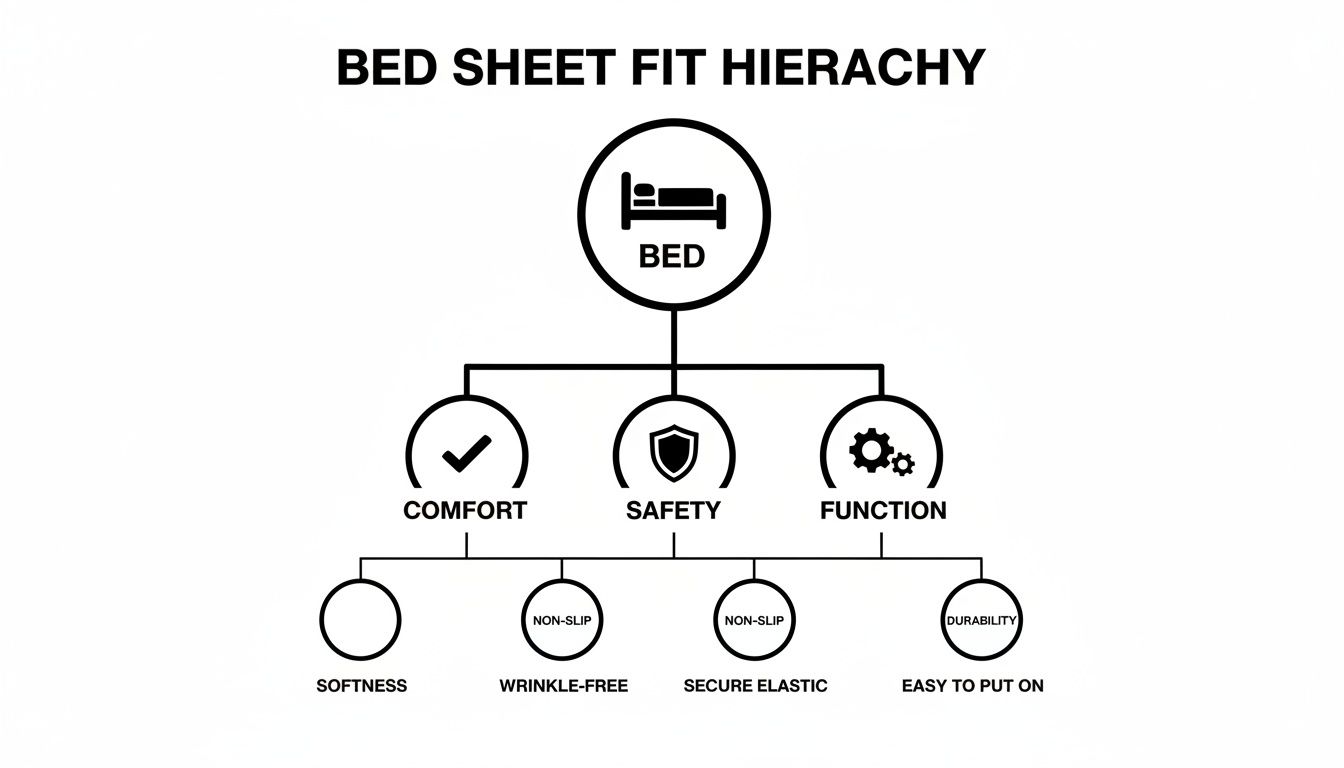
As this diagram shows, proper sheet fit is foundational. It enables a safe and comfortable healing environment by preventing dangerous bunching and ensuring the sheets stay securely in place.
Meeting the Needs of Bariatric Patients
The demand for wider beds—and the linens to match—is increasing. With bariatric patients accounting for roughly 15-20% of hospital admissions in North America, standard-sized sheets are often not a viable option.
These patients require larger sheets, such as 42x84 inches or even 48x90 inches, to properly cover high-capacity mattresses designed to support up to 1,000 pounds.
For those using medical beds at home, it is vital to match these specialized sizes to ensure all components work together seamlessly. Many modern adjustable electric beds are compatible with low-air-loss mattresses, and proper linens are a crucial part of the system. Examining how components like the Rhythm Softcaire DX Bariatric Mattress System function together highlights why every piece, including the sheets, is important.
Confidently identifying your bed type is key. Once you know the exact dimensions, you can choose linens that will remain secure, comfortable, and functional.
How to Measure Your Hospital Bed Mattress Correctly
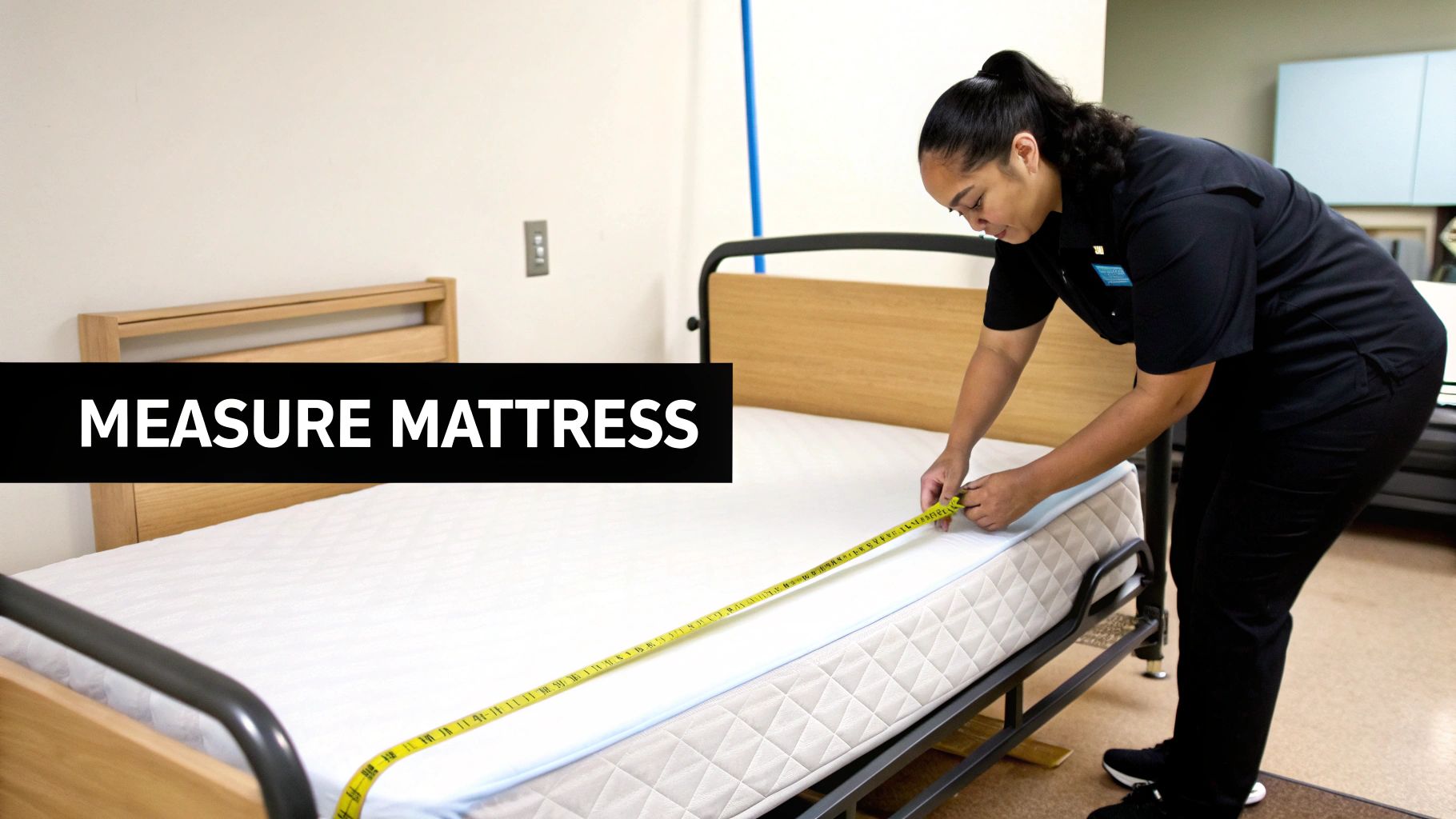
Ensuring sheets fit properly is about more than neatness—it's about patient comfort and safety. The process begins with one simple step: measuring the mattress. Ill-fitting sheets can be a constant source of frustration, but a few minutes with a measuring tape can guarantee a perfect fit.
This differs from buying sheets for a standard home bed, where "close enough" might suffice. A hospital bed must flex, bend, and articulate. The wrong size sheets will pop off the corners or bunch up uncomfortably, creating real problems. Precision is essential.
The Three Key Measurements
Before you begin shopping for sheets, grab a measuring tape and record these three numbers. This simple process eliminates guesswork.
- Measure the Length: Start at the head of the mattress and extend the tape measure straight down to the foot. The standard length is 80 inches, but extended-length beds are often 84 inches long.
- Measure the Width: Measure straight across the mattress from one side to the other. A typical hospital bed is 36 inches wide. For a bariatric model, the width can increase to 42, 48, or even 54 inches.
- Measure the Depth: This measurement is often overlooked but is the primary reason sheets don't fit. Measure the mattress thickness from its bottom seam to the highest point of its surface.
Pro Tip: If you use a mattress topper, an alternating pressure pad, or any other overlay, you must include it in your depth measurement. Measure from the bottom of the mattress to the top of the overlay to determine the true depth your fitted sheet needs to cover.
A Quick Note on Adjustable Beds
The ability to raise the head and feet makes a hospital bed highly functional, but it also creates a challenge for measuring correctly. A sheet that is too tight can restrict the bed's movement, while one that is too loose can become a tangled, unsafe mess.
For total accuracy, ensure the bed is completely flat before you start measuring. Taking measurements while the head or foot is elevated will stretch the mattress and provide incorrect numbers, leading you to purchase the wrong size sheets. A flat, neutral surface is the only way to obtain the true dimensions used by manufacturers.
Choosing the Right Sheet Material and Features
Once you have the correct dimensions, it’s time to consider the fabric and any special features. This is as critical as getting the size right because it directly impacts comfort, skin health, and the longevity of the sheets. The wrong material can feel restrictive and uncomfortable for someone spending extended periods in bed.
For a patient, the feel of the fabric is paramount. It determines the sheet's breathability, softness, and moisture-handling properties. The goal is to find a balance between patient comfort and the durability required for frequent, heavy-duty washing.
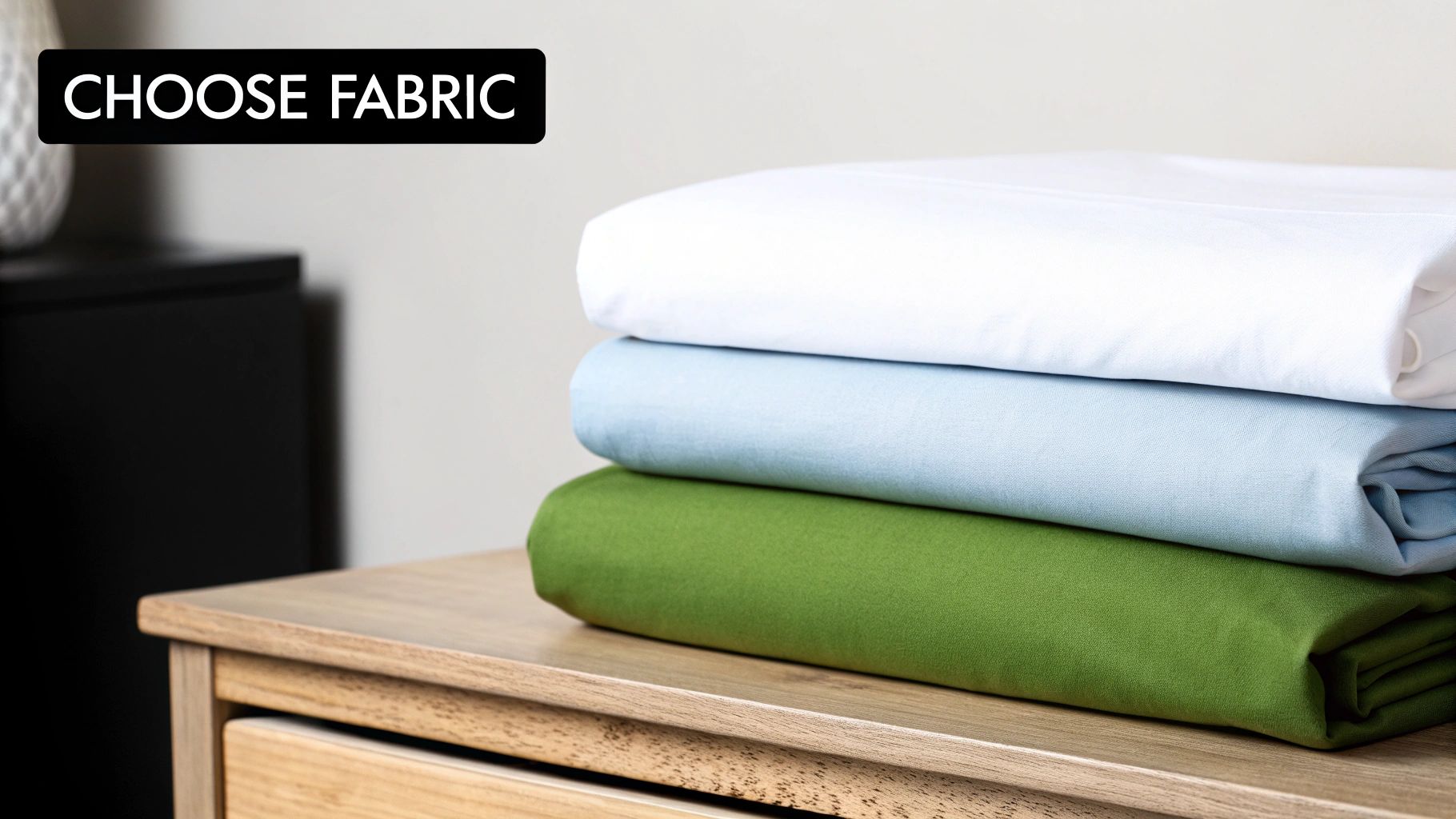
Comparing Common Sheet Fabrics
Each fabric offers different benefits. Some prioritize luxurious softness, while others are engineered for durability and moisture control. The best choice depends on the user's specific needs.
- Cotton and Cotton Blends: Cotton is a classic choice for its softness and breathability. When blended with polyester (polycotton), it gains durability and wrinkle resistance, making these sheets ideal for facilities that perform frequent high-temperature laundering.
- Bamboo: For an incredibly soft and silky feel, bamboo-derived fabrics are an excellent option. They are naturally moisture-wicking and hypoallergenic, which is beneficial for individuals with sensitive skin.
- Linen: For superior breathability and comfort, especially where temperature regulation is a concern, linen is an outstanding choice. You can learn more in this guide to linen sheets for hot sleepers. Linen is also extremely durable and has the unique quality of becoming softer with each wash.
Why Deep Pockets Are Non-Negotiable
When shopping for hospital bed sheets, particularly for an adjustable model, you will encounter terms like "deep pockets" and "gusseted corners." These are not just marketing terms; they are essential features that solve the common problem of the fitted sheet slipping off the corners.
A deep pocket means the corner of the fitted sheet is designed to accommodate a thicker mattress. This became a necessity as adjustable beds evolved, requiring tuck-in depths to increase from the old 7-inch standard to the 12–16 inches common today. These deeper pockets ensure the sheet stays in place, no matter how the bed is positioned.
A gusseted corner is another important feature. It is an extra piece of fabric sewn into the corners, giving the sheet more stretch and flexibility. This allows it to move with the bed as it articulates, preventing stress on the seams and keeping it securely in place.
Keeping Linens Secure on an Adjustable Bed
Anyone who has cared for someone using an adjustable bed knows the frustration of sheets that constantly bunch up, slip off, or become tangled. When the head or foot of the bed is adjusted, standard bedding often cannot stay in place.
This is more than a matter of neatness; it is a significant issue for patient comfort and safety. A secure, smooth surface is essential. Both the fitted and flat sheets play critical roles: the fitted sheet acts as the foundation, gripping the mattress, while the flat sheet provides a comfortable, hygienic barrier between the patient and their blankets.
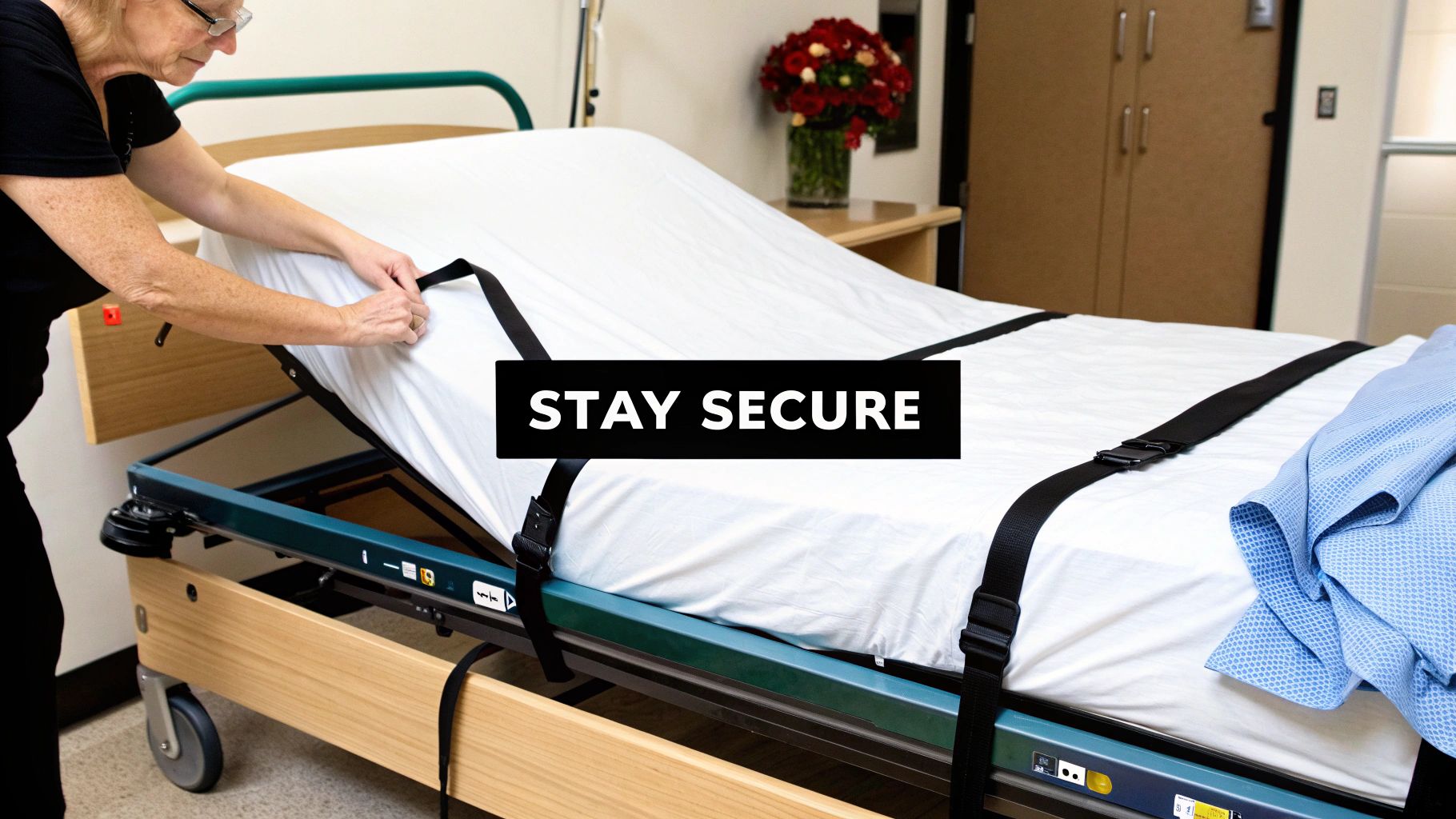
Simple Solutions for a Secure Fit
Fortunately, there are simple accessories designed to solve this problem by gripping the corners of the sheets and creating enough tension to hold them taut, regardless of the bed's position.
These effective tools include:
- Sheet Straps or Suspenders: These elastic straps have clips on each end and run diagonally under each corner, clipping onto the fitted sheet to pull it tight and prevent it from popping off.
- Sheet Fasteners: These are similar but often shorter, designed to create tension at the corners or along the sides of the mattress.
Using these simple tools can make a significant difference in daily care. You can find more practical advice in our article detailing the benefits of adjustable beds and how to maximize their use.
These accessories do more than just keep the bed tidy. They are crucial for preventing the flat sheet and blankets from becoming tangled around a patient, which can create dangerous pressure points and disrupt the comfort of someone who spends significant time in bed.
Proper linen management is a core component of quality care. Bedsheets claim a massive 76% market share in all hospital linens. Using properly sized flat sheets—often around 38x84 inches—alongside a securely fastened fitted sheet can reduce the time nurses spend adjusting bedding by an average of 12% per patient per shift, according to Joint Commission reports.
This demonstrates that a secure bed is not just about comfort; it's about making care more efficient and effective.
Actionable Tips for Buying Hospital Bed Sheets
You've done the research, taken the measurements, and are now ready to make a purchase. This is where your knowledge translates into a confident buying decision.
Let's review a final pre-purchase checklist. This will serve as a final check against common frustrations, like sheets that pop off the corners or don't fit correctly, which can arise when buying medical bedding.
Your Essential Shopping Checklist
Before you complete your purchase, run through these five points. This simple check can help you avoid the hassle of returns and ensure you get the right fit the first time.
- Double-Check Your Mattress Dimensions: Review the measurements you took for length, width, and depth. It is always a good idea to confirm them one last time.
- Confirm the Sheet’s Pocket Depth: Remember, the sheet's pocket needs to be deeper than your mattress, especially if you use a mattress topper or overlay. Allow for at least a few extra inches.
- Select the Right Material: Revisit the user's needs. Is the priority softness, durability, or breathability? Choose a fabric that strikes the right balance for their health and comfort.
- Prioritize Secure Features: Strong, all-around elastic on a fitted sheet is essential for keeping it secure on an adjustable bed that is frequently in motion.
- Consider Complete Sets: Purchasing a sheet set designed specifically for hospital beds is the easiest way to guarantee that your fitted sheet, flat sheet, and pillowcases are all properly sized and compatible.
This checklist is about more than just buying sheets. It's an investment in comfort, safety, and peace of mind. Getting it right means fewer disruptions for the person in bed and less work for caregivers.
From Informed Reader to Confident Buyer
When purchasing hospital bed sheets for home care, correct sizing is paramount. Industry statistics show that sizing mismatches occur in about 25% of purchases, leading to frustration and returns. It is helpful to know that standard Twin XL sheets, which typically measure 39x80 inches, fit approximately 85% of adjustable hospital-style beds. This is a major reason for their popularity among the 15 million U.S. home care patients. Understanding such details helps you make a more informed choice. For more industry information, you can review the hospital bedding market report on futuremarketinsights.com.
This guide was designed to provide you with the confidence to choose the best products for your specific situation. If you are looking for innovative solutions beyond traditional bedding, you might consider options like PeelAways Multi-Layer Disposable Waterproof Fitted Sheets, which offer a unique approach to hygiene and convenience.
By following these tips, you're not just buying a product—you're ensuring a better, more comfortable care experience.
Frequently Asked Questions About Hospital Bed Sheets
Navigating the specifics of medical bedding can raise many questions. Obtaining the right answers is key to choosing the best options for comfort, hygiene, and a secure fit. Here are some of the most common questions people ask when shopping for hospital bed sheets.
Can I Use Regular Twin Sheets on a Hospital Bed?
This is a very common question, and the short answer is no. A standard twin mattress is only 75 inches long. In contrast, the vast majority of hospital bed mattresses are 80 inches long, which is the same as a Twin XL.
That five-inch difference is critical. Attempting to force a regular twin fitted sheet onto a hospital bed will cause it to stretch, strain, and constantly pop off the corners—especially when adjusting the head or foot of the bed. For a secure fit that stays in place, you must use sheets specifically made for a Twin XL or a hospital bed.
What Does Pocket Depth Mean for Fitted Sheets?
Pocket depth is the measurement of the corner seam on a fitted sheet, indicating the thickest mattress the sheet can comfortably cover. This detail is crucial for hospital beds, which often have thicker therapeutic mattresses or use pressure-relief toppers that add height.
A standard pocket depth, typically around 7-12 inches, is almost always too shallow for a medical mattress.
To achieve a snug, reliable fit that won't slip, look for sheets with deep pockets of at least 14-16 inches. The extra fabric is what prevents the corners from riding up when the bed is articulated, ensuring the surface remains smooth and comfortable.
When sorting through options, a good guide can be very helpful. For a more detailed look at what to consider, you can learn more by Choosing The Right Fitted Sheets For Your Bed.
How Often Should I Change Hospital Bed Sheets at Home?
For individuals receiving care at home, it is recommended to change bed linens at least two to three times per week. However, hygiene is the top priority. Sheets must be changed immediately if they become soiled or damp to prevent skin irritation, pressure sores, and reduce the risk of infection.
Using a quality waterproof mattress protector is an essential part of keeping the bed clean, sanitary, and protected.
Are Bariatric Bed Sheets Hard to Find?
While less common than Twin XL sheets, bariatric bed sheets are readily available from specialized medical suppliers. These sheets are specifically designed for the wider mattresses found on bariatric beds (usually 42 inches or wider).
They also tend to have deeper pockets and are made from more durable, heavy-duty materials to handle the extra size and weight. Be sure to confirm your bariatric bed's exact dimensions before purchasing to guarantee a perfect fit.
At DME Superstore, we are committed to providing high-quality home care solutions that enhance comfort and safety. Explore our full selection of hospital beds, mattresses, and accessories to find the perfect fit for your needs. Visit us at https://dmesuperstore.com to learn more.


1 comment
Thank you for this in-depth article. It surpasses all other articles I have read in doing my research to make sure I purchase the right sheets for my husband’s comfort. The importance on measurement when using a mattress topper or any underlay gave the rational which is often left out.