



A bariatric wheelchair isn't just a larger version of a standard model—it's a heavy-duty mobility device engineered from the ground up to provide specialized support for heavier individuals. Unlike standard wheelchairs, it’s built with a reinforced frame, a wider seat, and a significantly higher weight capacity to ensure safe, comfortable, and reliable mobility.
Understanding the Bariatric Wheelchair
When most people picture a wheelchair, the standard, one-size-fits-most model comes to mind. For many, however, that design is not only uncomfortable but can also be unsafe. This is where a bariatric wheelchair becomes an essential piece of medical equipment.
Consider the difference between a standard passenger car and a heavy-duty truck. Both provide transportation, but the truck is constructed with a stronger chassis and a higher payload capacity to handle demanding tasks safely. A bariatric wheelchair is designed with the same principle, offering a robust solution for everyday mobility.
To provide a clearer picture, let's break down the core differences.
Standard vs Bariatric Wheelchair at a Glance
This table offers a direct comparison of the fundamental differences between a standard wheelchair and a bariatric wheelchair, highlighting key design and safety specifications.
| Feature | Standard Wheelchair | Bariatric Wheelchair |
|---|---|---|
| Weight Capacity | Typically 250-300 lbs | 400 lbs to over 1,000 lbs |
| Seat Width | Usually 16-20 inches | Often 22-30 inches or wider |
| Frame Construction | Standard aluminum or steel | Reinforced steel with dual cross braces |
| Primary User | Individuals with average weight/build | Individuals with obesity or higher body weights |
As you can see, every key component is scaled up to meet higher demands, ensuring the chair provides stability and security, not just basic support.
Built for Strength and Stability
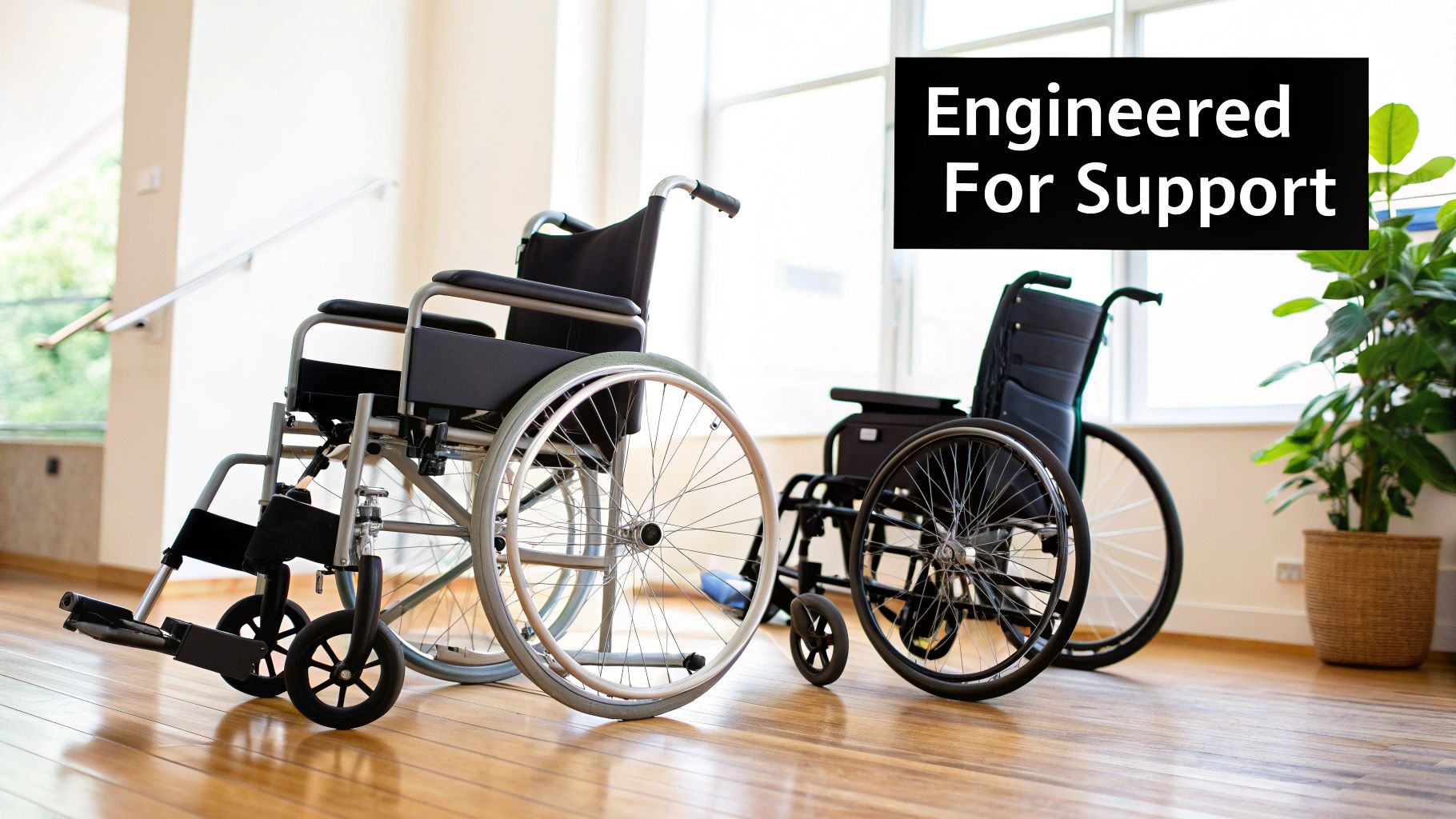
The foundation of a bariatric wheelchair is its construction. It is a heavy-duty mobility aid specifically engineered to support users with weight capacities ranging from 400 to over 1,000 pounds. This represents a significant increase from standard wheelchairs, which typically have a maximum capacity of around 250-300 pounds.
This increased capacity isn’t just about supporting more weight while stationary. It’s about providing unwavering stability during movement, transfers, and while navigating different surfaces, from smooth floors to uneven sidewalks. You can learn more about the growing need for these specialized chairs by exploring the bariatric wheelchair market growth on cognitivemarketresearch.com.
A properly fitted bariatric wheelchair does more than provide mobility; it restores independence, enhances safety, and significantly improves a person's quality of life by enabling greater participation in daily activities.
Key Distinctions from Standard Models
Beyond weight capacity, several critical features set these chairs apart. These are not minor upgrades; they are essential design choices that directly impact a user's long-term health, comfort, and daily function.
- Reinforced Frame: Most bariatric models use heavy-duty steel, often with dual cross braces under the seat. This prevents the frame from bending or breaking under the stress of daily use and transfers.
- Wider Seat Dimensions: The extra seat width and depth are vital. A proper fit prevents painful pressure sores, improves posture, and ensures the user is securely and comfortably seated within the frame.
- Durable Components: Every part is built to last. From the heavy-duty wheels and casters to the armrests and leg rests, each component is designed to withstand greater force and more frequent use without failing.
Ultimately, choosing a bariatric wheelchair is an investment in a solution that matches an individual’s specific needs, ensuring they can move through their day with the confidence, dignity, and safety they deserve.
What Makes a Bariatric Wheelchair Different? A Look at the Core Features
We’ve touched on how bariatric wheelchairs differ from standard models, but the real distinction lies in the engineering. It’s not just about making parts bigger; it’s about making them fundamentally stronger and more intelligent to handle the unique demands placed upon them.
Understanding the components of a bariatric wheelchair means looking at how each part is purpose-built for safety, durability, and the user's long-term well-being.
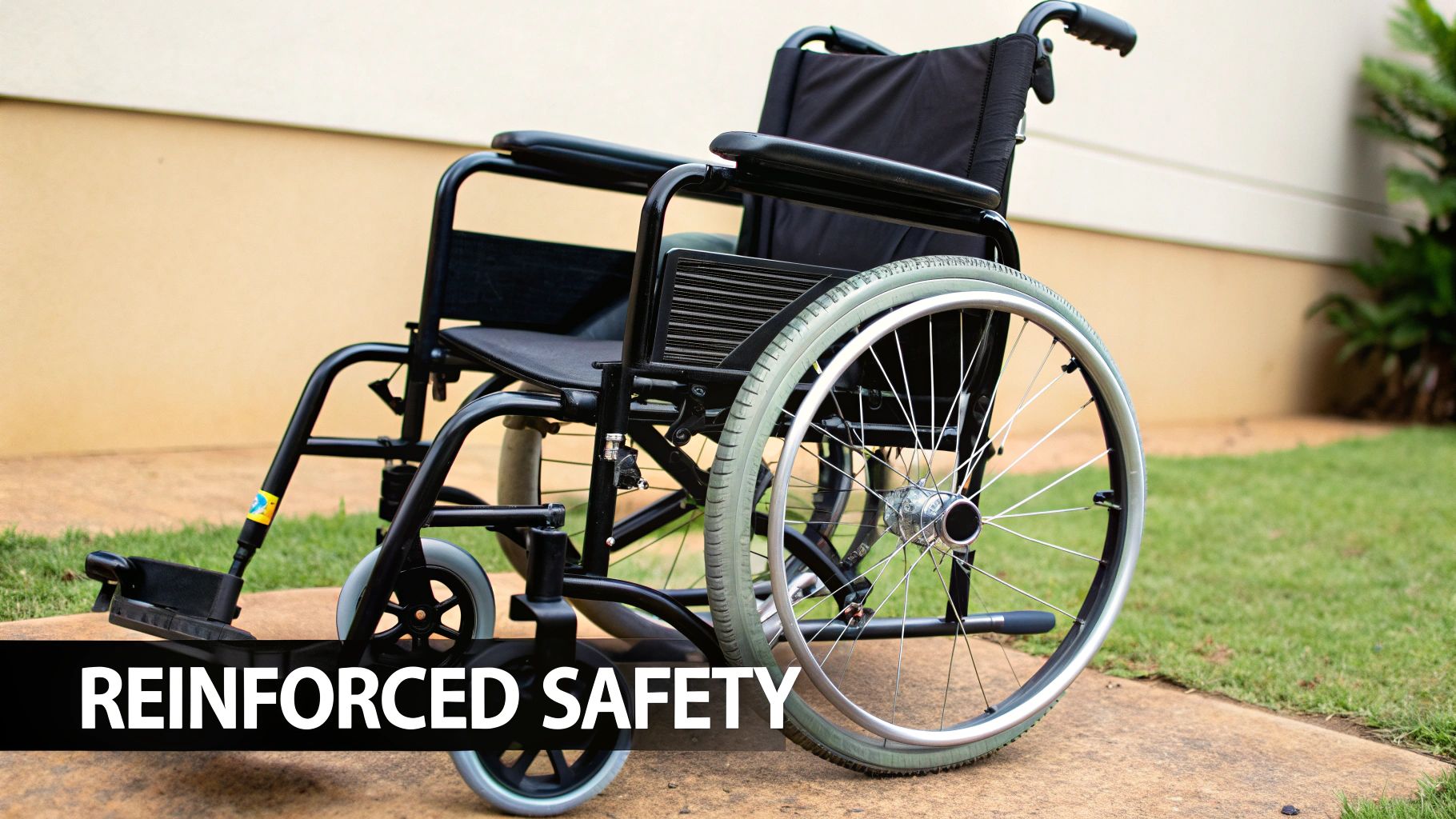
This kind of specialized design is more critical than ever. The demand for bariatric wheelchairs is increasing, reflecting a clear need for equipment with extra-wide seating, high weight capacities reaching 700+ pounds, and thoughtful designs that help prevent pressure ulcers. You can learn more about the growing market for bariatric wheelchairs at fortunebusinessinsights.com.
Reinforced Frame and Superior Weight Capacity
The foundation of a bariatric wheelchair is its frame. While standard chairs often use lighter materials for portability, bariatric models are typically built from reinforced steel to prevent bending or structural failure under daily stress. A key feature to look for is the dual cross brace design directly under the seat.
This double-bar system is crucial to the chair's rigidity, as it distributes weight more evenly across the entire frame. This principle ensures the wheelchair can safely handle the dynamic movements of transferring in and out or navigating uneven ground, not just a person’s static weight.
Expanded Seat Dimensions for Health and Comfort
A wider seat is more than a matter of comfort; it's a critical factor for the user’s long-term health. When a seat is too narrow, it can create dangerous pressure points that may lead to skin breakdown and painful, difficult-to-heal pressure sores.
The right seat width and depth are non-negotiable for promoting proper posture, ensuring even weight distribution, and preventing the severe health complications associated with poorly fitted mobility equipment.
A correctly sized seat allows the user to sit comfortably within the frame, fully supported without being constricted. This proper fit contributes significantly to daily comfort and makes self-propulsion more efficient. You can see how models like the ProBasics K7 Heavy Duty Bariatric Wheelchair offer a wide range of seat widths to guarantee a precise match for each individual.
Durable Wheels and Tires for All Surfaces
The wheels and tires on a bariatric wheelchair must also support a much higher load. They are engineered to be far more durable than those found on a standard chair.
- Solid or Flat-Free Tires: Many heavy-duty models come with solid or foam-filled tires. This eliminates the risk of flats and the need to check air pressure, providing reliable performance and peace of mind.
- Heavy-Duty Casters: The smaller front wheels, or casters, are also built with stronger forks and bearings to handle constant swiveling over various surfaces.
- Robust Rims and Spokes: The large rear wheels feature reinforced rims and often have a higher spoke count to manage the increased load without buckling or becoming damaged over time.
These upgrades ensure the wheelchair moves smoothly and safely over different terrains, from indoor carpeting to outdoor sidewalks, providing dependable mobility.
Who Really Needs a Bariatric Wheelchair?
While the engineering behind a bariatric wheelchair is impressive, its real value is measured by the freedom and safety it brings to people's lives. For many, it's the key to re-engaging with the world when a standard wheelchair is inadequate.
A bariatric wheelchair is a robust support system that provides a stable, secure, and comfortable foundation for daily life, empowering users to live more fully.
Individuals with Higher Body Weights
The primary group to benefit are people living with obesity. Using a standard wheelchair, with its lower weight capacity and narrow seat, can be dangerous. The frame can fail, and the improper fit can lead to serious health complications like pressure sores. A bariatric wheelchair is built to provide the necessary structural integrity and a supportive, appropriate fit.
This is a growing need. In the U.S., a significant portion of the population is affected by obesity, creating a high demand for durable medical equipment that meets their needs. It's no surprise that North America holds a large share of the global bariatric wheelchair market. The demand is driven by this need and better access to high-quality equipment. You can dive deeper into the market data at precedenceresearch.com.
Beyond Weight: Broader Medical and Support Needs
The use of bariatric wheelchairs extends beyond body weight alone. The enhanced stability and generous space are vital for people facing a range of other health challenges.
- Lymphedema: This condition causes significant swelling in the limbs. Individuals with lymphedema often need a much wider seat and higher weight capacity to accommodate their body shape safely and without constriction.
- Musculoskeletal Conditions: People with conditions like severe arthritis or certain muscular dystrophies may require a wider, more stable base of support to minimize pain and instability during movement.
- Post-Surgical Recovery: After certain surgeries, patients may have temporary weight-bearing restrictions or need extra room for casts, dressings, or medical devices. A bariatric model provides an ideal, safe platform for a smooth recovery.
For many, a bariatric wheelchair isn't just about mobility—it's about reclaiming a spot at the family dinner table, navigating the grocery store without fear, and dramatically reducing the daily risk of falls.
A Critical Tool for Caregivers and Families
The benefits extend to caregivers as well. Assisting a loved one with mobility is physically demanding, and struggling with undersized equipment increases the risk of injury for everyone involved, especially during transfers.
A properly sized bariatric wheelchair creates a stable, secure base that makes providing assistance safer and less strenuous. It is a cornerstone of a sustainable home care plan. For more on this, our guide on safe patient transfer techniques offers practical information for minimizing strain and ensuring safety for both the user and the caregiver.
How to Measure for a Perfect Wheelchair Fit
Fitting a bariatric wheelchair is like getting a custom-tailored suit—an off-the-rack size is unlikely to be suitable. When a wheelchair doesn't fit correctly, it's more than just uncomfortable; it can lead to serious health problems like pressure sores, poor posture, and make self-propulsion nearly impossible.
Taking a few minutes to get accurate measurements is the single most important step in choosing a chair that delivers safety, support, and day-to-day comfort.
This simple graphic shows how the process works: connecting a person's specific medical situation to their functional needs, which then points directly to the right equipment.
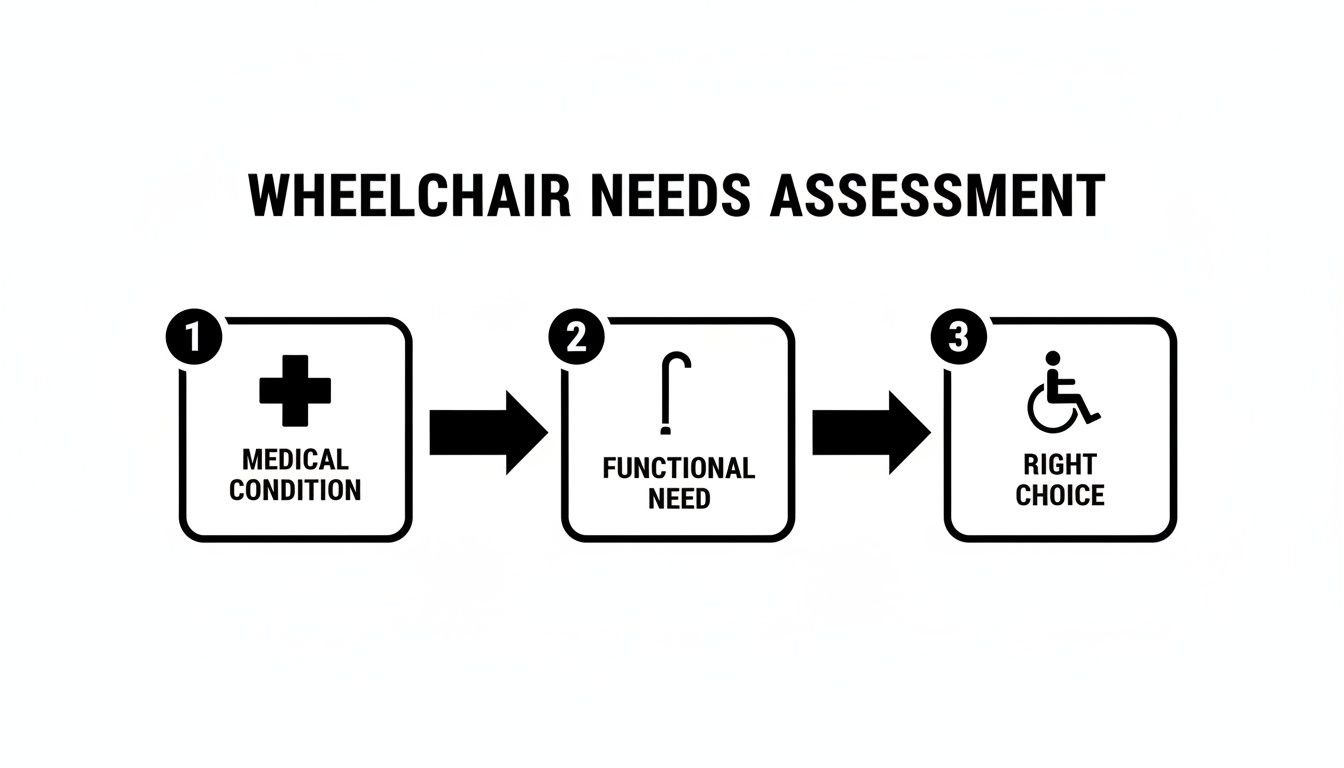
Once you understand the user's needs, the next step is to obtain a few key measurements.
Taking Core Measurements
To get these numbers right, the user should be seated on a firm, flat surface (a dining chair works well). Their feet should be flat on the floor with their knees bent at a 90-degree angle. This posture ensures the measurements are accurate.
1. Seat Width:
First, measure the widest point across the user's hips or thighs while they are seated. Take that number and add one to two inches. This extra space is crucial—it prevents the frame from rubbing or putting pressure on the hips, while still being close enough for the user to easily reach the handrims for propulsion.
2. Seat Depth:
Next, measure from the back of the user's hips forward to the back of their knees. Then, subtract one to two inches from that measurement. This ensures the front edge of the seat doesn't press into the sensitive area behind the knees, which could restrict circulation.
3. User Weight:
Always obtain an accurate, current weight. It is vital to choose a bariatric wheelchair with a weight capacity that provides a safety cushion. Look for a chair rated for at least 20-25 lbs more than the user's actual weight. This accounts for items like heavy clothing, personal belongings carried on their lap, and the dynamic forces of movement.
An accurately measured wheelchair isn’t a luxury; it's a medical necessity. A proper fit directly impacts health outcomes by distributing pressure evenly, promoting correct posture, and enabling greater independence and comfort throughout the day.
Matching Measurements to Product Specs
With these three measurements, you can shop with confidence. When you browse bariatric wheelchairs, you’ll find these exact specifications listed on each product page under headings like "Seat Width," "Seat Depth," and "Weight Capacity."
Taking the time to measure correctly removes the guesswork from the process. It helps you invest in a solution that will genuinely improve quality of life. For a more detailed walkthrough, our guide on how to choose a wheelchair is a great resource. This careful approach ensures the chair you select is a perfect, comfortable, and safe fit.
Choosing Between Manual and Power Options
Deciding between a manual and a power bariatric wheelchair is one of the most important choices you'll make. This decision directly impacts daily independence, energy levels, and overall lifestyle.
Each option is designed for different needs, abilities, and environments. Let's explore which one might be the right fit.
A manual bariatric wheelchair is the traditional design, propelled by the user or pushed by a caregiver. Its main advantage is simplicity. They are lighter than power models, making them more portable for transport in a vehicle—though even a "lighter" heavy-duty frame often requires a second person to lift safely.
However, propelling a heavy-duty wheelchair requires significant upper body strength and stamina. Covering long distances, navigating grassy areas, or even moving over thick carpeting can be exhausting. For this reason, manual chairs are often an ideal solution for users who will have a caregiver's assistance for most mobility tasks.
The Case for Power Bariatric Wheelchairs
A power bariatric wheelchair, or "powerchair," provides a different level of mobility. With an integrated motor and intuitive joystick controls, it removes the physical effort from movement. This can open up a new world of freedom.
Traveling longer distances without fatigue becomes possible. Hills, ramps, and uneven outdoor terrain become manageable, leaving the user with more energy for other activities.
Beyond basic mobility, powerchairs often come with advanced features that are crucial for health and comfort, especially for users who spend many hours in their chair. These can include:
- Power Tilt: This function tilts the entire seating system backward, shifting weight from the hips to the back. It is a critical feature for redistributing pressure and helping to prevent pressure sores.
- Power Recline: This allows the user to recline the backrest, similar to a home recliner. It is useful for resting, finding a comfortable position, and improving circulation.
- Elevating Leg Rests: These powered supports help raise the legs to manage swelling (edema) and customize comfort.
Choosing a power bariatric wheelchair is often an investment in greater independence and long-term health. The reduced physical strain and advanced positioning features empower users to engage more fully in their daily lives with less fatigue and greater comfort.
When weighing your options, consider the user's daily reality. Is the chair mainly for indoor use with a caregiver nearby? A manual model could be a great fit. But if the goal is maximum independence for running errands, visiting friends, and navigating the community, a powerchair is almost always the superior choice.
Manual vs Power Bariatric Wheelchair Decision Guide
This table breaks down the key factors to help you compare the two options side-by-side. Consider your daily routines, your home and community environment, and your personal mobility goals.
| Consideration | Manual Bariatric Wheelchair | Power Bariatric Wheelchair |
|---|---|---|
| Independence Level | Best with caregiver assistance; requires significant upper body strength for self-propulsion. | Promotes maximum independence; joystick control requires minimal physical effort. |
| Environment | Ideal for smooth, flat indoor surfaces. Can struggle with hills, thick carpet, or uneven ground. | Excels on varied terrain, including ramps, hills, grass, and sidewalks. |
| Travel & Portability | Lighter and simpler to transport, but may still require assistance to lift into a vehicle. | Heavy and requires a vehicle lift or accessible van for transport. Not easily portable. |
| Cost | Generally more affordable upfront. | Higher initial investment due to motor, batteries, and advanced features. |
| Health & Comfort | Basic seating. Does not offer advanced positioning features. | Often includes power tilt, recline, and elevating leg rests for pressure relief and comfort. |
| Maintenance | Simpler maintenance (tire pressure, frame checks). | More complex; requires battery charging, and potential motor/electronic service. |
| Energy Conservation | Can be physically demanding, consuming user's energy. | Conserves user's energy for other activities, reducing fatigue. |
Ultimately, the best choice aligns with your lifestyle. A manual chair offers simplicity for supported, less demanding environments, while a powerchair provides the freedom and advanced support needed for a more active and independent life.
Navigating Your Purchase and Payment Options
Acquiring the right mobility equipment should be a straightforward process. When investing in a bariatric wheelchair, understanding your payment options can reduce stress and help you get the support you need without frustrating delays.
Many people find that using a tax-advantaged account is a smart way to cover the cost. If you have a Health Savings Account (HSA) or a Flexible Spending Account (FSA), bariatric wheelchairs are considered qualified durable medical equipment (DME), which means you can use those pre-tax funds for the purchase.
Breaking Down the Cost
If paying the full amount upfront isn't the best option for your budget, financing is a practical route. We partner with programs like Affirm that allow you to break the total cost into smaller, predictable monthly payments. This is an excellent way to get the exact chair you need now while managing the expense in a way that works for you.
Using health insurance is another common path. While this process can sometimes be complex and lead to delays, it's a viable option for many. It's not just about knowing if your plan is accepted; having a clear understanding of insurance benefits can make a significant difference in the final cost.
Buying directly from a supplier like DME Superstore often gives you greater choice and much faster access to your equipment, bypassing potential insurance hurdles and wait times.
This direct approach puts you in control. You can choose the exact model that fits your measurements and lifestyle—not just what insurance dictates. With a wider selection and quicker delivery, you can regain your independence sooner.
Common Questions About Bariatric Wheelchairs
After covering the essentials of what a bariatric wheelchair is, how to choose one, and how to pay for it, some practical questions often arise. Let's address the most common ones so you can feel fully prepared to make the right choice.
Can a Bariatric Wheelchair Fit Through Standard Doorways?
This is one of the most important considerations. Standard interior doorways in most U.S. homes are typically 28 to 32 inches wide. While many bariatric wheelchairs have seat widths from 22 to 30 inches, you must consider the overall width—the total measurement including the wheels and handrims, which always extends further.
Before purchasing, use a tape measure to check the narrowest doorways in your home. Compare that number to the "overall width" listed on the product specifications for any chair you're considering. This simple step can prevent the significant problem of acquiring a chair that cannot navigate your living space.
How Do I Transport a Bariatric Wheelchair in a Car?
Transporting a heavy-duty wheelchair requires some planning. Manual bariatric models can often be folded, but they are still heavy. Lifting one into a trunk or the back of an SUV is almost always a two-person job.
Bariatric powerchairs present a different challenge. They are much heavier and do not fold. Transporting one will almost always require a specialized vehicle lift or a wheelchair-accessible van. For users who need an easier option for travel, some lighter-weight "transport" style bariatric wheelchairs are available and offer a more portable solution for outings.
Regular maintenance isn't just about keeping your chair rolling smoothly; it's a fundamental part of safety. Consistent checks make sure critical components like the brakes and frame are reliable for daily use.
What Kind of Maintenance Does It Require?
Proper maintenance is key to ensuring your bariatric wheelchair remains safe and durable for years. A few routine checks can make all the difference.
- Weekly Checks: If you have pneumatic (air-filled) tires, check the pressure regularly. It’s also a good practice to wipe down the frame and upholstery to keep it clean.
- Monthly Inspections: Perform a closer inspection of the chair. Check all nuts and bolts, tightening any that have become loose. Most importantly, test the wheel locks and brakes to ensure they engage firmly and securely.
- Battery Care (for Power Models): Always follow the manufacturer’s specific instructions for charging the batteries. A consistent charging routine is the best way to extend battery life and ensure your chair is always ready for use.
We also highly recommend an annual professional inspection to identify any potential issues before they become significant problems.
At DME Superstore, we're here to help you find the perfect mobility solution to fit your life. Explore our curated collection of high-quality bariatric wheelchairs and regain your independence today. Find your perfect fit at https://dmesuperstore.com.

