



Stepping into a shower should be a relaxing part of your day, not a source of worry. For individuals managing mobility challenges, the risk of a slip or fall on a wet surface is a significant daily concern. PVC shower chairs offer a simple yet incredibly effective solution, providing a stable and secure seat that transforms a potentially hazardous space back into a safe, accessible one. This guide will walk you through the key benefits, material differences, and essential features to help you understand how this equipment can enhance bathroom safety.
Why PVC Shower Chairs Are Essential for Safer Showers
For anyone with mobility issues, the bathroom often ranks as one of the most dangerous rooms in the home due to the combination of wet surfaces, hard tile, and the balance required for washing. A PVC shower chair is an indispensable tool in this environment, acting as a reliable foundation for a safer daily routine.
The primary benefit is straightforward: fall prevention. By providing a stable place to sit, these chairs eliminate the need to stand on slippery surfaces for extended periods, which drastically reduces the risk of an accident. This simple adaptation allows you to conserve energy, wash comfortably, and maintain your balance without fear.
Restoring Independence and Confidence
Beyond physical safety, PVC shower chairs play a crucial role in promoting personal independence. The ability to manage one's own hygiene without constant assistance is fundamental to maintaining dignity and confidence. These chairs empower users by providing the support needed to bathe safely on their own, reducing reliance on caregivers and fostering a powerful sense of self-sufficiency.
This newfound security doesn't just benefit the user; it provides immense peace of mind for family members and caregivers. Knowing a loved one has the right equipment to stay safe significantly lessens daily worry. This is one reason the demand for bathroom safety equipment is surging. In fact, the shower chair market was valued at US$5.14 billion and is projected to climb to US$12.21 billion by 2034, highlighting its critical role in modern home care.
A shower chair is often one component of a comprehensive safety strategy. It's wise to also explore comprehensive aging in place home modifications to create a fully secure living environment. Understanding all the available tools is the first step toward a safer, more independent lifestyle, and our guide on essential bathroom safety equipment for the elderly offers even more insights to help you secure your home.
Choosing the Right Material for Your Shower Chair
When selecting a shower chair, the construction material is a critical decision that impacts safety, durability, and hygiene. The high-humidity, high-use environment of a shower places significant demands on materials. Constant exposure to water, soap, and changing temperatures can cause materials that rust, degrade, or absorb moisture to quickly become unsafe or unsanitary. Understanding the differences between common options like PVC, aluminum, steel, and wood is key to making an informed choice.
Why Medical-Grade PVC Stands Out
For shower safety equipment, medical-grade polyvinyl chloride (PVC) is often the superior choice for several important reasons. Unlike metals, PVC is inherently 100% rust-proof. There is no coating that can chip away and no weak points where corrosion can begin. Its seamless construction also means there are fewer crevices where water and bacteria can accumulate.
This non-porous surface is also incredibly resistant to mold and mildew. In a space where hygiene is a top priority, a material that naturally inhibits microbial growth is a significant advantage. This makes PVC shower chairs not only easier to clean but also a safer option for users, especially those with compromised immune systems.
Furthermore, PVC offers an excellent balance of strength and lightweight design. It's durable enough to provide solid support yet light enough to be moved easily in and out of the shower—a feature that caregivers particularly appreciate.
Comparing PVC to Other Common Materials
While PVC is an excellent all-around option, it's helpful to understand how it compares to other materials you might encounter. Each has its own profile of strengths and weaknesses.
- Aluminum: This material is also lightweight and resists rust, making it a popular choice. However, aluminum frames are often assembled with steel hardware (screws and bolts), which can rust over time and become dangerous weak points.
- Plastic-Coated Steel: Steel provides high strength, making it a common choice for bariatric models. The critical vulnerability is the plastic coating. If that coating gets scratched or chipped, the steel underneath is exposed to moisture and will begin to rust, compromising the chair's structural integrity.
- Teak Wood: Teak is naturally water-resistant and offers a warm, aesthetic appeal. However, wood is porous and requires regular maintenance (like oiling) to prevent it from drying out, cracking, or developing mildew in the grain. It is also typically heavier and more expensive.
Key Takeaway: For everyday reliability and low-maintenance hygiene, PVC's seamless and non-porous construction provides a distinct advantage over materials that rely on coatings or are susceptible to rust at connection points.
The flowchart below provides a simple decision-making tool to help visualize when a PVC chair is the appropriate safety solution.
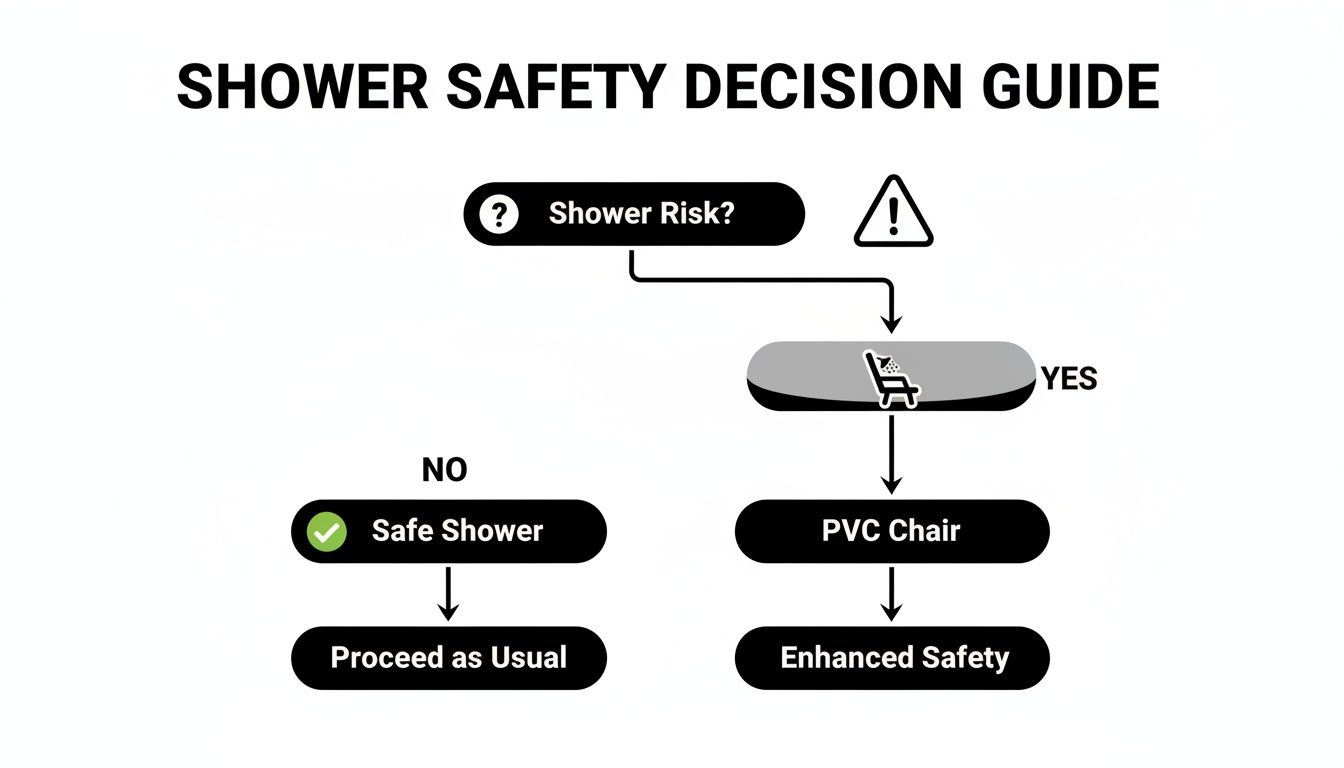
As the chart illustrates, if any shower risk is identified, a PVC chair is a direct and effective way to ensure a safer experience.
To make the comparison clearer, here is a breakdown of the key attributes of each material side-by-side.
A Quick Comparison of Shower Chair Materials
Understanding the key differences between common shower chair materials helps you find the best option for your specific needs.
| Material | Key Strengths | Potential Drawbacks | Ideal For |
|---|---|---|---|
| PVC | 100% rust-proof, easy to sanitize, lightweight, seamless design | Lower weight capacity on some standard models | Everyday use, hygiene-focused environments, and general mobility support. |
| Aluminum | Lightweight, corrosion-resistant frame | Steel hardware can rust, hollow tubes may dent | Users needing a very lightweight and portable option. |
| Plastic-Coated Steel | High strength, excellent for bariatric support | Coating can chip or crack, leading to rust and failure | Bariatric users who need the highest weight capacity. |
| Teak Wood | Aesthetically pleasing, naturally water-resistant | Heavy, requires regular maintenance, can develop mildew | Users prioritizing bathroom decor over low-maintenance functionality. |
In conclusion, while specialized needs might require a heavy-duty steel frame, medical-grade PVC shower chairs deliver the best overall package of durability, safety, and hygiene for the vast majority of users. Their design directly addresses the core challenges of the shower environment, providing a reliable and worry-free solution.
Essential Features for Maximum Safety and Comfort
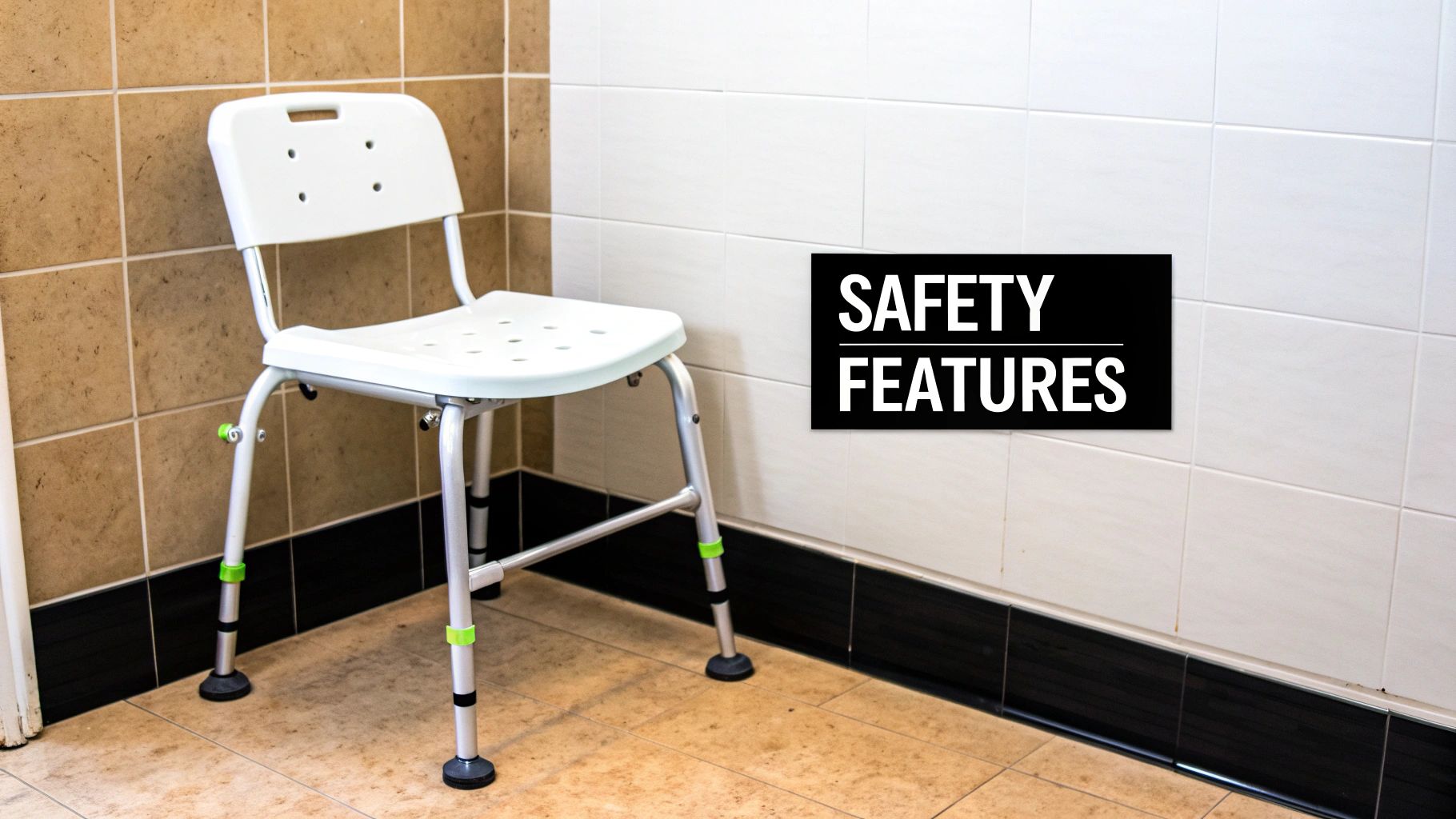
When evaluating PVC shower chairs, it's important to understand why certain features are non-negotiable for safety and comfort. Each component of the chair’s design serves a specific, practical purpose. From the height of the legs to the texture of the seat, these features work together to create a stable, reassuring, and comfortable experience. Let's break down what really matters so you can identify a chair that meets your needs.
Adjustable Leg Height for a Custom Fit
One of the most critical features of any reliable PVC shower chair is adjustable leg height. This is not just about comfort; it's about establishing a posture that is both ergonomically correct and stable. A chair that is too low can make it difficult to stand up, while one that is too high may cause the user's feet to dangle, compromising balance.
The ideal seat height allows you to sit with your feet flat on the floor and your knees bent at a comfortable 90-degree angle. This position provides maximum stability and leverage when sitting down or standing up. Most PVC models feature simple push-pin adjustments that make it easy to set each leg to the perfect height, ensuring a level and secure base even if the shower floor has a slight slope.
Many quality PVC chairs offer a versatile range of adjustments, often from 14 to 20 inches in height, and can support weight capacities up to 400 pounds for bariatric options. This is a crucial detail for reducing fall risks, which impact an astonishing 1 in 4 seniors every year. You can learn more about the specifications of shower chairs and their market trends to see how these features are evolving.
Non-Slip Feet for Unshakeable Stability
The connection between the chair and the shower floor is the single most important element for preventing movement. It is essential to look for chairs with large, suction-style non-slip rubber feet. These act as anchors, gripping the wet, slippery surface of a shower or tub.
This feature prevents the chair from sliding, shifting, or tipping during transfers or while bathing. It is a small detail that provides immense peace of mind, as even a minor, unexpected movement can cause a dangerous loss of balance.
Crucial Insight: The grip of the non-slip feet is what transforms a simple piece of furniture into a reliable piece of medical safety equipment. Always check that the rubber tips are intact and make firm contact with the ground before each use.
Thoughtful Seat Design for Comfort and Hygiene
The design of the seat itself plays a significant role in both comfort and hygiene. A well-designed PVC shower chair will almost always feature drainage holes. These perforations are essential for several key reasons:
- Preventing Pooling: They allow water to drain away quickly, so it doesn't collect on the seat, reducing the risk of slipping.
- Improving Hygiene: By eliminating standing water, these holes help prevent soap scum buildup and lower the risk of skin irritation.
- Enhancing Airflow: Proper drainage contributes to a more comfortable and sanitary shower experience.
Additionally, many seats have a subtle, non-slip texture molded directly into the PVC. This provides extra grip, ensuring the user feels secure even when the surface is wet and soapy.
Armrests and Backrests for Support and Leverage
While some basic models are stools, the addition of armrests and a backrest dramatically increases both safety and comfort. These components provide crucial support for anyone with limited upper body strength or balance issues.
- Armrests are invaluable when getting on and off the chair. They offer a sturdy handhold to grip when sitting down and a solid point of leverage to push up from when standing. This assistance can be the difference between an independent shower and needing help.
- A backrest provides postural support, allowing you to sit securely and comfortably without needing to constantly engage core muscles to stay upright. This reduces fatigue and makes for a more relaxing shower, especially for individuals who tire easily.
By carefully evaluating these core features—adjustable legs, non-slip feet, a draining seat, and supportive armrests—you can choose a PVC shower chair that offers a truly secure foundation for a safer, more independent daily routine.
How to Find the Perfect Fit for You and Your Shower
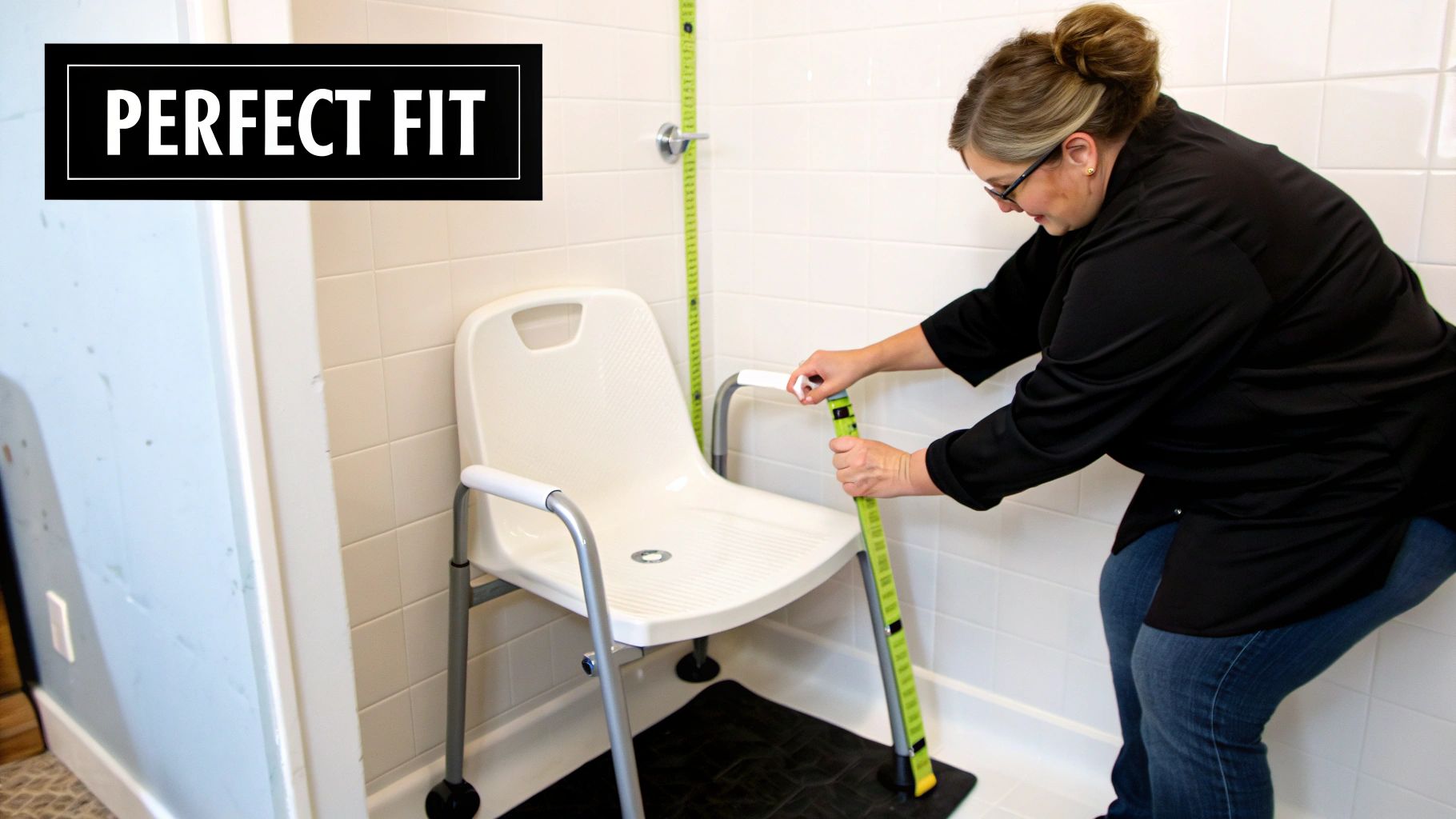
Selecting a PVC shower chair is similar to having a suit tailored. While a standard option might suffice, a perfect fit delivers unmatched comfort, stability, and confidence. An ill-fitting chair is not just awkward; it can create new safety hazards, defeating its purpose.
This practical guide will walk you through the simple measurements needed to ensure your chair is a perfect match for both the user and the bathroom. Taking a few minutes to measure now will provide the confidence to read product specifications and select a model that feels customized.
Measuring for the User: A Custom-Fit Feel
First, the measurements must begin with the person who will be using the chair. The goal is to find a seat height that promotes a stable, comfortable posture, making it easy to sit and stand without strain.
Using a tape measure, have the user sit on a standard dining chair where their feet can rest flat on the floor. Then, follow these two simple steps:
- Measure Seat Height: Measure from the floor up to the crease behind the user’s knee. This measurement is your ideal seat height.
- Check for Proper Posture: When seated, the user's knees should be at a comfortable 90-degree angle, with their feet planted firmly on the ground. This position offers the most leverage and stability.
When browsing PVC shower chairs, check the product details for the "seat height adjustment range." Your measurement should fall comfortably within that range to guarantee you can set the chair to the perfect height for maximum safety.
Measuring Your Shower Space
Next, let's ensure the chair fits inside your shower or tub without being too tight. A chair that is too wide can become unstable, while one that is too small might shift unexpectedly.
You only need one key measurement here:
- Measure the Base Width: Measure the flat, level surface of your shower or tub floor, from side to side and from front to back.
This measurement determines the maximum "footprint" your new chair can have. All four legs must rest securely on this flat area. Check the chair's overall width and depth in the product specifications to confirm it will fit with some room to spare. For those looking to create an even more accessible space, it's worth exploring the advantages of wet rooms and walk-in showers, which often make using a shower chair even easier.
Important Tip: Never place a shower chair leg on a sloped or curved part of a bathtub. All four non-slip feet must make solid, level contact with the floor to ensure stability.
Special Considerations for Bariatric Users
For individuals who require more support, a standard-sized chair will not be adequate. Bariatric PVC shower chairs are constructed differently, featuring reinforced frames, wider seats, and much higher weight capacities to provide necessary safety and comfort.
When choosing a bariatric model, focus on these three features:
- Weight Capacity: This is non-negotiable. Ensure the chair’s stated capacity is well above the user’s weight.
- Seat Width: A wider seat provides greater comfort and support, preventing painful pressure points.
- Reinforced Frame: Look for descriptions like "heavy-duty" or "bariatric." These models are made with thicker PVC and stronger cross-bracing for enhanced stability.
Products like the NOVA Medical Shower & Bath Chair with Back are a great example, listing clear specifications for weight capacity and dimensions, which makes it easier to match the chair to your measurements. By taking these simple steps, you can confidently choose a PVC shower chair that provides a secure, comfortable, and perfectly tailored fit.
Your Guide to Safe Use and Simple Maintenance
Acquiring the right PVC shower chair is only the first step. Knowing how to use and care for it properly is what turns a good product into a reliable long-term safety partner. This guide covers everything from initial stability checks to simple cleaning routines that keep your chair hygienic and safe.
Most PVC shower chairs are designed for straightforward, tool-free assembly, often using a simple system of push-buttons and snap-together parts. Before the first use, take a moment to double-check that everything is solid.
Safety Check: Place the assembled chair in the shower. Press down firmly on the seat and try to rock it side-to-side. It should feel completely solid, with all four rubber feet making level, slip-free contact with the shower floor. There should be no wobbling.
Safe Transfer Techniques
Knowing how to get on and off the chair safely is crucial for preventing slips and strains. A consistent, secure transfer method builds confidence and minimizes risk.
How to Sit Down Securely:
- Back Up Slowly: Walk backward toward the chair until you feel the edge of the seat against the back of your legs.
- Reach for Support: Place one hand, then the other, firmly on the armrests.
- Lower with Control: Bend your knees and gently lower yourself onto the center of the seat, avoiding "plopping" down, which can cause the chair to shift.
How to Stand Up Safely:
- Scoot Forward: Shift your body toward the front edge of the seat.
- Plant Your Feet: Place your feet flat on the floor, slightly apart. Staggering them—one foot slightly behind the other—provides a more stable base.
- Push, Don't Pull: Lean forward slightly and use the armrests to push yourself up into a standing position.
These techniques are even more effective when combined with other bathroom safety aids, such as a well-placed grab bar, which provides an extra layer of stability.
Simple Cleaning and Maintenance
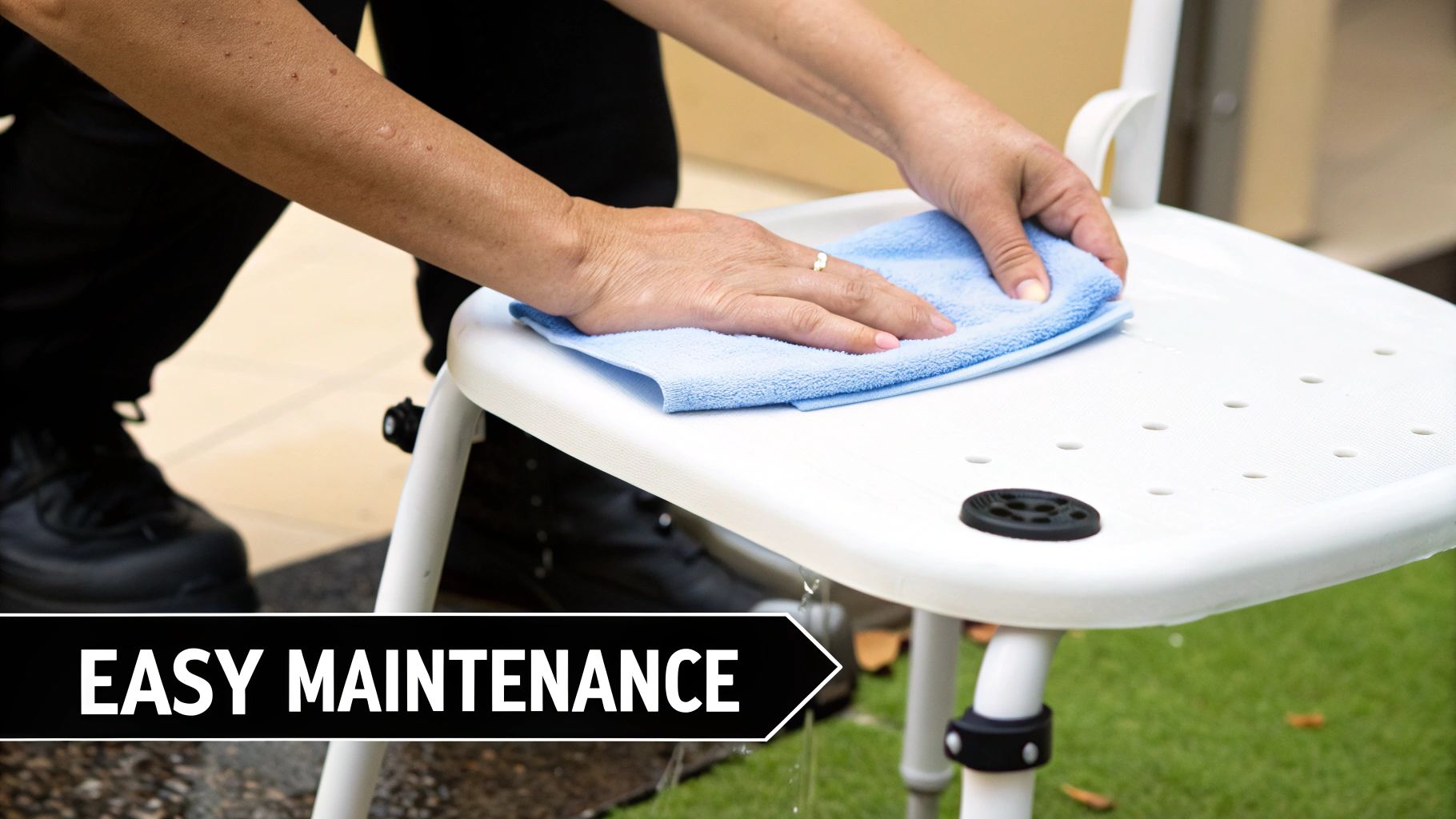
This is where PVC truly excels. The non-porous material naturally resists mold, mildew, and soap scum, making it incredibly easy to clean. A quick, regular cleaning routine is all that is required.
- After Every Shower: Rinse the chair with the shower head to wash away soap residue.
- Weekly Wipe-Down: Once a week, wipe the entire chair with a cloth using a mild, non-abrasive cleaner. A solution of vinegar and water is also effective.
- What to Avoid: Avoid harsh chemicals like bleach, as they can degrade the PVC plastic over time and compromise its strength. Gentle household cleaners are sufficient.
This simple upkeep will keep your chair hygienic and looking new. PVC's durability is one of its best features, with many models easily supporting 250 to 500 pounds. This strength, combined with anti-slip grips, is vital for safety, especially when considering that falls are linked to a staggering 95% of hip fractures in adults over 65.
Finally, inspect your chair every few weeks. Ensure the rubber feet are intact and all locking pins are securely in place. A few seconds of prevention ensures your PVC shower chair remains a trustworthy safety partner.
Your Top Questions Answered
When choosing a product as important as a shower chair, it's natural to have questions. Here are clear, straightforward answers to some of the most common inquiries to help you feel completely confident in your decision.
Can I Use a PVC Shower Chair in a Bathtub?
Yes, absolutely. Most PVC shower chairs are designed to work equally well in a standard bathtub or a walk-in shower. The key is to ensure the chair's base can sit completely flat on the bottom of the tub.
Before purchasing, measure the flat surface of your tub floor and compare it to the chair's "footprint" dimensions listed on the product page. The non-slip rubber feet provide excellent grip, but only when all four are making solid, level contact with the surface.
Are These Chairs Covered by Insurance or FSA/HSA?
In many cases, yes. PVC shower chairs are classified as durable medical equipment (DME), which often makes them an eligible expense for your Flexible Spending Account (FSA) or Health Savings Account (HSA). Using these tax-advantaged funds can be a simple way to pay.
Coverage through Medicare or private insurance typically requires a doctor’s prescription that details the medical necessity of the equipment. For a direct payment option, your FSA or HSA is often the most straightforward path.
Pro Tip: Always keep your receipt. If you have questions about the reimbursement process, a quick call to your plan administrator can provide clarity and ensure a smooth transaction when using your health savings funds.
How Much Weight Can a Standard PVC Chair Support?
Standard PVC shower chairs are surprisingly sturdy, typically built to support anywhere from 250 to 350 pounds. It is crucial, however, to always double-check the specific weight capacity for any model you are considering.
For individuals who require more robust support, bariatric models with reinforced frames are available. These heavy-duty chairs can safely handle 500 pounds or more, providing a secure and stable solution for every user. The exact weight capacity will always be listed clearly on the product specifications.
Do I Need Any Special Tools for Assembly?
No, special tools are not required. The vast majority of modern PVC shower chairs are designed for simple, tool-free assembly. They typically click together with a system of push-buttons, locking pins, or other snap-fit components that are both intuitive and secure. This user-friendly design means the chair can be set up correctly and ready for use within minutes, right out of the box.
At DME Superstore, our goal is to provide bathroom safety solutions that help you maintain your independence and confidence. Our handpicked selection of high-quality PVC shower chairs delivers the durability, hygiene, and support you deserve. Explore our full range of products to find the perfect fit for your home today.

