



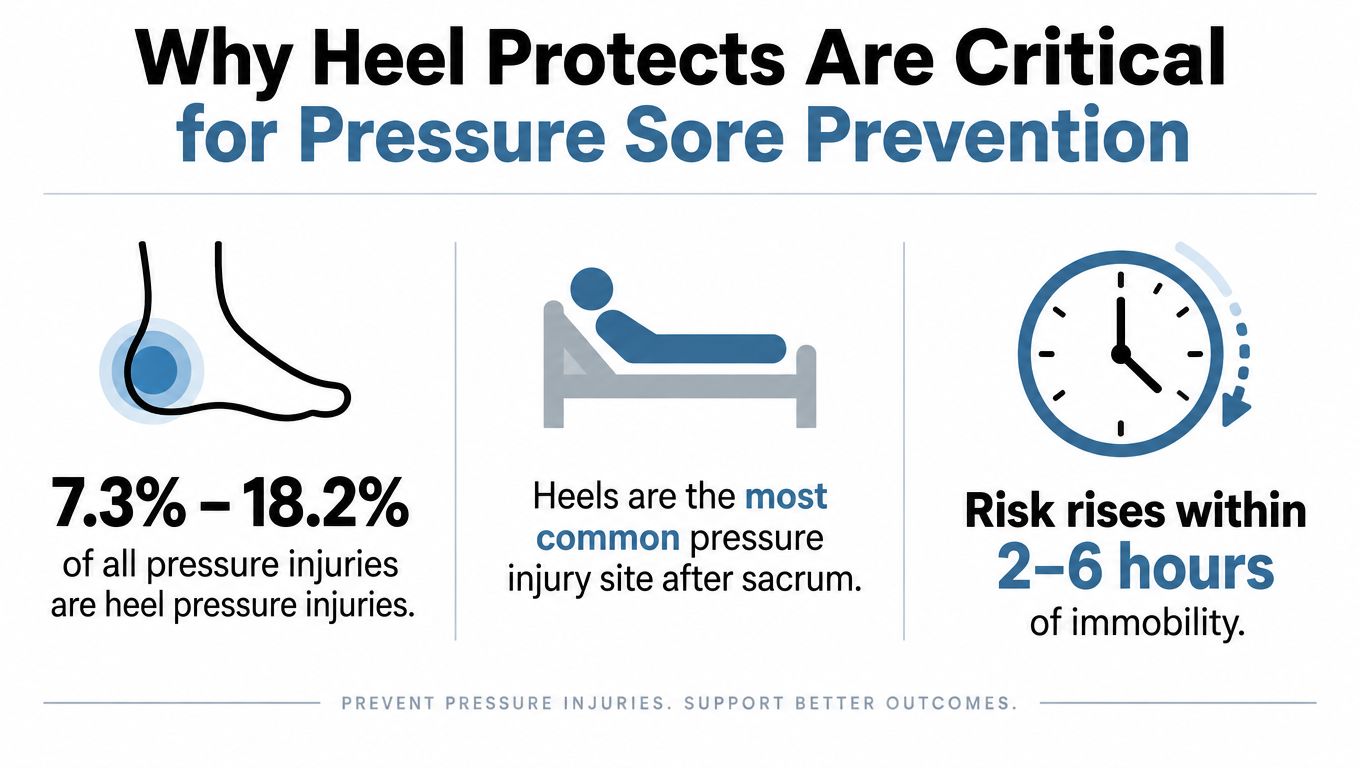
Heel pressure injuries account of 7.3% to 18.2% of all pressure injuries, and the right heel protector can help by completely suspending the heel rather than just cushioning it. The key question is whether the calcaneus is completely free of bed contact, without creating pressure on the Achilles tendon, ankle bones, or calf.
That distinction changes how caregivers should evaluate heel protectors for pressure sores. A soft-looking boot may feel comfortable but still allow the heel to sink onto the mattress. A firmer device may provide better suspension yet fit poorly, shift during repositioning, or create a new pressure point. Effective prevention depends on the mechanical design, the patient's circulation and mobility, and consistent skin monitoring.
Why Heel Protectors Are Critical for Pressure Sore Prevention
Heel injuries deserve focused attention because the heel has limited soft-tissue coverage over the calcaneus, the heel bone. When a person remains in bed, the body presses the heel against the mattress for prolonged periods. That pressure can restrict small blood vessels, reduce oxygen delivery, and leave fragile tissue vulnerable to breakdown.
A 2020 international consensus paper reported heel pressure injury prevalence ranging from 7.3% to 18.2%, confirming that the heel represents a major subset of pressure injuries. The same paper cited a root-cause analysis in which 51% of grade III and IV heel pressure injuries occurred in the community, not only in hospitals. These figures matter to family caregivers because a person recovering at home may face the same mechanical risk without continuous professional observation. The peer-reviewed heel pressure injury consensus provides the clinical context for treating heel off-loading as an active intervention.
Why the heel breaks down quickly
The heel's shape concentrates load over a small area. Immobility adds another problem, the person may not sense discomfort or shift position independently. Moisture, friction from sheets, sliding in bed, and poor circulation can further weaken the skin.
A heel protector isn't just a padded accessory. Its primary job is to remove the heel from the load-bearing surface. The consensus recommends an off-loading device for bedbound patients with heel pressure injuries, with or without an integrated wedge. It also recommends off-loading during walking for adults with stage I or II heel injuries, and during wheelchair sitting for paraplegic patients with heel injuries. The full consensus recommendations distinguish these use cases from general comfort care.
A broader prevention protocol also matters. An international consensus recommends risk assessment within 2 hours of admission and reassessment every 8 hours. For patients at moderate or high risk, it specifies a reactive mattress support surface together with a heel off-loading device. The pressure injury prevention consensus makes the practical point clear: heel protection works as part of a coordinated plan, not as a substitute for assessment, repositioning, and support-surface selection.
Caregivers can also review this home bed sore prevention guide for complementary positioning practices. The heel still needs direct inspection and a device that maintains suspension.
How Heel Protection Works and the Science of Suspension
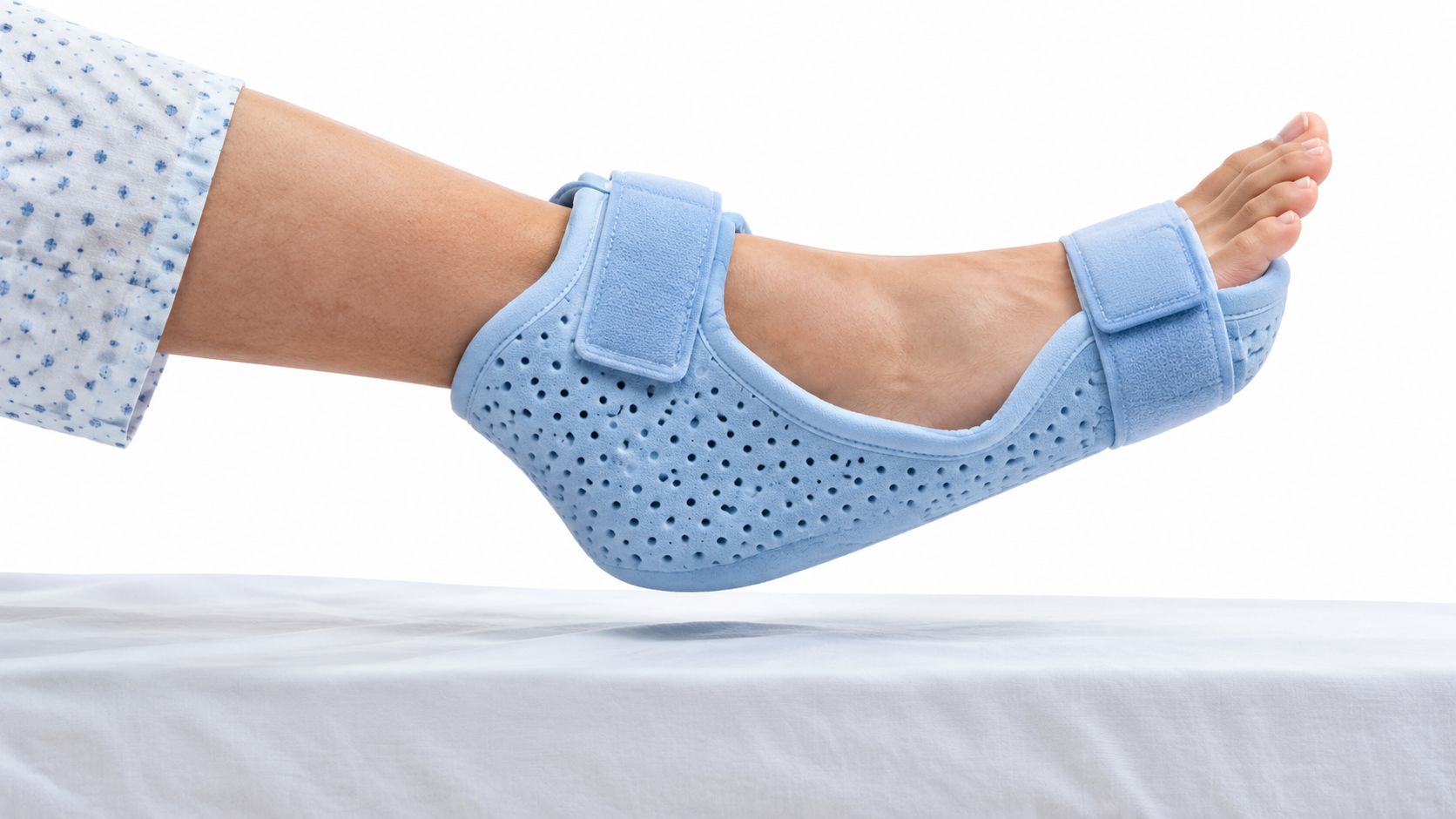
The most important feature of a heel protector is suspension. The heel should float above the mattress, while the device distributes the leg's load through appropriate areas of the calf or lower leg. Padding alone doesn't guarantee this result.
When the calcaneus rests directly on a bed, pressure compresses tissue between the bone and mattress. As interface pressure rises, small vessels may become compressed, reducing perfusion and contributing to tissue ischemia. Complete off-loading lowers that direct interface pressure. Guideline summaries identify keeping the heel entirely free of bed contact as the consensus mechanical goal. The international heel guideline summary describes this complete off-loading principle and reports evidence supporting heel off-loading devices.
What proper suspension should accomplish
A well-designed boot or wedge should create a stable gap beneath the heel. It should also:
- Transfer load safely: The device should distribute weight along the calf rather than concentrating it on the Achilles tendon.
- Protect the ankle: The malleoli, the bony ankle prominences, shouldn't become secondary pressure points.
- Limit movement-related forces: Secure positioning should reduce sliding, friction, and shear as the patient moves or is repositioned.
- Remain stable: A protector that rotates or slides can return the heel to mattress contact without the caregiver noticing.
The hidden failure mode is partial off-loading. A device may lift the heel initially but allow it to settle downward as the leg changes position. A thick cushion under the calf can also alter alignment or push against the Achilles tendon. Water-filled gloves and IV fluid bags are specifically discouraged for heel elevation because they may press on the Achilles tendon. Weight should be distributed along the calf instead. Evidence-based heel prevention guidance also emphasizes perfusion assessment, adjunctive dressings, and regular inspection.
Mattress choice doesn't replace heel suspension. A pressure redistribution mattress resource can help caregivers understand how support surfaces fit into an overall pressure-management plan.
The following video provides a visual reference for how a heel protector is positioned and used:
Mechanical rule: Judge a protector by whether the heel stays clear of the bed, not by how soft the product feels in your hands.
Types of Heel Protectors and Off-Loading Devices
Heel protection comes in several forms, and each solves a different part of the problem. The choice should reflect whether the person is bedbound, partially mobile, already showing skin changes, or at risk of friction from repositioning.
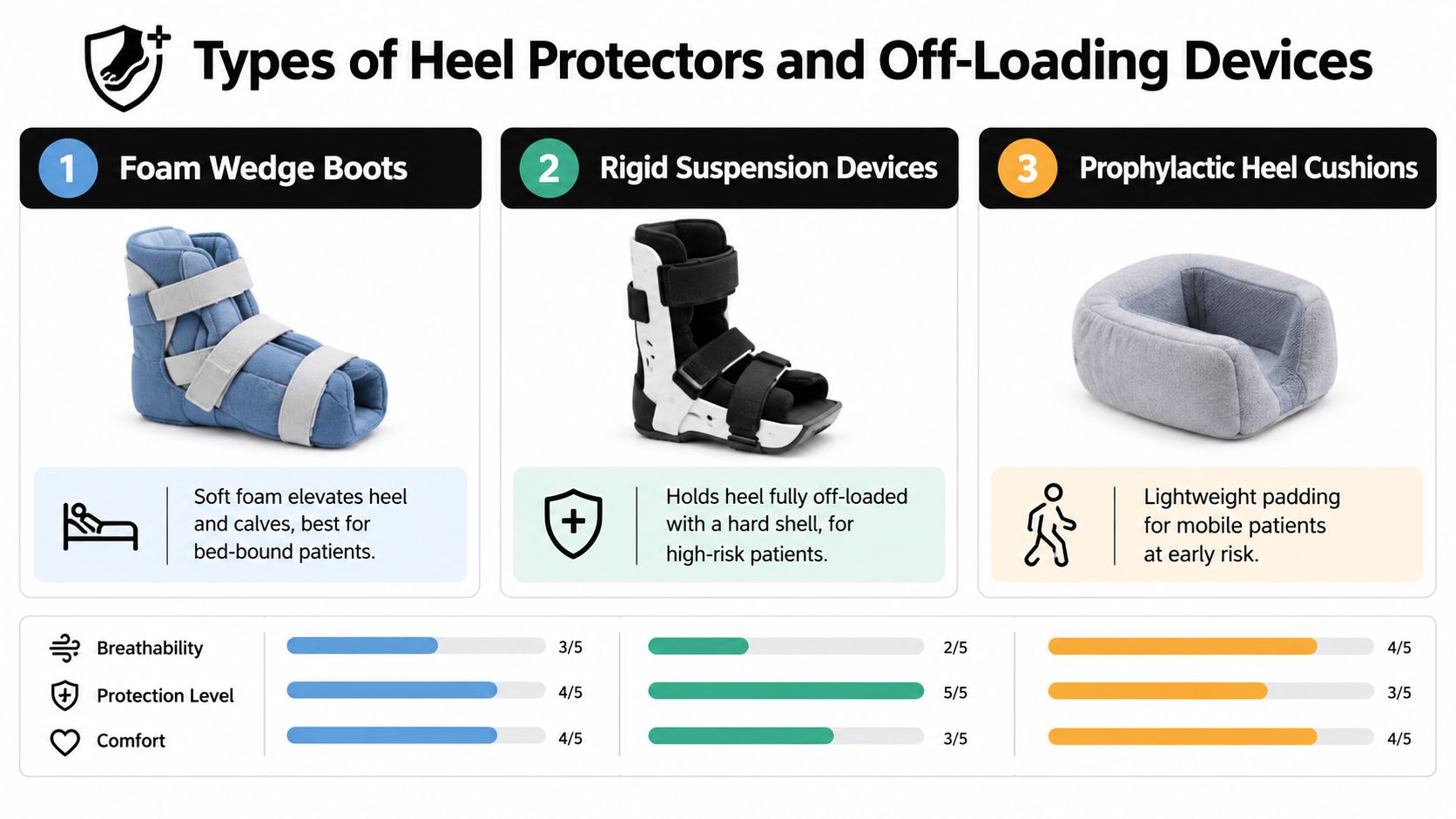
Foam wedge boots
A foam wedge boot uses shaped, resilient foam to raise the heel and distribute the lower leg's weight. It can be useful for bedbound patients when the wedge maintains a clear space beneath the calcaneus. Its limitations appear when the foam compresses, the leg shifts, or the boot's opening allows the heel to drift backward.
Foam can also retain warmth and moisture, depending on its covering and ventilation. Fit matters more than softness. The boot shouldn't squeeze the calf, rub the ankle, or allow the heel to settle onto the bed.
Rigid suspension devices
A rigid suspension device uses a structured shell or frame to maintain heel clearance. This design can offer more consistent geometry when a patient's leg position changes, but it still requires careful adjustment. A hard component placed against the wrong area can create pressure rather than prevent it.
These devices are often considered for patients with substantial immobility or higher pressure-injury risk. The clinician or caregiver should verify that the shell supports the calf and doesn't press into the Achilles tendon or malleoli.
Prophylactic heel dressings
A dressing doesn't usually suspend the heel by itself. Instead, it adds a protective layer against friction, shear, and some pressure exposure when used alongside off-loading. A review in Wound Practice and Research recommends prophylactic heel dressings for people with limited mobility, particularly in critical care or surgery, with daily inspection under the dressing. It notes that multi-layer polyurethane foam dressings with a silicone border may be preferred because their construction can help reduce pressure, shear, and friction. The wound care summary presents dressings as an adjunct, not a replacement for suspension.
Evidence supports combining approaches when appropriate. An international guideline summary reported one trial with 0% heel pressure injury occurrence in the heel off-loading device group versus 40% in controls, while a meta-analysis of four randomized controlled trials found preventive heel dressings reduced occurrence from 3.7% to 1.5%, equal to 21 fewer heel pressure injuries per 1,000 people treated. The guideline evidence summary reports both findings.
For mattress support, caregivers can compare a low-air-loss mattress with an alternating-pressure mattress, but neither option eliminates the need to check whether the heel itself remains suspended.
Evidence-Based Selection and Choosing the Right Device
Product selection should start with one question: Does the device completely off-load the heel without transferring harmful pressure elsewhere? Padding thickness, color, and apparent comfort matter less than the device's geometry and stability.
A comparative review found that all tested heel off-loading devices reduced heel contact pressure compared with no off-loading, but average pressures varied significantly between designs. One specific boot design produced the lowest mean pressure among the compared devices. The evidence indicates that “heel protector” describes a category, not a uniform level of performance. The comparative heel off-loading review supports evaluating the actual construction rather than assuming every padded product works the same way.
A practical selection screen
Check these features before choosing a device:
- Heel clearance: Confirm that the calcaneus hangs free and doesn't touch the mattress.
- Load distribution: Look for support along the calf, with no concentrated force on the Achilles tendon or ankle bones.
- Secure adjustment: Fasteners should prevent rotation without constricting circulation.
- Breathability: Airflow and moisture management help reduce the risk of damp skin beneath the device.
- Inspection access: The design should allow routine skin checks without creating a complicated removal process.
- Patient-specific suitability: Diabetes, neuropathy, fragile skin, edema, and poor circulation require clinical input before use.
A 2022 systematic review found that off-loading devices may reduce heel pressure-ulcer incidence compared with standard care. It reported reductions for Category ≥1 ulcers with RR 0.20, 95% CI 0.05–0.80, and Category ≥2 ulcers with RR 0.08, 95% CI 0.01–0.67, although the review rated the evidence quality as low and identified adherence as a practical limitation. The systematic review is useful because it shows both potential benefit and the importance of cautious interpretation.
DME Superstore offers heel-related pressure-management equipment alongside support surfaces and other home-care products. Compare dimensions, fastening systems, suspension structure, and care instructions rather than choosing solely by product category.
For the bed itself, a pressure relief mattress guide can help caregivers consider the support surface as part of the same prevention plan.
Proper Fitting, Use, and Care Routine
Even a well-designed protector can create harm if it shifts or fits too tightly. Treat application as a repeatable care routine, not as a one-time adjustment.
Fit the device deliberately
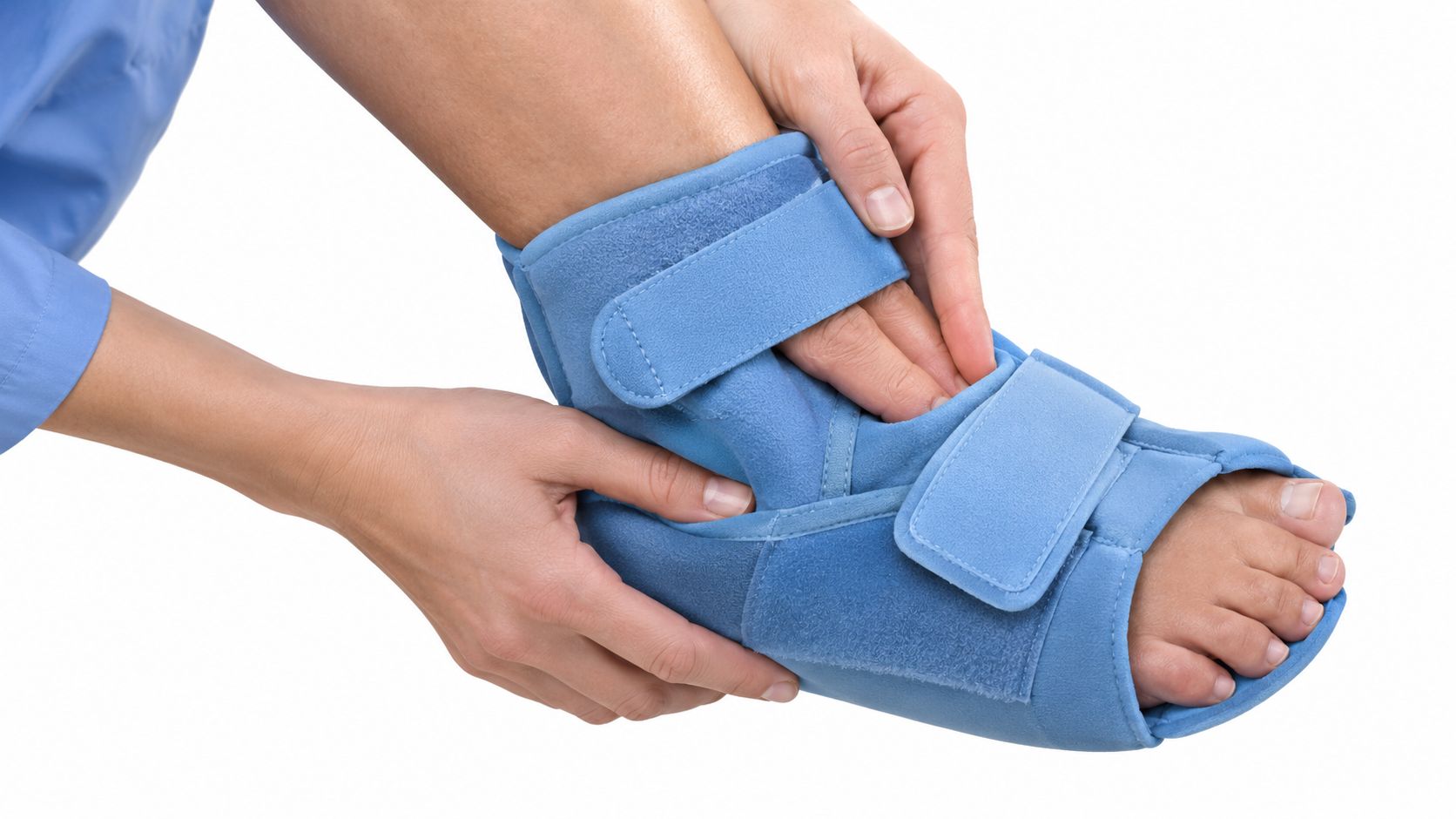
- Inspect first: Look at the heel, Achilles tendon, ankles, and calf before applying the protector. Note redness, discoloration, swelling, open skin, or drainage.
- Center the leg: Place the calf support so the heel sits in the intended suspended space. Don't allow the heel to slide backward into the bed.
- Secure without constriction: Fasten the boot firmly enough to prevent rotation, but avoid pressure that could affect circulation.
- Check the bony areas: Feel around the malleoli and Achilles tendon for contact or concentrated pressure.
- Recheck after repositioning: Changes in leg elevation can reintroduce focal heel loading. Verify clearance after every repositioning.
- Inspect routinely: Remove the device as directed and examine the skin. If a dressing covers the heel, follow the clinical plan for inspection, and don't assume the dressing hides a developing problem.
Keep the skin clean and dry. Moisture trapped inside a boot can soften the skin and make it more vulnerable to friction. A loose device can rub, while an overly tight one can compress tissue, so caregivers should report persistent marks rather than just adding more padding.
Caregiver check: After adjustment, ask whether the heel is actually floating and whether any new pressure is appearing at the Achilles tendon, ankle, or calf.
Document changes that persist or worsen, including redness that doesn't fade, increased warmth, swelling, drainage, odor, or a change in skin color. A person with neuropathy may not feel a poorly fitting protector, so visual inspection matters even when the patient reports no discomfort.
When to Consult a Clinician About Heel Care
A heel cushion isn't automatically safe because it feels soft. A poorly positioned device can press on the Achilles tendon, compress the calf, trap moisture, or create friction at the ankle. Patients with diabetes, neuropathy, poor circulation, edema, or fragile skin need individualized assessment before caregivers select or modify an off-loading system.
Contact a clinician or wound care specialist promptly if the heel develops persistent redness, purple or dark discoloration, a blister, open skin, drainage, unusual warmth, swelling, odor, or increasing pain. Worsening tissue changes, fever, spreading redness, or signs of infection require medical attention rather than a different cushion.
The clinical consensus strongly recommends off-loading devices for bedbound patients with heel pressure injuries. It also recommends use during walking for adults with stage I or II heel injuries, but mobility decisions should follow the treating clinician's instructions. A device that works in bed may not be appropriate during walking, and a protector intended for rest shouldn't be repurposed without guidance.
Families coordinating broader recovery may also find this guide to rehab care for Yuba City useful for understanding how rehabilitation support fits into long-term healing. Heel protection still requires direct clinical review when a wound is present or when circulation is uncertain.
Dressings can support the plan, but they don't replace suspension or assessment. Caregivers can review hydrogel wound dressing information, then confirm with a clinician whether that dressing type is suitable for the wound's condition.
Don't cut, fold, or add improvised materials to a heel protector without professional advice. Water-filled gloves and IV fluid bags can place pressure on the Achilles tendon, and a device that looks protective may be creating a hidden injury. Ask a clinician to evaluate the product, fit, circulation, skin response, and overall support surface together.
DME Superstore offers durable medical equipment for home mobility, pressure relief, and caregiver support, including heel-related protection options, mattresses, beds, and positioning products. Visit DME Superstore to compare equipment specifications and choose a pressure-management setup that supports proper heel suspension and routine skin checks.
