



You place your hearing aids on the nightstand, planning to put them away before bed. In the morning, one device is on the floor, the other is damp from the room's overnight humidity, and the charger is still unplugged. A small storage habit can make the difference between a dependable hearing routine and an expensive repair or a missing device.
A hearing aid storage case should do more than keep dust away. The right case protects against drops and loss, gives moisture a safe place to escape, supports charging when appropriate, and helps you build a repeatable nightly routine. It also needs to match your hearing aid style, battery type, dexterity, climate, and travel habits.
Why Your Hearing Aid Storage Case Matters
After a sweaty workout, a runner removes the hearing aids and leaves them beside the bed. A caregiver sets a resident's devices on a bathroom counter while handling other bedtime tasks. During travel, a pair rests on a hotel desk where housekeeping or a pet could knock them onto the floor. In each situation, an ordinary surface becomes an accidental storage system, offering little protection from impact, humidity, or loss.
Hearing aids stay close to the body, so they encounter sweat, skin oils, condensation, and temperature changes. Even a water-resistant device is not waterproof. Moisture may collect around the battery compartment, microphone openings, charging contacts, and other narrow crevices, contributing to corrosion or malfunction. Published hearing-aid moisture research describes failure mechanisms involving the battery compartment and electronics, while identifying heat, moving air, and desiccant as useful parts of a drying strategy.
A closed case is not automatically a dry case. If damp devices are sealed inside an airtight container, the case can trap the very moisture it should help remove. A well-designed storage system gives moisture a controlled way out and may combine drying, hygiene, charging, and organization in one routine.
Practical rule: Store hearing aids in the same protected place every night, then choose a case that manages moisture rather than simply hiding the devices.
Reliable storage also supports people who depend on these small devices every day. In the United States, about 1 in 3 adults ages 65–74 and nearly 1 in 2 adults age 75 and older live with hearing loss. Roughly 15% of U.S. adults, about 37.5 million people, report some trouble hearing, yet only about 1 in 4 adults who could benefit from hearing aids have ever used them, according to hearing loss facts from the National Council on Aging.
Hearing aids are also a meaningful financial investment. Prescription devices commonly cost $2,000 to $8,000 per pair, while OTC hearing aids are roughly $600 to $1,000 per pair, according to a review in PMC. A protective case is a simple safeguard for equipment used across bedrooms, cars, clinics, gyms, and airports.
The key shift is practical: a case should function as part of the care system, supporting moisture management, hygiene, charging, organization, and loss prevention, not merely acting as a plastic shell.
Comparing Hearing Aid Case Types and Materials
The best case depends on what happens before storage. Someone who wears hearing aids in a dry home and removes them at a quiet desk may need basic impact protection. A heavy sweater, outdoor worker, or person living in a humid climate may need a system that actively dries the devices.
Before comparing cases, identify the hearing aid's shape and charging arrangement. Behind-the-ear, receiver-in-canal, in-the-ear, and completely-in-canal devices have different housings, microphones, wires, and charging contacts. A clear overview of hearing aid styles explained can help you understand why a case designed for one style may not hold another safely.
| Case Type | Best For | Key Benefit |
|---|---|---|
| Hard-shell protective case | Home storage, drawers, and everyday protection | Resists crushing, dust, and minor drops |
| Padded travel pouch | Bags, appointments, and short trips | Adds cushioning while keeping accessories together |
| Electronic drying cradle | Humid climates, heavy sweaters, and frequent moisture exposure | Combines protected storage with an active drying cycle |
| UV sanitizing storage box | Users prioritizing overnight hygiene and drying | Uses ultraviolet light in a storage or charging routine |
| Charger-integrated case | Rechargeable hearing aids and regular overnight docking | Keeps the devices aligned with charging contacts |
A hard shell is a sensible starting point, but it can fall short when damp devices go inside. A sealed case may protect against impact while trapping humidity. Look for ventilation or a drying component if moisture is a recurring problem. A passive dry-aid container with desiccant can suit some households, while an electronic dryer may be more practical for people exposed to sweat or humid air.
Rechargeable users should confirm that the case fits the actual charging dock, not just the hearing aids. The devices must sit without pressure on microphones, receivers, or housings, and the contacts need to remain clean and dry. A slightly larger case can be safer than the smallest possible shell if it prevents crowding and allows air to circulate.
For a compact example, compare the dimensions and compatibility details of this charging case for the Vivtone Supermini CIC hearing aid. The important question isn't whether a case looks convenient. It's whether it supports the exact model you own.
UV storage boxes deserve careful expectations. Educational guidance describes UV sanitation cases as devices that can combine charging or storage with ultraviolet light and drying. They aren't a replacement for wiping away earwax, following manufacturer instructions, or keeping visibly wet devices away from electrical contacts. Treat UV as one part of hygiene and moisture care, not as a guarantee that every surface is clean.
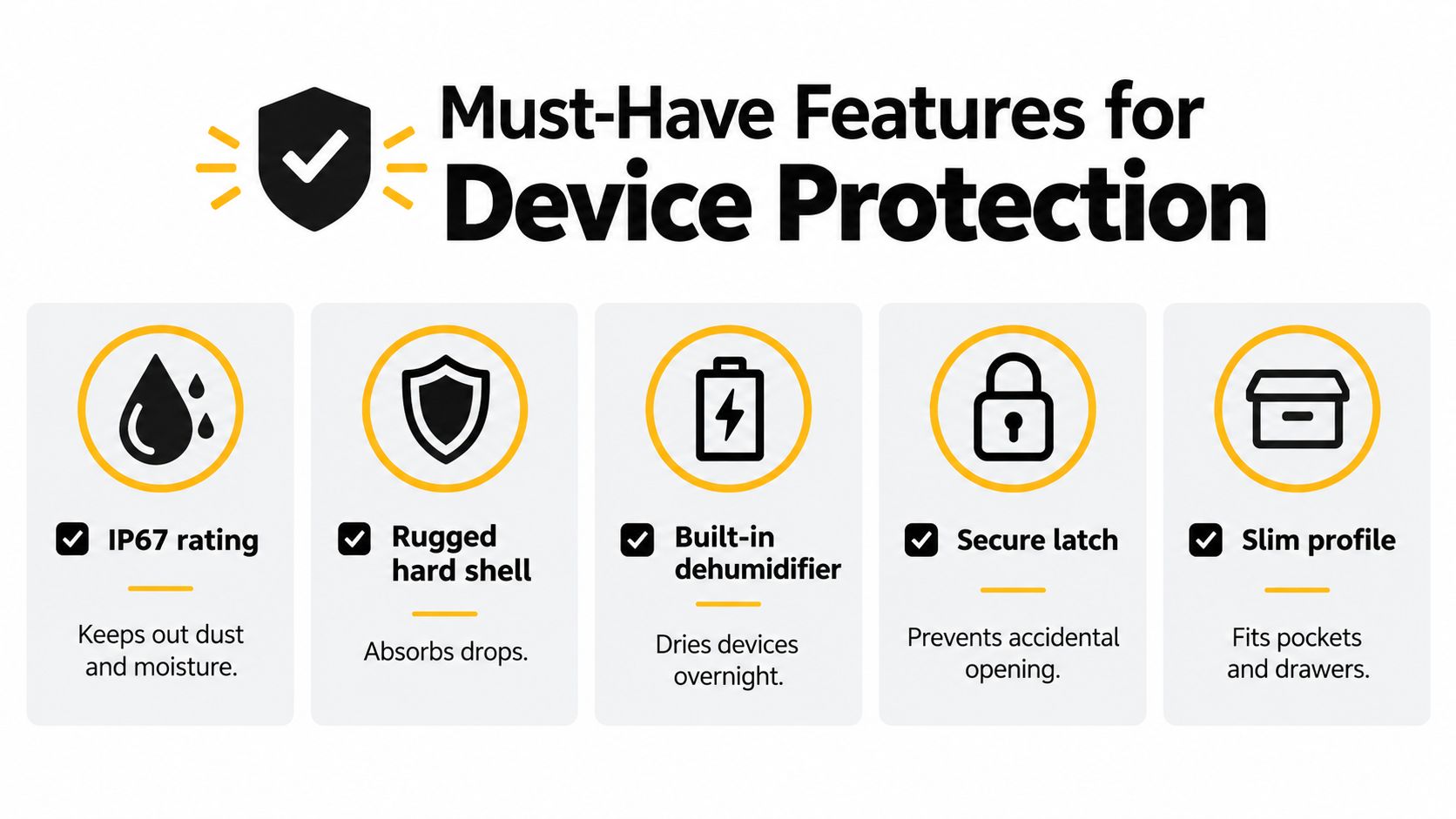
Must-Have Features for Device Protection
A hearing aid can look dry while moisture remains inside its openings. That is why a storage case should do more than prevent crushing. It should support controlled drying and hygienic storage, matched to the environment where the device rests overnight.
Manufacturer specifications usually describe non-condensing conditions, humidity limits, and temperature ranges rather than waterproof storage. Depending on the device, guidance may allow relative humidity from 0% to 70% or 20% to 75%, with transport and storage temperatures from roughly -20 °C to 60 °C (manufacturer technical sheet). These limits help caregivers choose a case realistically. A case cannot make a hearing aid safe in a steamy bathroom or a wet bag.
Closed-lid chargers may have an IP21 or IP22 rating. This offers limited protection from falling drops or angled drips under specific conditions. It does not permit submerging the case, rinsing it at a tap, or storing it beside a running shower.
Protection begins with the fit
A rigid shell helps protect the aids from pressure in a handbag or drawer. Inside, shaped wells or soft supports should hold each device without covering microphone ports, receivers, tubing, or buttons. A magnetic closure can simplify daily handling, while a firm latch reduces accidental opening during travel.
For disposable-battery models, leave room to open the battery door without forcing the device against the case. Store spare cells in a separate secure compartment. Loose batteries can contact metal objects, and humid storage can affect their condition.
Drying and hygiene work together
A dehumidifying case may use desiccant, gentle heat, moving air, or several methods together. Some products provide an 8-hour electronic drying cycle after wet or humid exposure, but the appropriate cycle depends on the case and hearing aid manufacturer (moisture study). Follow the product instructions, and keep household heaters, hair dryers, and unapproved high-heat methods away from the devices.
Use this checklist:
- Confirm compatibility: Match the hearing aid model, charger shape, battery type, and receiver position.
- Inspect the interior: Choose supports that hold the aids securely while leaving openings clear.
- Check the closure: Select a latch or magnetic system you can operate with your available finger strength.
- Review the rating: Treat IP21 or IP22 as limited drip protection, not waterproof certification.
- Plan for cleaning: Pick wipeable surfaces without deep seams that collect wax, dust, or moisture.
- Check the drying method: Make sure the case provides a suitable desiccant or approved drying system, rather than relying on a sealed shell alone.
Step-by-Step Nightly Care and Cleaning Routine
A tired caregiver may place hearing aids straight into a case after dinner, only to discover wax, moisture, or a charging problem the next morning. A reliable routine prevents that chain of trouble. The case should act like a small overnight care station, protecting the devices while helping manage moisture and keeping the storage area clean.
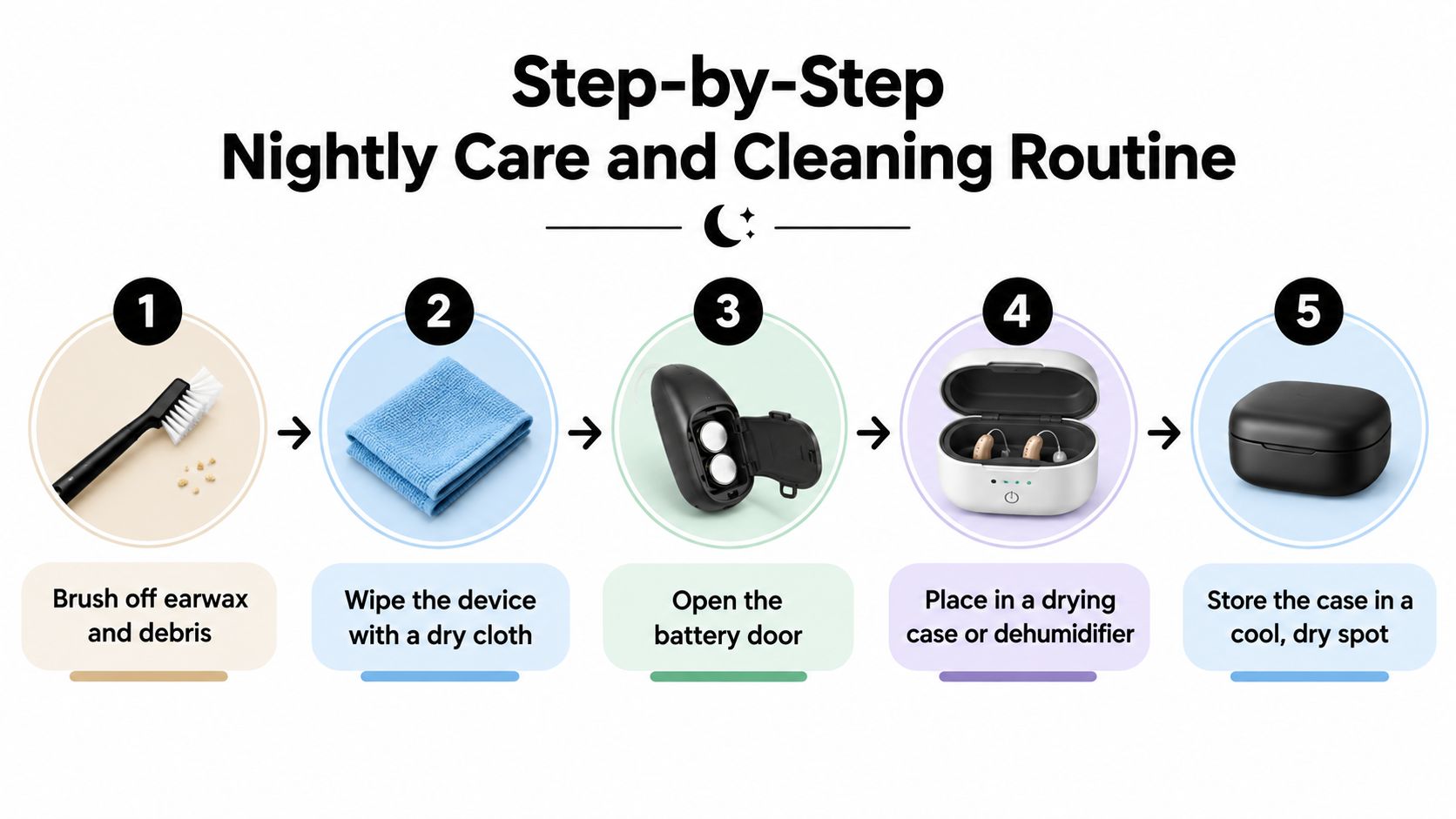
Wash and dry your hands before handling the aids. Remove visible earwax or debris with the brush supplied for the device, then wipe the outer surfaces with a clean, dry cloth. Keep tools away from microphone openings, receiver ports, and narrow channels. These openings are more like delicate vents than places to probe.
For disposable-battery hearing aids
- Brush first: Clear loose earwax and debris from the earmold, dome, and accessible surfaces.
- Wipe gently: Use a soft, dry cloth on the device body. Do not soak or heavily dampen it.
- Open the battery door: Leaving it open overnight allows trapped moisture to escape, as described in UCSF daily hearing-aid care.
- Use a dry case: Set the hearing aid in storage with suitable desiccant or an approved drying system.
- Choose the right location: Keep the closed case in a cool, dry place away from bathrooms, pets, and children.
An open battery door still needs protected storage. Ventilation releases moisture, while the case keeps dust, knocks, and accidental handling away.
For rechargeable hearing aids
Wipe each device and allow it to air-dry before docking. Fully damp aids should dry completely before charging, and the charging contacts must stay clean and dry, consistent with UCSF rechargeable-care guidance.
Once dry, place each aid correctly in its powered charger or approved drying cradle. Confirm that the indicators respond. If moisture remains, use the manufacturer-approved drying method instead of forcing a wet device into the dock.
The case itself also needs attention. A storage container can collect wax, dust, and moisture, so establish a regular cleaning routine. Guidance on hygiene for small personal containers offers a related infection-prevention principle in BacteriaFAQ.com infection prevention lens storage. Contact-lens cases and hearing-aid cases are not interchangeable.
Avoid: Canned or compressed air, direct heat, hair dryers, and improvised drying methods. They can push debris into openings or damage sensitive components. UCSF care guidance also advises keeping heat and canned air away from hearing-aid openings.
Replace wax guards and other consumable parts according to the device instructions. For an example accessory, review Vivtone ear wax guards for hearing aids. Clean devices and a clean case work together, so make cleaning part of storage rather than waiting for a performance problem.
Choosing the Right Case for Seniors and Caregivers
A case that works for one person may frustrate another. Active seniors often need a compact, padded design that can survive a pocket, gym bag, or travel tote. A caregiver may care more about visibility, labeling, sanitation, and a closure that prevents a device from being misplaced during bathing, dressing, or transfers.
Match the case to daily movement
For an active user, prioritize a hard outer shell, secure closure, and enough room for the charger, wax guards, and cleaning cloth. A bright color can make the case easier to locate in a dark bedroom or crowded bag. If the user regularly sweats, choose ventilation or an approved drying function instead of relying on a sealed shell alone.
A person with arthritis or reduced dexterity may need a large pull tab, a low-resistance latch, and a lid that opens widely. Tiny sliding catches can look neat but become impractical when fingers are painful or vision is limited. Test the closure before purchase, and make sure the user can open it without dropping the hearing aids.
Support caregiving and shared routines
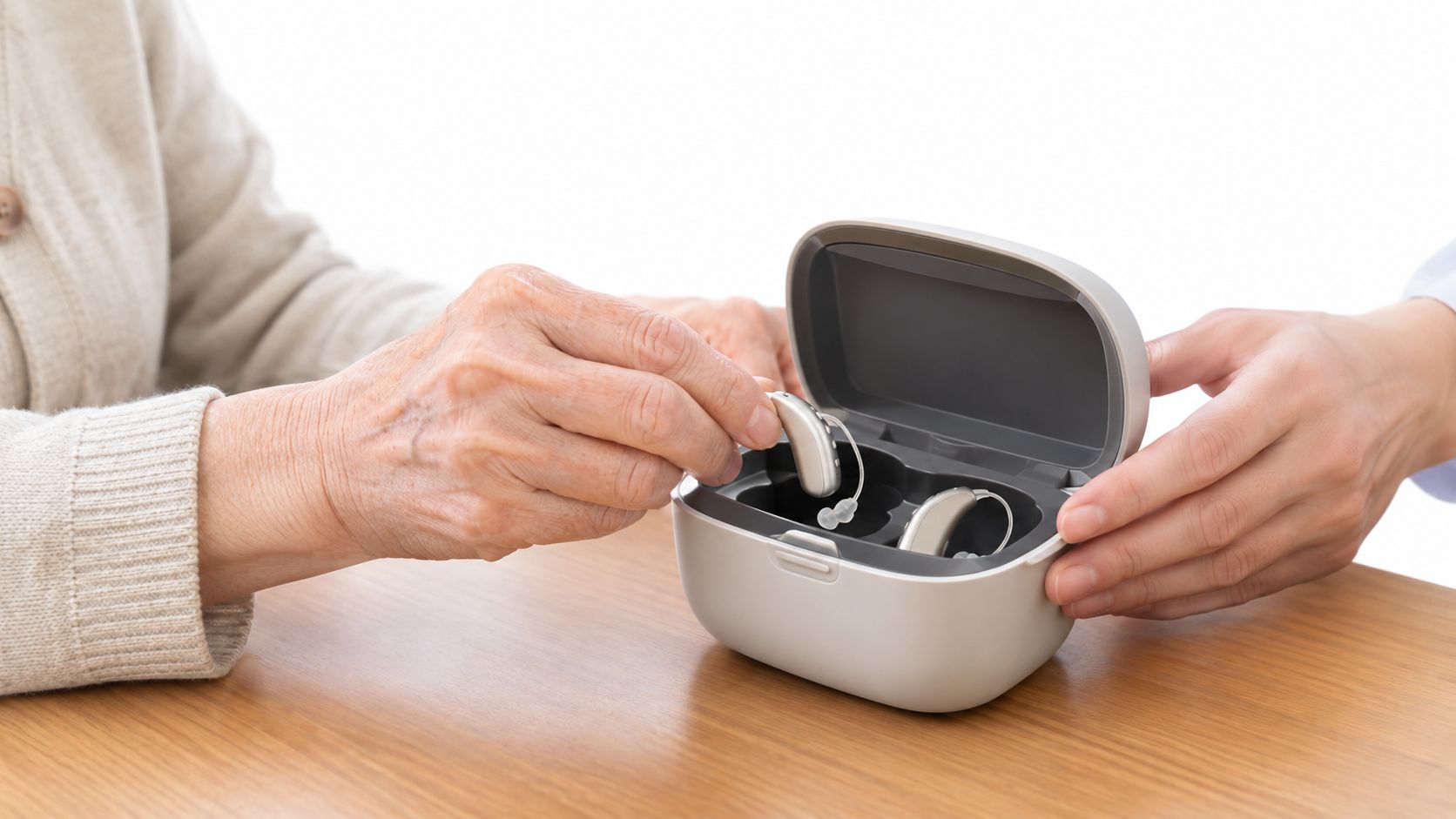
In assisted living or clinical settings, a case should make ownership obvious. A labeled exterior, individual device wells, and a secure closure reduce mix-ups. If several people handle the devices, select a surface that can be wiped according to the manufacturer's care instructions.
Caregivers should also establish one location for the case, charger, spare batteries, and cleaning supplies. Guidance on essential tips for caregivers and safe transfers reinforces a broader principle: organized equipment reduces avoidable handling mistakes during everyday assistance.
A UV sanitation case may suit a user whose routine includes frequent handling or shared caregiving support, provided the device maker permits that method. It shouldn't replace visual inspection. Earwax, moisture, damaged tubing, or a loose battery door still require attention.
For many households, the best option is a slightly larger ventilated case, not the smallest hard box available. Extra room can prevent pressure on microphones and charging contacts, while a stable interior reduces the chance of a device being knocked out when the lid opens.
Travel Safety and Battery Storage Rules
A hearing aid can move from a cool home to a hot car, a dry aircraft cabin, a humid hotel bathroom, or a crowded security tray within hours. Keep the hearing aids, charger, storage case, and spare batteries together in your hand luggage. This keeps them accessible and makes the case a controlled home base during the trip.
At airport security, follow the screening staff's current instructions. Hearing aids generally stay with the traveler, but procedures can vary. Tell the officer that you wear medical hearing devices and ask how to proceed. Place the devices in their case rather than a jacket pocket or an unprotected tray, where they could be lost or damaged.
Protect the case from temperature swings
Manufacturer requirements vary. In general, hearing-aid cases and chargers belong in controlled, non-condensing environments, away from prolonged extreme heat, freezing conditions, and water, as noted in the manufacturer storage specifications cited earlier. Never leave hearing aids in a parked car, on a sunny dashboard, or beside a heater.
A case works like a small protective shelter, but it cannot cancel the device's storage limits. If the hearing aid or charger has moved from a cold environment into a warm room, let it reach room temperature before opening compartments or connecting it to power. Cold surfaces meeting warm, moist air can create condensation, which may reach contacts or other sensitive parts.
Store spare batteries carefully
Disposable hearing-aid batteries should stay at room temperature in a dry place. Humidity can prematurely activate a battery and shorten its useful life, so a bathroom or hot car is a poor storage location. The hearing-aid battery guidance from the National Council on Aging also supports keeping batteries away from moisture.
Leave disposable cells in their original packaging until needed. Loose batteries should not share a pocket with coins, keys, or other metal objects. For a practical home and travel routine, review this hearing-aid battery storage guidance.
Pack according to the device type. Disposable-battery users need sealed spare cells and a safe way to carry used ones. Rechargeable users need the correct charging case, cable, and power adapter. Keep these items in a compartmented travel pouch, so a small accessory does not disappear at the bottom of a bag.
Buying Guide and FSA/HSA Eligibility
Start with compatibility, not appearance. Confirm the hearing aid model, whether it uses disposable or rechargeable power, whether the charger must fit inside the case, and whether your routine calls for passive desiccant, electronic drying, or UV sanitation. A case that looks protective but traps moisture or presses on the charging contacts isn't a good match.
For older adults and caregivers, a durable medical equipment retailer can simplify comparison by grouping device specifications, compatible accessories, warranty details, and care information. DME Superstore offers hearing-related products alongside broader homecare equipment, including OTC hearing aids with portable or integrated charging solutions. Its product guidance can also help readers compare hearing devices for older adults through hearing aids for seniors.
Review the purchase terms
Check the product page for the exact case contents. Some packages include only a shell, while others include a charger, drying function, desiccant, or sanitation feature. Confirm whether the case works with your hearing aid model before ordering, especially when the device has a proprietary charging dock.
DME Superstore states that its products are eligible for FSA/HSA spending, although account administrators and individual plan rules may differ. The retailer also offers nationwide free shipping, a 30-day return policy on most items, 24/7 chat-based support, and financing through Affirm. Verify current terms, eligibility, and return conditions at checkout because policies can change.
A sensible purchase often includes the case, the correct cleaning tools, and replacement consumables rather than an attractive case that doesn't support the complete routine. The priority is dependable storage that keeps the devices protected, dry, identifiable, and ready for the next day.
DME Superstore offers hearing aids, charging solutions, care accessories, and other homecare equipment for older adults and caregivers. Visit DME Superstore to compare compatible hearing aid storage options and choose a case that fits your device, routine, and moisture-control needs.
