



You're at checkout for a lift chair for your father. You've compared fabric, lift capacity, and delivery dates, and now someone asks if you want extended protection. You don't want to waste money, and you also don't want him stuck in a chair that won't raise him to his feet. That's the right moment to slow down, because the best extended warranty benefits have less to do with a sales pitch and more to do with what happens when equipment he depends on stops working at home.
What an Extended Warranty Actually Is for Medical Equipment
Your father uses the chair to get dressed in the morning. One evening it stops halfway up, and you're calling neighbors for help while he waits. A television failure is frustrating. A lift chair, powerchair, or adjustable bed failure can change whether someone can get to the bathroom, sleep safely, or leave the house for an appointment.
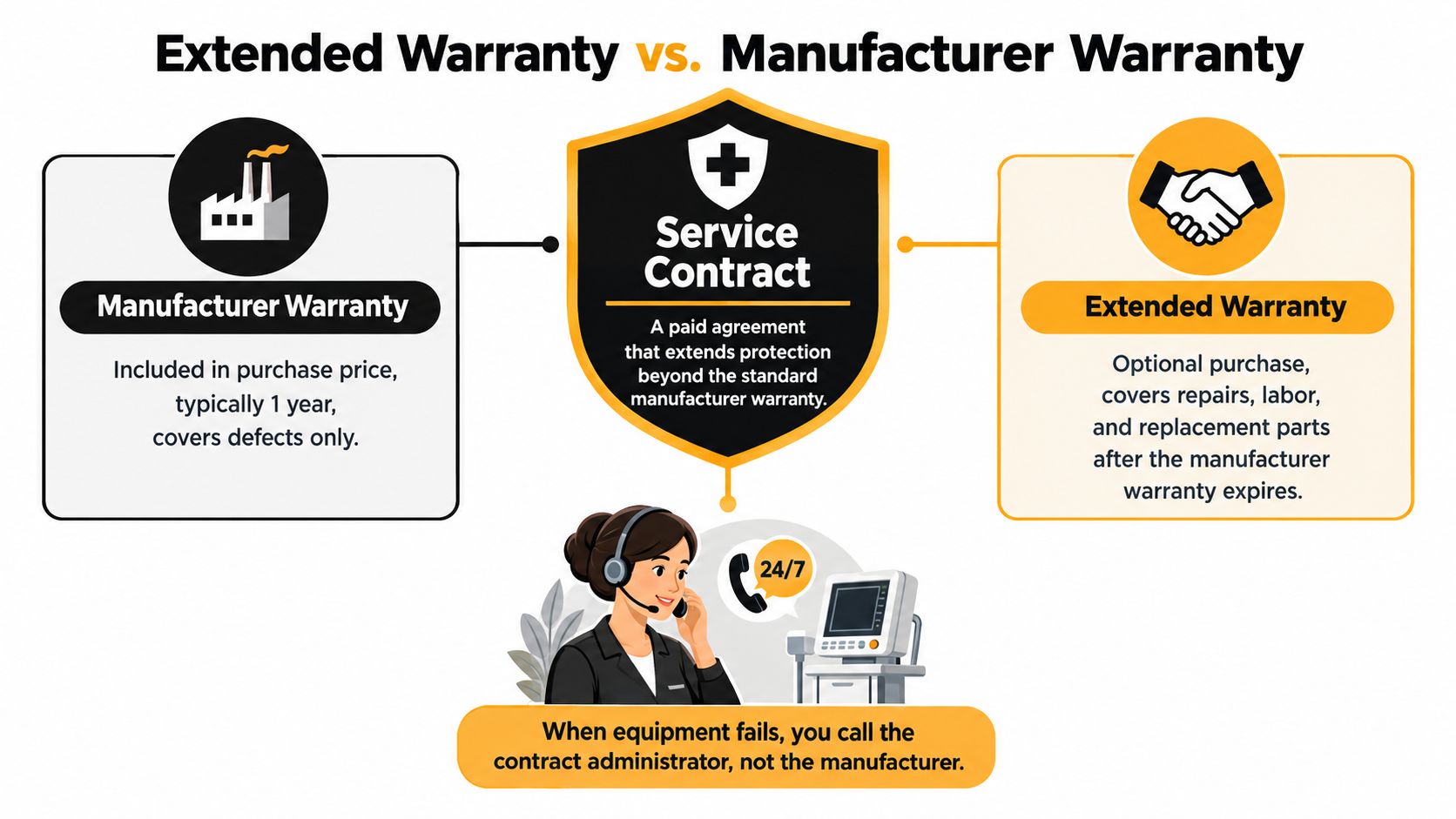
The term extended warranty sounds like the same coverage, only longer. It's a service contract, an optional agreement you buy separately. A manufacturer warranty is included in the purchase price and generally covers defects for a set period. A service contract costs extra, may start when that warranty ends, may overlap with it, and may cover only selected parts or types of repair.
Four Words That Shape Every Offer
- Deductible: The amount you pay per claim or per visit before the contract pays.
- Covered component: A specific part named in the contract, such as a motor or controller.
- Exclusion: Something the contract won't pay for, even during the coverage period.
- Authorized repair: Work done by a technician or shop the contract administrator approves, often after you get permission first.
Sellers often raise coverage at checkout because that's when you're already thinking about price and reliability. In a 2012 FTC conference presentation, U.S. market data indicated consumers spent approximately $14.7 billion on extended warranties, about 40% of automobile buyers purchased one, and Consumer Reports research cited in that FTC conference presentation on extended warranty purchases found 86% of vehicle buyers bought at the point of sale.
That timing doesn't make the offer wrong. It does mean you should judge it separately from the chair or scooter itself.
Think of the manufacturer warranty as the umbrella that came with the purchase, and the service contract as a second umbrella you choose to buy. Check whether rain would already miss you before paying for both.
Ask when the contract starts, what it adds, and who you'll call. If those answers aren't clear in writing, you don't have enough information to decide yet.
What Extended Warranty Benefits Cover for Scooters, Powerchairs, and Lift Chairs
Coverage is useful only when it names the parts that keep equipment moving. A long list of minor parts can look generous while leaving out the motor, electronics, or pump that would leave someone stranded. Start with the equipment your family uses, then match its highest risk components against the contract.
Components That Usually Matter Most
For a power scooter, look for the motor, transaxle, controller, and charger. Batteries deserve special attention because some contracts treat them as wear items, offer a prorated credit, or require a defined failure rather than gradual loss of range. On a powerchair, the joystick controller, motors, electronics, and seating actuators matter because a fault can affect steering, tilt, or safe transfers.
A lift chair depends on its lift mechanism, actuator, motor, hand control, and power supply. If you're comparing models, the detail in this guide to a 40 point lift chair inspection standard shows how many moving and electrical parts sit behind a chair that looks simple from the outside. For an alternating pressure mattress, ask about the pump or compressor, control unit, and air cells, since pressure relief stops working when air can't cycle as designed.
An academic life-cycle warranty study advises buyers of high dependency equipment to weigh failure severity, dependence, replacement lead time, repair availability, deductibles, reimbursement caps, and exclusions, especially whether the contract covers a failure prone battery, motor, electronics, actuator, pump, or controller.
Items That Often Sit Outside Coverage
- Wear items: Tires, inner tubes, cushions, arm pads, and upholstery may be excluded or limited.
- Accidental damage: A dropped controller or a chair damaged in a move may need separate accidental damage terms.
- Misuse and missed maintenance: Using equipment beyond its capacity or skipping required care can lead to a denied claim.
- Cosmetic damage: Scuffs and fabric fading usually don't count as a functional failure.
Frames on rollators and wheelchairs can be covered differently from brakes, cables, wheels, and bearings. Read those lines separately rather than assuming frame protection means the whole device is protected.
Practical rule: Circle the one or two parts whose failure would stop daily use. If the contract doesn't clearly cover those parts, its headline term matters much less.
The strongest extended warranty benefits for medical equipment are specific. They connect a named component, parts and labor terms, and a workable repair route to the failure you're most worried about.
How to Read a Service Contract Before You Sign
Read a service contract from the claim backward. Ask what happens on the worst day, not what the brochure promotes. You'll need the start date, end date, deductible, labor terms, travel or shipping terms, authorization rules, claim limit, and the exact process for getting help.
A contract that overlaps the manufacturer warranty may add little during that overlap unless it provides something different, such as accidental damage coverage or a loaner. A contract that starts later may cost less per useful year, but confirm there's no gap between the two periods. Also check whether the limit is per claim, per year, or for the life of the contract.
Service Contract Clauses That Matter Most
| Contract Element | Good to See | Red Flag |
|---|---|---|
| Start date | Begins when manufacturer coverage ends, with overlap explained | Runs at the same time with no added benefit |
| Deductible | Clear amount and when it applies | Separate fees for diagnosis, visits, and parts |
| Labor and travel | Technician labor and travel included | Parts covered but you pay every service visit |
| Batteries | Failure test and replacement terms in writing | Battery language missing or limited to a small credit |
| Shipping | Shipping both ways covered when return is required | You must box and ship heavy equipment at your cost |
| Authorization | Simple approval before repair, with a contact number | Repairs can be denied if you call a local tech first |
| Claim cap | Limit stated per claim and in total | Cap is lower than a major component replacement |
Battery wording deserves a slow read, and routine care matters too, as this advice on extending mobility battery life explains. Ask whether reduced range counts as failure, who tests it, and whether replacement means a new battery or a credit toward one.
Speed also matters, especially for older buyers. A 2021 U.S. warranty survey found consumers were 71% more likely to buy directly from the manufacturer than through other providers, and 84% of Baby Boomers called rapid claim resolution important compared with 51% of Generation Z, according to the 2021 U.S. warranty survey results.
Ask who administers claims, how quickly a technician is dispatched, and what happens if a part is unavailable. A familiar seller name doesn't guarantee the administrator will move quickly.
Extended Warranty vs Insurance, Manufacturer Coverage, and Self Insuring
Four paths can manage the same risk, but they don't solve the same problem. Compare them by asking how soon a failure becomes painful, how predictable the cost is, and whether the user can safely wait while you arrange money or repairs.
The Included Manufacturer Warranty
The Federal Trade Commission explains that a warranty is generally included in the purchase price, while an extended warranty, more accurately a service contract, costs extra and is sold separately. The same guidance notes a service contract may begin after the manufacturer warranty ends or cover only selected parts and repair types.
Manufacturer coverage is your first layer, so map it before buying more. Some parts may have different terms from the frame, electronics, or labor, which is why examples such as this overview of a lifetime warranty on selected lift chair components should be read component by component. A long frame term doesn't mean a hand control or actuator has the same protection.
Insurance and Self Insuring
Homeowner or supplemental insurance may help after theft, fire, or certain accidental losses, depending on the policy. It generally isn't designed as a routine repair plan for a worn actuator or failed controller, and reimbursement can involve its own deductible and paperwork. Many families are also surprised that health coverage for purchasing equipment doesn't automatically mean later repairs on equipment they own will be paid the same way, so confirm the rule for your specific plan.
- Self insuring: Set aside the amount you would have paid for the contract and keep it for repairs. This works best when you have backup equipment, local service, and enough savings for a major part.
- Service contract: Pay in advance to make a covered failure more predictable. This works best when downtime would create rental costs, extra caregiver hours, or safety risks.
- Manufacturer warranty only: Rely on included defect coverage, then pay later repairs yourself. This can be sensible for simple, low dependency equipment.
The question isn't only whether repairs will cost more than the premium. It's whether an uncovered failure would arrive at a moment when you can't absorb the bill, the wait, or both.
If a spare rollator sits in the closet, self insuring may be calm and rational. If a powerchair is someone's only way to reach the kitchen, predictable help can be worth paying for even when a claim feels unlikely.
What the Claims Process Really Looks Like
A claim usually begins with a small change. The scooter loses power on a ramp, the lift chair clicks but doesn't move, or the mattress pump alarms in the night. Write down the symptom, model, serial number, purchase date, and any error code before you call.
The visual below shows the usual path from that first symptom to a repaired or replaced unit.
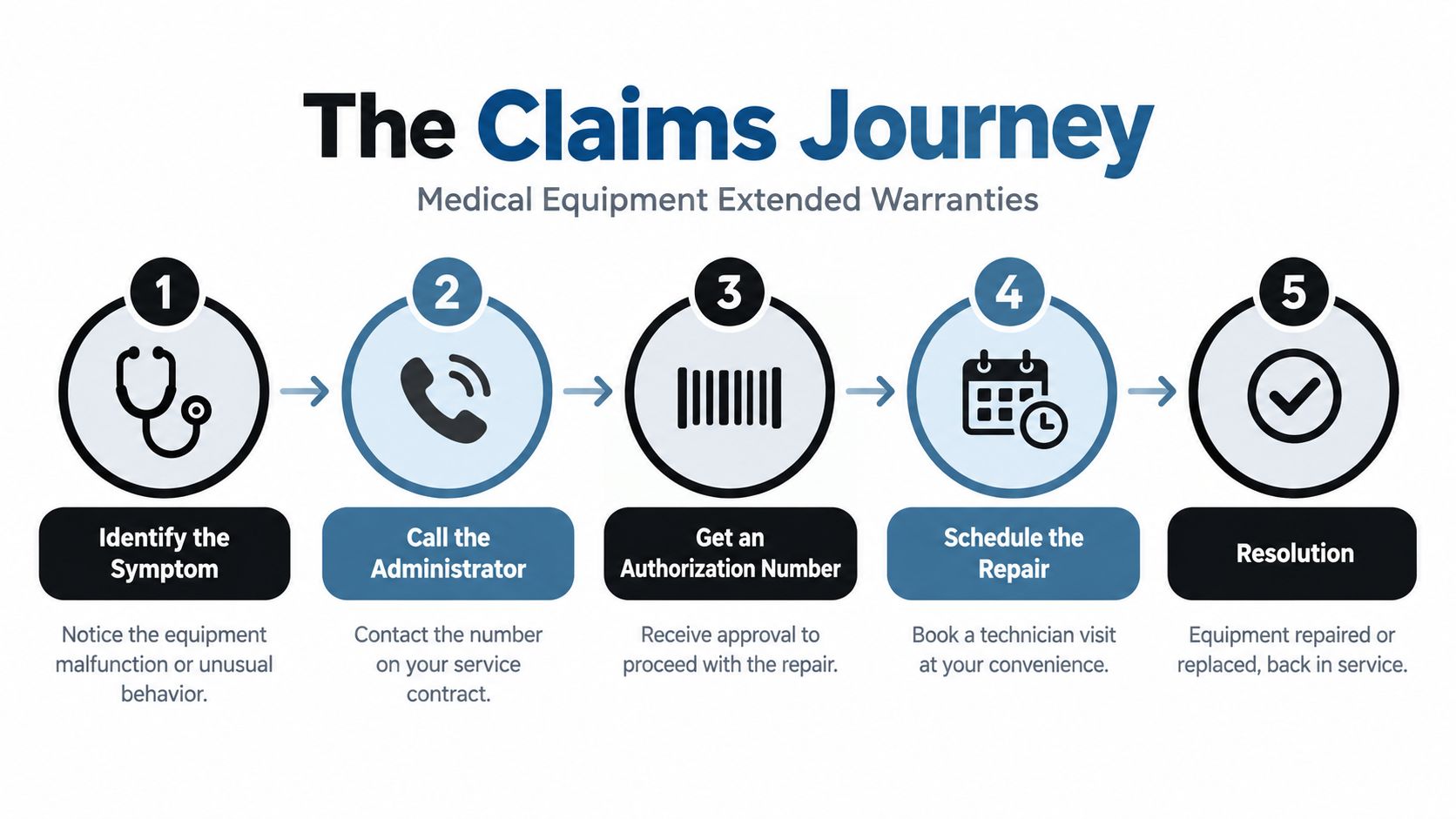
Call the administrator listed on the contract, not automatically the store or manufacturer. The administrator may troubleshoot by phone, open a claim, and issue an authorization number. Don't hire a technician or order a part before that approval if the contract requires it, because unauthorized work is a common avoidable reason for trouble.
Next comes diagnosis. A local technician may visit, a part may be shipped to you, or smaller equipment may need to be sent in. This walkthrough of the warranty claim process can help you prepare the documents and details administrators commonly request.
The short video below is a useful pause before you file, especially if you're organizing paperwork for someone else.
Friction can still happen. Diagnostics may take time, parts may be backordered, and an administrator may decide a unit is beyond economical repair under the contract cap. Ask at the start whether a loaner, rental allowance, replacement, or reimbursement is available, because those words mean very different things.
If a Claim Is Denied
- Ask for the reason in writing: Request the exact contract clause and the evidence used.
- Correct the record: Send maintenance receipts, photos, serial numbers, or technician notes that were missing.
- Request escalation: Ask for a supervisor review and note every name, date, and reference number.
- Use outside help: If the contract is regulated as insurance in your state, you can contact the state insurance commissioner.
Stay polite and specific. You're building a paper trail that shows what failed, when you reported it, and what the contract promised.
Choosing Coverage for Your Specific Situation
The same contract can be sensible for one household and unnecessary for another. Dependence is the dividing line. The more a failure disrupts sleep, transfers, pressure relief, or getting out of the house, the more weight you should give to repair speed and continuity.

Seniors Aging in Place
For a parent living alone, a lift chair or adjustable bed isn't furniture in the usual sense. It's how they rest with swollen legs, rise without pulling on a walker, and avoid sleeping in an unsafe position. Coverage for the actuator, motor, hand control, and labor matters most, along with in home service so the equipment doesn't have to be shipped away.
Recommendation: Favor coverage when there's no second chair or bed that can substitute safely. The key feature is in home repair with labor included.
Family Caregivers
A daughter managing work, school runs, and her father's appointments feels a powerchair failure as extra lifting, missed visits, and urgent rental calls. That's hidden labor, even if the repair invoice looks manageable. Look closely at controller and motor coverage, authorization speed, and whether the plan helps with a loaner.
Recommendation: Favor coverage when the user can't transfer or travel without the device. The key feature is fast authorization and a clear loaner or rental rule.
Bariatric Users and Post Surgery Patients
Heavy duty scooters, lift chairs, and beds use reinforced frames, stronger actuators, and higher capacity components. Those parts can be harder to source locally, and using standard backup equipment may not be safe. Confirm weight capacity hasn't been exceeded and that the contract covers the reinforced parts fitted to the actual model.
Recommendation: Favor coverage when replacement parts are specialized. The key feature is coverage for the exact heavy duty actuator, frame, and motor.
Post surgery recovery is different because timing can matter more than contract length. A patient home after a hip or knee procedure may need a lift chair, bed, or scooter intensely for a limited period, then much less later. A long term plan may add little if the recovery window is short and manufacturer coverage remains active.
Recommendation: Be cautious about long contracts for short recoveries. The key feature is rapid repair or loaner access during the recovery window.
Whichever profile fits, keep maintenance requirements in view. The FTC warns contracts may exclude accidental damage, require routine maintenance, or allow denial when specified maintenance instructions weren't followed, making exclusions more important than the headline coverage period. Some retailers, including DME Superstore, present third party protection options alongside product warranty details, so compare the administrator and terms rather than relying on where the offer appears.
A Simple Worksheet for Deciding If Coverage Is Worth It
Use five questions before you say yes or no. Write the answers down, because a decision that looks obvious at checkout often changes when you see the replacement cost and waiting time side by side.
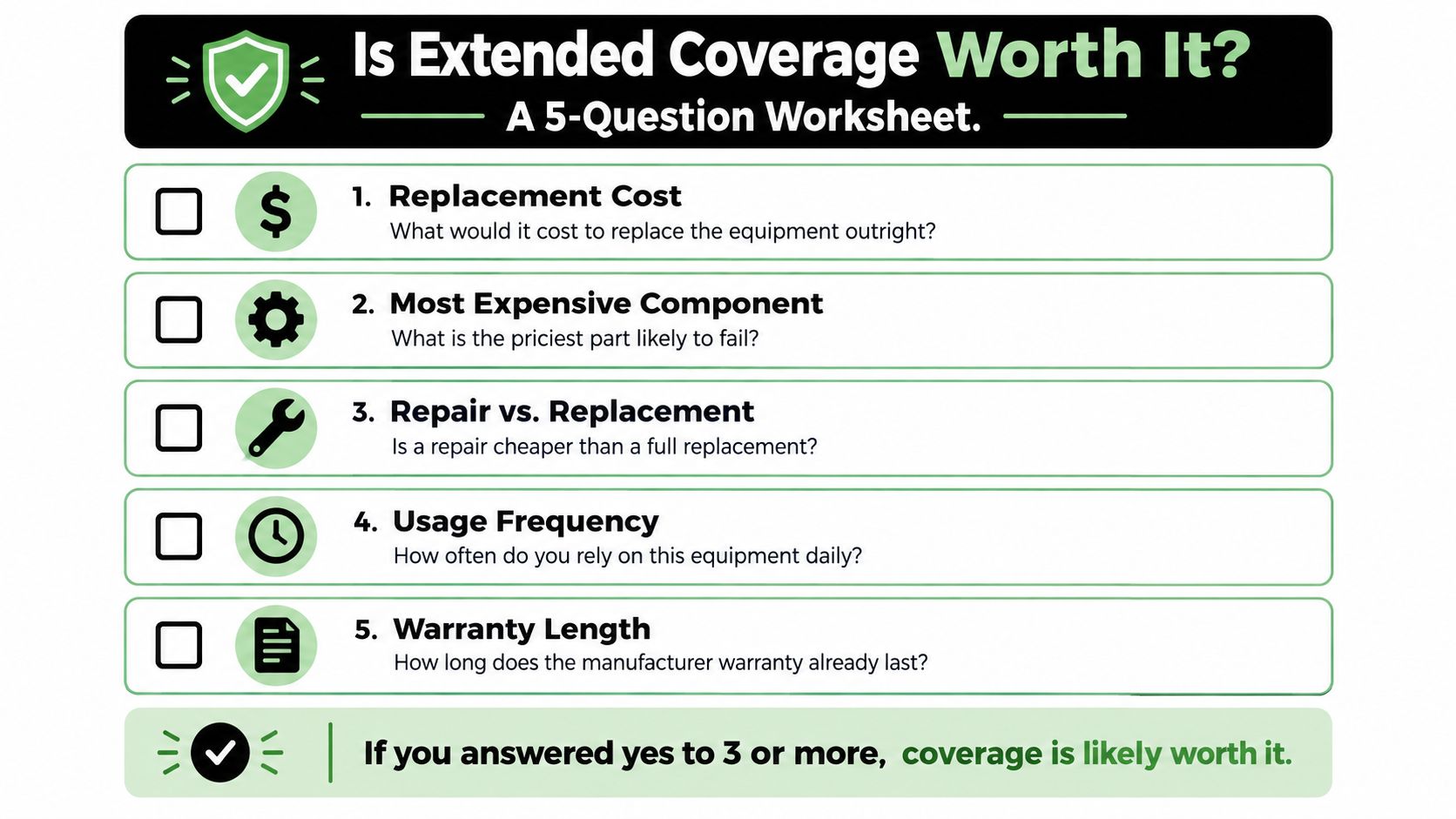
- Replacement cost: What would it cost to replace the equipment outright today?
- Most expensive likely failure: Which component would cost most to repair, and is it named in the contract?
- Out of warranty repair cost: What would parts, labor, travel, and shipping cost in your area?
- Safe waiting time: How long can the user manage without it, and is safe backup equipment available?
- Contract fit: Does the total contract cost, deductible, cap, and claims process match the risk you're trying to transfer?
Price alone won't answer those questions. A Kellogg School analysis of roughly 45,000 electronics transactions found extended warranties cost about 24% of product price on average, observed television failure rates were 5% to 8%, and warranty profit margins reached as high as 62% to 73%, which is why the Kellogg analysis of extended warranty pricing and failure rates supports comparing the premium with the reliability of the specific model rather than a generic percentage.
If replacement would strain the budget, the priciest component is covered, and the user can't wait safely, coverage deserves serious consideration. If the equipment is simple, a backup is available, and the contract excludes the likely failure, skipping it may be the stronger choice. If you're still sorting categories, this explanation of what counts as durable medical equipment can help you separate essential daily equipment from occasional aids.
You're not trying to protect against every possibility. You're protecting against the one or two failures that would disrupt independence, safety, or care at home.
If you're comparing lift chairs, powerchairs, scooters, beds, or pressure relief equipment, DME Superstore lists product specifications and warranty information to help you weigh manufacturer coverage against optional protection before you buy. Visit the store, bring your five worksheet answers, and choose coverage based on the equipment your family cannot safely be without.
