



A trapeze bar for a hospital bed is an overbed mobility aid that helps a patient reposition and transfer with minimal caregiver assistance, but it's rated for partial body weight support only, not full suspension. The headline number on the box can be misleading, because the safety question is whether the device can handle the way the person uses it.
If you're watching someone in bed struggle to scoot up, sit up, or turn without help, you're probably looking for a tool that restores some control without creating another safety problem. A trapeze bar can do that when it matches the bed, the person's strength, and the way the device is meant to be used.
Understanding the Trapeze Bar for Hospital Bed
A caregiver sees the same pattern over and over. The patient slides down toward the foot of the bed, gets stuck halfway to sitting, and needs help again just to get comfortable. That's usually the point when a trapeze bar for hospital bed enters the conversation, because the problem isn't just getting out of bed. It's all the small movements that happen before that.
A trapeze bar is a purpose-built overbed mobility aid. A patent record shows the device has been in use for well over 100 years, with earlier trapeze-related inventions dating back to 1899, 1921, 1932, 1987, 1990, and 1996 (patent record). That long history matters because it shows the device didn't appear as a novelty. It evolved alongside bed mobility and home care needs.
Practical rule: If the patient needs help shifting position, not full lifting, a trapeze may fit the task. If they need to be carried or fully supported, it's the wrong tool.
A simple triangle handle suspended above the bed looks almost too plain to matter. In use, though, it gives the patient a stable handhold to pull against, which can reduce how often a caregiver has to boost shoulders or hips. That's why many families think of it as a dignity tool as much as a mobility aid.
Coverage criteria reflect that same shift. One plan document lists standard trapeze equipment under HCPCS codes E0910 and E0940, with E0911 and E0912 for heavy-duty models intended for patients weighing more than 250 pounds (patent record). For a broad overview of durable equipment categories, DME Superstore's guide on what counts as durable medical equipment is a useful companion read.
How a Trapeze Bar Works for Bed Mobility
Think of the setup like ship rigging. The frame is the anchor, the bar acts like the spreader, and the chains or arms distribute force so the user can pull upward in a controlled way. That's a better mental model than “bed accessory,” because the device is really about positioning.

The movement in plain terms
The patient reaches for the handle, grips it, and uses the arms and shoulders to unload part of the body's weight. That makes it easier to slide the hips, shift the torso, or push toward a seated position without a caregiver lifting from underneath. The bar doesn't do the work for them, it gives them a better angle to do the work themselves.
That's why this device is commonly described as a repositioning aid rather than a lifting device. Product guidance often says it helps a patient safely change position in bed and transfer to other equipment with minimal assistance, and some models note adjustable handbar position or chain height. One listed range shows a bar height of 43" to 52", while a freestanding model lists an overall height of 78.5" to 86.3" and an adjustable holder length of 8.5" to 34.5" (Vitality Medical).
The user should be able to pull, pause, and reposition in small steps. If the movement turns into a full-body swing, the setup is too demanding or poorly adjusted.
A trapeze also helps reduce repeated caregiver effort during bed mobility. That matters in daily life, because the goal isn't dramatic movement. It's helping someone make the next comfortable shift without calling for assistance every time. For a related look at adjustable sleeping setups, Tip Top Furniture & Mattresses offers a helpful piece on luxury comfort from Tip Top that pairs well with this topic.
For more on transfer-focused equipment, see DME Superstore's guide to patient transfer devices.
Types of Trapeze Bars and Which One Fits Your Needs
A caregiver shopping for a trapeze bar can run into a common trap. The box may highlight a large number, but that number does not tell you whether the device fits the bed, the room, or the user's actual movement needs. Mount style, frame support, and how much the person will pull all shape the right choice.

Standard, freestanding, and bariatric options
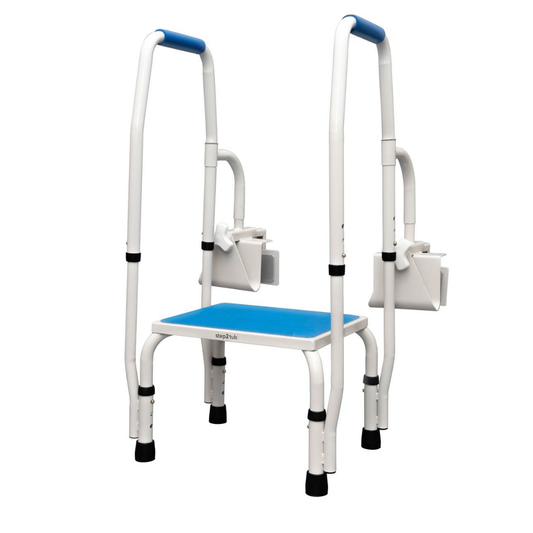
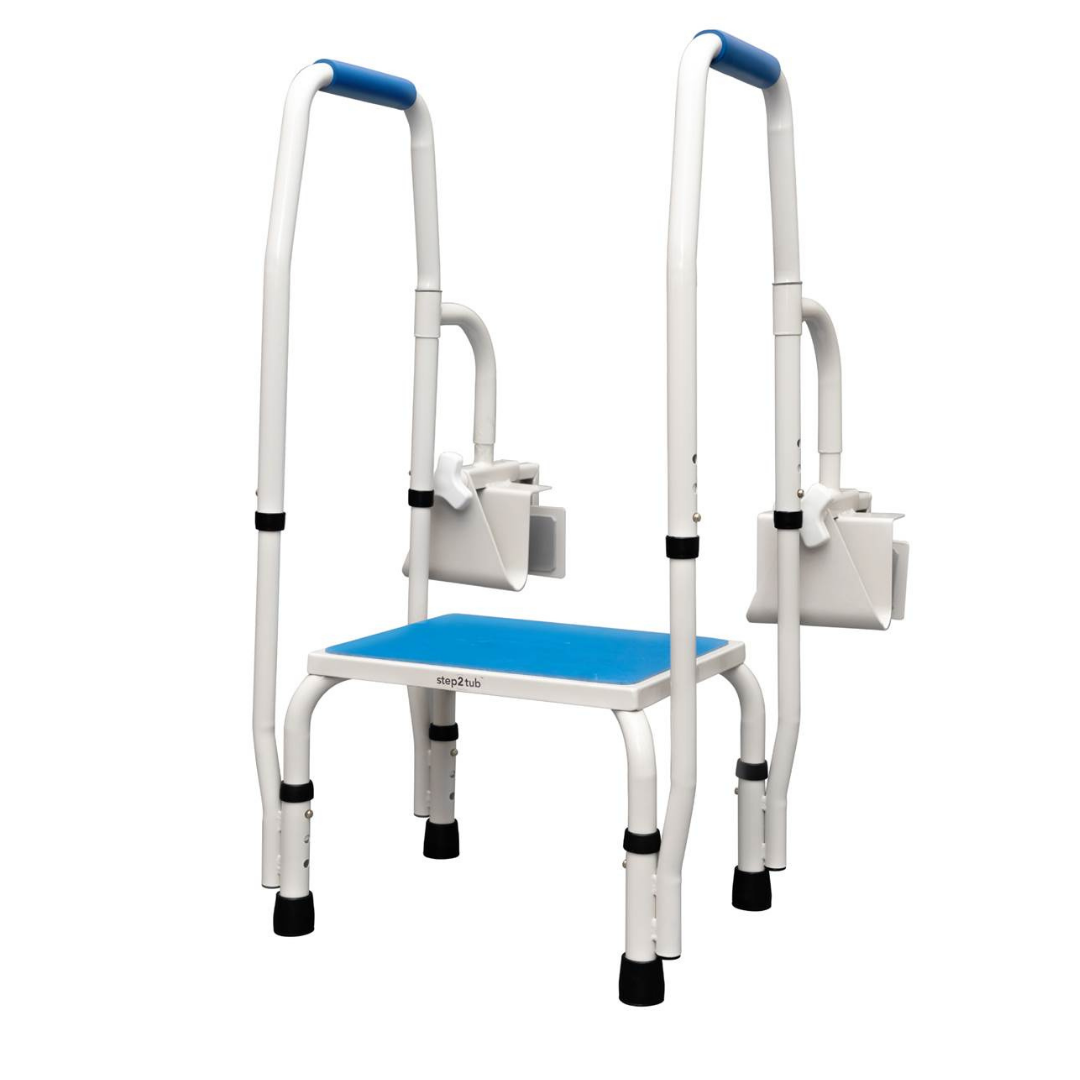
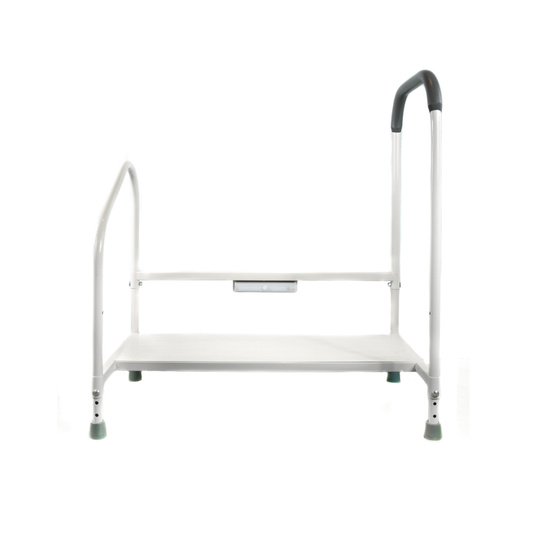
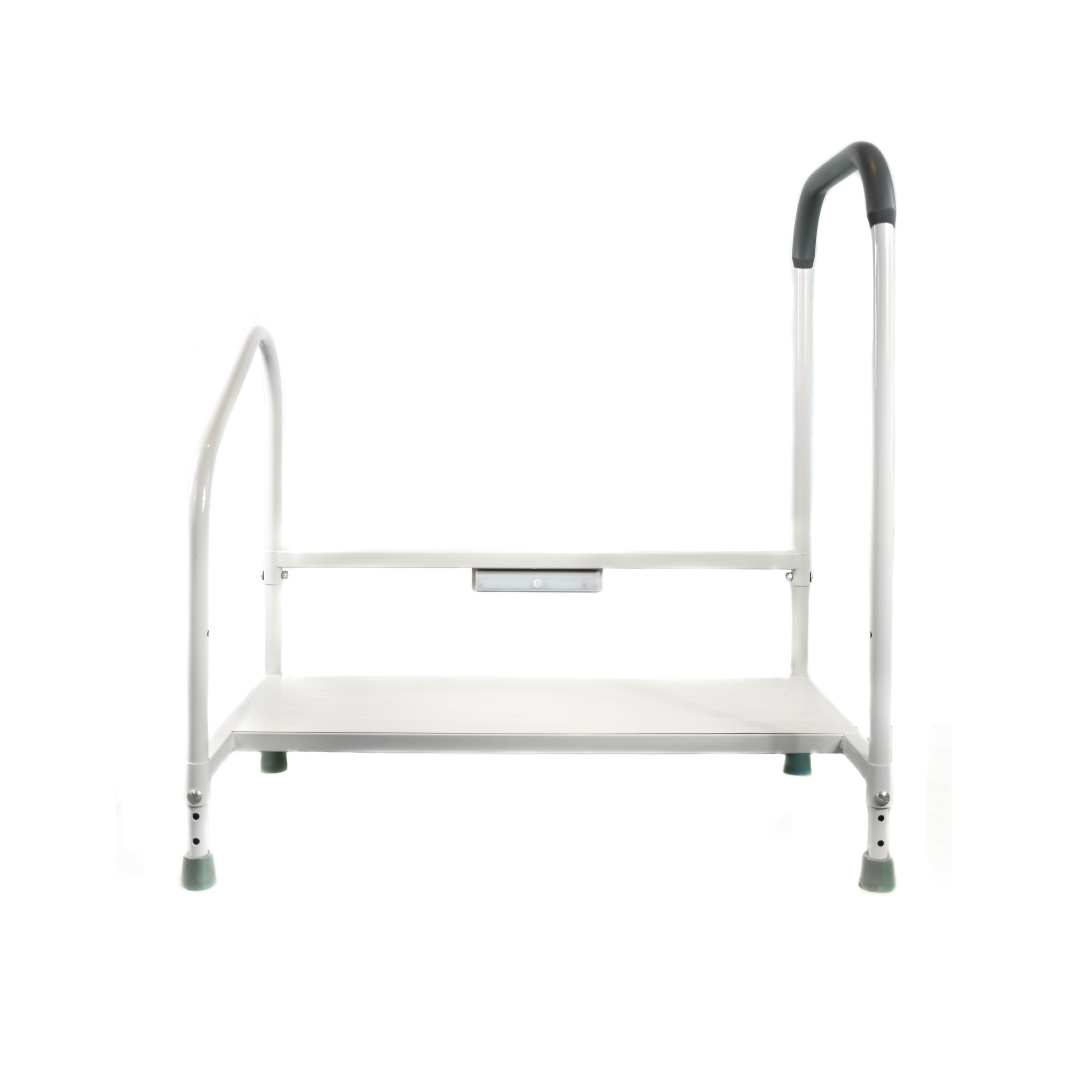
A standard trapeze is made to attach to a compatible bed frame, so it works best when the bed structure can support the hardware without strain. A freestanding model carries its own frame, which helps when the bed itself is not a good mounting point or the room setup leaves little room for frame attachment. A bariatric or heavy-duty model is built for higher loading demands and for users who need more support while repositioning.
Weight rating deserves more attention than the headline on the package. Common standard models are rated at 250 lb, heavier-duty versions at 300 lb, and some freestanding assistive models go up to 450 lb (VEVOR). One product page also notes an assisted weight capacity of 350 lb even when the trapeze bar itself is rated at 250 lb, which shows why the bar rating and the patient-support rating should not be treated as the same thing.
| Trapeze Bar Types at a Glance | |||
|---|---|---|---|
| Type | Weight Capacity | Best For | Mounting |
| Standard | Up to 250 lb | Routine repositioning with a compatible bed | Bed-frame mounted |
| Freestanding | Up to 450 lb | Rooms where the bed frame isn't suitable | Floor-supported frame |
| Bariatric | Up to 600 lb | Heavier users and stronger pull demands | Reinforced frame or stand |
A useful product example is DME Superstore's Medline lightweight bariatric trapeze, especially if you are comparing a standard setup with a heavier-duty option.
Checking Bed Compatibility Before You Buy
A trapeze can look universal and still fit poorly. Bed width, headboard shape, mattress height, floor clearance, and whether the bed has moving sections all affect how the device works in a real room. A model that seems fine on a basic manual bed can become awkward on an adjustable split-function bed, especially if the user has to reach across shifting parts.
The dimensions help explain why. A typical trapeze bar is about 24" to 26" wide and 28" to 30" high, with the spreader bar that attaches to the bed frame usually 32" to 36" wide. Those measurements show that fit is not a detail to leave for later. The handle has to sit where the patient can reach it without strain, and the mounting hardware still has to clear the frame and mattress height.
What to measure first
Start with the bed frame opening, the distance from the mattress surface to the top of the headboard area, and the free space around the bed. Those three measurements tell you whether a mounted or freestanding model can fit without crowding the room. If the bed is electrically adjustable, check whether the head or foot sections move in a way that could interfere with the trapeze during use.
A powered bed can change the geometry after installation, which is why a fixed setup on one frame may not translate well to another. DME Superstore's guide on electric hospital beds for home use is useful if you are comparing a stationary frame with a powered one.
The practical question is simple. Will the bar still sit in a usable position when the bed rises, lowers, or splits at the head section? If the answer is uncertain, a bed-mounted unit may not be the safest choice.
Compatibility is not about whether the trapeze “fits” in the room. It is about whether the patient can reach and use it without overreaching or twisting.
For buyers who are still comparing bed hardware, DME Superstore's note on bed rail installation is another useful reference point because the same habit applies, measure first, then match the device to the frame.
Installation Steps and Measurement Checklist
A trapeze bar works best when it is installed at the right height from the start. The common mistake is choosing a bar that sits too high or too low for the bed and for the person who will use it. Once that happens, the patient has to reach awkwardly, and the bar stops feeling like a support and starts feeling like a strain.

Before assembly
Start with the bed frame opening width, the distance from the mattress surface to the top of the headboard, and the clearance around the bed. Those three measurements give you a clear picture of whether a mounted or freestanding model can fit. If the bed has adjustable sections, check how the moving parts change the space around the trapeze, because a setup that looks fine on a flat bed can shift once the bed is raised or lowered.
You should also review the assembly notes before you begin. Some models are tool-free, while others call for a 14 mm wrench. Product weight varies too, so compare the unit you are considering with the room layout and the bed hardware, rather than relying on the headline description alone. For a related look at how bed hardware is matched to the frame, see this bed rail installation guide.
During setup
Follow the manufacturer's mounting sequence and keep the frame steady while you tighten the clamps or fasteners. If the bar height can be adjusted, place it where the user can reach the handle without stretching across the bed. A trapeze that sits too far away does not help mobility, it creates a reach problem.
Use this checklist before first use:
- Confirm bed compatibility: The frame, headboard area, and mattress height should match the hardware.
- Check the reach point: The patient should be able to grip the handle comfortably from the usual resting position.
- Inspect the clearance: Make sure nothing in the room blocks the pull path.
- Test for movement: The frame should not wobble, shift, or twist under gentle pressure.
Once the setup feels secure, do a supervised trial. The patient should be able to pull, pause, and reposition without the device drifting out of place. That is the real test, not just whether the box was easy to assemble.
Safety Considerations and the Weight Capacity Myth
This is the section most buyers need to hear, because the number printed on the product page can give a false sense of security. A trapeze rated for 250 lb does not automatically mean a 250 lb patient can safely load it with full body weight during every pull. The way the device is used matters just as much as the number on the label.
One manufacturer manual lists a 250 lb user weight capacity but only a 168 lb safe working load for the same trapeze system (Compass Health Brands manual). That gap is the key fact most shoppers miss. It shows the device is built to assist partial body-weight transfer, not to suspend the user's entire mass.
What that means in practice
If the patient uses the trapeze to take some load off the shoulders while shifting position, the device is doing what it was designed to do. If the patient is hanging fully from it, the demand is much higher than the safe working load may allow. RehabMart's guidance makes the same distinction, noting that the applied force capacity during use can be significantly lower than the maximum user capacity and that trapezes are not designed to support the user's entire weight completely (RehabMart guidance).
The right question isn't, “What does the box say?” It's, “What force will this person actually put on the bar while pulling, shifting, and holding themselves up?”
Caregivers should watch for overreach, shoulder pain, swinging, or a setup that requires the user to hang instead of reposition. Those are signs the model may be beyond its design intent. When the patient's pull force is high, the grip is unreliable, or the body position turns into a near-suspension movement, the safer choice is usually a different configuration or a higher-capacity system.
For people comparing bed mobility and support equipment, DME Superstore also carries a rental hospital bed trapeze that includes a fully adjustable handbar location and height adjustment from 43" to 52", which can help buyers match the device more closely to the bed and the user's reach.
How to Choose the Right Trapeze Bar for Your Situation
The right choice starts with the bed, not the catalog. If the bed has a compatible frame and the patient only needs help shifting, a standard model may be enough. If the frame won't accept hardware, or the room layout is tight, a freestanding option can make more sense. If the user's weight and pull force are higher, a bariatric or heavy-duty model deserves serious attention.
A useful way to narrow it down is to ask three questions. First, what kind of bed is it, manual, electric, split-function, low-profile, or bariatric? Second, what does the patient need to do, scoot, sit up, transfer, or just change position? Third, does the patient have the upper-body strength and judgment to use the device safely every time?
When suppliers list specifications, check these details before you buy:
- Verified weight rating: Look for both the user capacity and any safe working load notes.
- Compatible bed dimensions: Make sure the mounting hardware matches the frame and mattress height.
- Assembly requirements: Confirm whether it's tool-free or needs a wrench.
- Adjustment range: Check whether the bar height and hand position are reachable from the bed surface.
- Warranty and support: A clear warranty can matter when the device is being used daily.
For buyers comparing adjustable bed setups alongside trapeze options, Woodstock Furniture's bed guide is a helpful resource because bed geometry and movement affect whether an overhead aid will work cleanly.
A standard model is usually enough when the user can actively pull and the bed hardware is stable. A heavier-duty model makes more sense when the user is larger, pulls harder, or needs a sturdier margin of safety. A freestanding model is the better pick when bed-frame compatibility is uncertain or the room needs a separate support structure.
DME Superstore carries mobility and homecare equipment that helps families match the right support to the right bed, including trapeze options, adjustable beds, and related transfer aids. If you're comparing a trapeze bar for hospital bed use and want to check specs, compatibility details, and available solutions in one place, visit DME Superstore and review the product pages before you order.

