



You know the moment. A drink is in one hand, your scooter controls are in the other, and you're trying not to spill while also staying steady and safe. That's exactly where a mobility scooter cup holder earns its place, not as a luxury add-on, but as a small tool that helps keep your hands free and your attention where it belongs.
A good holder supports everyday independence during errands, appointments, and longer outings. It also helps prevent the awkward, unsafe habit of balancing a cup in your lap or holding a bottle while you steer. Because mobility scooter cup holders are designed as universal or semi-universal add-ons for scooters, power chairs, and wheelchairs, they fit into a wider pattern of practical mobility support for people who need hydration close at hand. This mobility-accessory category has clear cross-use design language, which is why the details of fit and placement matter so much.
The Simple Accessory for Safer Travels
A drink becomes a problem fast when you need both hands for control. Even a short trip across a parking lot can feel cluttered if you're trying to hold a bottle, manage your scooter, and keep your balance at the same time. A mobility scooter cup holder solves that by giving your beverage one fixed place to stay.
Why the simplest solution often works best
For many users, the right holder is the one that removes a daily distraction. It keeps a water bottle, coffee cup, or travel mug within reach without forcing you to multitask while moving. That matters for older adults and caregivers alike, because fewer hand movements usually mean fewer opportunities for bumps, spills, and awkward stops.
A cup holder should make the scooter easier to use, not more complicated.
The best part is that these accessories are usually straightforward. They're designed to support hydration and convenience without changing how the scooter itself works. That's why this category shows up across scooters, power chairs, and wheelchairs, and why it's become a normal part of the mobility-aid ecosystem rather than a specialty item reserved for one brand or model. For readers planning a scooter move or transport setup, this practical transport guide pairs well with the question of how accessories should travel with the scooter.
When you shop with the right expectations, the cup holder stops being a small extra and starts being part of your daily routine. You're not buying it for decoration. You're buying it so your hands stay free, your drink stays reachable, and your day feels less interrupted.
Why a Cup Holder Is More Than a Convenience
Hydration sounds simple until it's not convenient. If a water bottle is hard to reach, many people just sip less often, especially during long errands or when the weather is warm or uncomfortable. A secure holder turns hydration into something easy to keep up with instead of something you have to remember and manage every few minutes.
Everyday habits become easier to maintain
That convenience matters for routine tasks, too. A drink close by can make it easier to take medication on schedule, pause for a sip during a long appointment day, or keep a warm beverage steady during an outing. When a person doesn't have to stop and dig for a drink, they can stay focused on moving safely and confidently.

The deeper value is independence. A holder gives the rider a little more control over the day, because there's one less thing to ask someone else to carry or pass back and forth. That's part of why cup holders belong in the same conversation as other small mobility supports that help people stay active and comfortable.
If you're also thinking about fall prevention and safer daily movement, this guide on preventing elderly falls fits naturally with the same mindset. The goal is simple, reduce unnecessary reaching, juggling, and pausing. Those little reductions add up to a smoother outing.
Exploring Common Types and Mounting Methods
A cup holder can look simple at first, then the mounting method changes everything. A clamp that fits a tiller may be perfect for one rider, while another person needs a steadier armrest attachment that keeps a larger drink from shifting during the ride. Once you sort out how each style connects to the scooter, it becomes much easier to judge which one will stay out of the way and hold a drink safely.
The main styles at a glance
| Mounting Type | Best For | Pros | Cons |
|---|---|---|---|
| Clamp-on holders | Scooters with round tubing, handlebars, or tillers | Easy to move, often tool-free, widely compatible | Can be less secure if overtightened poorly or placed on a narrow surface |
| Screw-on holders | Users who want a more permanent attachment | Very stable, less likely to shift once installed | Usually needs tools and a more committed setup |
| Universal strap-on holders | Mixed-use mobility aids and unusual frame shapes | Flexible fit, quick to attach and remove | Can feel bulkier or less rigid than a clamp or fixed mount |
Tool-free models appeal to riders who want a faster setup and less fuss. One example fits tubing from 5/8 inch to 1.5 inches, rotates 360 degrees, and holds beverages up to 20 oz, which makes it useful on walkers and rollators as well as scooters. That kind of rotating, tool-free design shows how a holder can adapt to different daily routines without adding much complexity.
Matching the mount to the way you move
A holder may be labeled universal, yet placement still matters. A clamp that works well on one scooter's tiller may not sit correctly on an armrest or a curved post, and a mount that shifts even slightly can become annoying or unsafe once the scooter starts moving. For readers who want a practical overview of accessory placement on different frames, this mobility scooter guide is a helpful place to compare attachment points before choosing a product.
Some readers also compare mobility accessories with products they already use in other settings. hands-free organization for wagon trips makes the same point in a different context, keep the essentials close without forcing the hands to manage them. That idea matters on a scooter too, because the right holder should support the ride without crowding the controls or asking the rider to reach awkwardly.
A few product styles deserve special attention
Certain holders are made for molded plastic seat arms and can hold up to a 44 oz beverage with a push-button connection between the basket and mount. That model-specific design is different from a general clamp-on ring, and the difference matters if the rider carries a larger bottle or needs an armrest attachment instead of a tiller mount.
The practical choice depends on the trip and the drink. A small water bottle for a short neighborhood outing calls for a different setup than a larger beverage that needs extra support during a long day outside. The best attachment style follows the scooter's frame, the rider's reach, and the size of the container, so the holder stays secure without getting in the way.
How to Ensure a Perfect Fit for Your Scooter
A secure fit starts with simple measuring, not guesswork. If a holder is too loose, it can wobble. If it's too tight or shaped for the wrong tubing, it may not install cleanly at all. A few minutes with a tape measure can save a return and a lot of frustration.
Measure the scooter before you buy
Start with the part where the holder will attach, usually the tiller, handlebar, or armrest tubing. Use a flexible tape measure and check the outside diameter of the tube, then compare that number with the product page. One universal benchmark lists clamping to tubes up to 40 mm thick, accepting beverage diameters of 55–70 mm, and limiting the load to 1 kg to reduce tipping or slipping on uneven surfaces. Those specifications are a good reminder that fit is about both the scooter and the cup itself.
Practical rule: Measure the scooter first, then measure the cup or bottle you actually use most often.
The beverage side matters just as much. A tall travel mug, a standard water bottle, and a wider soft drink cup don't behave the same way inside a holder. If your drink is too narrow, it can rattle. If it's too wide, it won't seat correctly. A secure match keeps the drink upright and reduces the chance of movement when the scooter rolls over uneven pavement.
For readers comparing scooter frames and attachment points, this guide to types of mobility scooters is a useful companion piece. Different scooters have different tubing, armrests, and tiller shapes, so a fit that works on one model may not be ideal on another.
Choose the holder for the drink you really carry
Think about your real routine, not the biggest container in your cabinet. If you mostly carry a water bottle, a smaller ring or rotating clamp may be enough. If you regularly use a larger insulated cup, you may need a model designed for that container size or a molded-armrest style that supports more weight and bulk.
A good fit should feel boring in the best way. It should clamp securely, keep the beverage level, and leave your hands free to steer and brake without adjusting the drink every few minutes. That's the standard to use when comparing product pages.
Easy Installation for Immediate Use
A cup holder should make daily travel easier, not add another task to your morning. For many caregivers and older adults, the best choice is a design that can be installed quickly, checked at a glance, and trusted to stay out of the way once the scooter starts moving.
A clean setup starts with placement
Start by choosing a spot that does not interfere with the ignition, throttle, or tiller adjustment lever. The holder also needs enough room so your hand does not brush against it during steering or transfers. If it crowds the controls, it solves one problem by creating another.
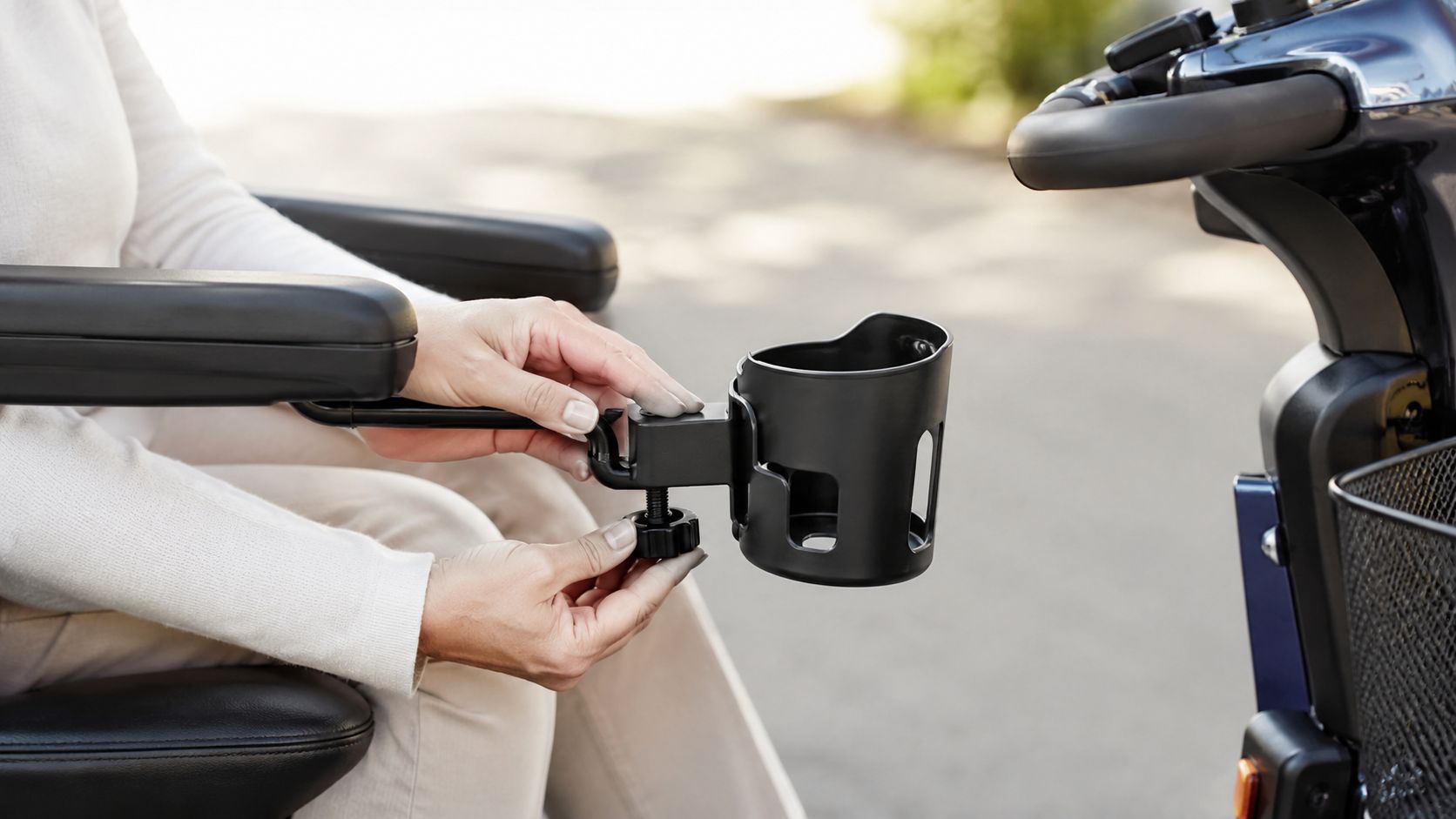
Some holders attach to a more specific part of the scooter. A molded-armrest cup holder uses a different mounting point than a basic clamp ring, and that can make sense when the armrest is the safest place for the accessory. A product like this molded-armrest cup holder mount shows how placement choices change from one scooter setup to another, especially when you want the drink close by without placing anything near the tiller.
A straightforward installation routine
- Loosen the clamp first. Open it wide enough to slide over the tubing without forcing it.
- Set the angle before tightening. If the holder rotates, position it so the drink stays upright and does not drift into your hand path.
- Tighten gradually. Stop once the holder feels secure. Overtightening can make later adjustments harder.
- Test with the actual drink. Put in the cup or bottle you plan to carry, then move the scooter a little by hand to check for wobble.
That same practical approach is useful on other mobility products too. A folding walker tray with cup holders shows how a simple storage accessory can support daily routines while still leaving the user room to move safely. The goal is the same here, the holder should make the trip easier without taking attention away from steering or balance.
Some people also like to pair drink storage with other carrying solutions so the essentials stay together. A guide on how to stay hydrated and organized on the go can be helpful if you are thinking about how a bottle, bag, or small accessory setup fits into a larger routine.
A careful installation usually takes less effort than people expect. Once the holder sits firmly in place and clears your controls, it should fade into the background and do its job during everyday use.
Crucial Safety and Maintenance Advice
A holder that fits on day one still needs attention later. Road vibration, curb cuts, uneven thresholds, and repeated use can loosen a clamp or reveal that a cup sits too high for the terrain you travel on. The safest setup is the one you keep checking, not the one you install and forget.
Safety starts with the drink itself
Use a cup or bottle with a secure lid whenever possible. Lids help reduce splashes when the scooter rolls over rough sidewalks or bumps, and they're especially useful if the holder sits on the tiller where motion is more noticeable. A lid won't solve every spill risk, but it adds a layer of protection that matters in real-world use.
The holder should stay clear of your hand path, your controls, and your transfer space.
The placement question is just as important as the container. A holder that blocks steering or forces your wrist to move around it can make the scooter harder to manage. That's why a “universal” fit is only part of the story. Real-world safety concerns include spill risk, interference with steering, and what happens when the scooter hits vibration or a sudden stop.
A simple maintenance habit keeps it reliable
Check the clamp regularly, especially after the first few rides. If the mount shifts even a little, it can slowly become a nuisance or a hazard. Also watch the weight of the beverage itself. A holder rated for a certain load should not be treated like a basket for heavy items, because extra mass creates more movement and more strain on the attachment point.
One more detail is worth remembering. A cup holder that works beautifully on a smooth indoor floor may feel less stable outdoors if it sits too far from the mounting tube or if the drink is too tall for the holder's depth. In that case, the safest choice is often the one that minimizes movement rather than the one that claims the broadest compatibility.
Choosing the Right Companion for Your Journey
A good choice starts with a few practical questions. Where does it mount on the scooter? What size drink do you usually carry? Will it stay clear of your controls and transfer space? And does it still feel steady when you roll over uneven ground, turn corners, or stop suddenly?
Those questions matter because a cup holder should fit into daily life, not get in the way of it. A holder that looks fine on the shelf can still be awkward in use if it blocks your hand path or makes it harder to steer. For anyone trying to stay hydrated and organized on the go, the safest accessory is the one that improves your day without adding extra hassle.
For many shoppers, the right mobility scooter cup holder is a simple clamp-on model that stays secure and easy to reach. For others, a model-specific armrest attachment or a rotating mount works better because it matches the frame and keeps the drink where it is least likely to spill. A scooter used mostly indoors may call for a different setup than one used over sidewalks, ramps, or curb cuts. The right answer is the one that fits your scooter, your drink, and the way you move through the day.
DME Superstore carries mobility accessories and DME products that help make daily life safer and easier, including scooter add-ons that support everyday convenience. If you are comparing cup holder styles, mounting options, or related mobility aids, visit DME Superstore to review product details and choose a setup that fits your scooter and your routine.

