



Choosing the right mobility scooter is less about technical specifications and more about finding a partner for your daily life. The goal is to select a machine that empowers you to navigate your world with confidence and ease, whether that's gliding through grocery store aisles, enjoying a sunny day at the park, or embarking on a long-awaited vacation.
Think of it as selecting the right tool for a job. You wouldn't use a hammer to turn a screw. Similarly, the best mobility scooter for seniors who primarily stay indoors is fundamentally different from one designed for outdoor adventures. This guide is designed to educate you on these differences, so you can make an informed decision that enhances your independence.
Understanding the Three Main Types of Mobility Scooters
The world of mobility scooters can seem complex, but it simplifies quickly when you break it down into three core categories. We're here to provide the foundational knowledge you need to identify which type of scooter is the right starting point for your unique needs.
Begin by Assessing Your Primary Environment
The most critical question to ask yourself is: "Where will I be using my scooter most often?"
Your answer is the key that unlocks the right path. Are you primarily navigating indoor spaces? Do you plan to explore the outdoors? Or is your biggest need the ability to take your scooter with you on the go? This simple decision-making process highlights the three main categories of scooters.
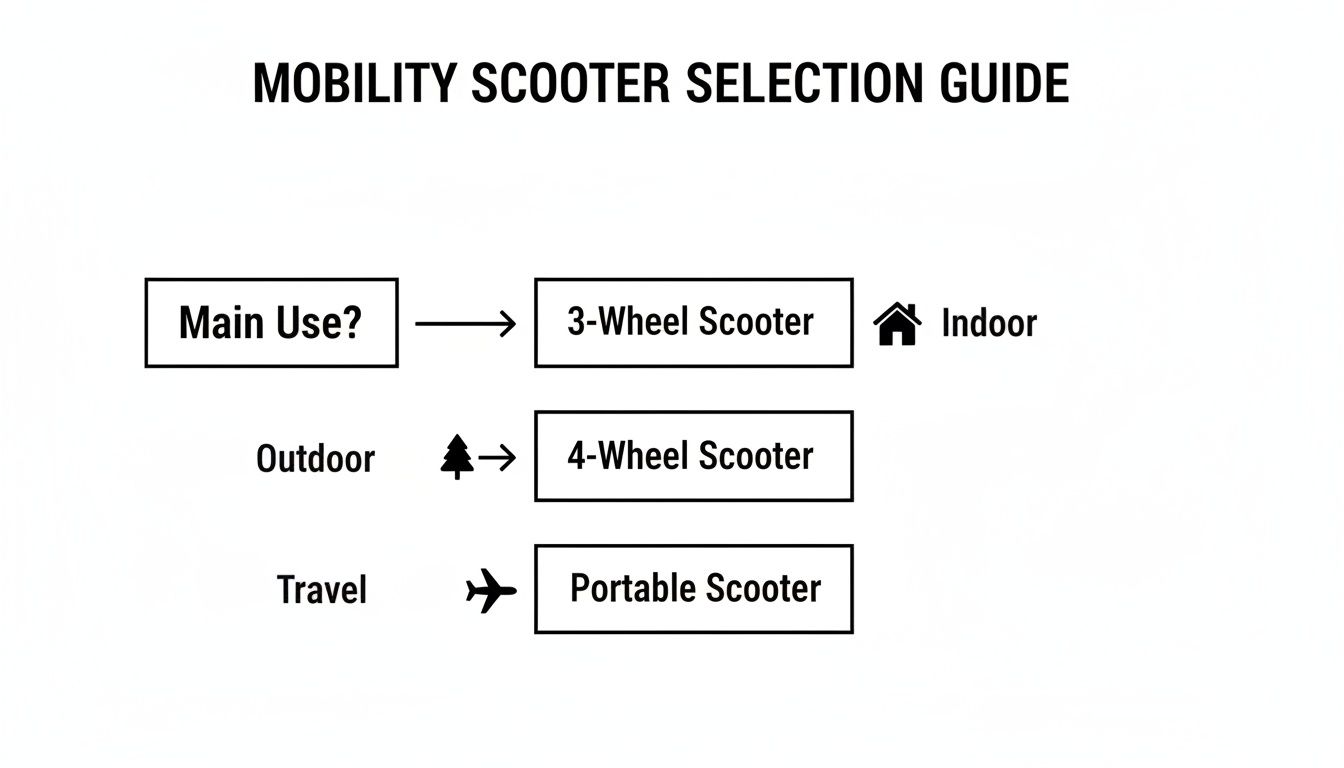
As this illustrates, your daily environment is the most important factor. A 3-wheel scooter excels indoors due to its superior maneuverability and tight turning radius. A more robust 4-wheel scooter offers the stability and confidence needed for sidewalks and varied outdoor terrain. Finally, a portable or folding scooter is specifically engineered for easy transport and travel.
The growing demand for these devices is reflected in market projections, which estimate the industry will reach $2.13 billion by 2026. This growth is fueled by active seniors seeking reliable solutions to maintain their independence. Industry reports often highlight the popularity of 4-wheel models, which are favored for their stability on diverse surfaces.
To help you better understand the functional differences, here’s a quick comparison of the three main scooter types.
Mobility Scooter Quick Comparison Chart
| Scooter Type | Best For | Turning Radius | Stability | Portability |
|---|---|---|---|---|
| 3-Wheel | Indoor use, tight spaces, maneuverability | Tightest | Good | Moderate |
| 4-Wheel | Outdoor use, uneven terrain, all-around use | Wider | Excellent | Low |
| Portable/Folding | Travel, easy transport, lifting into cars | Varies | Good | Excellent |
This table provides a solid educational foundation. When considering your options, it's helpful to think about the inherent trade-offs. For example, the exceptional indoor agility of a 3-wheel model comes at the cost of some stability, while the rock-solid feel of a 4-wheeler makes it less portable.
Portable models, like the intelligently engineered Glion SnapnGo, are designed from the ground up for low weight and simple folding, making them an excellent choice for an active, on-the-go lifestyle. Understanding these core design principles is the first step toward making an educated choice.
A mobility scooter is more than a machine; it's a tool that unlocks a more engaged, independent, and active life. It provides the freedom to participate fully in family gatherings, community events, and personal hobbies without limitation.
An In-Depth Look at Mobility Scooter Categories
Choosing a mobility scooter is similar to selecting a vehicle—the optimal choice depends on your intended destinations and activities. Now that you have a basic understanding, let’s delve into the specific design characteristics of each scooter category. By connecting these designs to real-world applications, you can more clearly see which model aligns with your daily routines.
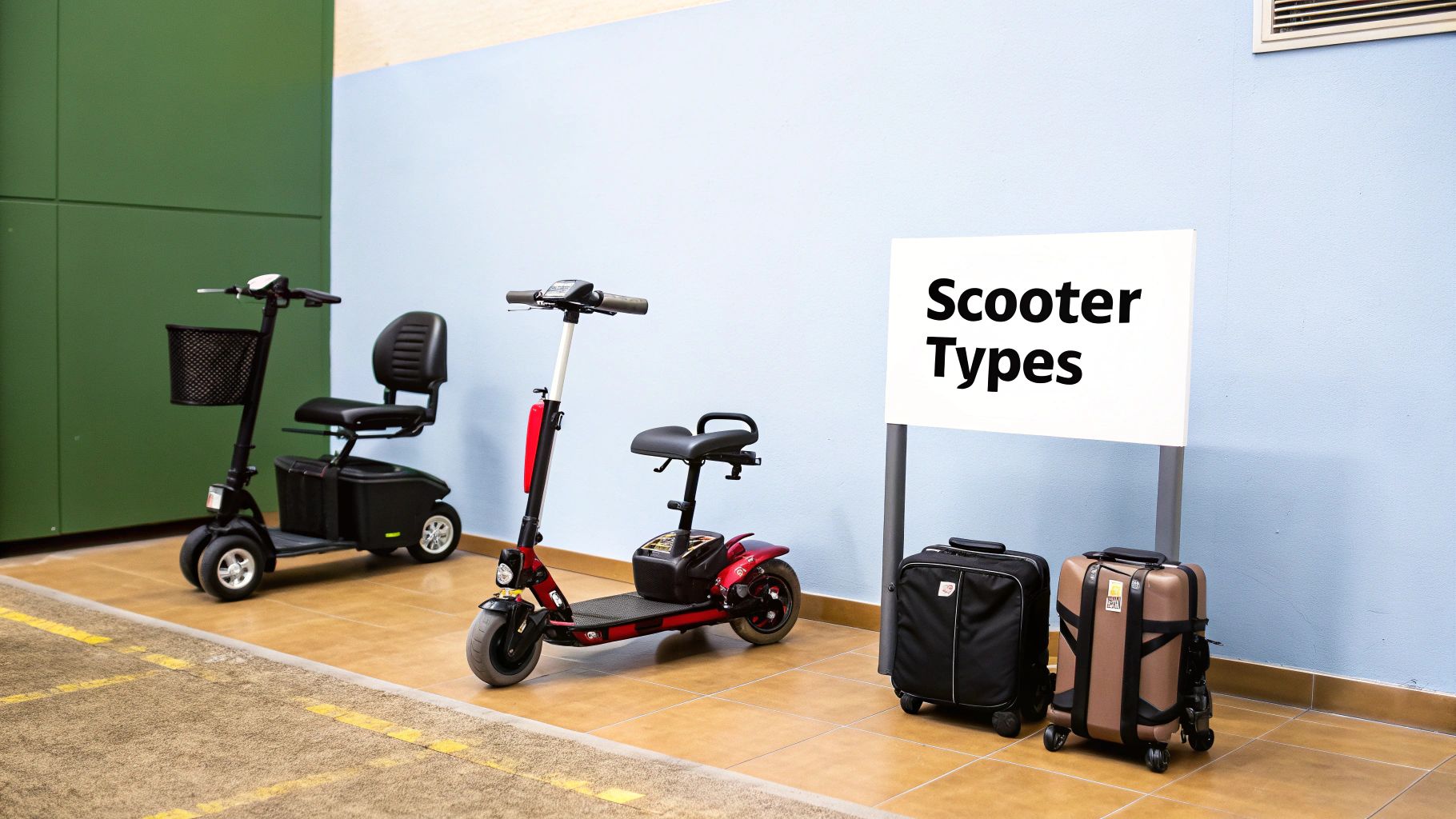
We will explore the four primary types: 3-wheel, 4-wheel, travel/folding, and heavy-duty models. Each is engineered for a specific user and environment, offering a distinct balance of agility, stability, convenience, or power.
The Nimble Navigator: 3-Wheel Scooters
A 3-wheel scooter is the agility expert of the mobility world. Its design, featuring one wheel in front and two in the back, results in an exceptionally tight turning radius. This makes it the ideal choice for indoor environments.
Navigating crowded pharmacy aisles, maneuvering through tight grocery store lanes, or simply executing a U-turn in your kitchen becomes effortless. For seniors who spend most of their time at home or in confined commercial spaces, a 3-wheel model provides freedom of movement without the frustration of getting stuck in tight spots.
However, this agility involves a design trade-off. The three-point base is inherently less stable than a four-point one, making it less suitable for rough or uneven outdoor surfaces.
The Steady Explorer: 4-Wheel Scooters
In contrast, the 4-wheel scooter is engineered for stability and confidence, particularly outdoors. With two wheels at the front and two at the back, it provides a solid, balanced platform that feels secure on sidewalks, park paths, and moderately uneven terrain.
This robust design makes it one of the best mobility scooters for seniors who enjoy being active in their community. Whether attending an outdoor event, visiting a local market, or simply enjoying a sunny day, a 4-wheel scooter delivers a smooth and secure ride. While its turning radius is wider than a 3-wheeler's, the enhanced stability is a critical feature for outdoor use.
Key Takeaway: The decision between a 3-wheel and 4-wheel scooter comes down to a simple assessment: Will you spend more time indoors or outdoors? Prioritizing either indoor agility or outdoor stability will guide you to the right choice.
The Globetrotter: Travel and Folding Scooters
For the senior who loves to travel, a portable scooter is an essential tool. These models are engineered with convenience as the primary goal. They are designed to either fold into a compact, luggage-like form or disassemble into several lightweight, manageable pieces.
This functionality makes them easy to place in a car trunk, take on a cruise, or check for a flight. A portable scooter can transform a family vacation by eliminating the stress of renting equipment or worrying about accessibility at your destination. It enables you to explore a new city or keep pace with grandchildren at a theme park with ease.
- Folding Models: Collapse into a single, cohesive unit, often in just a few simple steps.
- Disassembling Models: Break down into several components, making each piece lighter and easier to lift individually.
While they may not offer the heavy-duty suspension of larger models, their unparalleled portability is an invaluable feature for anyone with a passion for travel.
The Powerhouse: Heavy-Duty Scooters
Heavy-duty scooters, also known as bariatric scooters, are the most robust option available. They are constructed with reinforced frames, more powerful motors, and higher weight capacities, often supporting 400 pounds or more. These models are designed for individuals who require maximum support and durability.
Beyond sheer strength, heavy-duty scooters often come with upgraded features, such as larger, more ergonomic seats, advanced suspension systems for a smoother ride over rough terrain, and higher-capacity batteries for an extended travel range. For users who need maximum stability, power, and comfort, these scooters provide unwavering reliability and peace of mind.
Understanding the Features That Impact Your Daily Life
Once you’ve identified the right type of scooter for your environment, the next step is to understand the features that will most affect your daily experience. These details are what elevate a scooter from merely functional to perfectly suited for you. Let's translate technical specifications into practical, real-world benefits.
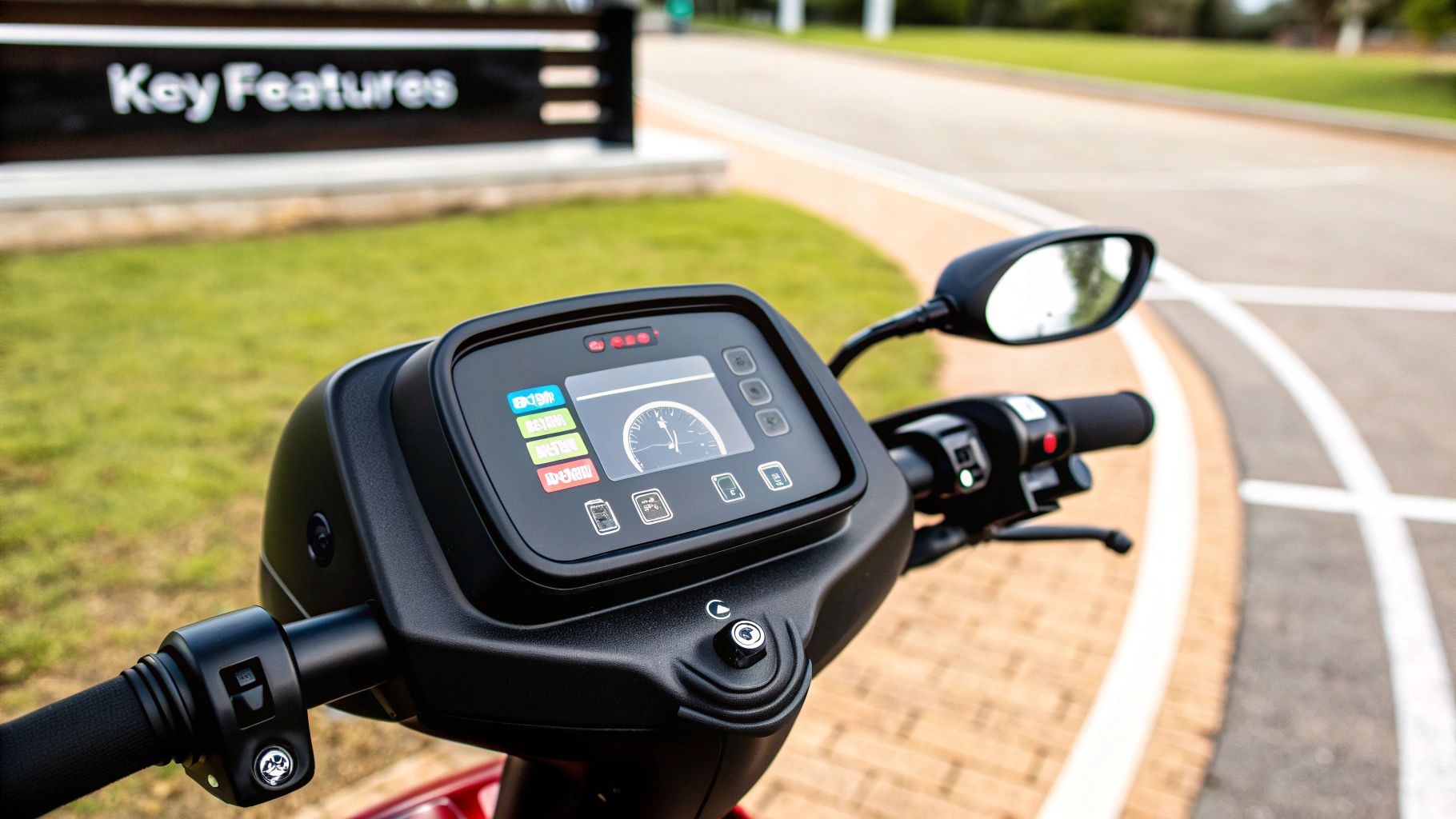
This is about more than just numbers on a page. It's about how each feature supports your independence. A long battery range means having the freedom to accept a spontaneous lunch invitation without worrying about getting home. A tight turning radius means easily retrieving an item from a kitchen cabinet without a frustrating series of maneuvers.
Battery Range: Your Daily Freedom Allowance
A scooter's battery range indicates how far it can travel on a single charge. It's helpful to think of this not just in miles, but as your "freedom allowance" for the day. A range of 8-10 miles is typically sufficient for navigating your home and immediate community or spending a few hours at a museum.
However, if you envision a full day of activities—running errands, meeting family for lunch, and then enjoying a park—a longer range of 15 miles or more is advisable. This provides the confidence to go wherever your day leads without the anxiety of monitoring the battery level.
Battery technology is a key area of innovation in the mobility sector. The global electric mobility scooter market on datainsightsconsultancy.com is expanding rapidly, driven by advancements that increase range and improve user controls, making these devices more practical and reliable than ever.
Turning Radius: The Key to Maneuverability
The turning radius is a critical, yet often overlooked, specification, especially for indoor use. It is a measure of your scooter's agility; a smaller number signifies a tighter turn.
- A tight turning radius (around 35-45 inches): This is essential for indoor navigation. It allows you to pivot around furniture, move through narrow hallways, and maneuver easily in small spaces like kitchens and bathrooms.
- A wider turning radius (50 inches or more): This is common in larger, 4-wheel scooters and contributes to their stability. It is well-suited for outdoor environments like sidewalks and parks where ample space is available for wider, more gradual turns.
Choosing the right turning radius involves matching the scooter's capability to your primary environment. For significant indoor use, a tighter radius is a crucial feature for daily convenience.
Portability: Understanding How You’ll Transport It
If you plan to transport your scooter in a vehicle, understanding the mechanics of portability is essential. This goes beyond total weight and involves how the scooter is prepared for travel. There are two primary designs:
- Folding Scooters: These models collapse into a single, compact unit, similar to a piece of rolling luggage. They are highly convenient for quick storage in a car trunk or closet.
- Disassembling Scooters: These models break down into several lighter, more manageable components (e.g., the seat, battery, frame). This design is beneficial for individuals who may have difficulty lifting heavier objects, as each piece is lifted separately.
The choice between these styles depends on your physical capabilities and how you intend to travel. Folding models offer speed, while disassembling models offer lighter individual components.
Other Essential Features to Consider
Beyond these key specifications, several other features can significantly impact your daily comfort and the scooter's overall utility.
- Weight Capacity: It is important to choose a scooter with a weight capacity that comfortably exceeds your own weight. This ensures the motor operates efficiently and the frame remains structurally sound, promoting safety and longevity.
- Ground Clearance: This is the distance between the underside of the scooter and the ground. For outdoor use, a higher ground clearance (3 inches or more) is necessary to navigate cracked sidewalks, small curbs, and uneven terrain without the risk of getting stuck.
- Tiller Type: The tiller is the steering column. An adjustable tiller allows you to position the controls at a comfortable distance, preventing strain on your arms, shoulders, and back during operation.
How to Match a Mobility Scooter to Your Lifestyle
The best mobility scooter for any senior is one that integrates seamlessly into their daily routine. To find this perfect fit, it's helpful to think in terms of lifestyle profiles rather than just technical specifications. By identifying which profile best describes you, you can create a personalized checklist of essential features.
This approach simplifies the selection process, allowing you to focus on what truly matters for your independence. You can confidently choose a scooter that will serve as a reliable partner in your daily activities.
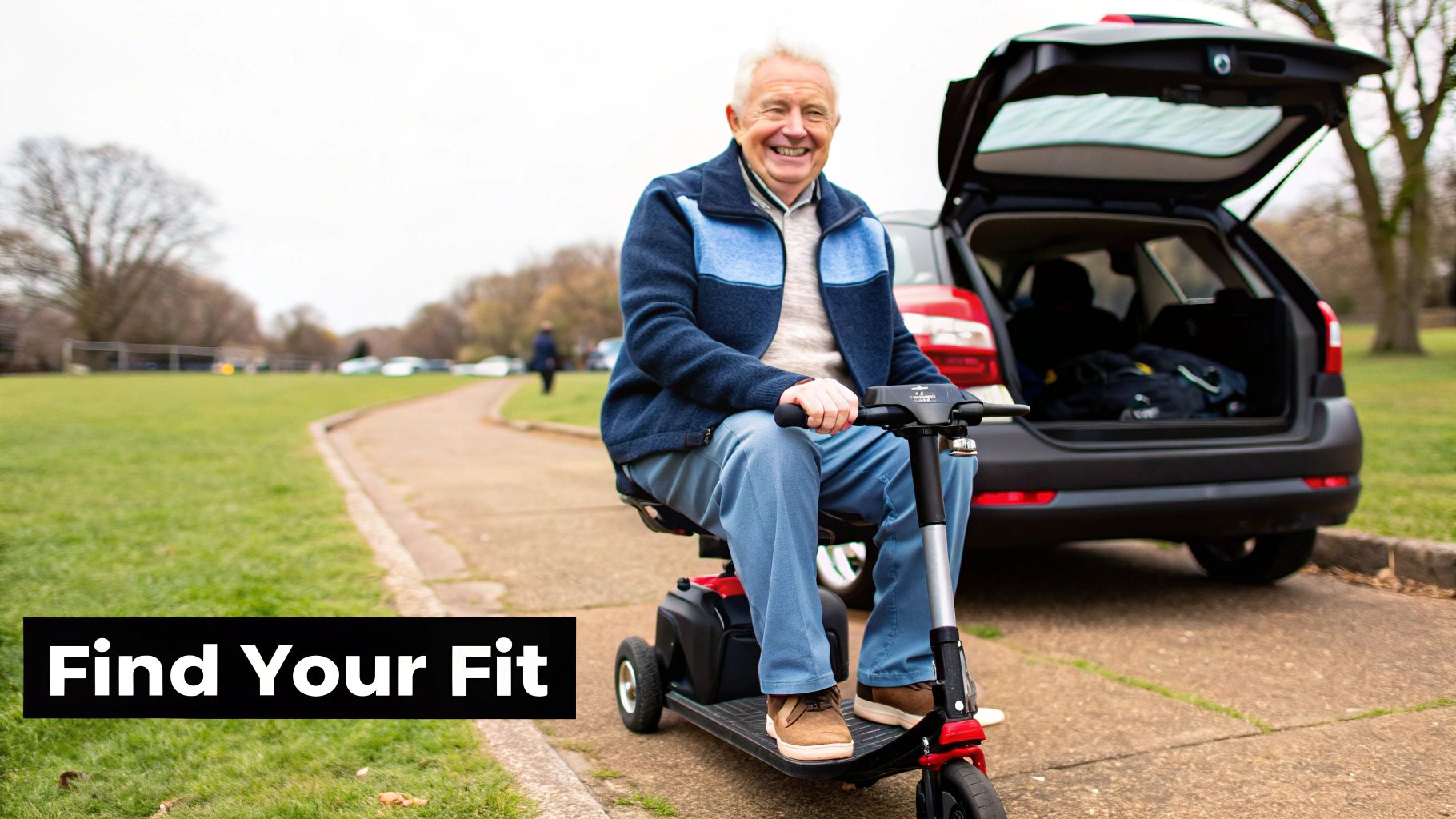
Profile One: The Indoor Navigator
If you anticipate using your scooter primarily indoors—within your home, a retirement community, or for trips to the grocery store and doctor's office—you fit the Indoor Navigator profile. For you, maneuverability is the top priority.
The most critical feature is a tight turning radius. A nimble 3-wheel scooter is often the ideal choice, allowing you to pivot easily around furniture and navigate narrow aisles and doorways with confidence.
Your personalized checklist should include:
- Tight Turning Radius (under 40 inches): Essential for maneuvering in confined spaces.
- Compact Frame: A smaller overall size is easier to manage in hallways and for storage.
- Sufficient Battery Life (8-12 miles): Provides ample power for a full day of indoor activities and local errands.
Profile Two: The Outdoor Adventurer
If your ideal day includes visiting parks, attending community events, or browsing an outdoor market, you are an Outdoor Adventurer. Your focus should be on stability, durability, and a smooth ride over varied terrain.
A sturdy 4-wheel scooter is typically the best option. Its wide wheelbase provides superior stability on sidewalks, grass, and slightly uneven surfaces. Features like good ground clearance and a quality suspension system become critical for comfort and safety.
Your checklist should prioritize:
- 4-Wheel Stability: Key for feeling secure during outdoor exploration.
- Higher Ground Clearance (3+ inches): Helps you glide over cracks, bumps, and other small obstacles.
- Long-Range Battery (15+ miles): A larger battery allows for a full day of activities without range anxiety.
- Comfort Features: A well-cushioned, supportive seat and a functional suspension system are vital for longer journeys. For more information on durability, our guide on the best mobility scooters for winter weather offers valuable insights.
A scooter should be an enabler, not a limitation. By matching your choice to your actual lifestyle, you ensure it becomes a valuable tool for enhancing your freedom and participation in the activities you enjoy.
Profile Three: The Frequent Traveler
If you are often planning road trips, cruises, or flights to visit family, you are a Frequent Traveler. For you, portability is paramount. Your scooter must be easy to transport, lift, and store.
A folding or disassembling scooter is the only practical choice. These models are specifically engineered to be lightweight and compact for travel. Pay close attention to the scooter's total weight and, for disassembling models, the weight of the heaviest individual piece.
The North American mobility scooter market is a leader in innovation, with the U.S. accounting for 85% of regional revenue. This demand drives the development of specialized models, including bariatric scooters capable of supporting over 500 pounds—a crucial feature as obesity rates among American seniors have surpassed 42%. Choosing a quality travel scooter from a reputable supplier not only improves daily convenience but is also proven to enhance overall quality of life.
Your essential features checklist:
- Lightweight Design: Ensure the scooter is easy to fold or take apart.
- Airline-Approved Batteries: If you plan to fly, confirm the scooter has FAA-compliant batteries (typically lithium-ion).
- Compact Folded Size: Measure your vehicle's trunk to ensure the scooter will fit before you purchase.
From Purchase to Maintenance: Next Steps
You’ve done the research and are ready to choose your scooter. Now, let’s cover the final logistical steps: payment options, delivery, and ongoing maintenance. Understanding these practical aspects will ensure a smooth process from purchase to daily use, helping you keep your scooter in excellent condition for years to come.
Affording Your Mobility Scooter
A quality mobility scooter is a significant investment in your independence, and there are several ways to make it more affordable. Tax-advantaged health accounts are a popular and effective option.
You can use funds from a Flexible Spending Account (FSA) or Health Savings Account (HSA) to purchase your scooter. These accounts are funded with pre-tax dollars, effectively providing a discount on the purchase price. We also offer flexible financing, allowing you to break the cost into manageable monthly payments.
- FSA/HSA Eligibility: All of our mobility scooters qualify as eligible medical expenses for these accounts.
- Financing Plans: Services like Affirm allow you to receive your scooter immediately and pay for it over time, avoiding a large upfront expense.
Understanding the Delivery Process
Once you’ve made your purchase, you'll be eager for its arrival. You can learn about general shipping estimates by researching typical delivery timelines.
Planning ahead provides peace of mind. Understanding your payment and delivery options allows you to focus on the excitement of regaining your mobility and independence.
Most scooters are shipped directly to your home with free standard delivery. For those who prefer additional assistance, our white-glove delivery service is an excellent option. A trained technician will deliver the scooter, bring it inside, assemble it, provide a comprehensive demonstration of its features, and remove all packaging materials.
Simple Maintenance for Long-Term Reliability
Your mobility scooter, much like a car, benefits from regular, simple maintenance to ensure it runs smoothly and safely. You don’t need to be a mechanic; a few basic checks will keep it in optimal condition.
Follow this simple checklist for proper upkeep:
- Prioritize Battery Care: Develop the habit of fully charging the battery after every use, no matter how short the trip. This practice is the single best way to maximize battery lifespan and ensure you always have sufficient power.
- Inspect Your Tires: Before each outing, perform a quick visual inspection of the tires. Check for proper inflation and any signs of significant wear. This simple step is vital for a safe and stable ride.
- Keep It Clean: Regularly wipe down your scooter with a damp cloth to keep it looking its best and prevent dirt from accumulating in moving parts. Avoid using a high-pressure water hose, which can damage electrical components.
- Listen and Look: As the primary operator, you are the best judge of your scooter's performance. If you notice any unusual noises or changes in how it handles, pay attention. Periodically checking that bolts and connections are secure can help identify minor issues before they become major problems.
For those with travel plans, understanding the regulations for mobility devices is also important. Our guide on whether mobility scooters are allowed on cruises may be a helpful resource.
Your Path to Greater Freedom and Independence
Choosing the right mobility scooter is a powerful investment in your quality of life. It is an act of reclaiming the freedom to engage with the world on your own terms. This guide was created to provide a clear, educational framework, transforming a potentially overwhelming decision into a series of logical, confident steps.
We began by helping you analyze your own lifestyle and environment. From there, we explained the key features that translate into real-world benefits, from battery range to portability. The ultimate goal is to find a scooter that doesn't just function correctly, but one that feels like a natural and empowering part of your life.
The right scooter is not just about transportation. It's about reconnecting with your community, re-engaging with hobbies you love, and embracing the possibilities that come with renewed independence.
Recapping Your Path to the Perfect Match
This simple, three-step process will help you make a well-informed decision and find one of the best mobility scooters for seniors that suits your needs.
- Identify Your Primary Environment: First, determine where you will use your scooter most. Are you an Indoor Navigator, an Outdoor Adventurer, or a Frequent Traveler? This single answer will narrow your search to the most appropriate category, whether it's a 3-wheel, 4-wheel, or portable model.
- Align Features with Your Lifestyle: Next, create a personalized checklist of essential features based on your daily needs. For a small living space, a tight turning radius is critical. For all-day excursions, a long-range battery is a top priority. For frequent car travel, a lightweight, easy-to-lift design is non-negotiable.
- Navigate the Purchase with Confidence: Finally, understand the logistics. Familiarize yourself with payment options, such as using an FSA or HSA, and learn the simple maintenance tasks that will ensure your scooter's longevity. Knowing what to expect regarding delivery and care will make the entire process stress-free.
Your journey toward renewed mobility starts with this informed choice. At DME Superstore, we are committed to providing the support and expertise you need to regain your freedom and rediscover the activities that bring you joy.
Got Questions? We Have Answers.
Making a decision about a mobility scooter is significant, and it's natural to have questions. To help you feel completely confident in your choice, we have compiled clear answers to the most common inquiries we receive from seniors and their families.
Will Medicare Help Pay for My Mobility Scooter?
This is a critical and common question. The answer is: sometimes, but the eligibility requirements are very strict.
Medicare Part B may cover a portion of the cost, but only if it is deemed a "medical necessity" by your doctor. This requires a formal, face-to-face examination where your physician must document that your mobility limitations are so severe they prevent you from performing activities of daily living inside your home.
The emphasis on "inside your home" is the crucial point. Medicare's criteria are focused on in-home mobility. If your need for a scooter is primarily for outdoor activities or community engagement, it will typically not qualify for Medicare coverage.
Can I Take My Scooter on the Bus or on a Plane?
In most cases, yes. Mobility scooters are permitted on public transportation and airplanes, but some advance planning is necessary to ensure a smooth experience.
-
Public Transit: Most modern buses and trains are equipped to accommodate mobility devices, featuring ramps and designated securement areas. It is advisable to contact your local transit authority before your first trip to confirm their specific size and weight limitations.
-
Airplanes: When flying, the battery is the primary consideration. Airlines require that scooter batteries be FAA-approved, which typically includes sealed lead-acid (SLA) or lithium-ion types. You must notify the airline in advance that you will be traveling with a scooter. They will provide specific instructions, which often involve removing the battery to be carried in your cabin luggage.
Travel Tip: Plan ahead. Contact your airline or local transit authority well in advance of your travel dates. Understanding their specific policies regarding mobility scooters will help ensure a stress-free journey.
How Do I Know if a Scooter Will Actually Fit in My House?
One of the most common concerns is whether a new scooter will fit through doorways and hallways at home. This is a simple issue to prevent with a little preparation.
Before making a final decision, take a tape measure and find your narrowest doorway. Measure the width of the actual open space, not the entire door frame. Compare this measurement to the "Overall Width" listed in the scooter's specifications.
As a best practice, you should allow for at least two to three inches of clearance on each side. This buffer is essential for making turns and navigating through doorways without scraping walls or the scooter itself. Also consider hallway corners; a scooter with a tighter turning radius will be much easier to maneuver in these spaces. Taking a few simple measurements can guarantee your scooter is a perfect fit for your home.
At DME Superstore, our mission is to empower you with the knowledge and high-quality products you need to live a more active and independent life. If you have more questions or are ready to explore your options, we invite you to browse our curated selection of top-rated models.

