

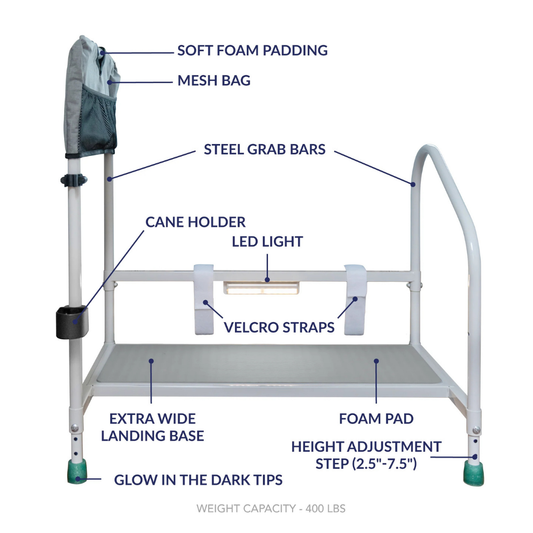
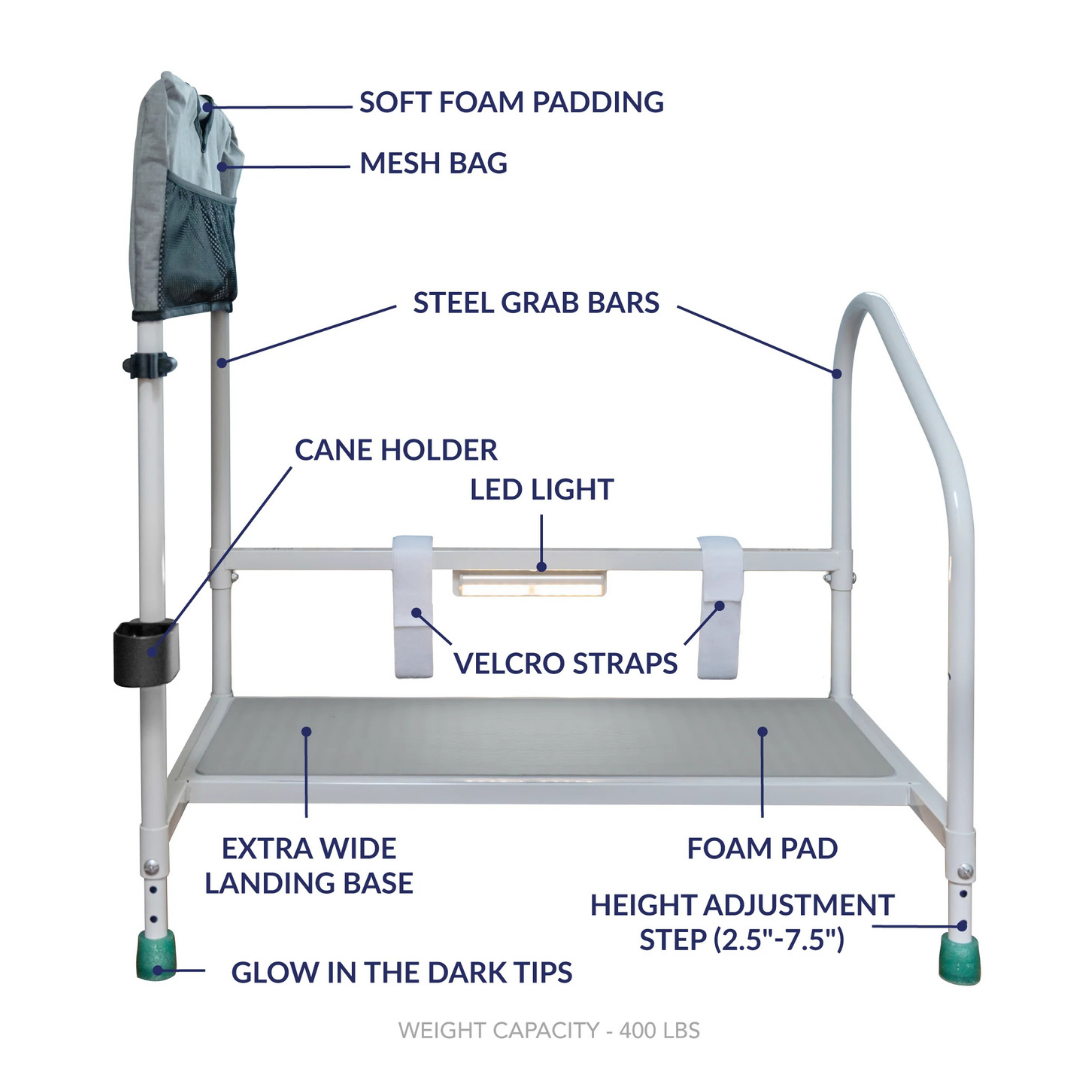


Patient transfer devices are specialized tools designed to help individuals with limited mobility move safely from one place to another—such as from a bed to a wheelchair. They are a cornerstone of safe caregiving, significantly reducing the risk of injury for both the person being moved and the caregiver.
Understanding which device to use is key to making daily movements secure, preserving dignity, and preventing the common physical strain that caregivers often face. This guide will walk you through everything you need to know about choosing and using these essential tools.
The Importance of Safe Mobility in Caregiving
For anyone caring for a person with mobility challenges, everyday actions can be a source of concern. Simple movements that many take for granted—like getting out of bed, using the bathroom, or sitting in a chair—suddenly present a risk of falling.
Without proper equipment, these transfers can lead to serious falls for the patient and debilitating back or shoulder injuries for the caregiver. This is where patient transfer devices become essential tools for safety and peace of mind.
These devices are specifically engineered to manage the physical demands of a transfer, turning a potentially risky manual lift into a controlled, secure process. They are a reliable partner in care, safeguarding the well-being of everyone involved.

Preventing Injury and Promoting Independence
The need for safe patient handling solutions is well-documented. Manual lifting and patient handling are leading causes of musculoskeletal injuries among healthcare workers, a problem that extends to home caregivers as well. As the global population ages, the demand for safer solutions continues to grow.
Beyond preventing injuries, these tools play a vital role in a person’s emotional well-being. Using a transfer aid can restore a crucial sense of dignity and autonomy. When an individual can participate in their own transfers, even in a small way, it reinforces their independence and builds confidence.
The core benefits of using a patient transfer device include:
- Enhanced Safety: They dramatically lower the risk of falls for the user and musculoskeletal injuries for the caregiver.
- Increased Confidence: Smooth, secure movements help reduce anxiety for everyone involved.
- Greater Independence: They empower individuals to remain more active and engaged in their daily lives.
By making daily routines safer and more manageable, a transfer device supports greater engagement, reduces feelings of isolation, and contributes to a better overall quality of life.
Understanding the Need for Assistance
Determining the appropriate level of support is a critical first step. Clinicians often use specific balance assessment tests for elderly individuals to evaluate their stability and fall risk.
The results from these assessments are invaluable, helping families and healthcare providers choose the most suitable device for a person's specific needs and home environment.
Understanding the Different Types of Patient Transfer Devices
The world of patient transfer devices can seem complex at first, but understanding the options is the first step toward making an informed decision. Each piece of equipment is designed for a specific level of mobility and type of transfer.
Choosing the right device is like selecting the right tool for a job. The best transfer device is one that aligns with the user’s abilities, the caregiver's strength, and the specific movement required. Let's break down the main categories, from simple aids for those needing minimal assistance to mechanical lifts that provide full support.
Manual Aids for Partial Assistance
For individuals who can bear some of their own weight and have adequate upper-body strength, manual aids are an excellent option. These tools provide support and stability without taking over the entire transfer, which helps the user maintain muscle tone and a sense of independence.
A key benefit of manual aids is that they encourage the user to stay involved in the transfer process, which is beneficial for both their physical and mental well-being.
Transfer Belts and Gait Belts
A transfer belt, often called a gait belt, is one of the most fundamental tools for caregivers. It is a wide, sturdy belt with handles that is fastened around the user's waist.
It is not designed for lifting. Instead, it provides the caregiver with a secure grip to guide and steady the person during movements like standing up from a chair or walking short distances. It's an ideal solution for someone who is unsteady but can support most of their own weight.
Sliding Boards and Transfer Boards
A transfer board creates a smooth, sturdy bridge between two surfaces of similar height, such as from a bed to a wheelchair.
Made from slick, durable wood or plastic, it allows a user with good upper-body strength to slide across the gap. This is an empowering option for independent transfers, such as getting into a car, as it enables the person to manage their own movement safely. To see how these devices fit into a larger mobility plan, it's helpful to understand the differences between a transport wheelchair vs a standard wheelchair.
Slide Sheets for Repositioning
Made from low-friction fabric, slide sheets are highly effective for repositioning someone in bed. They function like a gentle conveyor belt, allowing a caregiver to move a person up, down, or side-to-side with minimal effort. This significantly reduces the risk of painful skin shearing for the patient and saves caregivers from the physical strain of pulling or dragging.
Mechanical Lifts for Substantial Support
When a person has very limited or no ability to bear their own weight, a mechanical lift is essential. These machines perform the heavy lifting, ensuring the transfer is safe for the user and preventing serious back injuries for the caregiver.
Mechanical lifts are central to a "zero-lift" philosophy in caregiving, which relies on technology instead of manual strength to move a person. This approach has been proven to significantly reduce caregiver injuries.
Sit-to-Stand Lifts
A sit-to-stand lift is a perfect intermediate device. It is designed for individuals who can bear some weight on their legs and have enough arm strength to assist in pulling themselves up.
The user places their feet on a platform and holds onto handles while a supportive sling is placed around their back. The lift then mechanically assists them into a standing position. These are highly useful for transfers to a toilet and are excellent tools for rehabilitation, as they encourage active participation that helps maintain lower-body strength.
Full Body Patient Lifts or Hoyer Lifts
For individuals who are completely non-weight-bearing, a full-body patient lift—commonly known as a Hoyer lift—is the standard for safe transfers. These are floor-based lifts on wheels that use a specially designed sling to cradle the person’s entire body. The lift gently and securely hoists and moves them from one surface to another.
These lifts typically come in two main types:
- Manual Lifts: These models use a hydraulic pump operated by a lever. They are a more budget-friendly option but require some physical effort from the caregiver.
- Powered Lifts: These run on a rechargeable battery, with the lifting mechanism controlled by a push-button remote. They are the preferred choice for frequent transfers, as they minimize physical strain on the caregiver.
Integrated and Advanced Solutions
For the most seamless mobility, especially in homes where floor space is limited, integrated systems offer a significant advantage over portable lifts.
Ceiling Lifts
A ceiling lift is a motorized unit that travels along a track system permanently installed on the ceiling. This design is highly beneficial in smaller bedrooms or bathrooms where maneuvering a floor lift can be difficult. It provides smooth, direct, and effortless transfers to any location covered by the track, offering an unmatched level of convenience.
To help you understand how these options compare, here is a quick reference guide.
Quick Guide to Patient Transfer Device Types
This table breaks down the most common devices to help you match the right tool to the right situation.
| Device Type | Patient Mobility Level | Common Transfers | Key Benefit |
|---|---|---|---|
| Gait Belt | Able to stand and bear some weight with assistance. | From sitting to standing, or short-distance walking. | Provides caregiver a secure grip for stabilization. |
| Transfer Board | Good upper body strength but limited leg function. | Bed to wheelchair, wheelchair to car. | Empowers independent or semi-independent transfers. |
| Sit-to-Stand Lift | Can bear some weight and has grip strength. | Chair to toilet, bed to commode. | Encourages user participation and preserves strength. |
| Hoyer Lift | Completely non-weight-bearing. | Bed to chair, chair to bath, or from the floor. | Provides full, secure support for maximum safety. |
| Ceiling Lift | Completely non-weight-bearing. | Room-to-room or across a room. | Frees up floor space and offers seamless movement. |
Choosing the right patient transfer device comes down to matching the equipment’s function to the user’s unique abilities and their home environment. By understanding these different categories, you can select a tool that will enhance safety, preserve dignity, and simplify daily life.
How to Choose the Right Device for Your Specific Needs
Selecting the right patient transfer device requires a thoughtful assessment of the individual's needs, the caregiver's capabilities, and the home environment. It is a process of gathering information to find the solution that fits perfectly.
A well-chosen device will integrate seamlessly into your daily routine, making every transfer safer and less stressful. Conversely, an inappropriate choice can lead to frustration, an increased risk of injury, and unnecessary expense. Taking the time to evaluate your specific situation is the most important step toward establishing a safe and successful home care plan.
Start With a User-Centered Assessment
The primary factor in your decision is the person who will be using the device. Their physical condition, weight, and daily routines will help you narrow down the options to what is both safe and practical.
An honest evaluation of their abilities is the foundation for making a sound choice.
- Weight-Bearing Ability: Can the person support some or all of their own weight, even for a moment? If they can, a sit-to-stand lift could be an excellent choice to encourage participation and help maintain muscle strength. If they are completely non-weight-bearing, a full-body patient lift is the only safe option.
- Upper Body Strength: Do they have the arm and core strength to assist during the transfer? Someone with good upper-body function might be able to use a transfer board independently, which is a significant boost for their autonomy.
- Cognitive Function: Can the person understand and follow simple instructions? Devices that require user participation, like a sit-to-stand lift, are best for those with a high level of awareness. A full-body lift provides complete support regardless of cognitive state.
Choosing a device requires a holistic view of the user. It's not just about their physical limitations but also about what will make them feel most secure, comfortable, and dignified during a transfer.
Evaluate Your Home Environment
Once you have a clear understanding of the user's needs, it's time to assess your home. Even the best lift is ineffective if it cannot fit through a doorway. Take a tape measure and conduct a thorough walkthrough of the spaces where transfers will occur most frequently.
- Measure Doorways and Hallways: Check the width of every doorway on the transfer path to ensure there is enough clearance for a floor lift to pass through easily.
- Assess Space Around Furniture: Is there enough room to maneuver a lift around the bed, chairs, or toilet? Floor lifts require a significant turning radius.
- Check Under-Bed Clearance: Most floor-based lifts have legs that must slide under the bed for stability. Measure the space between the floor and the bed frame to ensure compatibility.
If your space is limited, a ceiling lift may be a more practical solution, as it frees up valuable floor space and eliminates the challenge of navigating tight corners.
Consider the Caregiver’s Capabilities
Finally, consider the primary caregiver. The right transfer device should make their role safer, not more physically demanding. If the caregiver has their own physical limitations, such as a back condition or limited strength, a manual lift that requires pumping a hydraulic lever may not be a sustainable choice.
In that case, a powered lift with a simple push-button remote is a much better investment in the caregiver's long-term health. The growing need for equipment that protects both patients and caregivers is a major factor in the patient transfer device market.
The diagram below illustrates the main categories of devices based on the level of assistance required.

This visual guide separates devices into those for assisted transfers, self-transfers, and fully mechanical lifts, helping you match the user’s abilities with the right category of equipment. This selection process is similar to choosing other assistive tools. For instance, finding the best workout equipment for bad knees involves selecting low-impact options that support safe movement—a principle that directly applies here. To learn how these aids fit into the broader category of home medical supplies, our guide on what is considered durable medical equipment can be helpful.
Mastering Safe Transfer Techniques and Best Practices
Having the right patient transfer device is only the first step. True safety is achieved by using it correctly every time.
Proper technique transforms a potentially stressful, high-risk moment into a smooth, predictable routine. It is about protecting backs, preventing falls, and preserving dignity. This section covers the universal safety rules and device-specific tips that form the foundation of every secure transfer.
Think of each transfer like a pilot’s pre-flight checklist. These are the essential steps to complete before the movement begins, whether you're using a simple gait belt or a sophisticated mechanical lift.

Core Principles of Every Safe Transfer
Before initiating any transfer, make these checks a habit. They take only a few seconds but can prevent the most common accidents.
-
Communicate Clearly: A transfer is a team effort. Talk the person through the entire process, explaining what you are about to do and what they can do to help. Clear communication eliminates surprises that can lead to sudden, unsafe movements.
-
Clear the Path: Ensure the route from point A to point B is completely free of obstacles. Remove stray shoes, area rugs, and power cords. Anything that could cause a trip or get tangled in the wheels of a lift or wheelchair is a hazard.
-
Lock All Wheels: This is one of the most critical and easily overlooked steps. Before the person moves, always lock the brakes on the bed, wheelchair, commode, or lift. An unsecured piece of equipment can shift unexpectedly, creating a serious fall risk.
-
Use Proper Body Mechanics: A transfer device is designed to protect your back, but you must still use good form. Keep your back straight, bend with your knees (not your waist), and hold the person you're moving close to your body. This maintains a stable center of gravity for both of you.
Device-Specific Safety Tips
In addition to universal rules, each type of transfer device has its own guidelines for safe operation. Understanding these details is key to using your equipment correctly and effectively.
-
For Transfer Belts: The belt should be snug around the person's waist, fitted over their clothing. It should not be uncomfortably tight, but it must be secure. Use the handles to guide and steady them—never use the belt itself to lift their full body weight.
-
For Sliding Boards: Ensure the board creates a secure, overlapping bridge between the two surfaces. A small gap can become a significant problem. Encourage the user to lean forward slightly as they slide, as this shift in weight makes the movement smoother.
-
For Patient Lifts (Hoyer Lifts): Before attaching the sling to the lift, double-check that it is positioned correctly under the person, with no twists or folds in the fabric. As you begin the lift, spread the base legs to their widest possible position to maximize stability and prevent tipping.
A pre-transfer check is not just a suggestion; it's a vital safety habit. A quick look at straps, batteries, and the surrounding environment can mean the difference between a smooth transfer and a dangerous mishap.
A Quick List of Dos and Don'ts
Developing good habits makes transfers feel routine and safe. Keep this simple checklist in mind to ensure safety is always the top priority.
What You Should Always Do
- Do a quick visual inspection of the device before every use.
- Do ensure the user is as comfortable and prepared as possible before you begin.
- Do move slowly and smoothly, avoiding any sudden or jerky motions.
What You Should Never Do
- Don't rush. Ever. No matter how much of a hurry you're in.
- Don't exceed the device's stated weight limit.
- Don't attempt a transfer if you feel unsure or if the person is agitated.
By mastering these fundamental techniques, you can turn a patient transfer device from a piece of equipment into a reliable tool for safe, dignified care. To learn more about establishing a secure routine, you can explore our detailed guide on safe patient transfer techniques.
Navigating Costs, Maintenance, and Long-Term Value
Purchasing a patient transfer device is an investment in safety and quality of life. While the initial price is a factor, it is important to consider the complete picture, from financing options to the routine upkeep that ensures safe operation.
The good news is that you may not have to bear the full cost upfront. Patient transfer devices are often considered qualified medical expenses, which means you can use pre-tax funds from a Flexible Spending Account (FSA) or a Health Savings Account (HSA) to purchase them. For larger items like a powered lift, financing services such as Affirm can break the cost into manageable monthly payments, so safety remains affordable.

Protecting Your Investment with Proactive Maintenance
Once your new device is in use, its long-term reliability depends on proper care. Just as a car requires regular maintenance, your transfer equipment needs consistent attention to perform safely year after year. Proactive maintenance is not just recommended—it's essential.
Waiting for a component to fail is not an option when a person's well-being is at risk. The best way to protect both the user and your investment is to establish a simple, repeatable maintenance routine.
A patient transfer device is more than a piece of equipment; it's a lifeline. Regular inspections transform it from a one-time purchase into a lasting tool for security, dignity, and peace of mind.
The growing emphasis on safe and accessible technology is reflected in market trends. The availability of better reimbursement policies and financing options is making these essential tools more accessible, highlighting their importance in modern caregiving.
Your Simple Maintenance Checklist
A few minutes of inspection each month can prevent a major issue before it occurs. Use this checklist as a guide to keep your equipment in optimal condition.
- Check All Bolts and Fasteners: Give them a quick check to ensure everything is snug. The vibrations from daily use can sometimes loosen them over time.
- Inspect Slings and Straps: This is absolutely critical. Look closely for any fraying, tears, or worn-out stitching, paying special attention to the attachment points. A damaged sling is a serious safety hazard.
- Test Mechanical and Electrical Parts: For a powered lift, ensure the battery holds a charge and the remote functions correctly. For manual lifts, check that the hydraulic pump operates smoothly without sticking or hesitation.
- Wipe Down Surfaces: A regular wipe-down keeps the device clean and ensures moving parts remain free of dust and debris. Always follow the manufacturer's cleaning instructions.
Following these simple steps will ensure your device is always ready for a safe transfer. For a more detailed look at what to inspect, check out our guide on the guidelines for identifying deteriorated patient lift slings.
Your Partner in Creating a Safer Home
Choosing the right patient transfer device is a significant decision, but it’s not one you have to make alone. After assessing the user's mobility, the layout of your home, and the caregiver's physical abilities, you have the foundation needed to make an informed choice.
The next step is putting that knowledge into practice, and a trusted partner can make all the difference. At DME Superstore, we are more than a retailer—we are your ally in this process. Our goal is to help you create a home environment that is secure, comfortable, and promotes as much independence as possible.
Guidance Every Step of the Way
We understand that every family’s situation is unique, which is why we offer personalized support. You can connect with our experienced team through 24/7 chat support for quick answers or in-depth advice.
We also streamline the process with benefits designed for your convenience and peace of mind:
- Nationwide Free Shipping: Get the equipment you need delivered directly to your door with no extra shipping costs.
- Trusted Brands: We carry a carefully selected range from top manufacturers like Pride Mobility and Medline, so you can be confident in the quality of your purchase.
- Flexible Payments: All our products are eligible for FSA/HSA spending, and we offer financing through Affirm to help you manage your budget.
Making the right choice is an investment in quality of life. It’s about replacing worry with confidence and ensuring every transfer is a safe, dignified experience for both the person being moved and their caregiver.
Our team is here to guide you to the best solution for your family. Take a look at our curated selection of patient transfer solutions or reach out today for personalized help.
Answering Your Questions
When researching patient transfer devices, many practical questions arise. Getting clear answers is the first step toward feeling confident in your choice and ensuring every transfer is as safe as possible. Here are some of the most common questions we hear from families and caregivers.
Will Medicare or Insurance Cover the Cost?
This is a very common question, and the answer is: it depends. Coverage can vary significantly based on your specific insurance plan and the documented medical necessity. Medicare Part B, for example, may cover a patient lift if a doctor prescribes it as essential durable medical equipment (DME).
Most private insurance plans follow Medicare's lead but often have their own rules and pre-authorization requirements. The best first step is always to contact your insurance provider directly to inquire about your specific plan. At DME Superstore, we ensure all our products are eligible for FSA/HSA spending and offer financing through Affirm to provide more flexible payment options.
What’s the Difference Between a Hoyer Lift and a Sit-to-Stand Lift?
The primary difference lies in the level of participation required from the person being transferred.
A Hoyer lift, also known as a full-body or patient lift, is designed for someone with little to no ability to support their own weight. It uses a sling to do all the work, completely lifting and moving the person from a bed to a chair, or vice-versa.
A sit-to-stand lift, in contrast, is intended for someone who can still bear some weight on their legs and has enough upper body strength to assist in the transfer. It helps them move from a seated to a standing position, which is excellent for keeping muscles active and encouraging participation.
The choice between these two powerful patient transfer devices comes down to the user's physical capabilities. A sit-to-stand lift supports partial mobility, while a Hoyer lift provides total assistance.
How Do I Clean and Maintain My Device?
Proper maintenance depends on the type of device. For simpler aids like a sliding board or transfer bench, a regular wipe-down with a mild disinfectant is usually sufficient to keep them hygienic.
For mechanical lifts, more attention is required. It is good practice to perform routine checks. Inspect all moving parts, ensure bolts are tight, and carefully examine the sling for any signs of tearing or fraying. Always refer to the manufacturer’s guide for specific cleaning and maintenance schedules to guarantee both safety and longevity for your equipment.
What Should I Do If My Loved One Is Afraid?
It is completely normal for someone to feel fear or resistance when a new piece of equipment is introduced. The key is to approach the situation with communication and patience.
Begin by calmly explaining that the device is there to make transfers safer for both of you. Demonstrate how it works slowly before attempting a real transfer. Involve them in the process by giving them small, manageable tasks, which can help them feel more in control.
Sometimes, having an occupational or physical therapist guide the first few transfers can make a significant difference in building confidence. A little patience and consistent reassurance go a long way.
At DME Superstore, our team is here to help you navigate these choices and find the perfect solution for your home. Explore our extensive collection of patient transfer devices and let us be your partner in creating a safer, more independent environment.

