



A rollator walker is a sophisticated mobility aid designed for individuals who require walking support but wish to maintain an active pace. It thoughtfully combines the stability of a traditional walker with the smooth convenience of wheels, offering a unique blend of safety and freedom.
Understanding the Rollator Walker
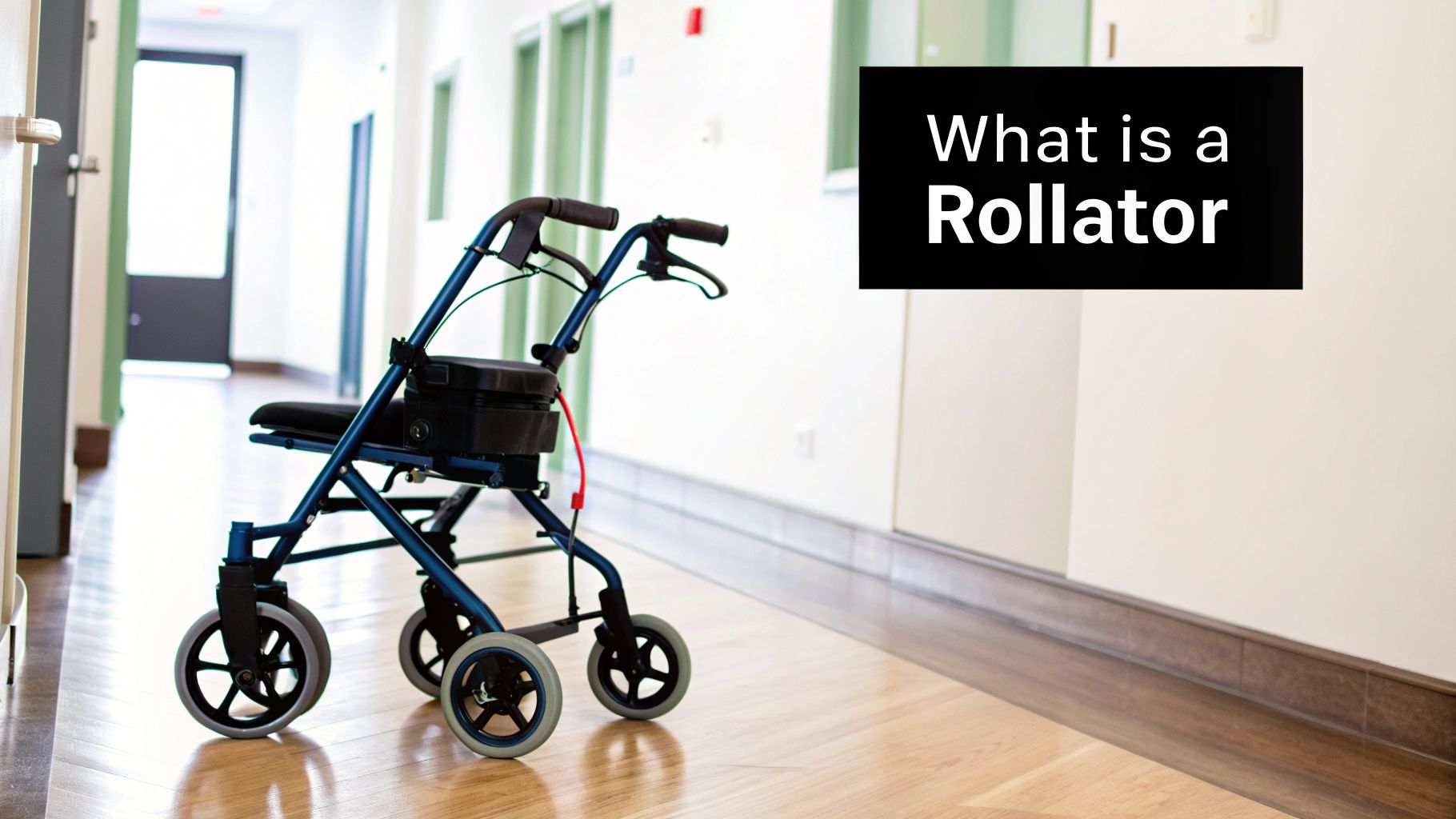
For those who find a standard walker cumbersome—requiring a lift-and-move action with every step—a rollator offers a significant advancement. Unlike its traditional counterpart, a rollator glides effortlessly, promoting a more natural and fluid walking pattern. This design allows users to move more quickly and with greater confidence.
It serves as an ideal solution for individuals who need more support than a cane can provide but do not require the full, static stability of a standard walker. A rollator is best suited for those who can support their own weight but need assistance with balance, endurance, or strength, particularly over longer distances.
The Core Design Philosophy
The fundamental concept behind a rollator is to provide continuous support without interrupting the user's stride. This simple yet powerful principle is what distinguishes it from other walking aids.
At its core, a rollator is an exceptionally user-friendly piece of medical equipment. To better understand its benefits, let's examine the key components found on nearly every model.
Anatomy of a Rollator Walker: Key Components
| Component | Primary Function | Educational Benefit |
|---|---|---|
| Wheeled Frame | Provides a rolling base of support, typically with three or four wheels. | Eliminates the need to lift the device, reducing physical strain and enabling a smooth, continuous walking pace. |
| Hand Brakes | Function like bicycle brakes, allowing the user to control speed and lock the wheels. | Offers complete control over movement and allows the user to securely lock the rollator before sitting, preventing accidental rolling. |
| Built-In Seat | A sturdy, integrated seat, often accompanied by a backrest. | Provides a convenient and secure place to rest, helping manage fatigue and making longer excursions more feasible. |
| Storage Options | A basket, pouch, or under-seat bag for personal items. | Frees the user's hands for safe steering and allows for easy transport of essentials like a purse, groceries, or medical supplies. |
This intelligent combination of features has established the rollator as an empowering and popular mobility tool. Its design reflects a modern understanding that mobility aids should enhance an active, independent lifestyle rather than restrict it.
This shift is also evident in market data. The global rollator walker market was recently valued at USD 80.63 million, with demand growing as more people seek effective ways to maintain their mobility and independence. For those interested in market dynamics, you can discover more about these market trends and their drivers in the full report.
Exploring the Anatomy of a Modern Rollator
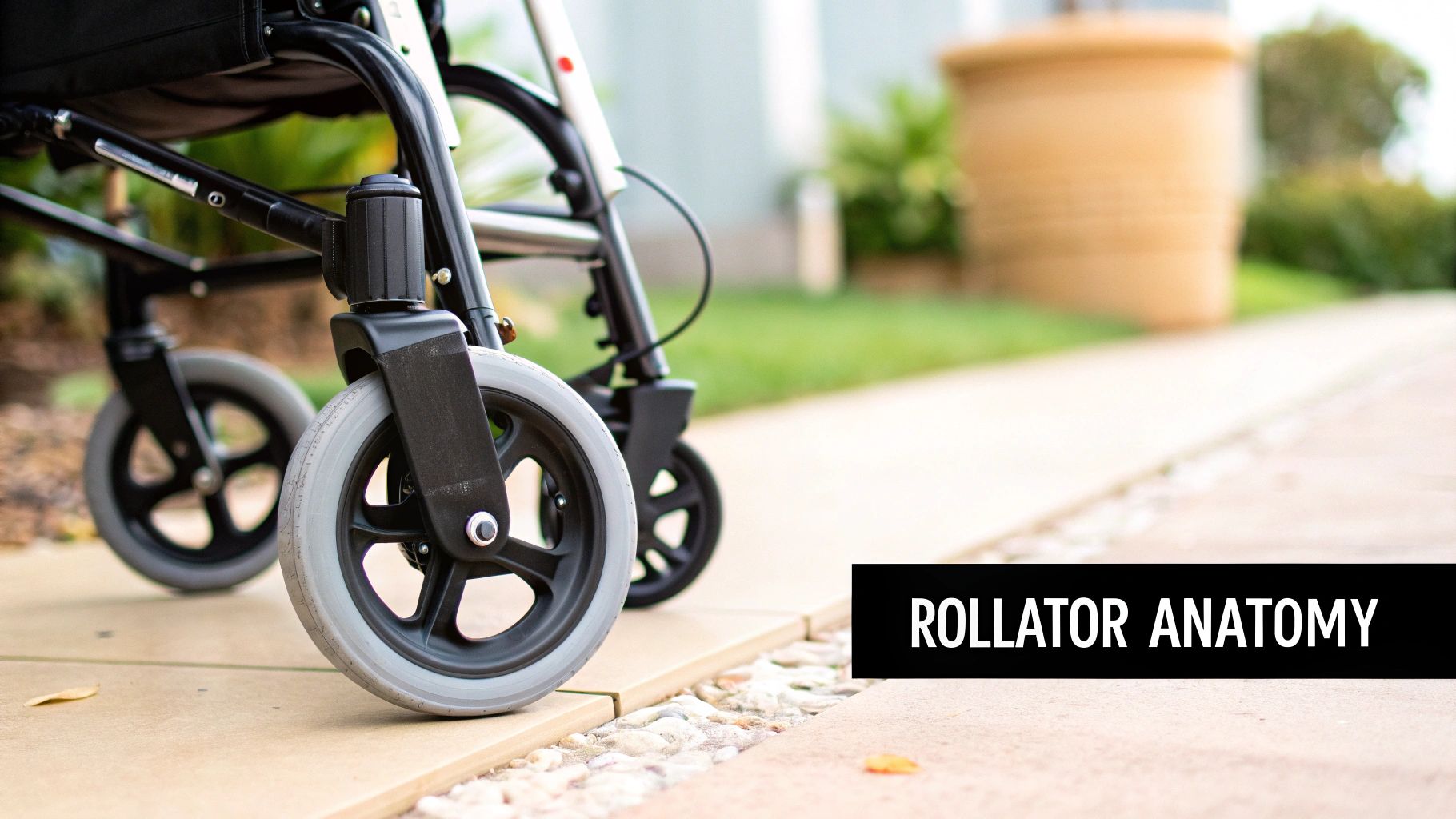
To fully appreciate what a rollator walker offers, it's helpful to understand its construction. Each component is engineered for a specific purpose, creating a system that seamlessly blends safety, convenience, and comfort. This is not merely a frame with wheels; it is a thoughtfully designed tool built for real-world use.
The foundation of any rollator is its frame. It must be durable enough to provide unwavering support yet light enough for easy handling. Most modern rollators are constructed from either aluminum or steel.
Steel frames are known for their exceptional durability and are often used in bariatric or heavy-duty models designed for higher weight capacities. However, for the majority of users, aluminum is the preferred material. It provides an optimal balance of strength and low weight, making it easier to lift the rollator into a vehicle or carry it up a few steps.
Wheels and Brakes: The Control System
The wheels are the defining feature that separates a rollator from a standard walker. Their size and design determine where the rollator can be used and the comfort of the ride.
- Small Wheels (6-7 inches): These are best suited for indoor environments. Their smaller size offers greater maneuverability, making it easy to navigate around furniture and through tight doorways.
- Large Wheels (8 inches or more): These are designed for outdoor use. They can more easily traverse uneven surfaces like cracked sidewalks, gravel paths, and grass, providing a smoother, more stable experience.
Integral to the wheels are the brakes—the most critical safety feature. They operate much like bicycle brakes, with levers located on the handlebars. Squeezing the levers slows the rollator, while pushing them down until they click engages the parking brake. This locking function is essential for safely using the seat.
A reliable braking system is paramount. Always test the brakes to ensure they are easy to engage and lock. This is your primary control for safe operation.
Comfort and Convenience Features
Modern rollators are equipped with numerous features designed to improve the user's quality of life. The built-in seat is perhaps the most appreciated feature, offering a convenient place to rest anytime, which can turn a challenging trip into a manageable one. It is important to check the seat's height and width to ensure a comfortable fit.
Storage is another significant feature. Most rollators include a basket or a detachable pouch, typically located under the seat or on the front of the frame. This practical addition frees up the user's hands, allowing them to safely steer while carrying groceries, a purse, or other personal items. As you compare models, you can learn more about ultralight rollators that successfully integrate all these features into a highly portable design.
Is a Rollator the Right Choice for You?
Selecting a mobility aid is a significant decision, and a rollator walker is not universally suitable for everyone. However, for the right individual, it can be a transformative tool for regaining independence and confidence.
The ideal rollator user is someone who requires more consistent support than a cane can offer but feels hindered by the slow, deliberate pace of a standard walker.
If you can bear your own weight but experience challenges with balance, stamina, or strength, a rollator could be an excellent choice. It is engineered to support an active lifestyle, not to impede it.
Scenarios Where a Rollator Shines
Consider your daily activities. A rollator often becomes an essential partner for individuals managing certain health conditions or life events.
- Managing Chronic Conditions: For those with conditions like COPD or arthritis, fatigue can be a significant challenge. A rollator provides the stability to walk farther, and its built-in seat offers a vital opportunity to rest, making errands more manageable.
- Post-Surgery Recovery: Following a procedure that affects balance or strength, a rollator offers the secure support needed to ambulate safely. It helps in rebuilding strength and confidence during recovery.
- Balance Concerns: Conditions that affect equilibrium, such as Parkinson's disease, can make walking feel precarious. A rollator’s wide, stable base provides continuous support, reducing the fear and risk of falling.
A rollator walker facilitates a more natural walking rhythm. Instead of focusing on lifting and placing a walker, you can direct your attention to your destination, whether it's the next aisle in the grocery store or a sunny spot in the park.
Supporting an active lifestyle is more important than ever. By 2030, the United Nations projects that 1 in 6 people globally will be over 65, increasing the demand for effective mobility solutions. For conditions like osteoporosis, which affects over 200 million women worldwide, ergonomic features on modern rollators—like padded seats and anti-slip wheels—have been shown to reduce fall risks by up to 30%. These are not just conveniences; they are vital safety features. You can explore the data on this growing market and its safety impact in this comprehensive market analysis.
For minor balance assistance during short walks, a cane may be sufficient. Conversely, if you are unable to bear your own weight for extended periods, a wheelchair is a safer and more appropriate choice.
However, if your needs fall between these two scenarios—requiring support, safety, and the ability to move at your own pace—a rollator is very likely the key to restoring your mobility.
Choosing Your Mobility Partner: Rollator vs. Other Aids
Selecting the right mobility aid is like choosing a reliable partner for your daily life. There is no single "best" option; the ideal choice depends on your specific needs for stability, your desired pace, and your most frequented environments. A rollator walker is an excellent tool for many, but understanding how it compares to other aids is crucial for making an informed decision.
The decision often involves a trade-off between stability and mobility. A standard walker, for instance, offers an exceptionally stable base of support. However, it must be lifted with each step, maximizing stability at the expense of pace. This makes it an excellent choice for indoor use where fall prevention is the top priority.
At the other end of the spectrum, a cane provides the least support but the most freedom, ideal for someone needing minimal balance assistance. A rollator occupies the middle ground, blending substantial support with the freedom to move at a smooth, natural speed.
Comparing Your Mobility Options
Let's consider how these aids function in real-world scenarios. A rollator, with its smooth wheels and integrated seat, is perfect for a trip to the park or a day of shopping. If you are unable to bear weight on your legs or need to travel long distances without fatigue, a wheelchair is the most suitable option. For more information, please see our guide on how to choose a wheelchair.
This decision tree can help you determine if a rollator aligns with your needs for balance, walking speed, and rest.
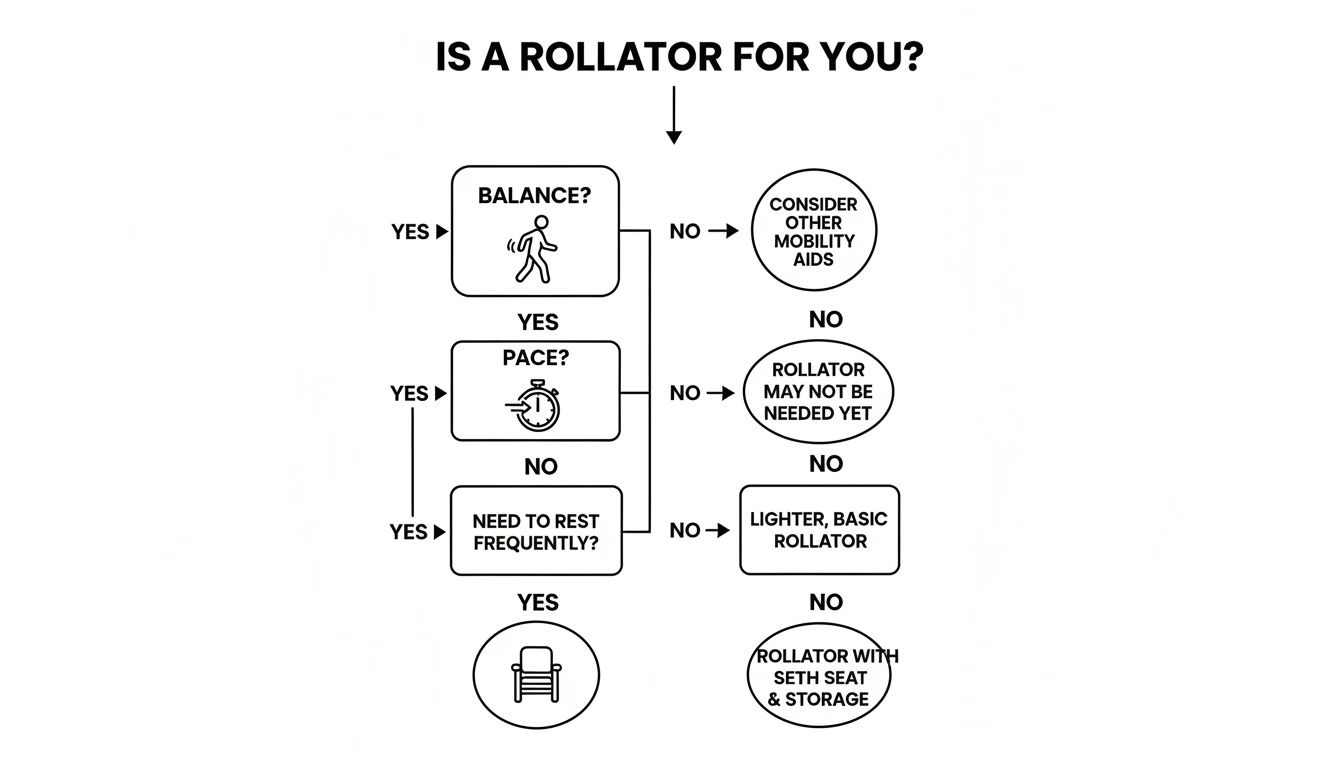
The primary takeaway is that rollators are designed for individuals who can walk but require assistance with balance and endurance, especially when periodic rests are beneficial.
Choosing Your Mobility Aid: Rollator vs. Walker vs. Cane vs. Wheelchair
To clarify the differences, this table compares the most common mobility aids, helping you identify the best match for your lifestyle and physical requirements.
| Mobility Aid | Best For | Stability Level | Portability | User Energy Required |
|---|---|---|---|---|
| Rollator | Active users needing balance support and rest breaks | Moderate to High | Good (most models fold) | Low |
| Standard Walker | Maximum stability for short distances, often indoors | Very High | Fair (can be bulky) | High (lift with each step) |
| Cane | Minimal balance assistance and light support | Low | Excellent | Low |
| Wheelchair | Inability to bear weight or long-distance travel | N/A (Seated) | Varies by model | Low to High (depending on type) |
Ultimately, choosing a mobility partner requires an honest assessment of your abilities and goals. By understanding where the rollator fits within this spectrum, you can select the device that will best empower you to move safely and confidently.
How to Select the Perfect Rollator for Your Life
Selecting a rollator is about finding a mobility partner that fits your body, your daily routine, and your environment. Let’s explore what key features mean for your real-world use.
The first consideration is where you will primarily use it. This directly informs the best wheel size. Smaller wheels, around 6-7 inches, are excellent for indoor use. They are nimble and make it easy to navigate tight corners and maneuver around furniture.
For outdoor use, larger 8-inch wheels are highly recommended. They can more easily roll over uneven surfaces like sidewalk cracks, grass, and gravel, providing a more stable and comfortable ride.
Sizing Up Your Support System
Once you've determined the appropriate wheel size, the rollator's dimensions are critical for safety and comfort. Paying close attention to these specifications ensures a proper, almost custom, fit.
The weight capacity is a non-negotiable safety specification. Always choose a model rated to comfortably support your body weight. Exceeding this limit can put significant stress on the frame and brakes, creating a serious safety risk.
Equally important are the height adjustments.
- Handle Height: To avoid poor posture and prevent back strain, the handles should align with your wrists when you are standing straight with your arms at your sides. This position allows for a slight, comfortable bend in your elbows when you grip the handles.
- Seat Height: Before purchasing, verify the seat-to-floor height. You should be able to sit with your feet flat on the ground and your knees bent at a comfortable 90-degree angle. This ensures you can rise from the seat safely and easily.
Proper adjustment is not just about comfort; it is essential for maintaining correct posture and ensuring safe operation. A poorly fitted rollator can pose as much of a hazard as having no support at all.
Folding, Features, and Final Touches
Consider how a rollator will fit into your daily life. The folding mechanism can significantly impact convenience. If you travel frequently or have limited storage space, look for models with a simple, one-hand folding mechanism. Some models fold side-to-side into a slim profile, while others collapse from front to back.
Finally, evaluate the additional features that can make your life easier. A spacious basket is useful for carrying groceries or personal items. Small additions like a cup holder or a cane holder can enhance a good rollator and make it an ideal mobility tool for your needs.
For a deeper dive into all the options, you can find more insights by choosing the right rollator in our detailed guide.
Keeping Your Rollator Safe and Reliable
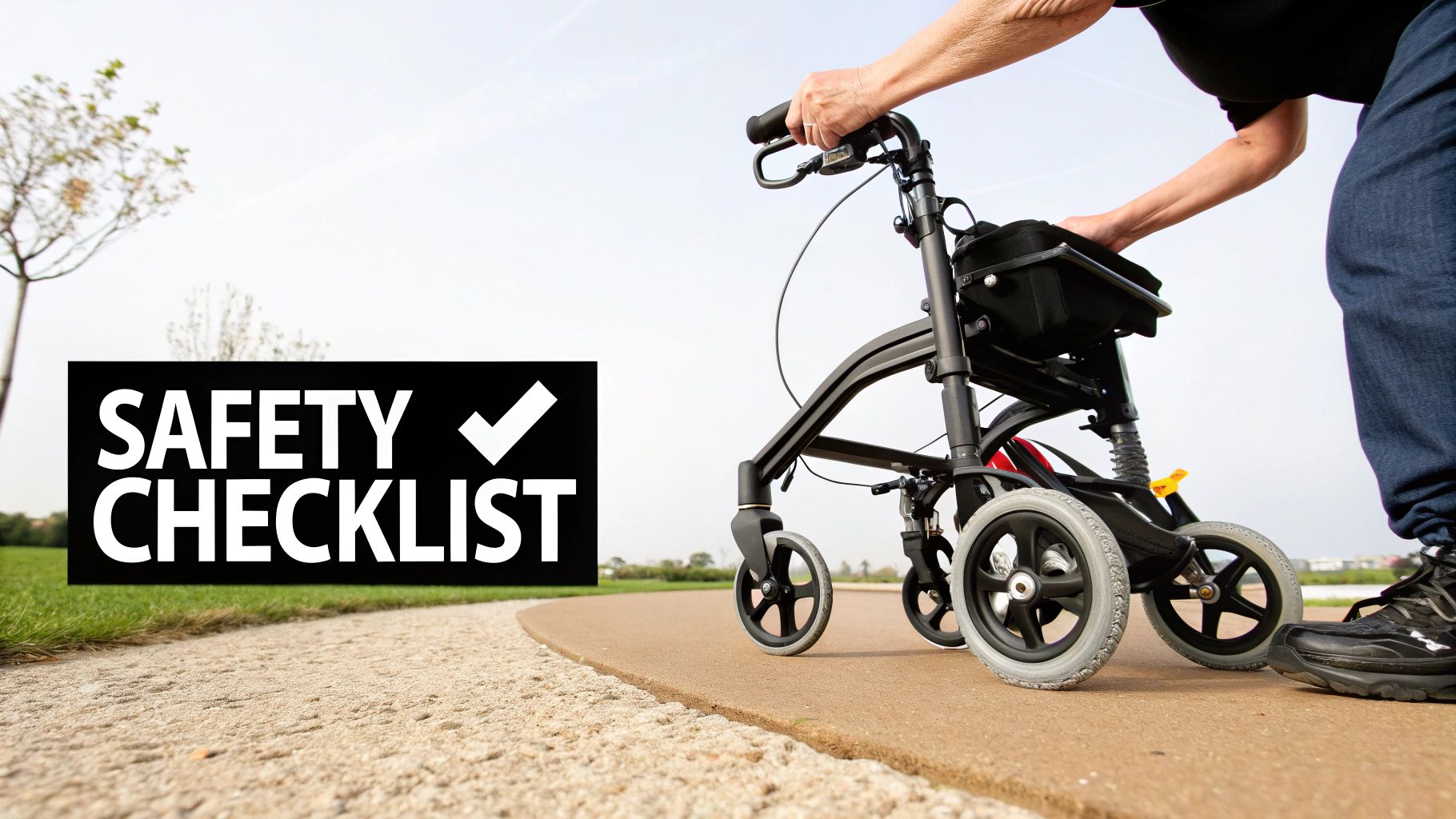
Your rollator is more than a piece of equipment; it's a partner in your independence. To ensure this partnership remains strong and reliable, it is crucial to learn basic safety practices and perform simple maintenance checks. These habits will help protect you and keep your rollator in excellent condition.
Safe operation primarily depends on the brakes. Always squeeze the brake levers to control your speed, especially when descending a slope or ramp. Before attempting to sit, push the levers down until they lock firmly into place. This is the most critical step to prevent the rollator from moving while you are seated.
Navigating obstacles like curbs or uneven terrain also requires practice. Approach curbs directly, not at an angle. Gently lift the front wheels onto the curb, then push forward until the rear wheels follow. This methodical approach ensures stability and prevents tipping.
Your Simple Maintenance Checklist
Think of this as a pre-trip inspection for your rollator. A brief monthly check can identify small issues before they become significant problems, ensuring your rollator is always ready and safe to use.
Here’s a quick checklist to follow:
- Brake Check: Squeeze the brake levers and try to push the rollator. The wheels should not move. If they do, the brakes need adjustment.
- Wheel Inspection: Examine the wheels for any visible damage or significant wear. Ensure they spin freely and are securely attached to the frame.
- Frame and Fittings: Inspect the entire frame for loose screws or wobbly joints, paying close attention to the folding mechanism. Tighten any loose parts to maintain the rollator's structural integrity.
Maintaining your rollator is a direct investment in your safety and independence. These brief, regular checks ensure it performs reliably every time you use it.
Got Questions? We’ve Got Answers.
Let's address some of the most common questions people have when considering a rollator. Clear, practical information is the final step in making a confident decision.
How Can I Pay for My Rollator?
A primary concern for many is the cost. A frequent question is, "Will insurance or Medicare help pay for a rollator?"
The answer is: sometimes. Medicare Part B may cover rollators as durable medical equipment (DME) when prescribed by a doctor as medically necessary. Many private insurance plans follow similar guidelines.
Another common question is, "Can I use my HSA or FSA funds?" Yes. A rollator walker is a qualified medical expense, making it eligible for purchase using a Health Savings Account (HSA) or Flexible Spending Account (FSA).
Using your HSA or FSA funds is an effective way to manage the cost of your new rollator. It allows you to use pre-tax dollars, making this essential equipment more affordable.
How Do I Set It Up Correctly?
Proper setup is essential for both safety and comfort. Adjusting the handle height correctly is key to maintaining good posture and preventing strain on your back and shoulders.
Follow these steps to find the perfect height:
- Stand straight inside the rollator frame with your shoulders relaxed.
- Allow your arms to hang naturally at your sides.
- Adjust the handles so that the handgrips are level with the crease in your wrist.
When you grip the handles, your elbow should have a slight, comfortable bend. This simple adjustment promotes a natural posture and ensures safe walking.
For more specific questions or to explore a broader range of topics on independent living, you can find further guidance from various support resources.
At DME Superstore, we are dedicated to helping you find the perfect mobility solution that fits your life. Explore our curated selection of high-quality rollator walkers and take the next step toward regaining your independence.

