



If you're reading this, there's a good chance something small has changed at home.
Maybe your mother now uses the wall for support when she walks from the bedroom to the bathroom. Maybe your father says he's “fine,” but you notice he avoids the shower unless someone is nearby. Maybe getting out of bed has become slower, harder, and a little less steady than it used to be. These moments can feel subtle at first, but they often signal the same question: what support will help, without making home feel like a hospital?
That's where the right home care equipment for elderly adults can make a real difference. Not because more equipment is always better, but because the right setup can restore confidence, reduce strain, and support independence in everyday routines. This shift toward home-based support isn't a fringe trend. The global home medical equipment market is projected to grow from USD 47.78 billion in 2025 to USD 66.75 billion by 2035, with a projected 3.4% CAGR from 2025 to 2035, according to Market Research Future's home medical equipment market analysis.
Many families start by searching for products. A better starting point is the person, the home, and the daily routines that are getting harder. If you're also thinking about larger home changes, resources on safe aging in place solutions can help you think beyond portable equipment and look at the whole environment. For a broader overview of common protective tools, DME Superstore also has a helpful guide to home safety equipment for elderly adults.
Creating a Safe and Independent Home
Families often think this process begins with a walker, a shower chair, or a bed. In practice, it usually begins with a feeling. Someone you love doesn't seem as secure at home as they did a few months ago.
That feeling matters. It tells you to pay attention before a minor struggle becomes a crisis.
A safe home setup should support three things at once:
- Movement: getting from room to room without risky improvising
- Self-care: bathing, toileting, dressing, and sleeping with less strain
- Confidence: helping the person accept support that feels useful, not defeating
The mistake I see most often is treating equipment like a shopping list. Families compare features, prices, and styles before they've identified the actual problem. But a raised toilet seat won't solve trouble turning in a narrow bathroom. A power scooter won't help if the front entry has steps and no ramp. A bed with many functions may still be wrong if the transfer height doesn't match the user's legs or the caregiver's body mechanics.
Home works best when the equipment disappears into the routine. The person can move, wash, rest, and get help without feeling like every task has become complicated.
That's the heart of right-sizing. The best solution isn't the product with the longest feature list. It's the one that fits the person's strength, judgment, habits, and living space.
First Step Assessing Your Loved One's Needs
Before you compare any products, slow down and observe a full day if you can. Morning and evening routines often reveal the most. Watch how your loved one gets out of bed, reaches the bathroom, stands from the toilet, enters the shower, prepares food, and settles back into bed at night.
Equipment has supported home independence for a long time. By 1999, about 1.3 million people age 65+ used only equipment for all disabilities, a figure that had grown by almost one million since 1984, according to HHS/ASPE's report on assistive device use among elderly adults. That historical pattern matters because it shows that practical tools can reduce the need for direct personal help when they match real needs.

Start with daily routines
Look at tasks, not diagnoses alone. Two people with the same medical condition may need very different support.
Ask questions like these:
- Bed mobility: Can they roll, sit up, and stand without pulling hard on furniture?
- Walking: Are they steady on flat floors, or do they shuffle, veer, or fatigue quickly?
- Toileting: Can they lower and raise themselves safely?
- Bathing: Is the problem balance, stepping over the tub wall, standing tolerance, or all three?
- Meal tasks: Can they carry items while using a mobility aid?
- Stairs and entryways: Do they avoid certain parts of the home because access feels unsafe?
Some families feel awkward doing this because it can seem intrusive. A gentler approach is to frame it around goals. Ask, “What feels hardest lately?” or “What part of the day takes the most energy?” That keeps the conversation respectful and practical.
Notice what the person is already doing to compensate
People naturally create workarounds. Those workarounds are useful clues.
You might see someone:
- Using counters as handholds in the kitchen
- Sleeping in a recliner because getting in and out of bed feels difficult
- Skipping showers because the tub entry feels risky
- Taking very small steps and avoiding turns
- Waiting for family help with transfers that used to be independent
These patterns often tell you more than a simple yes-or-no question about independence.
Practical rule: Don't ask only, “Can they do it?” Ask, “How do they do it, how long does it take, and how safe does it look?”
A task may technically be possible and still be unsafe, exhausting, or inconsistent.
Assess the home and the person together
Many buying mistakes originate when families identify the right category but choose the wrong version because they haven't looked closely at the setting.
Use a room-by-room lens:
| Area | What to observe |
|---|---|
| Bedroom | Bed height, path to bathroom, room for a walker or wheelchair |
| Bathroom | Tub or shower entry, toilet height, grab locations, floor surfaces |
| Hallways | Width, clutter, lighting, sharp turns |
| Entry | Steps, thresholds, railings, ramp needs |
| Living area | Seat heights, transfer surfaces, cord placement |
For a structured way to document these details, this home safety assessment checklist can help families organize what they're seeing.
Include comfort and preferences
A technically correct device can still fail if the person hates using it.
Ask about:
- Privacy: Are they comfortable with visible equipment in shared spaces?
- Routine: Do they prefer bathing at night, resting in a recliner, or eating in bed?
- Appearance: Does a bulky device feel stigmatizing?
- Control: Do they want something simple that they can manage without help?
Comfort isn't a bonus issue. It often determines whether equipment becomes part of daily life or stays untouched in a corner.
Essential Home Care Equipment Categories
Families often reach this stage after noticing the same difficult moments again and again. A loved one can still do many things, but getting to the bathroom takes too much effort, standing from the recliner has become risky, or bathing now requires more help than it used to. Equipment can help, but only if it fits the person's body, habits, and rooms.

A helpful way to sort these categories is to ask one simple question: what part of the daily routine is breaking down? That keeps the focus on function, not features. The goal is rarely to fill the house with equipment. It is to choose the smallest, safest change that makes daily life easier and more consistent.
Mobility aids
Mobility devices support very different problems, even though families often group them together.
Walkers and rollators
A standard walker usually suits someone who needs steady support and can safely lift or place the walker with each step. It slows the pace in a useful way, which can improve control.
A rollator works better for someone who walks more continuously, can manage hand brakes, and benefits from a built-in seat. It is often a poor fit for a person who forgets to lock brakes, leans too far forward, or moves too quickly when tired.
This choice is a lot like choosing footwear. More mobility is not always better. The right option is the one that gives enough support without adding a new risk.
Choose this category when the main concern is:
- Unsteady walking
- Fatigue over longer distances
- Need for support during transfers
- Reduced confidence in hallways or open spaces
Canes
A cane can help with mild balance loss or one-sided weakness. It cannot do the job of a walker. If someone is pulling hard on counters, grabbing furniture, or struggling to rise from a chair, a cane is usually too little support.
Wheelchairs and scooters
A manual wheelchair can help when walking is possible for short distances but too tiring or unsafe for longer trips, appointments, or recovery periods. A power wheelchair or mobility scooter may fit better if arm strength is limited or caregiver help is not always available.
A scooter usually works best for someone who can get on and off the seat safely and has enough space to turn. A power wheelchair often suits tighter control needs, more involved seating needs, or greater mobility loss inside the home.
If you are sorting out which items fall under medical equipment coverage rules, this guide to what counts as durable medical equipment can help place wheelchairs, scooters, and similar devices in context.
Bedroom solutions
Bedroom equipment affects much more than sleep. It can shape pain levels, skin protection, caregiver effort, and how safely a person gets in and out of bed at night.
Adjustable beds
Adjustable beds can make position changes easier and reduce the strain of transfers. Johns Hopkins Medicine notes that home assistive equipment can include beds designed to make getting in and out easier, and that head or foot elevation may help some people manage discomfort related to conditions such as arthritis, reflux, or breathing problems at home, as described in Johns Hopkins Medicine's guidance on assistive equipment for the home.
In practical terms, that can mean:
- Head elevation for someone who is uncomfortable lying flat
- Foot elevation for positioning comfort
- Height adjustment to reduce strain during transfers
- Easier repositioning for the older adult and the caregiver
Pressure-relief mattresses
For a person who spends long stretches in bed, the mattress becomes part of the care plan. Pressure-relieving surfaces can reduce sustained pressure on vulnerable areas and support skin protection.
This category matters most for people with limited mobility, frequent repositioning needs, or a history of skin breakdown.
Choose the bed setup as a positioning and transfer system, not only as bedroom furniture.
Lift chairs and bedside supports
Some people walk fairly well once they are up, but getting up is the hard part. A lift chair may help with sit-to-stand transitions and lower the physical strain on both the user and the caregiver. Bedside handles or support rails can help too, but only when they match how the person rolls, pushes, and stands.
Bathroom safety equipment
Bathrooms compress several risks into one small area. Wet floors, low surfaces, hard walls, and rushed movements often come together in the same task.
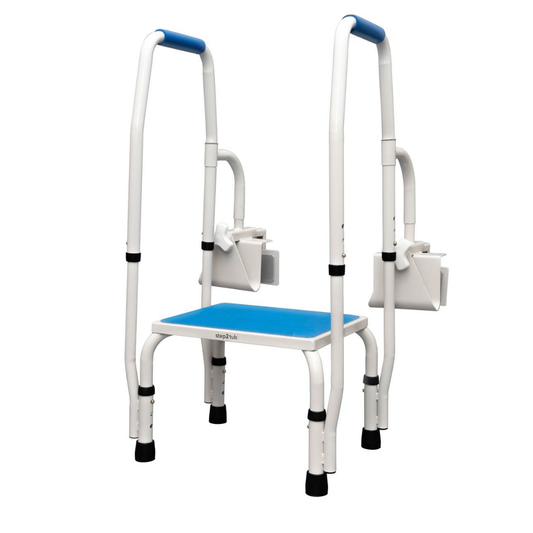
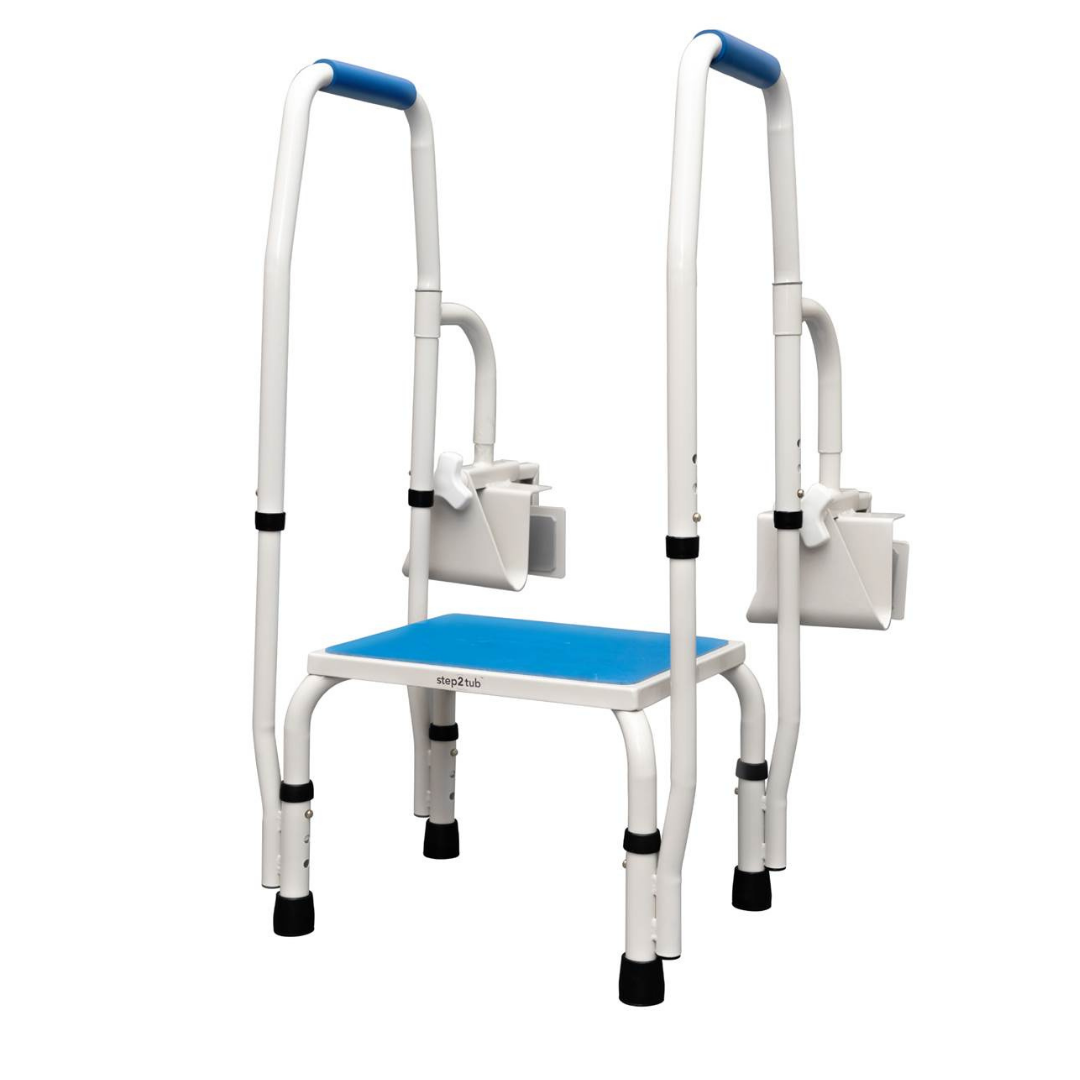
Shower chairs and tub benches
A shower chair usually fits a person who can step into the shower but cannot stand safely for the full bathing routine. A tub transfer bench fits a different problem. It helps when stepping over the tub wall is the unsafe part.
The bench works like a bridge across that barrier. The person sits first, then moves across in smaller, more controlled steps.
Look closely at:
- Seat width
- Leg adjustability
- Back support
- Arm support when needed
- Drainage and ease of cleaning
Grab bars
Grab bars help only when they are placed where the hand needs support during the actual movement. A bar can be firmly installed and still be poorly positioned. The right location depends on whether the person pushes up, lowers down slowly, pivots, or steadies themselves while turning.
Raised toilet seats
Raised toilet seats reduce how far a person has to lower and lift their body. That can help after surgery, with leg weakness, or when hip and knee bending is painful. Models with arms can add a more stable push-off surface for standing.
Transfer aids
Transfers are often where small problems become injuries. If moving from bed to chair, chair to toilet, or wheelchair to car now requires heavy lifting, transfer equipment deserves close attention.
Transfer boards and pivot aids
These tools usually fit a person who can follow directions, participate in the movement, and bear some weight or shift their body with control. They can reduce effort, but they still require the right technique and enough space.
Patient lifts
A manual or powered patient lift may be the safer choice when one helper can no longer manage transfers with physical support alone. For many families, this change brings relief. It reduces fall risk, protects the caregiver's back, and makes routine care more predictable.
The lift itself is only part of the setup. The full picture includes:
- Sling type
- Transfer path
- Floor clearance
- Caregiver training
- Storage space
Daily living and supplemental aids
Smaller items are easy to overlook because they do not look as medical or dramatic. They often make daily routines easier in very specific ways.
This category can include:
- Reachers for dressing or picking up dropped items
- Dressing aids such as sock aids or long-handled shoehorns
- Adaptive utensils for reduced grip or tremor
- OTC hearing aids when hearing loss affects safety or communication
- Portable oxygen concentrators when medically indicated for mobility outside one room
- Simple monitoring devices for home routines, when recommended by the care team
A reacher is a good example of right-sizing the solution. It does not solve “independence” as a broad concept. It helps someone pull up pants, retrieve a dropped phone, or pick up laundry without bending and losing balance.
How to narrow your choices
If the options start to blur together, sort them by the moment that is failing at home.
| Problem at home | Equipment category to review |
|---|---|
| Unsafe walking | Walker, rollator, cane, wheelchair |
| Difficulty getting out of bed | Adjustable bed, bedside support, lift chair |
| Risky shower entry | Shower chair, tub bench, grab bars |
| Low toilet transfer | Raised toilet seat, toilet safety frame |
| Heavy caregiver transfers | Transfer aid, patient lift |
| Long periods in bed or chair | Pressure-relief mattress, positioning supports |
That kind of sorting helps families avoid a common mistake. They buy a device with many features, but it does not match the home or the person's real routine. The best equipment is usually the option that fits into daily life smoothly, gets used consistently, and makes one hard task safer today.
How to Measure for a Perfect Fit
A device can be clinically appropriate and still fail at home. That happens all the time when no one checks the actual space.

A qualitative study of older adults found that inappropriate use often happened when equipment wasn't customized to the person's size, abilities, or living space. The study concluded that direct observation of the home environment is necessary because equipment chosen in hospital settings often failed once it was placed in the residence, as reported in this study on older adults, assistive devices, and home fit.
Doorways and hallways
Start with the route the device will take, not just the room where it will be used.
Measure:
- Every doorway opening along the path
- Hallway width
- Tight corners
- Thresholds at room entries
- Entry doors and exterior transitions
This matters most for wheelchairs, transport chairs, and scooters, but it also affects wider walkers and bathroom equipment.
If you're trying to compare dimensions with product specifications, this guide on how to choose a wheelchair can help you think through width, use setting, and maneuverability.
Turning space and approach angles
Many homes don't have long straight paths. They have furniture, narrow turns, and angled entries into bathrooms and bedrooms.
Check whether the person can:
- Turn into the bathroom without clipping the frame
- Approach the toilet or bed from the correct side
- Position a walker fully in front of them before standing
- Park a scooter or wheelchair without blocking the home
A device may technically fit through a doorway and still be impractical if the turn into that doorway is too sharp.
Bring a tape measure and a notepad into the home before you buy. Product pages can only help after you know your real numbers.
Bed and chair height
Transfer safety often depends on inches, but I won't pretend there's a single ideal number for everyone. What matters is the relationship between the person's leg length, their strength, and their transfer style.
Measure:
- Current bed height from floor to top of mattress
- Seat height of the chairs they use most
- Toilet height if standing is difficult
- Clearance beside the bed for a walker, wheelchair, or caregiver
If the bed is too low, standing becomes a squat. If it's too high, the person may slide forward or lose footing during transfer.
A short video can make this process easier to visualize:
Bathroom clearances
Bathrooms deserve their own measurement pass because they create the most returns and setup problems.
Measure:
- Distance from toilet to side wall
- Open floor area in front of toilet and sink
- Tub wall height
- Shower width
- Space for a shower chair or tub bench
- Wall location for possible grab bar placement
Also watch the person use the space if they're comfortable with that. Their movement path matters more than the room's square shape on paper.
Write down both user and home measurements
The right fit depends on both. A wheelchair isn't chosen only by the home. A shower chair isn't chosen only by the body. You need both sets of information in front of you at the same time.
A simple worksheet should include:
| What to record | Why it matters |
|---|---|
| Door and hallway widths | Confirms passage and turning feasibility |
| Bed, chair, and toilet heights | Helps with transfer setup |
| Bathroom dimensions | Prevents unusable bath equipment |
| User height and weight needs | Supports safe sizing |
| How many helpers are involved | Affects transfer and lift choices |
That measurement step often feels tedious, but it saves families from buying something that “looked right” and becomes a daily obstacle.
Safety Best Practices and Equipment Maintenance
Once equipment is in the home, safety becomes a routine, not a one-time decision. Even a well-chosen device can become unsafe if it's used incorrectly, adjusted poorly, or allowed to wear down over time.
Build a simple inspection habit
You don't need a formal checklist taped to every wall, but you do need consistency. Pick one day each week and run a quick visual and hands-on check.
Focus on the basics:
- Walkers and rollators: check grips, brake response, wheel wear, and loose fasteners
- Wheelchairs and transport chairs: inspect tires, footrests, armrests, and folding mechanisms
- Beds and lift chairs: confirm controls work smoothly and cords aren't pinched or creating trip hazards
- Bathroom equipment: make sure rubber tips, suction points, or legs stay stable and level
- Patient lifts: inspect slings for wear and confirm moving parts operate as expected
If something feels “a little off,” don't wait for it to become an emergency.
Watch for user changes, not just equipment changes
People change faster than equipment does. A walker that worked well three months ago may no longer be enough if balance, endurance, or judgment has declined. A bathroom routine that was independent may now require setup help or supervision.
That's why the smartest question isn't always which high-tech feature to add. Home safety equipment should match the person's impairments and home conditions, and a lower-tech option may be safer and more consistently used than a more complex one, as discussed in this article on choosing home medical equipment for senior safety and aging comfort.
Some people do better with one reliable button, one sturdy bar, and one familiar routine than with an app, alerts, charging cables, and settings they don't trust.
Keep training simple and repeatable
When a device enters the home, everyone involved should know the same core points:
- Where the equipment belongs
- How transfers should happen
- What not to do under stress
- When to stop and ask for help
The safest homes are rarely the most high-tech. They're the homes where the setup is clear, the equipment fits the routine, and the family notices small problems early.
Navigating Payment for Home Care Equipment
Cost pressure can push families into rushed choices. Some buy the cheapest item available, then replace it when it doesn't work. Others delay too long because they assume every option will be out of reach. A calmer approach is to sort payment paths before you commit.

Common ways families pay
Coverage depends on the item, the plan, medical documentation, and whether the equipment meets durable medical equipment requirements. In practical terms, families often look at a mix of public benefits, insurance, personal funds, and financing.
Here are the main buckets to explore:
- Medicare: Often part of the first conversation for walkers, certain wheelchairs, and homecare beds when criteria are met
- Medicaid: Rules vary by state, so local confirmation matters
- Private insurance: Coverage depends on the individual policy and network requirements
- Veterans benefits: Eligible veterans may have support pathways through the VA
- Out-of-pocket purchase: Sometimes the fastest route, especially for lower-cost or non-covered items
- Community support: Some families also explore local lending closets or nonprofit assistance
Match the payment path to the type of need
The best funding route often depends on whether the equipment is temporary, long-term, medically necessary, or convenience-focused.
For example:
| Situation | Payment approach to investigate first |
|---|---|
| Doctor-directed mobility device | Medicare, Medicaid, or private insurance |
| Bathroom safety upgrade | Out-of-pocket, FSA/HSA, or community support |
| Larger comfort and positioning purchase | Insurance review plus financing options |
| Mixed household setup with several items | Combine benefits, tax-advantaged funds, and direct purchase |
If you're reviewing broader insurance planning, some families also find it useful to understand how Medicare Supplement plans for 2026 are structured when they're comparing future healthcare costs.
Don't overlook tax-advantaged spending
For many households, FSA and HSA funds are one of the most practical ways to pay for home-related medical purchases. According to the publisher's program information, all products are eligible through the DME Superstore FSA and HSA eligibility program.
That can be especially useful when:
- A needed item isn't fully covered by insurance
- You want to act quickly instead of waiting through a claims process
- You're buying multiple smaller items at once, such as bathroom aids, cushions, or mobility accessories
Think in terms of total value, not sticker price
A lower upfront price can still be expensive if the item doesn't fit the person or the home. Returns, replacements, rushed second purchases, and avoidable caregiver strain all carry real cost.
The better financial question is often: which option supports safe daily use with the fewest corrections afterward?
Your Action Plan for a Safer Home
It often starts with a familiar moment. A daughter notices her father pushing off the sink to stand. A spouse sees that getting into the shower now takes twice as long. Nothing looks dramatic, but the home is suggesting a need for better support.
A good plan starts by matching the person, the task, and the space. The goal is not to fill the house with equipment. It is to choose a few tools that make daily life safer, easier, and more natural to manage.
Start with one routine at a time
Pick one full day and watch where effort, hesitation, or near-misses show up. Pay attention to walking, toileting, bathing, getting in and out of bed, and the times of day when fatigue makes everything harder.
Include your loved one in that review. A chair that feels stable to you may feel bulky or embarrassing to them. The right fit supports safety and still respects habits, preferences, and pride.
Match the equipment to the exact job
Choose equipment the way you would choose the right key for one lock. A product with more features is not automatically a better answer if it does not solve the problem in front of you.
If standing from the toilet is difficult, focus on toilet support. If the challenge is turning or repositioning in bed, look at bed or positioning aids. If the walker fits the person but clips the bathroom doorway, it is still the wrong choice. Good equipment should work in the home people live in, not in an ideal floor plan.
Test the fit before you buy
Measurements turn a hopeful idea into a workable setup. Check doorway width, hallway clearance, bathroom layout, turning space, seat height, and bed height. Then compare those numbers with the product specifications.
This step matters because even a well-made item can fail in the wrong space. A shower chair that is two inches too wide, or a bedside aid set at the wrong height, can create frustration instead of relief.
If questions remain after those three steps, getting guidance before ordering can prevent a long return process. If you're ready to turn your notes into a workable setup, DME Superstore offers home mobility, bathroom safety, transfer, bed, and pressure-relief equipment, along with product specifications and chat-based support that can help you compare options using the person's needs and the home's real limits.

